COMMENTARY: Why reconditioning is the most important investment BHPH dealers can make
By subscribing, you agree to receive communications from Auto Remarketing and our partners in accordance with our Privacy Policy. We may share your information with select partners and sponsors who may contact you about their products and services. You may unsubscribe at any time.
The current Middle East conflict is creating ripples that are already squeezing the average buy-here, pay-here customer. Fuel prices nationwide have jumped dramatically over the last several weeks, and most customers don’t have extra room in their budgets to absorb higher prices. If fuel costs stay high, and essential items like gas and groceries also get more expensive, they likely won’t have extra money to spend on preventive maintenance and vehicle repairs.
As a BHPH dealership, success in this environment depends on the quality of the vehicles we sell. Ensuring that product quality carries through from the moment we source a vehicle to the moment the customer fulfills their sales contract requires a different approach to reconditioning.
The inventory reality
The challenge for some dealerships begins with sourcing high-quality used vehicles. People are holding on to cars longer than they ever have before. Consequently, the available fleet is older, has higher mileage, and shows more wear than it did just a few years ago. With fewer high-quality options available, BHPH dealers don’t have the selection of affordable quality vehicles that were available just a few years ago.
This shift puts more pressure on the reconditioning process to offset sourcing challenges. Vehicles with lighter wear and substantial remaining useful life are far less available, and when they do appear, they are often priced beyond what many customers can afford. As a result, reconditioning has become more expensive and time-consuming up front, but that investment is necessary to ensure we are selling vehicles our customers can depend on.
From reactive to proactive
Before COVID, inflation, and geopolitical instability, BHPH operations looked much different. Lower vehicle acquisition costs gave us more flexibility in underwriting and reduced our risk when customers defaulted on their purchase agreements. That same environment also shaped our reconditioning strategy. When more affordable, lightly used vehicles were easier to find, there was less need for extensive reconditioning because those vehicles generally had less wear and more remaining component life.
Today, we’ve had to adjust our business model to compensate for the higher costs of sourcing and repairing vehicles. This increased investment and risk have forced us to be more selective in our underwriting decisions. It has also pushed us to take a far more proactive approach to reconditioning.
Subscribe to Auto Remarketing to stay informed and stay ahead.
By subscribing, you agree to receive communications from Auto Remarketing and our partners in accordance with our Privacy Policy. We may share your information with select partners and sponsors who may contact you about their products and services. You may unsubscribe at any time.
We’ve begun assessing the relative age and wear life of the vehicles we source, and then making proactive repairs to address potential problems we anticipate over the next 15-20,000 miles. Often, this means making reconditioning decisions we would have never made before.
Proactively handling these repairs so our customers are less likely to be affected by them later is better for our reputation and business operations. A car that doesn’t break down in the first 12 months of ownership gives a customer time to stabilize, build trust in our process, and feel good about their purchase decision.
How reconditioning supports customer success
Over the years, we’ve learned that understanding our customers’ day-to-day challenges helps us put them in vehicles that give them a better chance of long-term success. During tougher economic times, household budgets tighten, and rising gas prices can quickly change what a customer can realistically manage each month.
When money is tight, routine maintenance is often one of the first expenses people put off. But deferred maintenance increases the risk of breakdowns, especially in older vehicles. One unexpected repair can disrupt a household budget and, in some cases, put a customer at risk of defaulting on their purchase agreement. That reality shapes how we source and recondition our vehicles.
Reconditioning starts with sourcing. A vehicle cannot overcome a poor acquisition decision, which is why every unit we consider must meet strict standards for quality, dependability, affordability, and ease of maintenance. Our team also maintains do-not-buy lists for vehicles that we know are unlikely to serve our customers well.
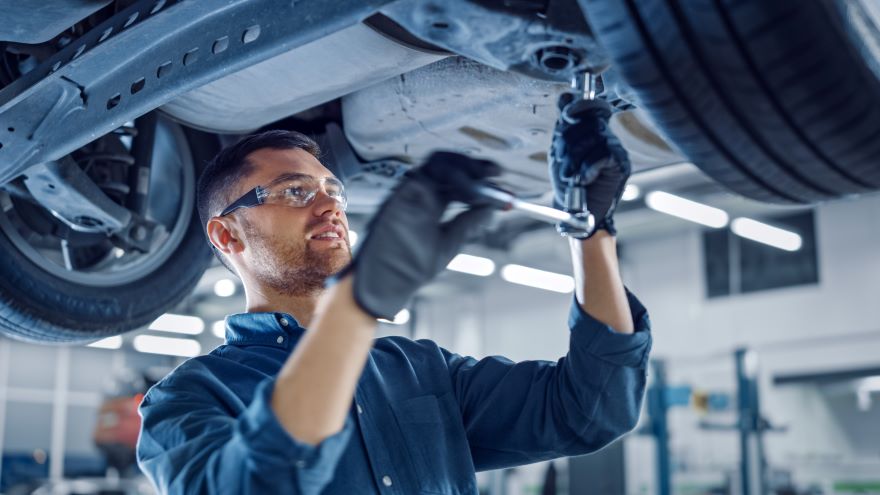
Once we acquire a vehicle, it goes through a multi-step inspection and reconditioning process designed to catch issues that would disqualify it from sale, including major engine or transmission problems, flood or frame damage, and undisclosed excessive body work. From there, we evaluate the vehicle’s interior, exterior, and major wear components to determine what repairs are needed. A vehicle is only added to inventory after multiple technicians have signed off on its condition and readiness.
By the end of this process, our customers will purchase dependable vehicles that meet their needs today and well into the future.
A long-term strategy
Ultimately, taking a more proactive approach to reconditioning requires greater upfront investment and increases the risk we assume when we sell vehicles. Some dealers may choose not to make that investment, while others may face capital constraints that limit how fully they can recondition a vehicle, but we see it as the most sustainable path forward.
When customers purchase from us, they are getting vehicles that are affordable and dependable. By working to reduce unexpected repairs and major engine or transmission failures, we help support more reliable transportation and give customers a better opportunity to build a stronger financial foundation. Over time, that leads to repeat business and referrals from friends and family.
The competitive advantage
During times of economic uncertainty, businesses need to hold fast to their core principles. For Oak Motors, that means consistently delivering affordable and dependable transportation options to our customers. In practice, that also becomes a competitive advantage. Buyers quickly learn which dealerships treat them fairly and which do not.
This outlook applies beyond the BHPH space. Dealers who invest in their customers’ success, even during uncertain times, are more likely to build stronger relationships and long-term stability. When you identify your customers’ pain points and work in good faith to solve them, you create trust that benefits both the customer and the business, even in difficult times.
Tiger Okeley is the executive board member of Oak Motors, a buy-here, pay-here dealership celebrating 40 years of empowering people in central Indiana.