Fed’s Barr fears ‘we will all pay the price’ for ongoing deregulations
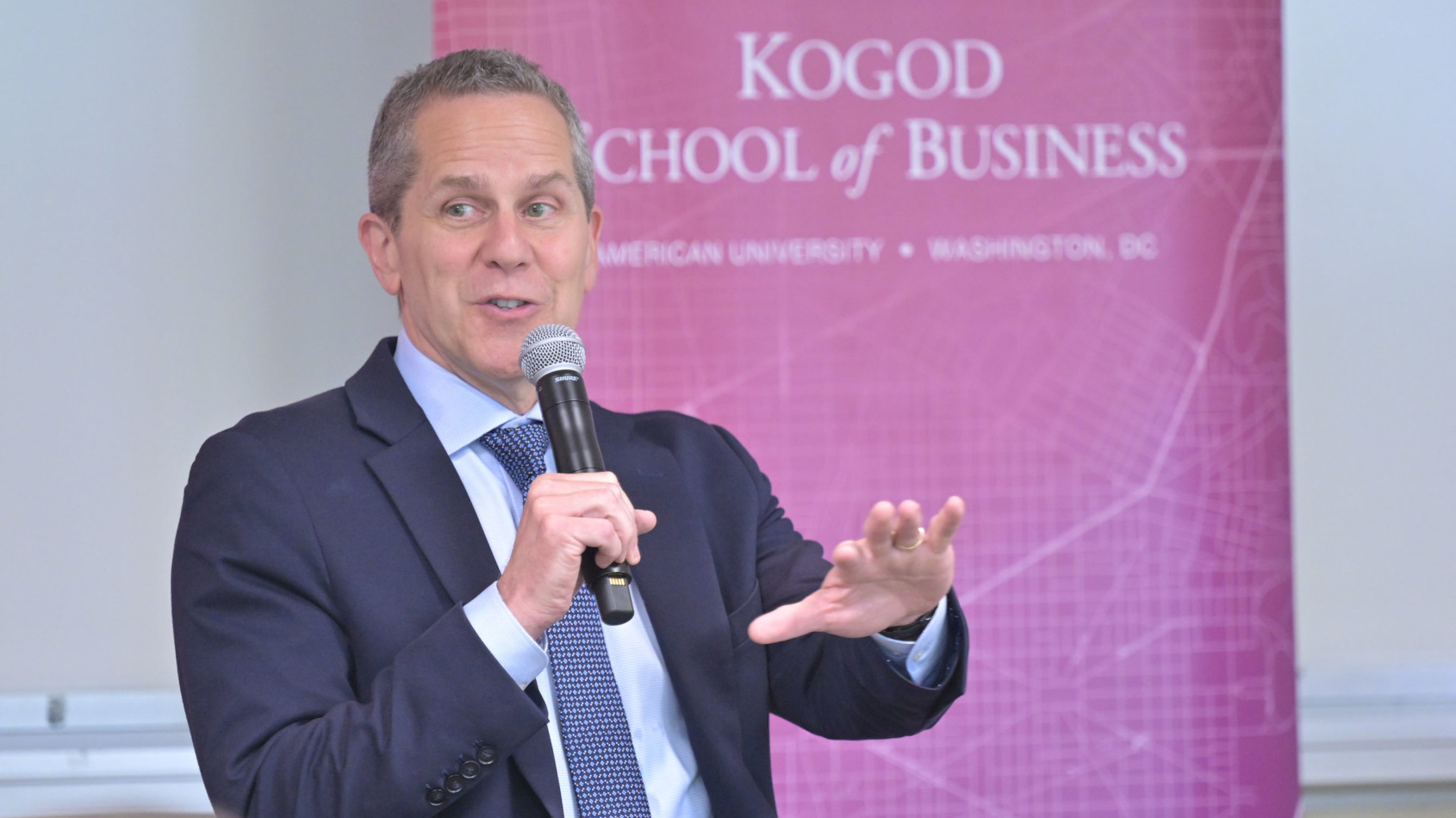
Federal Reserve Governor Michael Barr delivered remarks on supervision and regulation Saturday at American University in Washington, D.C. Photo courtesy of the Fed.
By subscribing, you agree to receive communications from Auto Remarketing and our partners in accordance with our Privacy Policy. We may share your information with select partners and sponsors who may contact you about their products and services. You may unsubscribe at any time.
Federal Reserve Governor Michael Barr spent a portion of his most recent Saturday at American University in Washington, D.C., outlining how ongoing deregulation in banking and other parts of financial services is creating numerous potential problems for consumers and credit providers.
Barr closed his remarks with a warning, saying, “And when the bill comes due, we will all pay the price.”
What’s creating this ominous bill? Barr shared some specific figures associated with capital requirements of banks. But first, he reflected on history, touching on events such as the Great Depression and the Great Recession.
“Considerable, sometimes bitter, experience has shown that the safety and soundness of banks is crucial to the jobs, financial security, and hopes and dreams of everyone in America. Deregulation can provide a short-term sugar high in the economy, but it can also lead to long-term costs for society,” Barr said in his prepared remarks.
“Achieving appropriate bank regulation and supervision is a balancing act,” he continued. “Banks need room to grow so that their lending can support innovation and aspiration throughout the economy. At the same time, long experience has shown that without proper safeguards, banks striving to innovate in pursuit of higher profits may take excessive risks.
“When banks get in trouble, their downfall threatens businesses and households, putting the viability of communities, and sometimes even the entire economy, at risk. That is the legacy of the Great Depression, the savings and loan crisis of the 1980s, and the Global Financial Crisis that occurred nearly 20 years ago. Though it can feel like these events are in the distant past, it is important to remember the damage they did to the economy and the pain that they caused, shattering the lives of millions of people,” Barr added.
Subscribe to Auto Remarketing to stay informed and stay ahead.
By subscribing, you agree to receive communications from Auto Remarketing and our partners in accordance with our Privacy Policy. We may share your information with select partners and sponsors who may contact you about their products and services. You may unsubscribe at any time.
Barr pointed out that over the past year and a half, the Federal Reserve, along with the other federal banking regulatory agencies, lowered capital requirements through a series of regulatory proposals. He said he dissented from each of the decisions that apply to large banks.
Barr indicated deregulatory proposals have reduced the amount of capital required for the largest banks by 6%. He also noted policymakers reduced the G-SIB (Global Systemically Important Bank) surcharge, which is an additional capital buffer the Federal Reserve requires the largest, most complex banks to hold above standard minimums. It reduces the risk of failure and limits systemic economic damage.
“This matters because these eight G-SIB firms play a dominant role in the banking system, holding around 60% of banking sector assets. A 6% reduction may not sound like a lot, but it is significant. It translates to $60 billion less in capital to protect against bank failure and instability that could spread through the financial system,” Barr said.
“Our capital standards are already near the low end of the range of optimal levels estimated by academic research; that is, the levels that strike the best balance between growth and safeguards,” he continued. “It is also important to note that when we deviate from internationally agreed-upon accords, we set a bad example for other governments that I fear could lead to a ‘race to the bottom’ for capital requirements across jurisdictions.
“The result of these reductions in capital standards is that the global financial system becomes more vulnerable. This is a channel of risk that can come back to threaten U.S. financial stability,” Barr went on to say.
Barr then turned to other regulatory elements, including the vast reduction of the Consumer Financial Protection Bureau.
“On top of these reductions in capital rules, liquidity requirements, and supervisory practices, we also have seen declines in consumer protection,” he said. “Financial consumer protection regulations and supervision have been scaled back by the Consumer Financial Protection Bureau. Weakening protections against fraud, excessive fees, predatory lending, and unfair or discriminatory financial practices risks conditions that are harmful to consumers and sometimes can even destabilize the economy. It was exactly these conditions of lax consumer protections that were allowed to fester in the years before the global financial crisis and then did devastating damage. We risk making that mistake again.
“Taken together, the regulatory and supervisory changes recently enacted or proposed represent the most significant deregulation of the banking system since the global financial crisis. They tip the imperative balance that must be maintained between openness to innovation, on the one hand, and safety and soundness, on the other, in a way that will increase the risks of financial instability. I have voted against these changes, and I feel it is also my duty to continue to speak about them and explain that the costs they impose, in the form of risk, greatly outweigh the promised benefits of a lighter regulatory burden,” Barr went on to say.
Is Barr raising legitimate concerns? Or is it the cliché of yelling that there’s a fire in a packed movie theater?
“So, to sum up, while I agree with the objective of ensuring the banking sector can support the economy, I don’t agree with the remedy: reducing bank capital. We have seen again and again that capital is crucial to long-term financial stability and thus economic growth,” Barr said.
“We’re now in a risk-on environment with a booming stock market, robust bank profits, and a deregulatory mindset. The bank deregulation undertaken so far, and the plans for more to come, is ultimately going to make our financial system less robust. And when the bill comes due, we will all pay the price,” he went on to say.