Strong expectations for unchanged rates even with new Fed chair in place
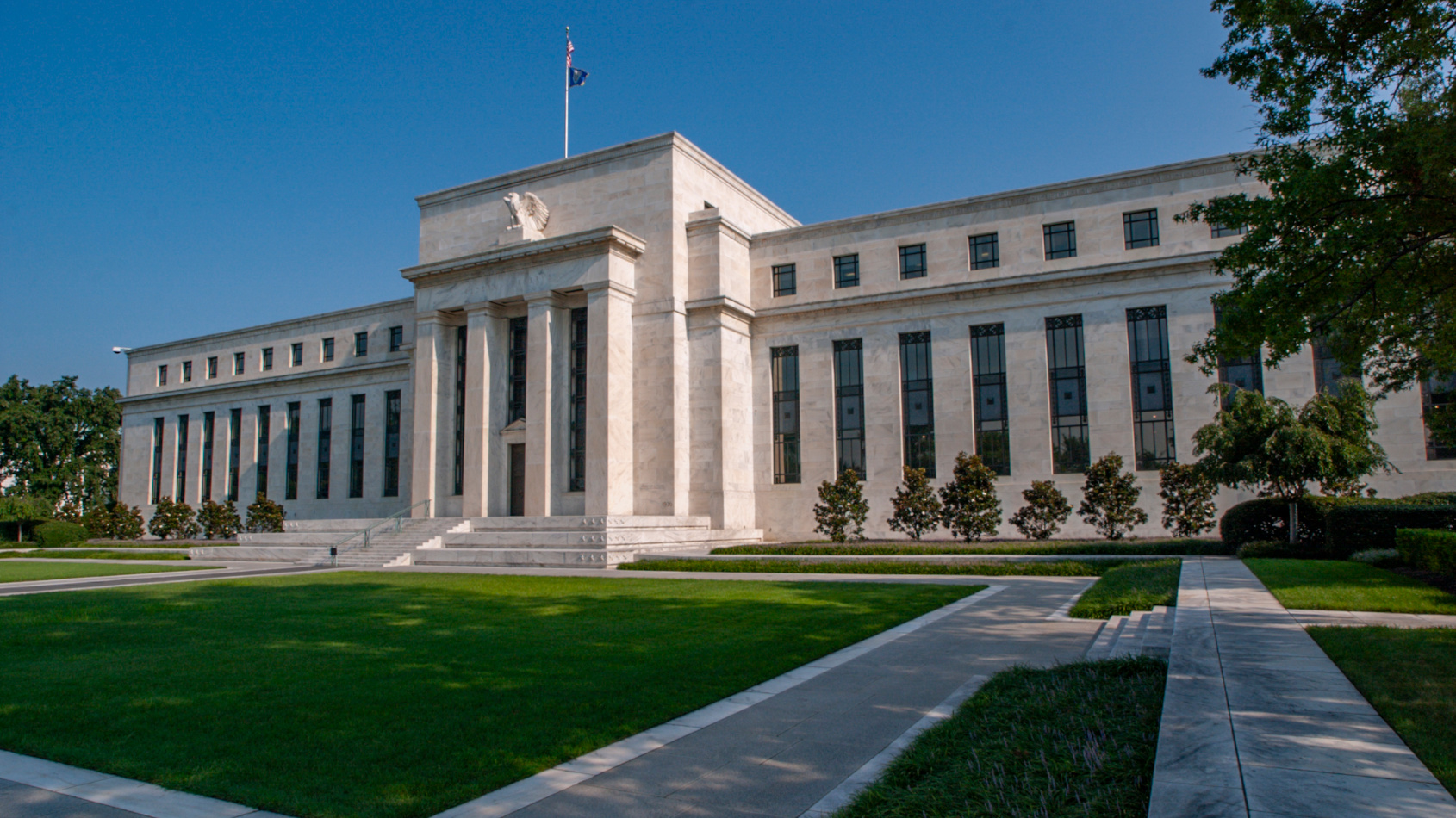
The Marriner S. Eccles Federal Reserve Board Building in Washington, D.C., houses the main offices of the Board of Governors of the United States' Federal Reserve System. Image courtesy of the Fed.
By subscribing, you agree to receive communications from Auto Remarketing and our partners in accordance with our Privacy Policy. We may share your information with select partners and sponsors who may contact you about their products and services. You may unsubscribe at any time.
This week’s gathering of the Federal Open Market Committee (FOMC) is the first one with Kevin Warsh as chair of the Federal Reserve.
But experts — and even one of the FOMC members — aren’t expecting any changes to interest rates.
Comerica Bank chief U.S. economist Bill Adams predicted on Monday that the Federal Reserve is expected to hold the federal funds target steady at a range of 3.50% to 3.75% at the conclusion of policymakers’ gathering on Wednesday.
“Their policy statement will welcome the pickup in job growth so far this year,” Adams said. “Payrolls averaged a gain of over 100,000 per month through May, up from 10,000 per month in 2025. The statement also will acknowledge that inflation has risen further from their 2% target due to energy prices.
“On core inflation, they will likely be encouraged by cool core goods prices in recent reports, but concerned by the pickup of services price inflation excluding housing,” he continued. “In the June Dot Plot, the median forecast for inflation at year-end will likely rise, while the unemployment rate estimate should edge lower.
“On rates, a few more Dots on the Plot are likely to indicate members see a hike as likelier than a cut by the end of 2027. Even so, the June meeting’s core message will likely be that the Fed expects to hold rates steady at the next few decisions,” Adams went on to say.
Subscribe to Auto Remarketing to stay informed and stay ahead.
By subscribing, you agree to receive communications from Auto Remarketing and our partners in accordance with our Privacy Policy. We may share your information with select partners and sponsors who may contact you about their products and services. You may unsubscribe at any time.
Fed Governor Lisa Cook also shared her intentions during a public appearance at the Stanford Institute for Economic Policy Research at Stanford University in Stanford, Calif.
“I see elevated risks to both sides of our mandate, and from a risk-management perspective, I currently believe that the right course of action is to hold rates steady,” Cook told the assembly right after Memorial Day.
“However, I want to be clear about my risk assessment: The risks remain tilted toward higher inflation. In my baseline forecast, disinflation should resume in upcoming months without having to raise rates. Similarly, I expect the labor market will remain stable without having to lower rates,” Cook said.
Dealers likely aren’t watching Dot Plots or other broad economic maps policymakers are examining this week. They want to see used and new vehicles being financed and delivered as well as service bays fulfilling profitable repair orders.
“For dealers, the takeaway heading into summer is that inflation is now firmly in the rate conversation,” Cox Automotive chief economist Jeremy Robb wrote in his weekly analysis. “The Fed retains room to wait, but the diesel passthrough, elevated inflation expectations, and a consumer increasingly reliant on credit all argue against near-term relief on financing costs.
“Until energy prices normalize, the Fed will be in a tight spot. The first Warsh-led Fed meeting is later this week. It will be important to hear what the discussions are in the room to gain clues on the path of interest rate policy for the remainder of 2026,” Robb went on to say.