Dealers already wary about interest-rate impact watch Fed pass on chance for adjustment
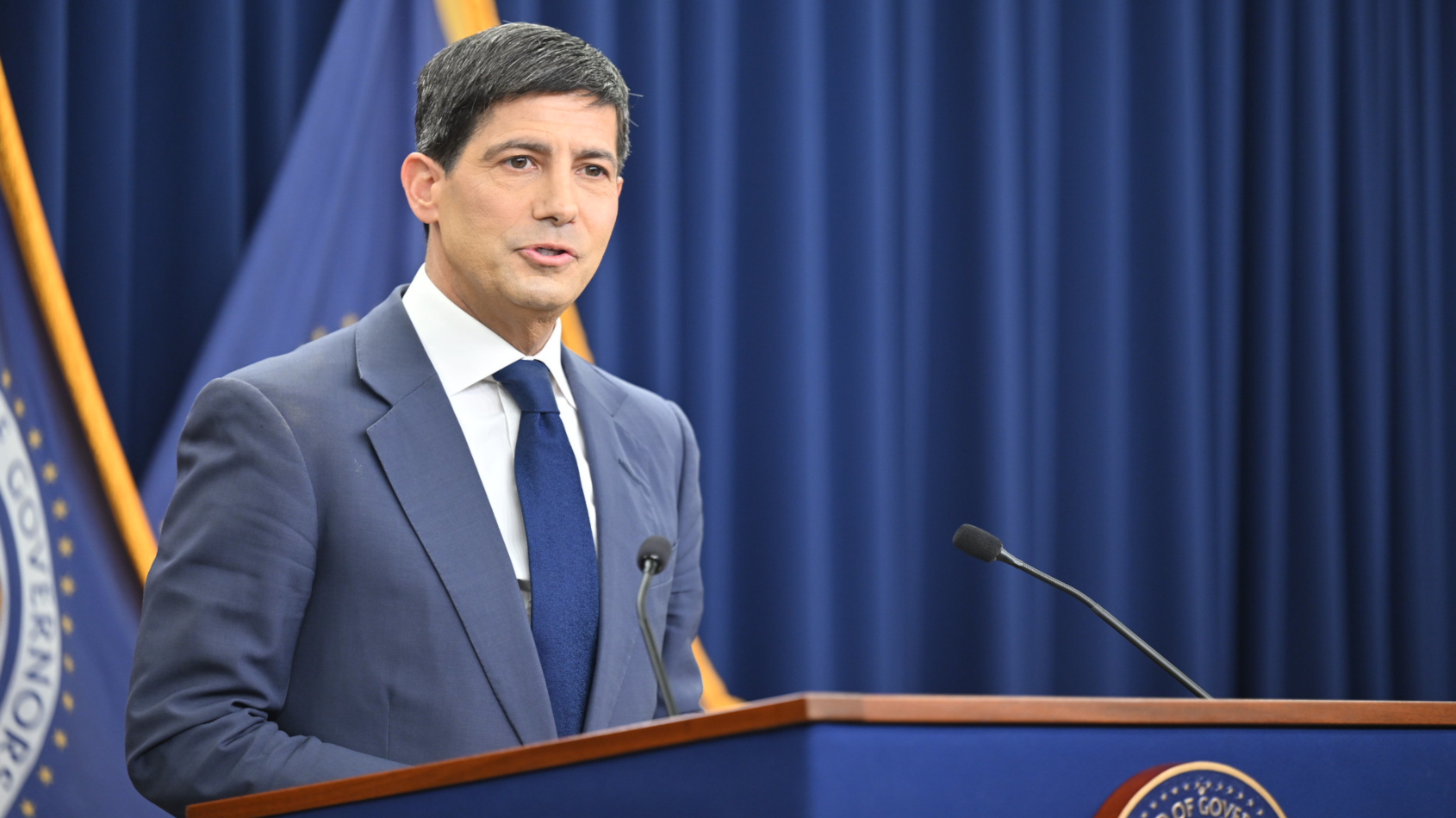
Kevin Warsh makes his first press conference appearance as Federal Reserve chair following a meeting of the Federal Open Market Committee (FOMC) in Washington, D.C. Photo courtesy of the Fed.
By subscribing, you agree to receive communications from Auto Remarketing and our partners in accordance with our Privacy Policy. We may share your information with select partners and sponsors who may contact you about their products and services. You may unsubscribe at any time.
The Q2 2026 Cox Automotive Dealer Sentiment Index (CADSI) released just after Memorial Day showed operators’ outlook weakened sharply with economic conditions remaining the primary concern.
And perhaps that concern intensified on Wednesday when the Federal Reserve voted unanimously to keep interest rates unchanged.
An independent dealer in the South told Cox Automotive this spring, “Interest rates holding buyers back, tariff uncertainty making people hesitate, but summer selling season usually picks up in May/June. Balance of pressure and demand keeps market average, rather than strong or weak. Political noise is hurting consumer confidence though.”
Another independent dealer in the Midwest added, “Economic uncertainty, interest rates still high, ability to get credit still hard for non-excellent credit, fuel costs, higher household costs overall. It all impacts our profits.”
The CADSI indicated dealer expectations for the next three months declined to 47 from 56 in Q1, falling below the positive threshold. Cox Automotive said both franchised and independent dealers reported declines, with independent dealers seeing a more pronounced drop.
“While significant, the pullback was seasonally normal and follows the typical Q1 ‘spring bounce.’ It also reflects increasing concern about inflation, economic conditions and softening consumer demand,” Cox Automotive said in its analysis that accompanied the CADSI.
Subscribe to Auto Remarketing to stay informed and stay ahead.
By subscribing, you agree to receive communications from Auto Remarketing and our partners in accordance with our Privacy Policy. We may share your information with select partners and sponsors who may contact you about their products and services. You may unsubscribe at any time.
The car business is perhaps just one of the segments considered by the Federal Open Market Committee (FOMC) led by new Fed chair Kevin Warsh, who acknowledged one of the primary headwinds impacting dealerships and their customers.
“We recognize that inflation has been running well ahead of the Fed’s long-stated inflation goal of 2 percent that’s been going on for more than five years,” Warsh said in opening remarks of a press conference on Wednesday in Washington, D.C. “Persistently high prices are a burden for the American people.
“But the recent past need not be prologue,” Warsh continued. “I am pleased to report that members of the FOMC are unambiguous and unanimous: This committee will deliver price stability.”
So, how might the Fed achieve that goal with Warsh now in charge? He explained an initial move on Wednesday.
“I am appointing a task force in each of five areas that are central to the broad conduct of monetary policy: First, Fed communications; second, the Fed’s balance sheet policy; third, our use and reliance on existing data sources; fourth, productivity and jobs in an era of transformation; and last, the Fed’s inflation frameworks,” he said.
“These subjects are timely, consequential, and in my view worthy of a fresh look. My colleagues and I discussed them with energy and purpose over the last couple of days,” Warsh continued. “For each of these independent task forces, I am enlisting some of the very best minds — both inside and outside the economics profession. They will be supported by subject-matter specialists from our superb Fed staff.
“And they will have a straightforward charge: start with first principles; ask hard questions; examine current practice; consider alternatives; and, ultimately, propose next steps for policymaker consideration,” he went on to say.
While dealers might think that course of action might be all well and good, operators still have inventory to turn. In what he termed, “the bottom line,” in another analysis posted on Tuesday before the Fed announced its decision, Cox Automotive chief economist Jeremy Robb didn’t describe a scenario where policymakers would swiftly reduce the federal funds rate from its current range of 3.50% to 3.75%.
“Chairman Warsh and the broader FOMC are unlikely to find a clear path to cutting interest rates in the near term. Warsh has indicated he welcomes dissent and open debate within the committee, but every voting FOMC member holds exactly one vote, and moving policy in either direction requires building genuine consensus across a diverse set of views,” Robb wrote.
“With inflation running hot, labor markets healthy, and financial conditions accommodative, the current data do not offer the committee a compelling collective case for easing. The futures market currently implies a greater probability of a rate increase than a cut as we move into the second half of 2026 and beyond,” he continued.
“While many consumers and businesses would benefit meaningfully from lower financing costs, there is simply too much underlying strength in the economy — and too much inflation still in the pipeline — for a rate cut to be appropriate. An easing move at this stage would risk accelerating the very inflationary trends the Fed is working to contain,” Robb went on to say.
Let’s round out this report with perhaps some cautious optimism.
U.S. consumers are still spending, but inflation pressure is eroding real income growth and narrowing the cushion behind consumption, according to a new Fitch Ratings report released on Thursday.
Fitch said that lower oil prices could ease the squeeze if sustained, while stable labor market conditions and solid balance sheets should keep the slowdown contained but uneven through the second half of this year.
“Consumption is not rolling over, but real income support has weakened as inflation has picked up again,” said Olu Sonola, head of U.S. economics at Fitch Ratings. “Household balance sheets remain solid, but lower saving buffers mean spending growth is likely to become more uneven.”