COMMENTARY: Don’t use general compliance information for a unique, specific situation
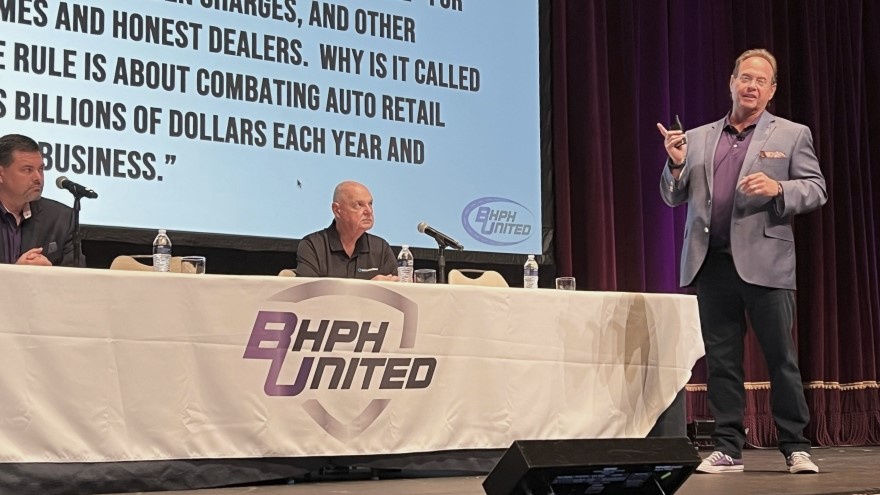
Steve Levine (right) gives dealers a scare in his session with dealers Mike Downey (left) and Stan Heintz about the FTC's proposed CARS Rule during the 2024 BHPH United Summit in Las Vegas. Photo by Andrew Friedlander.
By subscribing, you agree to receive communications from Auto Remarketing and our partners in accordance with our Privacy Policy. We may share your information with select partners and sponsors who may contact you about their products and services. You may unsubscribe at any time.
During last week’s NIADA Convention, I presented a session on Fair Lending, the FTC’s Advertised Price Guidance, and other issues. At the beginning of my session, I included a slide stating that it is an important disclaimer, advising the audience that my presentation is not meant to be legal advice and that the information provided is general in nature. Nearly every legal or compliance presentation includes a similar slide whose purpose is to advise the audience of the limitations of what they are about to hear.
During the discussion of the FTC’s new guidance on advertised price, one dealer began asking very detailed questions about their specific situation. I attempted to provide a general answer but explained that the dealer’s situation was somewhat unique. I noted that our time was limited and encouraged the dealer to reach out to discuss the particulars in more detail. Undeterred, this dealer asked a follow up question with even more unique facts. Again, I explained that time limits and my lack of familiarity with their business made a more detailed answer impossible.
Be careful how information is applied
I wonder how often someone hears general information at a conference and decides to apply it to their specific business situation, disclaimer slides be damned. The same applies to articles in industry publications and opinions expressed in dealer chat rooms. Don’t even get me started on the dangers AI presents.
I read a great article recently by a lawyer I respect and his take is that businesses are using artificial intelligence to replace lawyer relationships. That’s a pretty perilous strategy. Remember, folks: AI responds only to the question being asked, which may or may not be accurate or complete.
It isn’t thinking critically, it isn’t applying years of experience with a particular business, and it definitely isn’t considering the host of other variables that may influence a lawyer’s guidance.
You get what you pay for
The saying “you get what you pay for” seems applicable here. General guidance may be a great start, but I wouldn’t make decisions based on these free resources without conducting more due diligence. There’s a reason that good advice costs money.
Subscribe to Auto Remarketing to stay informed and stay ahead.
By subscribing, you agree to receive communications from Auto Remarketing and our partners in accordance with our Privacy Policy. We may share your information with select partners and sponsors who may contact you about their products and services. You may unsubscribe at any time.
Don’t “bet the business” on AI and other free sources of information. Reach out to Ignite and let’s ensure your business is protected.
Steve Levine is an auto finance lawyer with over 30 years of experience protecting car dealers and finance companies. He is the Owner of Ignite Dealer Compliance Group, which offers guidance on compliance, operations and best practices. He can be reached at [email protected]. He has authored two books on auto finance sales and compliance; Winning the Fight: A Guide to Protect Car Dealers, and Counterpunch: Compliance Strategies for Car Dealers. Both are available on Amazon. Please follow Steve on Twitter @LawyerLevine for compliance and industry related content.