Gas prices & inflation continue to drag on the car business
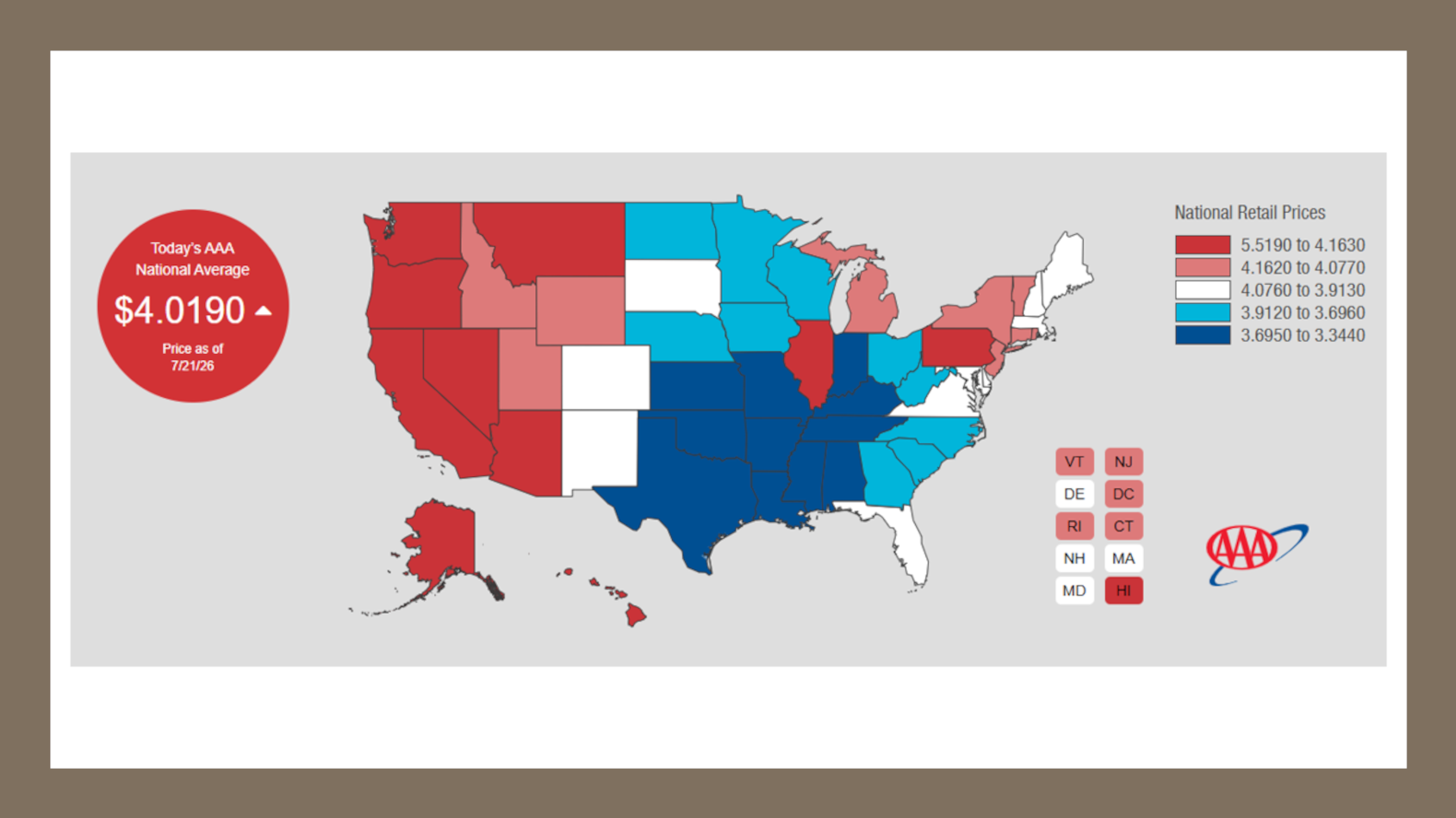
Screenshot courtesy of AAA.
By subscribing, you agree to receive communications from Auto Remarketing and our partners in accordance with our Privacy Policy. We may share your information with select partners and sponsors who may contact you about their products and services. You may unsubscribe at any time.
A drag on the car business and overall economy is intensifying again.
AAA reported Tuesday that the average price of a gallon of gasoline in the U.S. ticked above $4, rising 15 cents in the past week.
“With renewed hostilities in the Middle East, gas prices are climbing again and treasury yields moved higher, though a pullback in technology stocks reversed some of that move,” Cox Automotive chief economist Jeremy Robb wrote in an analysis on Monday.
“During testimony on the Hill, Fed chairman (Kevin) Warsh reaffirmed his commitment to taming inflation, which has acted as an unwelcome tax on consumers for the last several years,” Robb continued.
Inflation, which is surfacing in part via fuel costs, also was mentioned by America’s Car-Mart chief operating officer Jamie Fischer when the buy-here, pay-here dealership network detailed results from its 2026 fiscal year.
“History tells us that when money gets tight for our customers, affordable and reliable transportation becomes more essential, not less,” Fischer said. “The escalation of conflict involving Iran drove pump prices to multi-year highs and put real pressure on exactly the working households we serve.”
Subscribe to Auto Remarketing to stay informed and stay ahead.
By subscribing, you agree to receive communications from Auto Remarketing and our partners in accordance with our Privacy Policy. We may share your information with select partners and sponsors who may contact you about their products and services. You may unsubscribe at any time.
The Federal Reserve seems to be keenly aware of the situation Fischer noted. Governor Lisa Scott shared her latest economic outlook during a public appearance last week at the Exchequer Club of Washington D.C.
“The initial assessment is easy: inflation is simply too high,” Cook said. “The current rate of annual inflation is near the highest since 2023. Last summer, it was reasonable to expect inflation to return to a downward path after one-time price increases from the tariffs. And, indeed, tariff-related price increases do appear to be mostly behind us, and yet inflation has moved higher.
Cook pointed out that headline inflation is on track so far this year to come in about 1 percentage point higher than what was expected a year ago.
Cook later said, “recent big supply shocks — tariffs and the Middle East conflict — risk leading to persistently higher inflation. Under normal conditions, economists would expect these shocks to have only one-time effects. But keep in mind that these shocks come as inflation has been elevated relative to our target for five years.
“Firms’ pricing and wage decisions may depend more on what inflation has been rather than its source, implying a risk that the high inflation we have seen boosts inflation going forward. Nevertheless, I am comforted that medium- and long-run inflation expectations appear mostly anchored,” she went on to say.
Robb tried to use another trend to project what’s next from policymakers. He said Fed funds futures now assign a 49% probability of an interest-rate increase by September. That expectation is up from 44% a month ago.
“The June FOMC minutes revealed a committee that has moved away from an easing bias and unified around a hawkish hold at this time,” Robb said in an earlier analysis. “The 12–0 vote to maintain the target range for rates marked a sharp contrast to April’s four dissents, but the committee implicitly showed their focus on taming inflation with the statement’s new closing line: ‘The Committee will deliver price stability.’”