Connecting auto finance, risk management & interest rates ahead of Fed’s last policy meeting of year
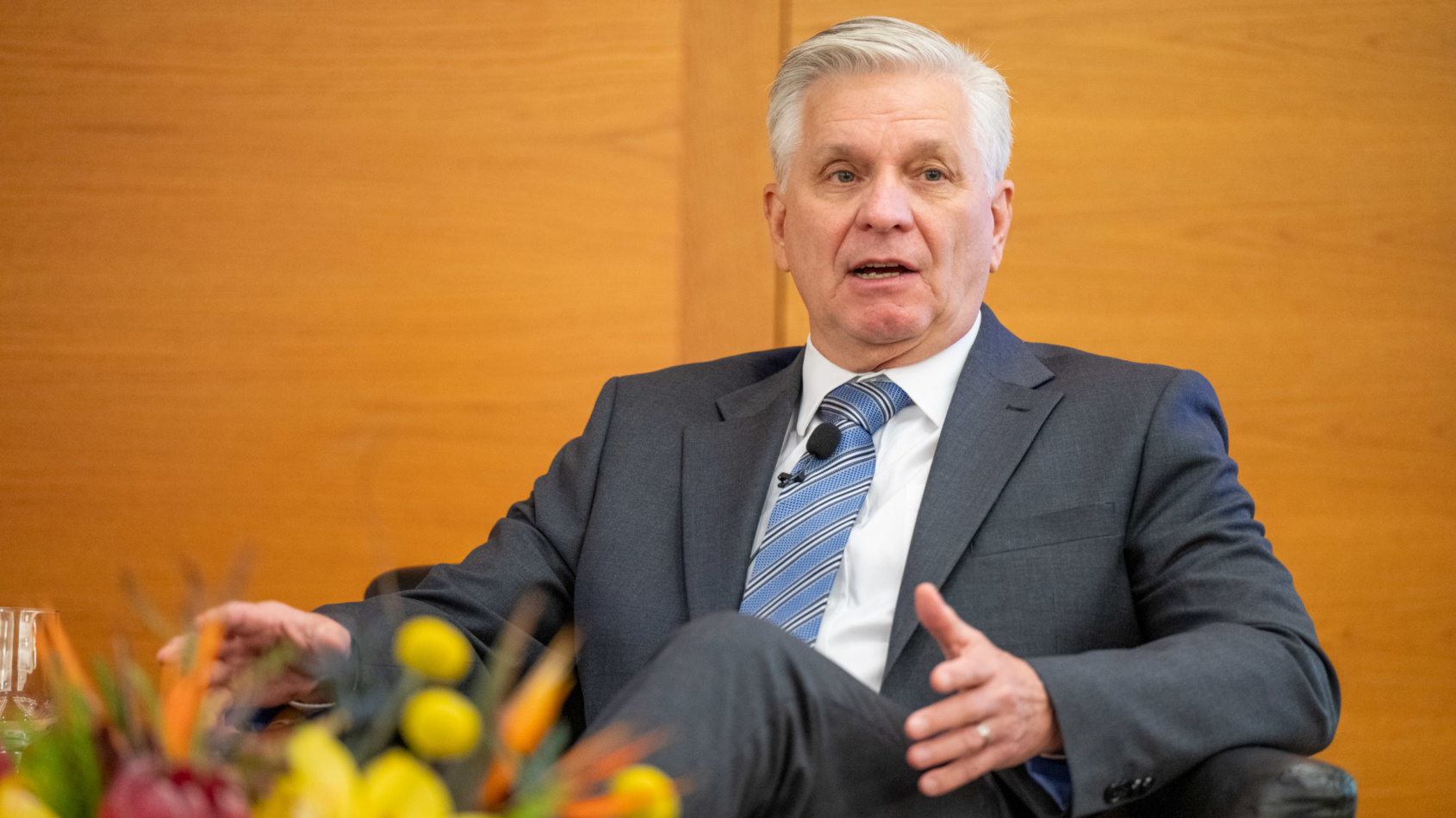
Governor Christopher Waller is pictured during a fireside chat at the ninth annual Fintech Conference hosted by the Federal Reserve Bank of Philadelphia on Nov. 12. Image courtesy of the Federal Reserve.
By subscribing, you agree to receive communications from Auto Remarketing and our partners in accordance with our Privacy Policy. We may share your information with select partners and sponsors who may contact you about their products and services. You may unsubscribe at any time.
The Federal Reserve will make its final decision about interest rates this year on Wednesday. And at least one member of the Federal Open Market Committee (FOMC) appears to be looking at auto finance when considering another rate cut.
At the Society of Professional Economists Annual Dinner last month in London, Fed Governor Christopher Waller connected decreasing rates to risk management, using auto financing in his reasoning to push rates lower, when the federal funds rate is already below 4% for the first time in three years.
Waller told the attendees, “Risk management, in fact, provides some practical guidance in dealing with two questions that seem to have flummoxed some people: Is the job-creation slowdown in the U.S. this year mostly supply or demand related, and how should monetary policy respond?”
After acknowledging the federal government’s shutdown stalled the arrival of important data associated with labor, inflation and more, Waller pointed to auto finance as another reason why the Fed should cut rates again this week.
“Turning to auto loan growth, it has been relatively weak this year, likely reflecting a combination of weak demand from households and pressures in car affordability,” Waller said. “To a greater extent than housing, the cost of purchasing an auto mostly reflects the price, but interest rates play a factor in the monthly payment. Auto loan rates continue to be elevated relative to their average in the years before the pandemic.
“For example, in 2019, the average five-year loan carried a 5.3 percent interest rate, whereas the average is now 7.6 percent. Reflecting the combination of higher auto prices and interest rate expenses, the weeks of median income needed to purchase an average new vehicle remains elevated, rising from 32.8 weeks in November 2019 to 37.4 weeks in September this year,” he continued.
Subscribe to Auto Remarketing to stay informed and stay ahead.
By subscribing, you agree to receive communications from Auto Remarketing and our partners in accordance with our Privacy Policy. We may share your information with select partners and sponsors who may contact you about their products and services. You may unsubscribe at any time.
“To sum up, I consider the costs of housing and autos to be an ongoing challenge for consumers, especially lower- and middle-income consumers. This is likely weighing on spending growth and would become a more acute problem if the labor market continues to weaken,” Waller went on to say.
On Monday, Comerica Bank chief economist Bill Adams and senior economist Waran Bhahirethan predicted the FOMC will cut the federal funds target a quarter of a percentage point to a range of 3.50% and 3.75%.
“Several FOMC members will likely dissent again,” Adams and Bhahirethan wrote in an analysis. “The Fed will likely be tight-lipped about the outlook for rates in 2026 given conflicting views among FOMC members. The FOMC probably will signal measures to support short-term funding markets after signs of tight liquidity in them in recent months.
Cox Automotive interim chief economist Jeremy Robb offered a similar prediction on Monday.
“The market is betting on a quarter-point rate cut, but with growing debate across the Fed governors, anything can happen,” Robb wrote in a blog post. “One more rate cut could prove pivotal in moving mortgage rates lower still, and we are just starting to see lower interest rates for auto loans. The Fed faces a tough decision, knowing we will see more data shortly. But small rises in unemployment might be enough to tilt the dissenters.”