Fed keeps interest rates unchanged even in ‘challenging environment’ for automotive
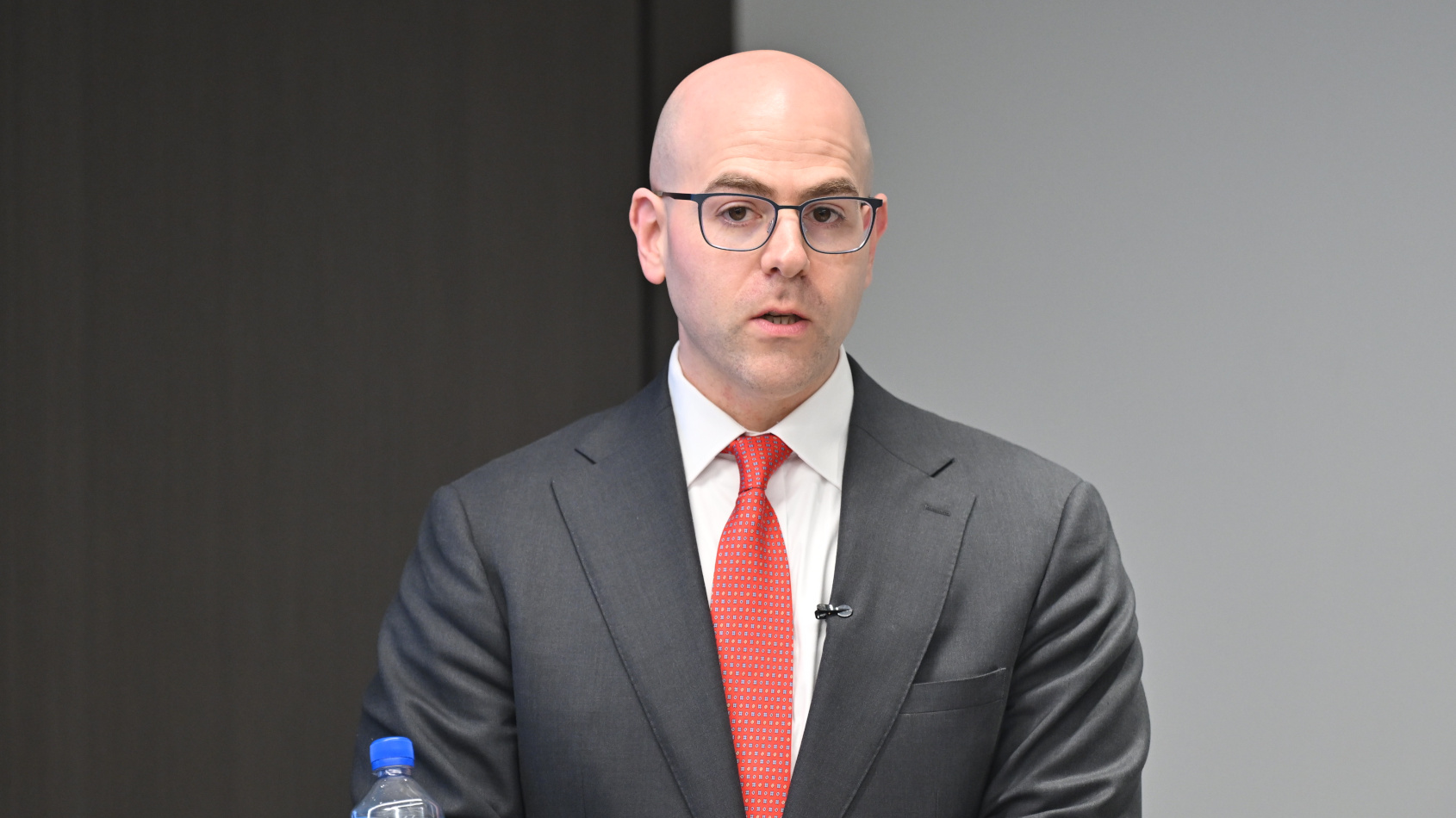
Federal Reserve Governor Stephen Miran, pictured here while giving a speech at Bank Policy Institute in Washington, D.C., on Nov. 19, was one of two members of the Federal Open Market Committee who wanted to cut interest rates this week. Photo courtesy of the Fed.
By subscribing, you agree to receive communications from Auto Remarketing and our partners in accordance with our Privacy Policy. We may share your information with select partners and sponsors who may contact you about their products and services. You may unsubscribe at any time.
Two outspoken members of the Federal Open Market Committee (FOMC) — Stephen Miran and Christopher Waller — wanted their fellow Federal Reserve policymakers to lower the federal funds rate by 25 basis points. But the other 10 members chose to keep the federal funds rate at a range of 3.5% to 3.75% when they announced their decision on Wednesday.
It’s a decision that experts see as further complicating the situation for automotive and other parts of the economy.
Federal Reserve chair Jerome Powell reiterated after the Fed hosted its first policy meeting of the year, “We are well positioned to determine the extent and timing of additional adjustments to our policy rate based on the incoming data, the evolving outlook, and the balance of risks.
“Monetary policy is not on a preset course, and we will make our decisions on a meeting-by-meeting basis,” Powell continued.
The Fed has its next meeting to decide interest rates on March 17-18. Until then, dealers and lenders will be looking to sell vehicles and book contracts in an environment when used-car retail prices might be as low as they get in 2026.
In an analysis posted on Monday, Cox Automotive interim chief economist Jeremy Robb offered an explanation through the prism of the car business that might explain why the Fed first rate decision of the year wasn’t unanimous.
Subscribe to Auto Remarketing to stay informed and stay ahead.
By subscribing, you agree to receive communications from Auto Remarketing and our partners in accordance with our Privacy Policy. We may share your information with select partners and sponsors who may contact you about their products and services. You may unsubscribe at any time.
“The inflation picture presents a mixed signal for Fed policy,” Robb wrote on Monday. “The Personal Consumption Expenditures (PCE) deflator rose 2.8% year-over-year through November, running slightly hotter than mid-year levels and remaining above the Fed’s 2% target. This persistent elevation in the Fed’s preferred inflation gauge complicates the path forward for rate cuts, as policymakers balance more robust economic growth against stubborn inflation, while we experience a slowing rate of job creation.
“For automotive markets, the combination of robust GDP growth and higher-for-longer rates creates a challenging environment: income growth rates are slowing, as ever-present inflation erodes buying power, while interest rates stay higher than many consumers — and dealers — would like,” he continued.
Comerica Bank chief economist Bill Adams and senior economist Waran Bhahirethan accurately predicted on Monday that the Fed would leave interest rates unchanged.
“Inflation likely closed 2025 above target for the fifth straight year, and the modest growth of payrolls in November and December was still enough to make October’s contraction look like a one-off. These data give the Fed breathing room to wait for tariff-driven inflation to dissipate before considering further rate cuts,” Adams and Bhahirethan wrote on Monday in conjunction with their decision forecast.
“The Fed is expecting the tax cuts and spending increases in last July 4th’s fiscal bill to boost economic activity and hiring this year, another reason to hold off on further cuts,” the bank experts added.
Adams and Bhahirethan also touched on the dialogue within the FOMC as well as the ongoing turmoil between the Fed and the White House about how to approach future rate decisions.
“Markets will listen carefully to chair Powell’s comments on the Fed’s independence at the post-meeting press conference, given the White House’s increasing pressure on the Fed to cut. If anything, the pressure campaign raises the bar for the Fed to cut near-term,” Adams and Bhahirethan said. “The Fed’s policymakers see the credibility of their independence as essential if they want the public to expect inflation to meet their target in the long run, since expectations are largely self-fulfilling.
“The Fed was already managing a trade-off between supporting the job market and tamping down inflation before this pressure campaign intensified. Now the tradeoff is even more complicated: Yes, balancing the near-term outlook for the job market and inflation, but also convincing the public that they remain independent and their commitment to the inflation target is credible,” Adams and Bhahirethan went on to say.
During the meeting, the FOMC also reaffirmed its longer-run goals and monetary policy strategy first adopted in 2012.
“The Federal Open Market Committee (FOMC) is firmly committed to fulfilling its statutory mandate from Congress of promoting maximum employment, stable prices, and moderate long-term interest rates,” policymakers said in a statement. “The committee seeks to explain its monetary policy decisions to the public as clearly as possible. Such clarity facilitates well-informed decision making by households and businesses, reduces economic and financial uncertainty, increases the effectiveness of monetary policy, and enhances transparency and accountability, which are essential in a democratic society.”