AutoTrader set to launch ‘transformational’ new platform powered by AI demand infrastructure
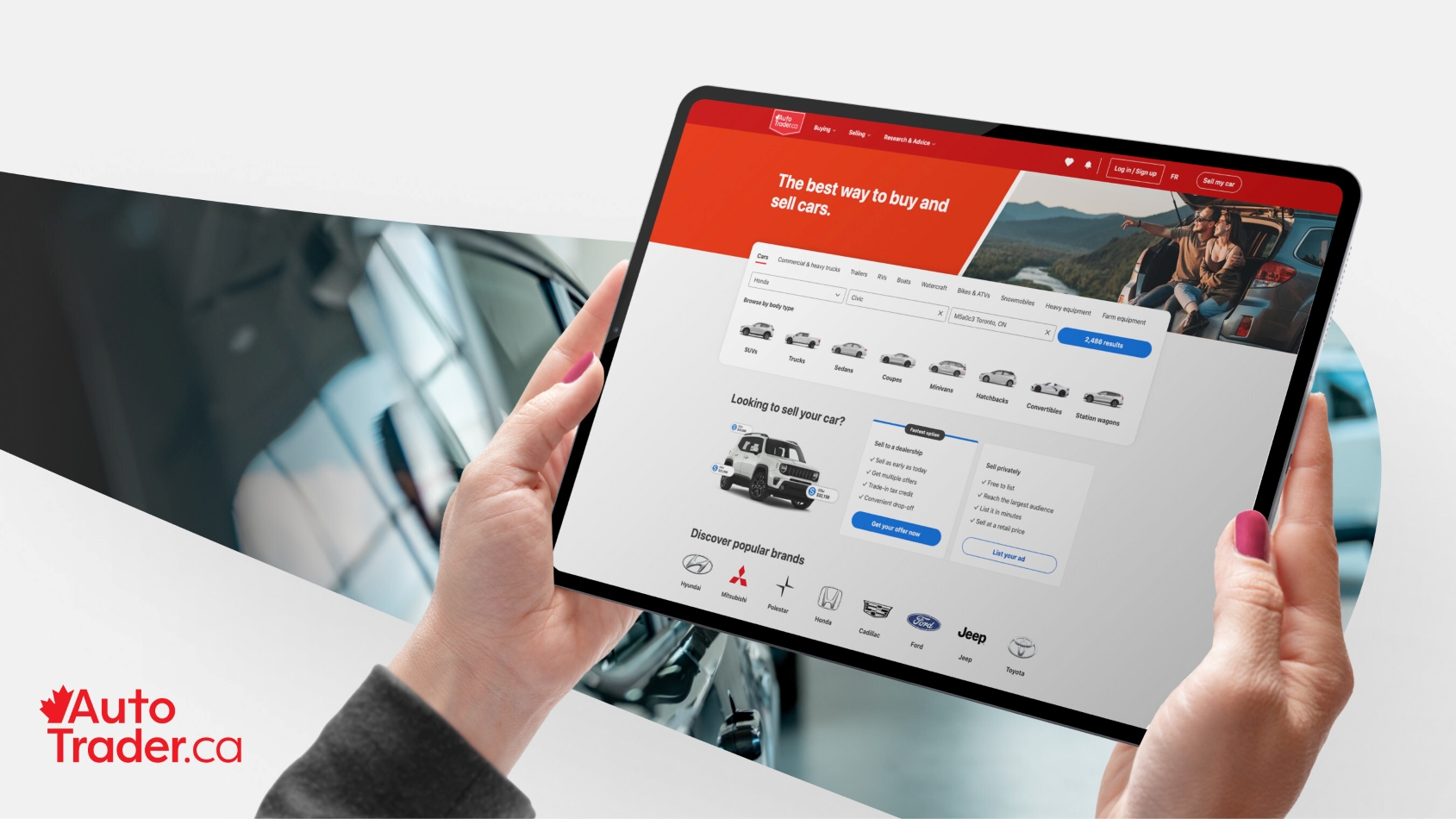
Image courtesy of AutoTrader.
By subscribing, you agree to receive communications from Auto Remarketing and our partners in accordance with our Privacy Policy. We may share your information with select partners and sponsors who may contact you about their products and services. You may unsubscribe at any time.
Jody Gill wants to be absolutely clear about one thing.
AutoTrader’s new platform is not just an upgraded version of its predecessor. It’s not a refinement or a tweak.
“It’s transformational,” said Gill, AutoTrader’s chief sales officer. “We’ve put more than 48,000 hours of into this, in terms of human resources, in collaboration with dealerships across Canada. We’ve got more than 300 engineers working through this. We’ve got hundreds of product people working through this.
“It’s been a very collaborative effort, not only with our customers and consumers, but internally with all of our teams as well. Because it is transformational, not just a cosmetic update.”
The Canadian online vehicle marketplace announced it has begun to launch “the next evolution” of its platform, featuring artificial intelligence, a “more intuitive, forward-looking car shopping experience” and an expanded suite of dealer tools, and designed to align with how dealers operate in an increasingly data-led and demand-driven market based on how Canadians shop for vehicles.
Gill said AutoTrader has a finger on the pulse of the market thanks to a full year of testing the technology and collecting feedback from consumers and dealer partners on its vision of a new marketplace.
Subscribe to Auto Remarketing to stay informed and stay ahead.
By subscribing, you agree to receive communications from Auto Remarketing and our partners in accordance with our Privacy Policy. We may share your information with select partners and sponsors who may contact you about their products and services. You may unsubscribe at any time.
“What we found was that AI is reshaping how Canadians shop for vehicles,” he said, “and we wanted to be at the forefront in terms of the next generation of the platform. It was really built to reflect how buyers actually search and how dealers actually operate.
“So, let’s take Netflix as an example. I go into Netflix and based on my history, it will recommend shows for me. Now think about car shopping the same way on the new AutoTrader, where we’re using AI to make sure we’re serving up the most relevant content that’s aligned with what the consumer is looking for. Which means higher intent, which means higher lead intent when it gets to our dealer partners. Which makes it a real optimization of converting that lead.”
While the full rollout is scheduled for May, currently about 30% of AutoTrader’s traffic is being handled by the new platform as testing continues.
Gill said the early returns from that usage are showing it’s “providing more incremental value to our customers,” generating higher-quality inquiries and improved engagement rates.
“So, what’s happened is this approach has shown a stronger alignment between shopper intent and inventory, which results in more relevant listings being surfaced for the shopper, and that generates a higher quality lead for the deal.”
And all that is just part of AutoTrader’s AI search strategy.
Last month, the company launched an app on popular AI platform ChatGPT to allow car shoppers to search for vehicles using natural language in English and French.
“We are the only marketplace in Canada that has this type of functionality within LLM [large language models],” Gill said. “That’s where someone can access that application and be able to talk through exactly what they’re looking for. They can say, ‘I’m adding a third child to my family. Now I need a minivan. Help me find a minivan within this price range, etc. And it makes it very interactive.
“It’s part of the strategy, but what we also know today is that traffic on LLMs in this type of scenario is still ramping up. So, the majority of our traffic is still coming through our traditional marketplace. But the technology underneath it is very similar, which is serving up the most relevant content in the most timely manner for the consumer.”
The technology at the core of the new marketplace platform is DemandAI, an intelligence layer that powers discovery and relevance and performance.
It’s designed to evaluate more than 50 vehicle attributes and 30 shopper intent signals to determine how listings are ranked, matched and surfaced, which, Gill said, helps the connect dealer inventory with the right buyer at the right time.
“There’s many different data points that go into it,” he explained, “but at a high level, what I can tell you is in our legacy platform, I could go in and say, ‘Hey, I’m looking for a 2010 to 2012 Honda Civic with a range of under $50,000,’ and we would serve up some ads that fit into those criteria. But then there would be other ads that don’t fit into those criteria based on what our dealers are buying in terms of visibility.
“In this new platform now, as a consumer, I am only going to get the relevant information I’m looking for based on thousands of data points that we are surfacing for that consumer. And at the same time, we also know the history of that consumer in terms of what they’ve searched for in the past, which also helps us serve up what they want.”
DemandAI is the central support among the three “pillars” on which AutoTrader’s new platform is built.
Number one, Gill said, is the consumer.
“Let’s meet consumers where they are in their journey,” he said, “which means, make sure we’re serving up the ads that are relevant to them. The second pillar is the engine that creates all of that, the demand infrastructure.”
The third, he said, is how this benefits AutoTrader’s customers: its dealer partners.
Gill said there are two answers to that question.
One is the platform’s dealer dashboard, a “command center” designed to allow dealers to actively manage inventory performance and make data-driven decisions that impact conversion and revenue outcomes.
“What we found was we can deliver relevant inventory to the consumer, but we also have to help dealers identify where they can improve or optimize their listings, because that’s also important.” Gill said. “Dealer dashboard gives them is a summary at any given moment in real time of how they compare at an inventory level in terms of merchandising, how many images they have and how their pricing is compared to similar vehicles within their market.
“And what that allows them to do is very quickly identify the vehicles they need to optimize for merchandising and pricing, and then make those adjustments in real time.”
The other benefit, he said, is “a very simplified packaging staircase,” which lets dealers choose from among three packages — Go, Smart and Pro — based on their growth goals.
“So, if they want to sell 10% more cars, we can go to them and say, ‘OK, well, this is the recommended package you should go on,’ and that package encompasses everything in terms of their listings and their visibility. The packages give more power to dealers to select one that is are aligned with their goal.”
Go, the base package, is tailored for a smaller dealer, Gill said, “maybe an independent dealer who has 15 to 20 cars on the lot.” It’s designed to build visibility with a simple, reliable foundation for success.
The next tier up, the Smart package, “reaches more buyers with increased visibility and AI-driven insights to drive higher efficiency for dealers,” he said. “And Pro is what unlocks maximum visibility, brand-building tools and dedicated service design for those who want to dominate the market.”
After all the work, the year of testing, the 48,000 hours and 300 engineers, Gill said AutoTrader is very pleased with the platform and its early results.
But, he added, that’s not what’s important.
“It’s the feedback we’re getting from the dealers, that’s the most important thing,” Gill said. “And what they’ve told us is, number one, they’re very happy with the fact that we are investing in the platform. We’re investing in where technology is going and where it is already, because that’s what they expect from us.
“And number two, we’re making their life easier with the simplified packages and the and the tools we’re giving them to optimize their inventory. That’s been overwhelming feedback we’ve gotten from our customers, which, again, is the most important thing, as well as very positive feedback from consumers who are shopping on the new site.”