AFSA appears on Capitol Hill to push proposal to regulate debt-settlement companies
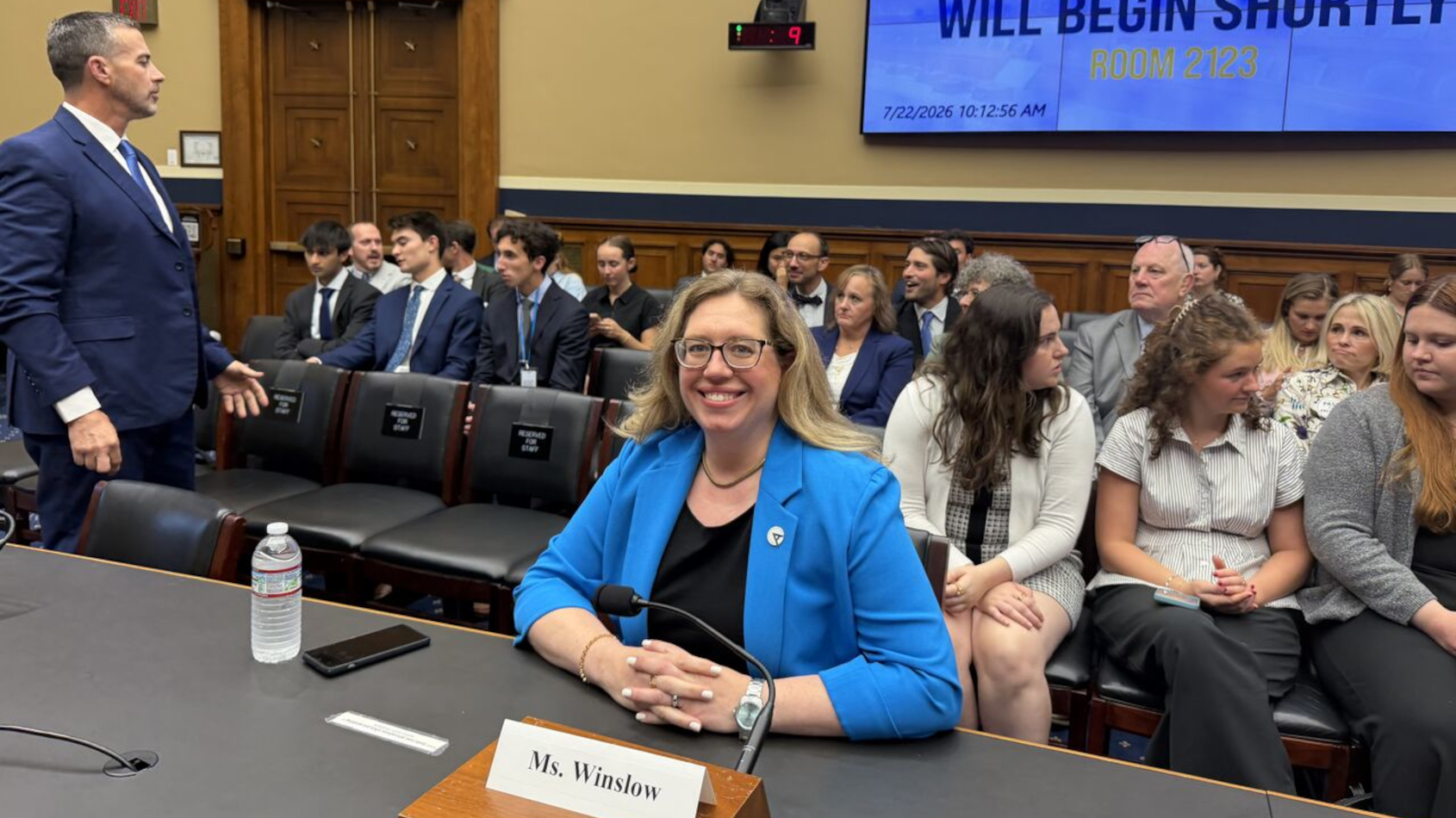
AFSA president and CEO Celia Winslow testified on Capitol Hill Wednesday morning, discussing the affordability challenges that debt-settlement companies create for Americans. Image courtesy of the American Financial Services Association.
By subscribing, you agree to receive communications from Auto Remarketing and our partners in accordance with our Privacy Policy. We may share your information with select partners and sponsors who may contact you about their products and services. You may unsubscribe at any time.
Imagine a contract holder in your auto-finance portfolio who is current on their monthly payments suddenly stops paying because they took questionable recommendations from an influencer on social media.
It’s becoming a common situation, which is why the American Financial Services Association went back to Capitol Hill on Wednesday for a hearing hosted by the U.S. House Subcommittee on Commerce, Manufacturing, and Trade.
President and CEO Celia Winslow appeared to reiterate AFSA’s support for the Debt Settlement Consumer Disclosure Act, noting multiple reasons why debt-settlement companies are creating numerous problems for consumers and lenders.
“This deliberate manufacturing of delinquency — strategic default — is well documented by financial regulators and is the trademark of the industry,” Winslow told lawmakers. “Debt settlement is the only industry in the American economy that instructs its customers to stop paying their bills. The consequences follow are ones you might expect: accounts fall into default, balances swell with accrued interest and late fees, credit scores collapse, collection activity intensifies, and consumers face lawsuits from creditors – all before a single settlement is reached, and whether or not one ever is.
“More troubling still, the industry has widened its net beyond consumers who are already in distress,” she continued. “Some debt settlement companies now market aggressively to consumers who are current on their payments and encourage them to stop paying; deliberately creating delinquencies to pressure lenders into settlements. Some AFSA members estimate that half of their customers who enroll in a settlement program are current on their accounts at the time of enrollment.
“These are not consumers drowning in default; they are consumers a sales operation persuaded to jump into the debt pool,” Winslow added.
Subscribe to Auto Remarketing to stay informed and stay ahead.
By subscribing, you agree to receive communications from Auto Remarketing and our partners in accordance with our Privacy Policy. We may share your information with select partners and sponsors who may contact you about their products and services. You may unsubscribe at any time.
Winslow explained that there are well-established avenues consumers can take if they’re experiencing financial hardship. She began by highlighting communications between lenders and their customers.
“AFSA members work directly with customers experiencing financial difficulty by offering short- and long-term hardship programs, such as payment deferrals, modified schedules, waived fees, or reduced rates,” Winslow told lawmakers. “These are designed to bridge a rough patch without major disruption to the customer’s finances or credit. Creditors would far rather restructure a loan than lose a customer to charge-off. No enrollment fee is charged for calling your lender.
Winslow also touched on legitimate, non-profit credit counseling.
“The FTC itself recommends that consumers struggling with debt turn to nonprofit credit counselors to build a repayment plan,” Winslow said. “The results achieved by this sector deserve this subcommittee’s attention because they show what consumer first debt assistance looks like in practice.
“Nonprofit credit counselors work closely with their customers and should be exempt from federal legislation,” she went on to say.
Winslow then went into the four reasons why AFSA strongly supports the Debt Settlement Consumer Disclosure Act as currently drafted.
- Define the industry as it actually exists.
“The act defines debt settlement entities and services to cover not just the settlement companies themselves but their affiliates, lead generators, marketers, and other third-party providers — the full enrollment supply chain, including the structures used to evade the TSR (Telemarketing Sales Rule) today,” Winslow said.
- Ensures clear disclosures.
“The act mandates that debt settlement firms provide clear, prominent disclosures that their services can damage a consumer’s credit and limit future access to credit. It requires firms to transparently disclose the risks and consequences of advising consumers to stop making payments,” Winslow said.
- Require a monthly statement for every enrolled debt.
“Consumers would receive a monthly statement showing the current balance of each enrolled debt, changes since the prior statement, and any administrative fees charged,” she said.
- Prohibit the deceptive claims that fill the industry’s advertising.
“The act would strengthen advertising standards by banning exaggerated savings claims, prohibiting companies from labeling a settlement program ‘debt consolidation’ when it is nothing of the kind, and barring promises of improved credit scores or guaranteed outcomes,” Winslow said.
Winslow rounded out her testimony by emphasizing the hypothetical mentioned at the beginning of this story is not farfetched, rather happening more often.
“AFSA members have seen a significant rise in financial scams originating on social media, including so-called ‘credit hacks’ content that coaches consumers into credit washing and other frauds,” Winslow said. “We support efforts to reduce and eliminate fraud across consumer lending, including credit repair scams, credit washing, false identity theft claims, auto purchase fraud, and misleading debt settlement schemes.
“These frauds harm the consumers they ensnare, and they raise the cost and risk of lending for everyone else, while providing no benefit to any legitimate participant in the market,” she continued. “Notably, the same fraud ecosystem that sells ‘credit hacks’ on social media is the ecosystem that markets debt settlement to consumers who are current on their bills: both monetize financial anxiety, and both flourish in the regulatory seams between agencies and jurisdictions.”