Edmunds: Pandemic-era problems still festering in form of negative equity
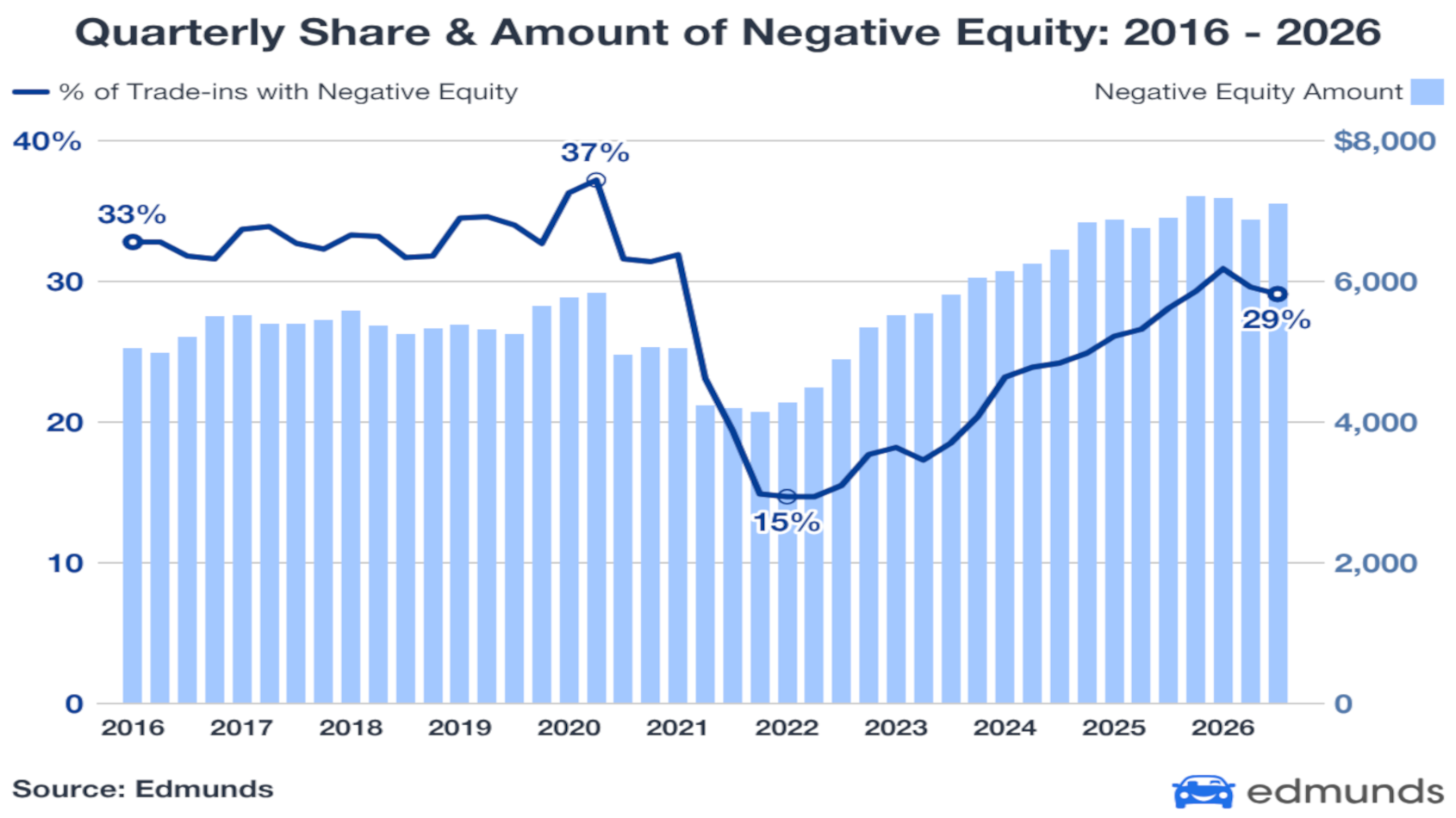
Chart courtesy of Edmunds.
By subscribing, you agree to receive communications from Auto Remarketing and our partners in accordance with our Privacy Policy. We may share your information with select partners and sponsors who may contact you about their products and services. You may unsubscribe at any time.
The auto-finance industry is still feeling the long-term ill effects from the pandemic.
Edmunds head of insights Jessica Caldwell examined how a persistent negative equity problem created six years ago is festering into record auto-loan debt.
Caldwell on Wednesday explained how the pandemic-era car market created today’s negative equity problem, which includes nearly three in 10 trade-ins toward new-vehicle purchases coming in underwater. That’s based on what Edmunds tracked during the third quarter.
“During the pandemic, vehicle shortages and surging used-car values created an unusual window in which many owners found themselves with more equity than expected, even relatively early in their loans. By early 2022, just 14.7% of trade-ins with outstanding loans toward new-vehicle purchases were underwater, with an average deficit of less than $4,300,” Caldwell wrote in this Edmunds analysis.
“As vehicle production recovered and used-car values retreated from their pandemic-era peaks, the equity advantage many owners had enjoyed began to disappear. As the market normalized, buyers who purchased vehicles at peak prices — particularly those who paid above sticker price or financed their purchases over extended terms — faced a greater risk of owing more than their vehicles were worth,” she continued.
Caldwell indicated consumers trading in those underwater vehicles during Q3 still owed an average of $7,107 more than their cars were worth. That’s more than$1,800 above comparable pre-pandemic levels.
Subscribe to Auto Remarketing to stay informed and stay ahead.
By subscribing, you agree to receive communications from Auto Remarketing and our partners in accordance with our Privacy Policy. We may share your information with select partners and sponsors who may contact you about their products and services. You may unsubscribe at any time.
Between 2016 and 2019, Caldwell noted roughly one-third of financed trade-ins were underwater, but the average deficit typically ranged between $5,000 and $5,500.
“The financial consequences of rolling negative equity into a new auto loan have grown considerably in recent years,” Caldwell wrote before getting into more Edmunds data.
Edmunds determined that consumers who rolled negative equity into a contract for a new vehicle during the third quarter financed an average of $57,235. That’s up 44.1% from $39,732 in Q3 2019.
Edmunds added that the average monthly payment for those individuals climbed 47.4% over the same period, from $646 to $952.
And compounding the problem are the rates attached to those contracts sitting at an average of 8.1%, according to Edmunds tracking.
Furthermore, Edmunds mentioned 91.2% of these contracts with negative equity booked during Q3 had terms stretched to more than 72 months or longer.
“Today’s financing environment presents additional challenges. Vehicle prices remain elevated, borrowing costs are higher than before the pandemic, and extended loan terms have become increasingly common. For buyers who need to replace a vehicle before paying down their existing loan, these conditions can make it difficult to escape negative equity without bringing additional cash to the transaction,” Caldwell wrote.
“For consumers looking to avoid this cycle, understanding their vehicle’s current value relative to what they owe is an important first step. Keeping a vehicle longer or paying down the existing loan before trading can help reduce negative equity when circumstances allow. Those who need to replace their vehicle sooner should focus on minimizing additional debt and evaluating the total cost of financing rather than the monthly payment alone,” she went on to say.
Negative equity is among the topics to be discussed during Used Car Week, which begins on Nov. 16 in San Diego.