
Initial 2026 auto financing outlook still muted despite two positive trends
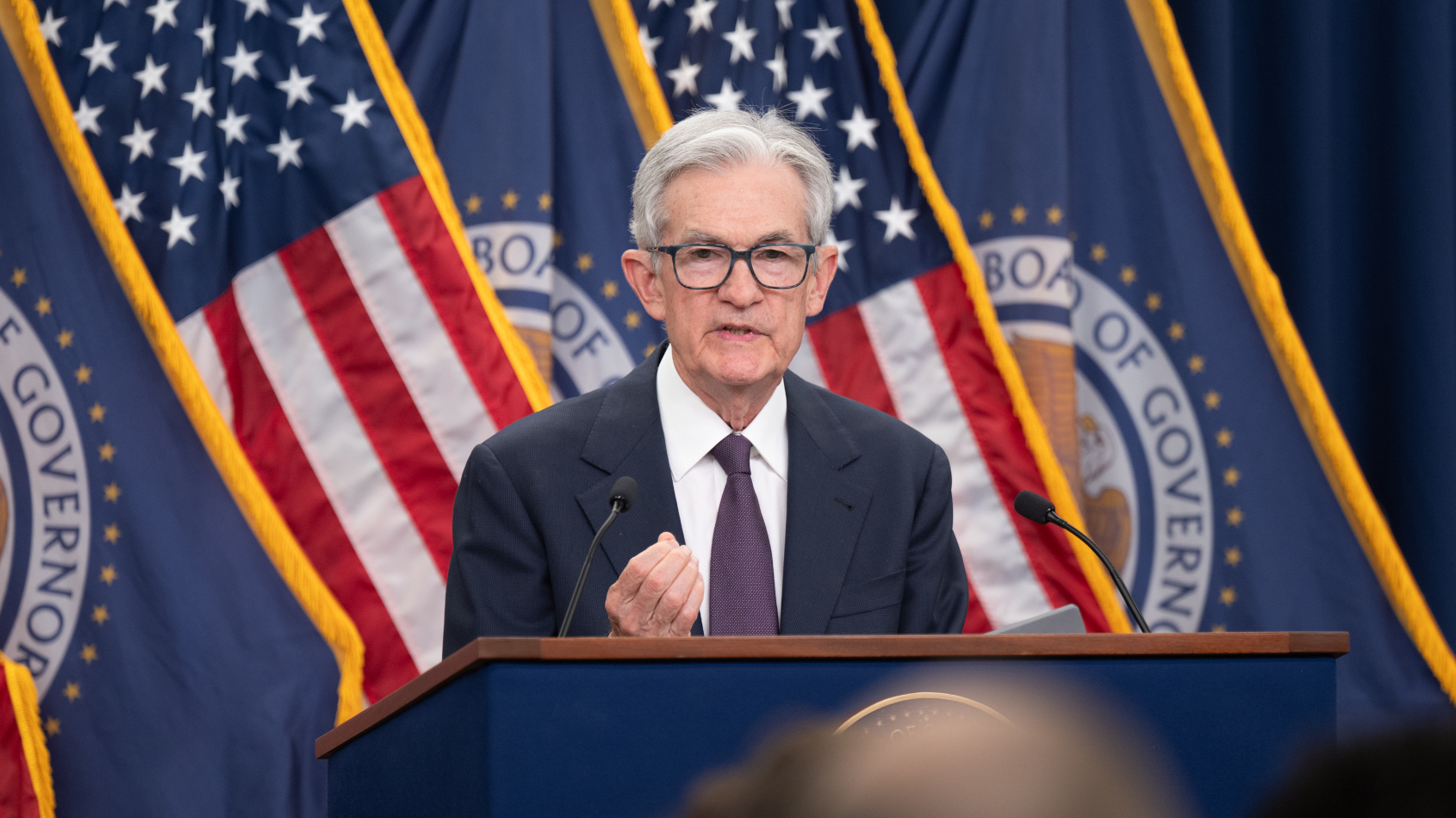
Federal Reserve chair Jerome Powell answers questions during a press conference in Washington, D.C. Photo courtesy of the Fed.
By subscribing, you agree to receive communications from Auto Remarketing and our partners in accordance with our Privacy Policy. We may share your information with select partners and sponsors who may contact you about their products and services. You may unsubscribe at any time.
In December, consumers’ pay rose and average rates on auto financing dropped. Sounds like wonderful ingredients to get vehicles delivered and contracts booked, huh?
Well, Cox Automotive interim chief economist Jeremy Robb is among the cautious contingent not ready to proclaim boom times in the immediate future, especially with tax refunds on the way.
Looking first at the money already landing in working consumers’ accounts, the December ADP National Employment Report produced by ADP Research in collaboration with the Stanford Digital Economy Lab showed pay ticked up 4.4% year-over-year.
Federal Reserve chair Jerome Powell discussed consumer income when policymakers cut interest rates in December for the third time in 2025. Powell responded to a question about the difference in spending by lower-income and higher-income individuals, creating what many experts call a “K-shaped” environment.
“Through our vast network of contacts and through our observation of what’s going on in the economy, we hear about this a lot,” Powell said. “If you listen to the earnings reports for consumer-facing companies that tend to deal with low- and moderate-income people, they’ll all say that we’re seeing people tightening their belts, changing products that they buy, buying less and that sort of thing. And so it’s clearly a thing.
“It’s also clearly a thing that asset values, housing values, and securities values are high, and they tend to be owned by people more at the higher end of the income and wealth. And so, as to how sustainable it is, I don’t know. Most of the consumption does happen by people who have more means,” he continued.
Subscribe to Auto Remarketing to stay informed and stay ahead.
By subscribing, you agree to receive communications from Auto Remarketing and our partners in accordance with our Privacy Policy. We may share your information with select partners and sponsors who may contact you about their products and services. You may unsubscribe at any time.
I think the top third accounts for way more than a third of the consumption, for example. So, it’s a good question how sustainable that is,” Powell went on to say. “The best we can do is to have price stability and a strong labor market.
“In the last two years, the largest part of the wage gains were going to people in the bottom quartile, the bottom part of the low and moderate income. So, having a strong labor market for a long period of time is really, really good from a social standpoint. It’s helping people at the lower-income levels, and that’s what we all want to get back to,” Powell added.
And especially for lower-income individuals, having access to transportation — often their own vehicle — is the clear path to getting the income gains experts are mentioning. Perhaps the Fed is having a hand in that process since Robb shared in a blog post that average interest rates on financing contracts originated in December for both new and used cars dropped to their lowest levels in a year.
Robb wrote on Monday that new vehicle APR declined 13 basis points while used rates dropped 25 basis points.
“December’s data present a mixed picture for automotive markets heading into 2026. While lower interest rates provided meaningful relief — with auto APRs hitting their lowest levels in a year — sales remain muted, with new retail down recently despite the rate improvements. This disconnect suggests rate relief alone may not be enough to offset broader consumer caution,” Robb wrote.
“The tension between rising consumer sentiment and weakening spending is particularly notable. Consumers report feeling better following the government shutdown resolution, yet actual spending behavior tells a different story, with five consecutive weeks of year-over-year declines. This gap matters for dealers: Optimism doesn’t translate to showroom traffic when consumers are holding off on making purchases,” he continued.
“Labor market stability, evidenced by declining jobless claims, provides some foundation as we end 2025, but the consumer spending slowdown in big-ticket categories like vehicles warrants close attention,” Robb went on to note. “The late-month improvement in weekly sales offers a glimmer of momentum, and we know consumers are about to enter a strong tax refund season. As we enter the new year, watch whether rate improvements can finally convert positive sentiment into actual sales.”