AFSA explains 4 top problems associated with credit reporting to House lawmakers, offers 4 possible solutions
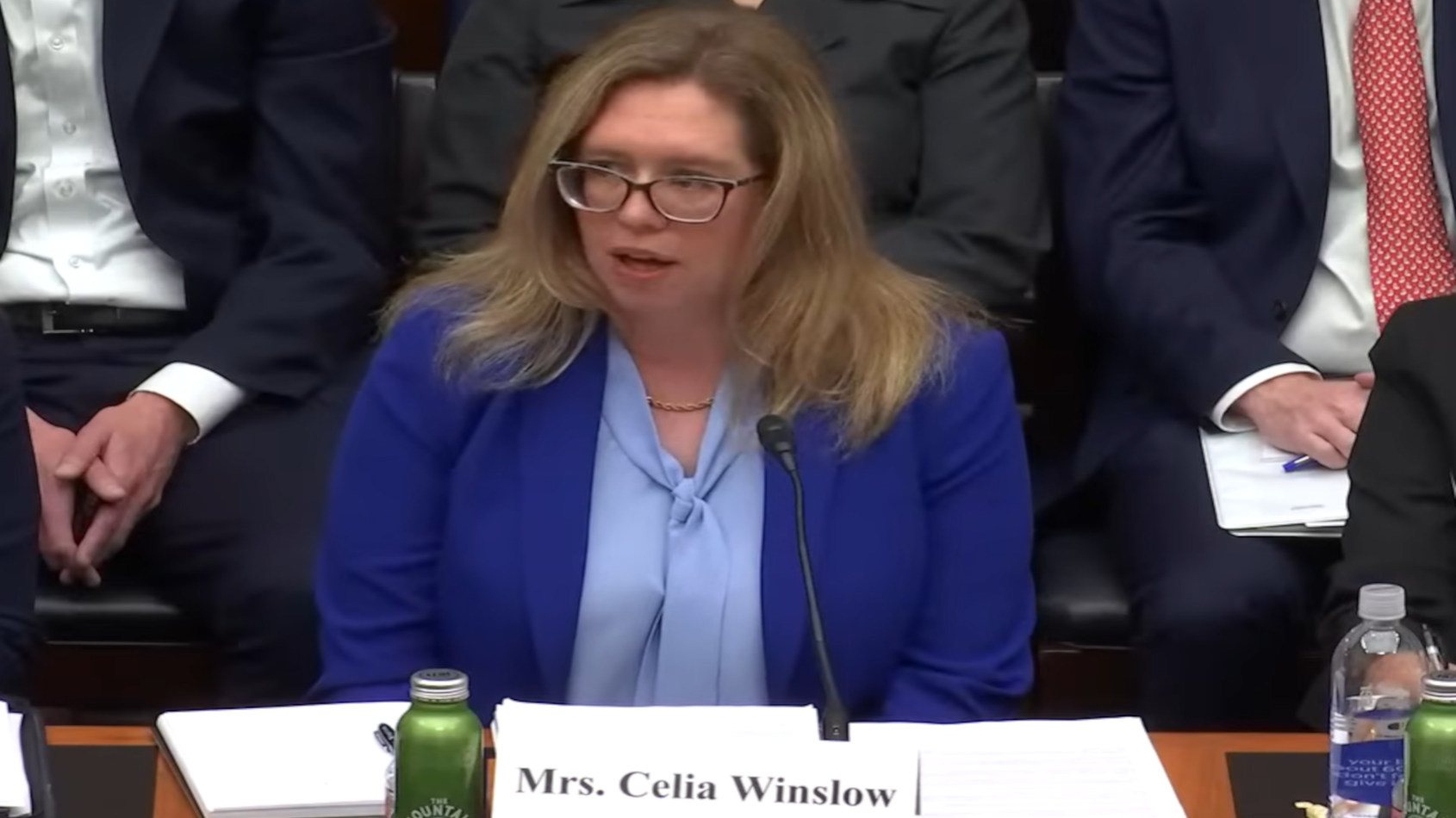
American Financial Services Association president and CEO Celia Winslow recently appeared before the U.S. House Financial Services Committee’s Subcommittee on Financial Institutions. Screenshot courtesy of the U.S. House.
By subscribing, you agree to receive communications from Auto Remarketing and our partners in accordance with our Privacy Policy. We may share your information with select partners and sponsors who may contact you about their products and services. You may unsubscribe at any time.
American Financial Services Association president and CEO Celia Winslow recently appeared before the U.S. House Financial Services Committee’s Subcommittee on Financial Institutions during a hearing focused on promoting access to credit for American consumers.
Winslow spelled out the four primary problems AFSA and its members are seeing in connection with credit reporting as well as four potential solutions that federal lawmakers could aid in putting into practice.
“Creditors are partners in the financial lives of tens of millions of Americans, providing pathways to homeownership, reliable transportation, education, and economic resilience when the unexpected occurs,” Winslow told the House subcommittee in her prepared testimony. “The consumer-credit industry fuels opportunity across every segment of society, and the integrity of the credit-reporting system is foundational to that goal.
“That foundation is under threat. Social media influencers, fraudsters and schemers, along with AI-driven scam platforms, are distorting credit scores at scale, eroding the reliability lenders depend on to extend safe, reliable, and affordable credit. But they are solvable problems, and Congress has the tools to solve them,” she continued.
Here are the four main issues associated with credit reporting Winslow described to lawmakers.
- Frivolous and duplicative disputes perpetuate fraud, increase compliance costs
Winslow pointed out the Fair Credit Reporting Act (FCRA) provides a process for consumers to submit a dispute about inaccurate information to the credit bureaus and furnishers. The FCRA requires the bureaus and the furnishers to investigate these disputes and respond appropriately within 30 days.
Subscribe to Auto Remarketing to stay informed and stay ahead.
By subscribing, you agree to receive communications from Auto Remarketing and our partners in accordance with our Privacy Policy. We may share your information with select partners and sponsors who may contact you about their products and services. You may unsubscribe at any time.
“In every industry, mistakes can occur,” Winslow said. In credit reporting, this might mean that a debt owed by one person shows up on someone else’s credit report; a payment is reported as late that was actually paid on time; or a billing address change is not updated quickly.
“Bad actors, including certain credit repair organizations and financial influencers on social media, seek to take advantage — or encourage consumers to take advantage of — this dispute process,” she continued. “Acting on bad advice, consumers themselves (or third parties they pay) deploy identical form letters claiming the debt is not really owed. The letters do not provide specific explanations of disputes, nor do they have any documentation.”
Winslow shared captive auto finance companies told AFSA they are receiving between 14,000 and 15,000 credit disputes per month, but only one or two are legitimate.
- False identity theft claims distort credit reports
Winslow then recapped fraudulent use of IdentityTheft.gov, which is an online portal operated by the Federal Trade Commission.
“So-called ‘credit coach’ influencers and certain credit repair scammers are directing consumers to file false identity theft reports as a way of ‘washing out’ accurate, negative information from their credit files and inflating scores,” Winslow said. “The harm is clear: creditors are stuck with significant compliance costs to investigate baseless claims, and also take on litigation exposure, even when the investigation reveals the identity fraud claim is unwarranted.
“Meanwhile, honest consumers end up competing for credit in a marketplace manipulated by fraud,” she continued. “Furthermore, removing accurate information from consumer reports reduces the accuracy of the credit-reporting system, undermining its legitimacy, meaning lenders are more likely to make unsound credit decisions, ultimately hurting consumers.”
- Debt settlement schemes harm consumers
Next, Winslow noted what AFSA and its members are calling a “growing blind spot” in the credit-reporting system. Here’s how she explained the problem.
“Certain debt settlement companies target consumers who are current on their loans, encourage them to stop paying their creditors, and instruct them instead to make regular payments into a special account controlled by the debt settlement company, which they use to potentially negotiate with lenders,” Winslow said.
“Some of these companies target borrowers with closed-end loans, where the borrower only owes a few thousand dollars, making the cost of paying the firm greater than any benefit the borrower could receive,” she continued. “This strategy significantly lowers consumers’ credit score because they become delinquent, while not offering any compensating benefits.”
- Artificial attempts to increase credit scores
To explain this conundrum, Winslow cited the workings of certain credit builder payment cards that have disrupted the industry in recent times.
“Unlike conventional credit cards and lending products, certain credit builder cards operate under different underwriting structures and are not always subject to the same stringent credit qualification standards,” Winslow said. “Many of these products function more like secured or prepaid credit mechanisms, where spending limits are tied directly to funds that the consumer has already deposited.
“While these products are designed to help individuals establish or rebuild credit histories, they can also create unintended distortions within the credit reporting ecosystem,” she continued. “Because on-time payments are reported to credit bureaus, users may experience rapid increases in their credit scores, even though the underlying financial risk profile may not have changed in a meaningful way.
“In some cases, the improved scores may reflect payment behavior on funds that were effectively pre-funded rather than borrowed in the traditional sense,” Winslow went on to say. “Creditors may interpret these elevated scores as evidence of stronger borrowing capacity or repayment history than actually exists. This can lead to situations in which borrowers are approved for credit that requires true repayment discipline and risk management, which the borrower does not actually possess, resulting in the borrower defaulting.
Because of the complexity of those four problems, Winslow also gave House lawmakers four suggested improvements.
- Eliminate frivolous and duplicative disputes
AFSA is encouraging Congress to amend the FCRA and other statutes to preserve the integrity of the credit-reporting system and reduce false credit disputes.
- Crack down on social media scammers
AFSA also supports H.R. 7548, the bipartisan Safeguarding Consumers from Advertising Misconduct (SCAM) Act, which would require online platforms to take “reasonable” steps to prevent fraudulent and deceptive advertisements.
“Credit washing pitched by financial influencers on social media to illegitimately boost credit scores, makes a borrower look like a better risk than they are and is costing companies billions,” Winslow said. “Monetizing a how-to guide to commit fraud is not a free speech issue, and platforms that profit from such content cannot claim to be mere bystanders. They are participants and such a business decision should come with consequences.”
- Make technology part of the solution
Winslow recommended that the same AI tools bad actors use to generate fraudulent dispute submissions should be available to financial institutions seeking to identify and rebuff them.
“But regulatory uncertainty about their permissible use creates a chilling effect on lender innovation,” she said. “Congress should make clear that creditors are permitted, if not encouraged, to deploy AI tools to counter fraudulent disputes. “A framework that allows bad actors to weaponize AI while constraining lenders is neither fair nor functional.”
- Add clear disclosures with debt settlements
Winslow pointed out that the Telemarketing Sales Rule (TSR) is currently the only federal regulation directly applicable to debt settlement companies.
“While the TSR plays an important role, it does not comprehensively regulate all debt settlement practices or advertising,” she said. “Some debt settlement companies take advantage of loopholes and mislead consumers.
“Congress should consider a federal law mandating debt settlement disclosures so that consumers can truly understand and see the risks of entering into debt settlement agreements,” Winslow went on to say.
The entire hearing is available through the window below.