FTC reviews 3 dealer group settlements after abandoning disparate impact
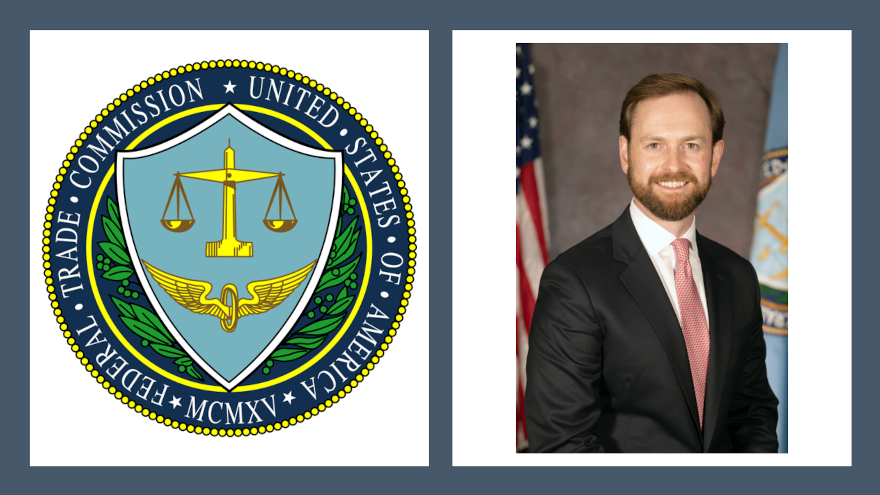
President Trump officially designated Andrew Ferguson as chairman of the Federal Trade Commission. Images courtesy of the FTC.
By subscribing, you agree to receive communications from Auto Remarketing and our partners in accordance with our Privacy Policy. We may share your information with select partners and sponsors who may contact you about their products and services. You may unsubscribe at any time.
Disparate impact theory sometimes made automotive compliance professionals nauseous, especially when it was used by federal regulators to generate settlements for as much as $10 million in a single situation.
Late on Friday, those professionals — and three dealership groups — got some relief courtesy of the Federal Trade Commission.
The FTC announced a policy statement clarifying that the regulator will not pursue claims based on disparate-impact or “unfair discrimination” theories.
Furthermore, officials said that under the new policy they reviewed past decisions that were based on statistical analyses designed to show disparate-impact liability and entered into agreements to modify certain compliance-related obligations for Napleton Inc., Passport Auto Group and an individual previously associated with Coulter Motor Co. LLC.
Here’s a review of the previous actions involving those dealer groups:
—In April 2022, the FTC and the state of Illinois took action against Napleton “for sneaking illegal junk fees for unwanted ‘add-ons’ onto customers’ bills and for discriminating against Black consumers by charging them more for financing.” Officials ordered Napleton to pay $10 million to settle the lawsuit, which generated a record-setting monetary judgment for an FTC auto lending case.
Subscribe to Auto Remarketing to stay informed and stay ahead.
By subscribing, you agree to receive communications from Auto Remarketing and our partners in accordance with our Privacy Policy. We may share your information with select partners and sponsors who may contact you about their products and services. You may unsubscribe at any time.
—In October of that year, the FTC announced an action against Passport Automotive Group for what the regulator called in a news release as “deceiving consumers by tacking hundreds to thousands of dollars in illegal junk fees onto car prices and for discriminating against Black and Latino consumers with higher financing costs and fees.” At the time, the FTC said Passport Automotive Group, president Everett Hellmuth and vice president Jay Klein would pay more than $3.3 million to settle the FTC’s lawsuit, which the regulator said will be used to refund consumers harmed by Passport’s conduct.
—In August 2024, the FTC and state of Arizona alleged in a complaint that Coulter Motor Co., along with its former general manager, Gregory Depaola, which operated Coulter Cadillac Tempe and Tempe Buick GMC, along with Depaola, regularly charged consumers for unwanted add-ons that consumers never agreed to pay and other “bogus fees.” Officials said a survey of consumers who purchased or leased cars from Coulter found that 92% were charged for at least one add-on without their authorization, or that they thought was required. The regulator said Coulter would pay $2.6 million to settle a lawsuit, most of which will go to provide refunds to consumers harmed by defendants’ allegedly unlawful actions.
“Disparate-impact claims are nearly impossible to square with our colorblind Constitution,” FTC chairman Andrew Ferguson said in a news release distributed on Friday. “They impose liability for discrimination without any evidence that anyone intended to discriminate, which pushes businesses to make race-based decisions in order to avoid liability.
“The commission never had authority to impose disparate-impact liability. Today, we announce that the commission will never do so again,” Ferguson continued.
The FTC pointed out its policy statement follows President Trump’s issuance of an executive order last year on “restoring equality of opportunity and meritocracy” that set forth “the policy of the United States to eliminate the use of disparate-impact liability in all contexts to the maximum degree possible to avoid violating the Constitution, Federal civil rights laws, and basic American ideals.”
Officials explained disparate-impact theory presumes that a difference in outcome among demographic groups must be the result of unlawful discrimination, even if no evidence of discrimination exists.
As the policy statement says, the FTC lacks the statutory authority to consider claims under this novel legal theory.
Moreover, officials added disparate-impact analysis under its authorities would require race-based analysis of outcomes, which is pernicious and contrary to fundamental constitutional values.
The policy statement goes on to explain that there are no apparent limits to the policy implications of applying disparate-impact analysis, because “almost any conceivable policy or practice affects different groups differently.”
The regulator added, “Had Congress intended to grant the FTC such sweeping authority, it could have said so.”
The statement sets forth how the FTC will pursue discrimination claims in appropriate contexts. For example, it will continue to assert disparate-treatment claims under the Equal Credit and Opportunity Act, but it will treat Section 5 of the FTC Act as the consumer-protection statute it has always been.
The FTC vote authorizing the policy statement and approving the agreements was 2-0.
The entire 21-page policy statement can be viewed here.