Experts see Middle East conflict making current car & credit markets even more challenging
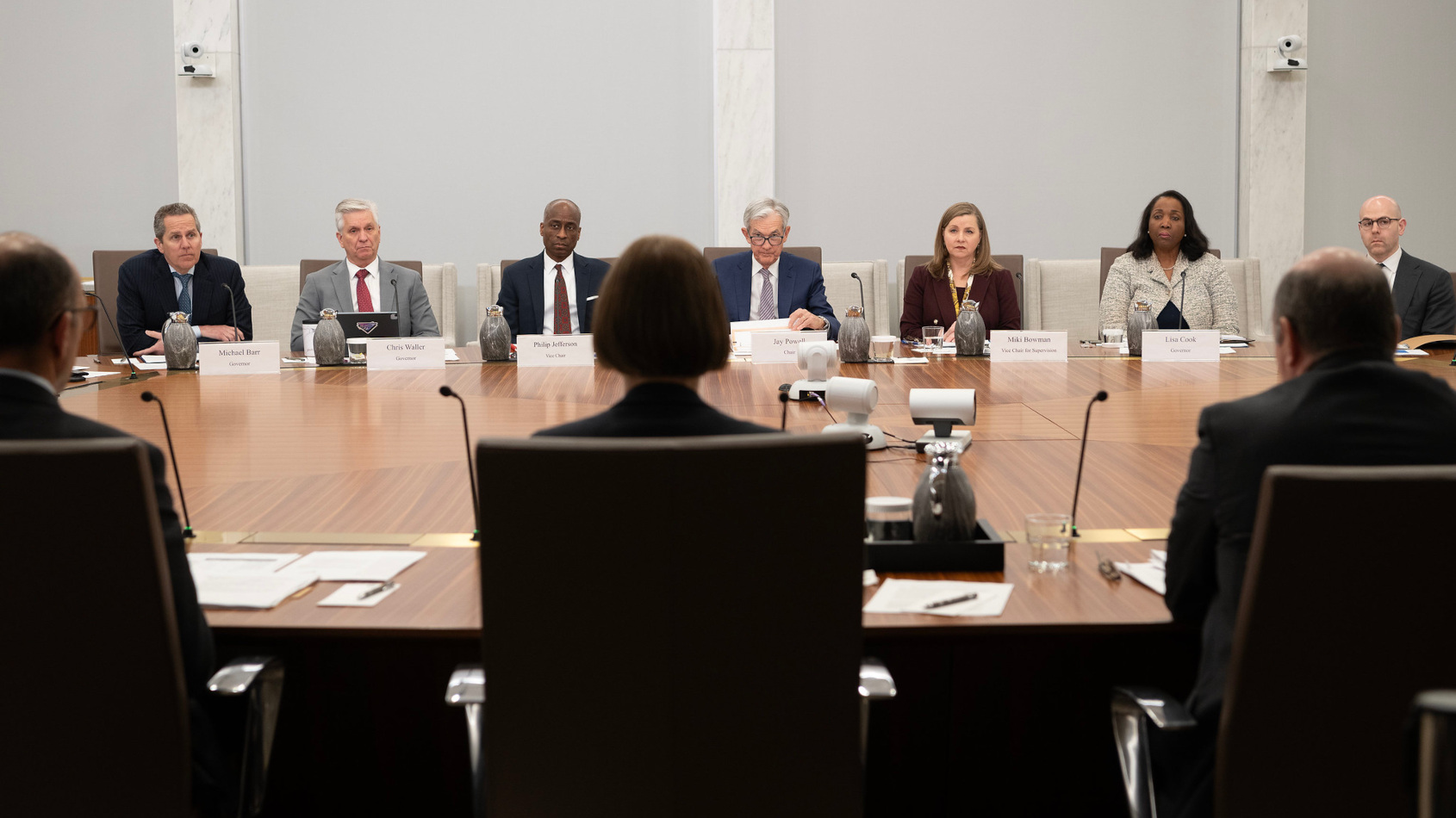
Members of the Federal Reserve listen to presentations during their meeting last week in Washington, D.C. Photo courtesy of the Fed.
By subscribing, you agree to receive communications from Auto Remarketing and our partners in accordance with our Privacy Policy. We may share your information with select partners and sponsors who may contact you about their products and services. You may unsubscribe at any time.
Cox Automotive and S&P Global Ratings have tried to make credit market and other economic predictions in recent days.
But experts acknowledged the war in the Middle East is presenting global automakers and suppliers with another layer of challenges in an industry already grappling with intensifying competition and rising protectionism.
And S&P Global Ratings said the credit implications will depend on the duration of the war and how widely it spreads.
Cox Automotive chief economist Jeremy Robb recapped that the Federal Reserve kept the federal funds target range at 3.50% to 3.75%. Following last week’s decision, Robb pointed out policymakers now have left rates unchanged since December.
Robb added that the Fed also raised its inflation outlook, increasing its 2026 projection from 2.4% in December to 2.7% in March.
“The Fed held rates steady last week, but the backdrop has shifted,” Robb wrote in an analysis posted on Monday. “As conflict in the Middle East intensified through March, energy prices moved sharply higher, reintroducing inflation risk at a moment when policymakers had been hoping for a steadier path.
Subscribe to Auto Remarketing to stay informed and stay ahead.
By subscribing, you agree to receive communications from Auto Remarketing and our partners in accordance with our Privacy Policy. We may share your information with select partners and sponsors who may contact you about their products and services. You may unsubscribe at any time.
“The Federal Reserve left interest rates unchanged this week, citing increased uncertainty around the U.S. economic outlook. Rising oil prices are adding to inflation concerns just as job growth has slowed, making the policy path more complicated,” he continued.
“While some forecasters still expect rate cuts in 2026, the futures market now shows no probability of a cut this year and a growing chance of a rate increase,” Robb added.
Meanwhile, S&P Global Ratings explained that energy-driven inflation and its potential impact on demand is the biggest risk to the car market experts fear might be already weak this year and next.
Along with supply-chain instability and costlier materials, S&P Global Ratings inflation could undermine the recovery of issuers’ credit metrics analysts have assumed for the next two years.
If the war does not end soon, S&P Global Ratings suggested that the greatest pitfall will be stagflation, which is a combination of higher costs and softer-than-expected volumes.
“So far, entities have not reflected war-related turbulence in their guidance for 2026,” S&P Global Ratings credit analyst Vittoria Ferraris said in a news release. “The prevailing assumption is that the disruption will be brief and will not materially worsen what is already shaping up to be a challenging year for the industry.”
Federal Reserve chair Jerome Powell looked to keep an even keel when appearing publicly after policymakers kept interest rates unchanged.
“My colleagues and I remain squarely focused on achieving our dual mandate goals of maximum employment and stable prices for the benefit of the American people,” Powell reiterated in the opening segment of a news conference in Washington, D.C., last Wednesday.
“But the implications of events in the Middle East for the U.S. economy are uncertain,” he continued. “In the near term, higher energy prices will push up overall inflation, but it is too soon to know the scope and duration of the potential effects on the economy. We will continue to monitor the risks to both sides of our mandate. We are well positioned to determine the extent and timing of additional adjustments to our policy rate based on the incoming data, the evolving outlook, and the balance of risks.”