EFG: 6 compliance priorities for rest of 2026
Graphic courtesy of EFG Companies.
By subscribing, you agree to receive communications from Auto Remarketing and our partners in accordance with our Privacy Policy. We may share your information with select partners and sponsors who may contact you about their products and services. You may unsubscribe at any time.
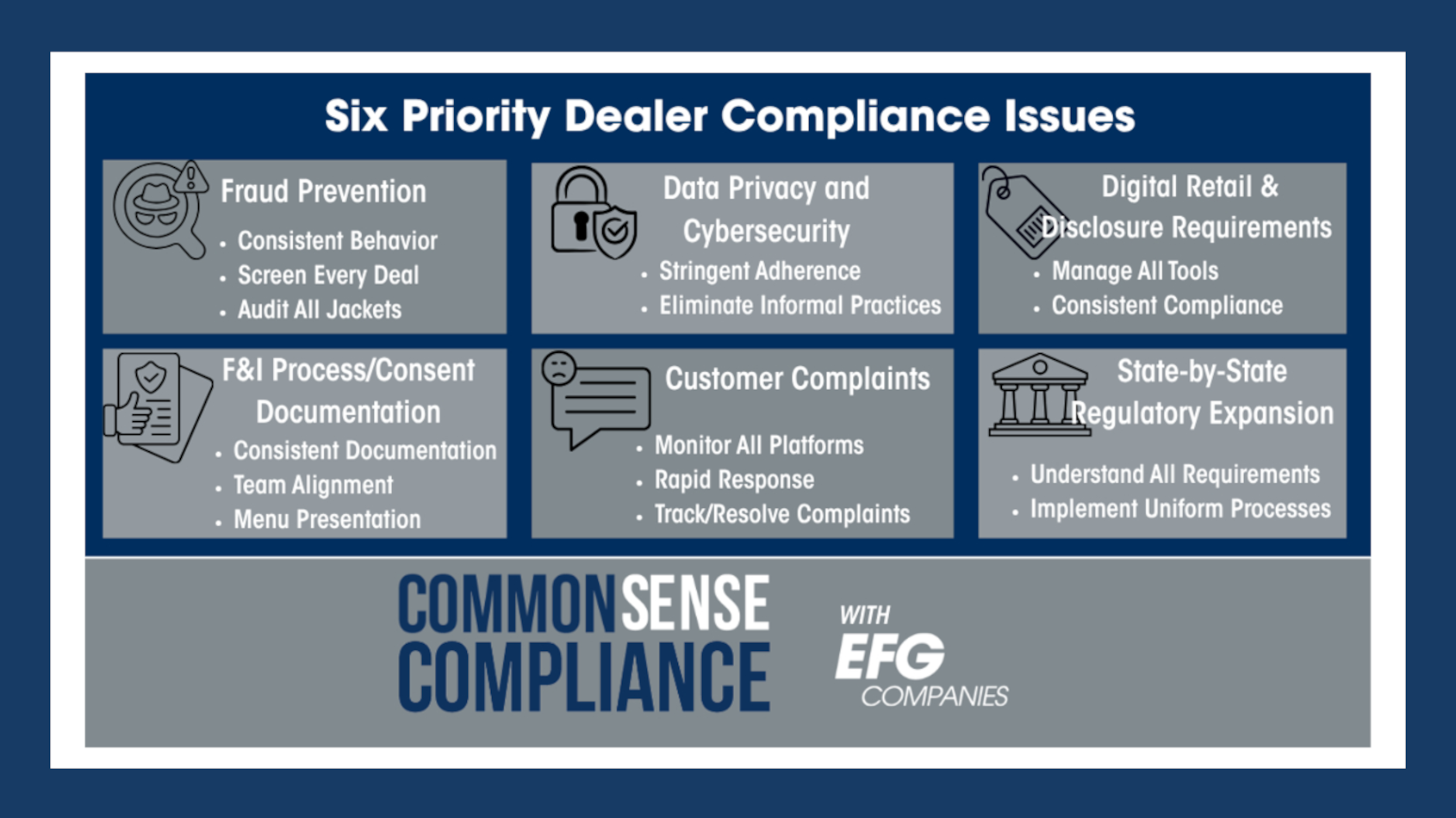
Generated by its account service team that’s 100% certified by the Association of Finance and Insurance Professionals (AFIP) — most at the master classification level — EFG Companies compiled a list of six compliance issues dealer principals should prioritize for the rest of 2026.
EFG is looking for stores to avoid profit-killing fines and legal fees, especially since the Federal Trade Commission issued warning letters to dealership groups nationwide, signaling increased scrutiny of pricing transparency and disclosure practices.
“The biggest compliance risk for dealerships in 2026 is assuming enforcement pressure has eased,” said Jennifer Rappaport, who is president and CEO of EFG Companies.
“In reality, fraud prevention, data security and customer complaints remain top compliance triggers,” Rappaport continued in a news release. “Frequent, targeted training from master AFIP‑certified experts, paired with hands-on, compliant account management and process discipline, is the most effective defense against costly compliance missteps.”
As she referenced, here are those six compliance priorities EFG experts pinpointed:
- Fraud prevention
EFG acknowledged rising synthetic identity fraud requires better controls. The 2026 Point Predictive Auto Lending Fraud Report estimated income and employment misrepresentations account for an expected $4.4 billion fraud exposure this year.
Subscribe to Auto Remarketing to stay informed and stay ahead.
By subscribing, you agree to receive communications from Auto Remarketing and our partners in accordance with our Privacy Policy. We may share your information with select partners and sponsors who may contact you about their products and services. You may unsubscribe at any time.
“Instilling consistent behavior across your F&I team to screen every deal regardless of credit score and audit all deal jackets before submission will help your business confirm accuracy and avoid potential financial loss,” experts said.
- Data privacy and cybersecurity
EFG explained that regulators assessing compliance with the FTC Safeguard Rule now view any errors in compliance as systemic failures versus “one-off mistakes.”
Experts said, “stringent adherence to all compliance processes is required to eliminate risky informal practices. What’s more, as of March, the U.S. government has issued heightened warnings regarding increased cyberattack risks.”
- Digital retail and disclosure requirements
EFG pointed out that digital retailing requires accurate disclosures and strong data integrity. Experts also noted that recent FTC enforcement actions emphasize that advertised vehicle prices must reflect the full price consumers are required to pay, including mandatory fees, “raising the stakes for online listings, digital menus, and automated pricing tools.”
EFG suggested that dealerships should manage all communications tools for “consistency and compliance.”
- F&I process and consent documentation
EFG acknowledged that longer contract terms, higher transaction amounts, increased refinancing, and rising default activity are flags for regulators.
“Consistent documentation, menu presentation, and alignment between sales and F&I teams are staple in your toolbox to ensure compliant practices,” experts said.
- Customer complaints
Whether you’re selling tacos or Tacomas, businesses are likely going to encounter someone who is unhappy with the service or product.
“Complaints now trigger audits, regardless of the veracity.” EFG said. “Unresolved issues and complaints increasingly serve as catalysts for federal and state regulatory review, making rapid response and documentation critical.
“Closely monitor all digital platforms to track and resolve complaints before they spiral into regulatory action,” experts added.
- State-by-state regulatory expansion
While some Consumer Financial Protection Bureau activity has slowed, EFG mentioned federal enforcement remains active, specifically pricing transparency, disclosures, and consumer protection.
In addition, experts indicated states continue to expand their own regulatory frameworks.
“A fragmented, state-by-state compliance landscape requires that dealerships proactively seek to understand their state’s requirements and implement appropriate uniform processes and governance,” EFG said.
For more compliance information from EFG, visit this website.