Fed’s Barr recaps rate strategy after ‘series of shocks’ to US economy
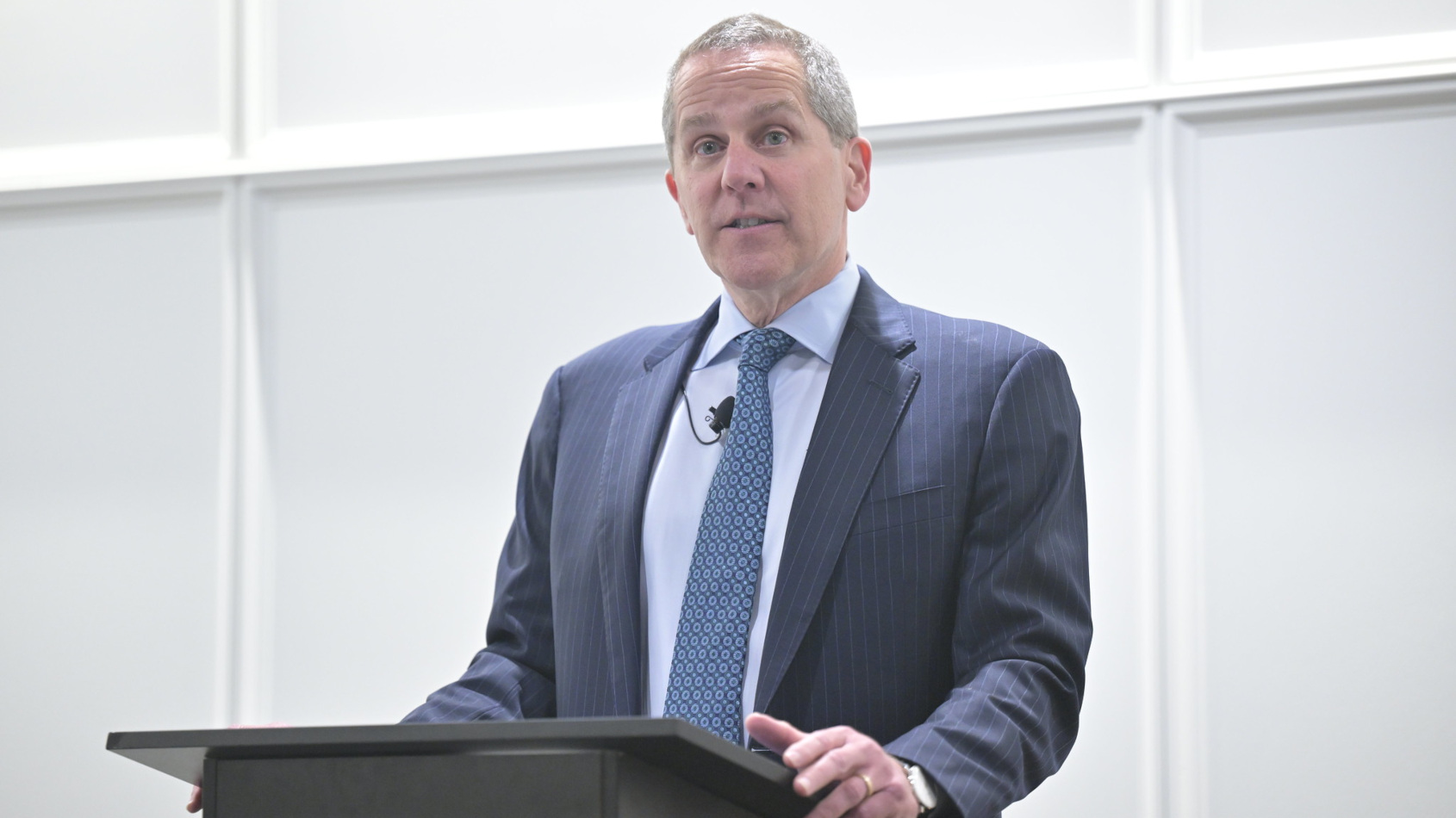
Federal Reserve Governor Michael Barr appeared last week at the Brookings Institution in Washington, D.C. Image courtesy of the Fed.
By subscribing, you agree to receive communications from Auto Remarketing and our partners in accordance with our Privacy Policy. We may share your information with select partners and sponsors who may contact you about their products and services. You may unsubscribe at any time.
Federal Reserve Governor Michael Barr explained how he’s examining data and trends to formulate policy while, “the U.S. economy has thus far remained resilient, despite having experienced a series of shocks over the past year.”
Barr appeared last week at the Brookings Institution in Washington, D.C., following the Federal Open Market Committee (FOMC) keeping interest rates unchanged.
Barr offered his assessment of the economy by delving immediately into the war in the Middle East. It’s a development that’s pushed the average price of a gallon of gas to $4.01, according to the latest update from AAA released on Tuesday.
“If the conflict were to end soon, it is possible its effects on inflation and economic activity could be limited,” Barr told the gathering at the Brookings Institute. “But if it continues for some time, the spike in energy prices and other commodities could have broader implications for both prices and economic activity.
“We have had five years now of inflation at elevated levels, and near-term inflation expectations have risen again, so I am particularly concerned that yet another price shock could increase longer-term inflation expectations,” he continued. “Consumers and businesses factor future inflation into their current economic decisions, so there is a risk that this dynamic could lead to inflation persistence, making it more difficult to return inflation to 2 percent.
“We need to be especially vigilant. Uncertainty about how these developments will unfold is just one of the reasons why I thought it necessary to hold policy steady at (the most recent) FOMC meeting,” Barr added.
Subscribe to Auto Remarketing to stay informed and stay ahead.
By subscribing, you agree to receive communications from Auto Remarketing and our partners in accordance with our Privacy Policy. We may share your information with select partners and sponsors who may contact you about their products and services. You may unsubscribe at any time.
Next, Barr discussed the impact of tariffs on inflation over the past 12 months. He acknowledged tariffs have prices for goods and services.
“Elevated goods inflation has contributed significantly to a stalling in the disinflationary process,” Barr said. “While the effective tariff rate had been fluctuating at a high but variable level for around a year now, the recent Supreme Court ruling has led to a reduced rate of around 10 percent — a still-high level. And additional measures could move tariffs higher again. These fluctuations add to uncertainty about the ultimate effects of tariffs on inflation.
“A reasonable base case is that tariff effects on inflation will wane later this year, but there is some risk that tariff effects will take longer to dissipate,” he continued.
A third element that’s impacting the economy currently has been the significant slowdown in the growth of the labor force, Barr said. He cited a sharp reduction in net immigration and some reduction in labor force participation as the triggers of this situation.
“Labor force growth is close to zero. Job creation has also been close to zero for the past year, a highly unusual experience outside of a recession. We are in a ‘low hire, low fire’ environment,” Barr said. “So far, the low levels of job creation and the lack of labor force growth have been roughly balanced, which can be seen by the unemployment rate remaining fairly low and steady since last fall.
“Yet low levels of hiring likely leave the labor market vulnerable to shocks, so continued vigilance on labor market conditions remains warranted,” he added.
The FOMC next gathers on April 28-29 for its next opportunity to adjust the federal funds target range that’s currently at 3.50% to 3.75%. It’s been at that range since December.
“Given the considerable uncertainty about the potential effects of developments in the Middle East on our economy, as well as the other factors I mentioned, it makes sense to take some time to assess conditions,” Barr said. “Our current policy stance puts us in a good place to hold steady while we evaluate incoming data, the evolving forecast, and the balance of risks.”