How could $1 billion be deployed? Free2move addresses affordability challenges & future of mobility
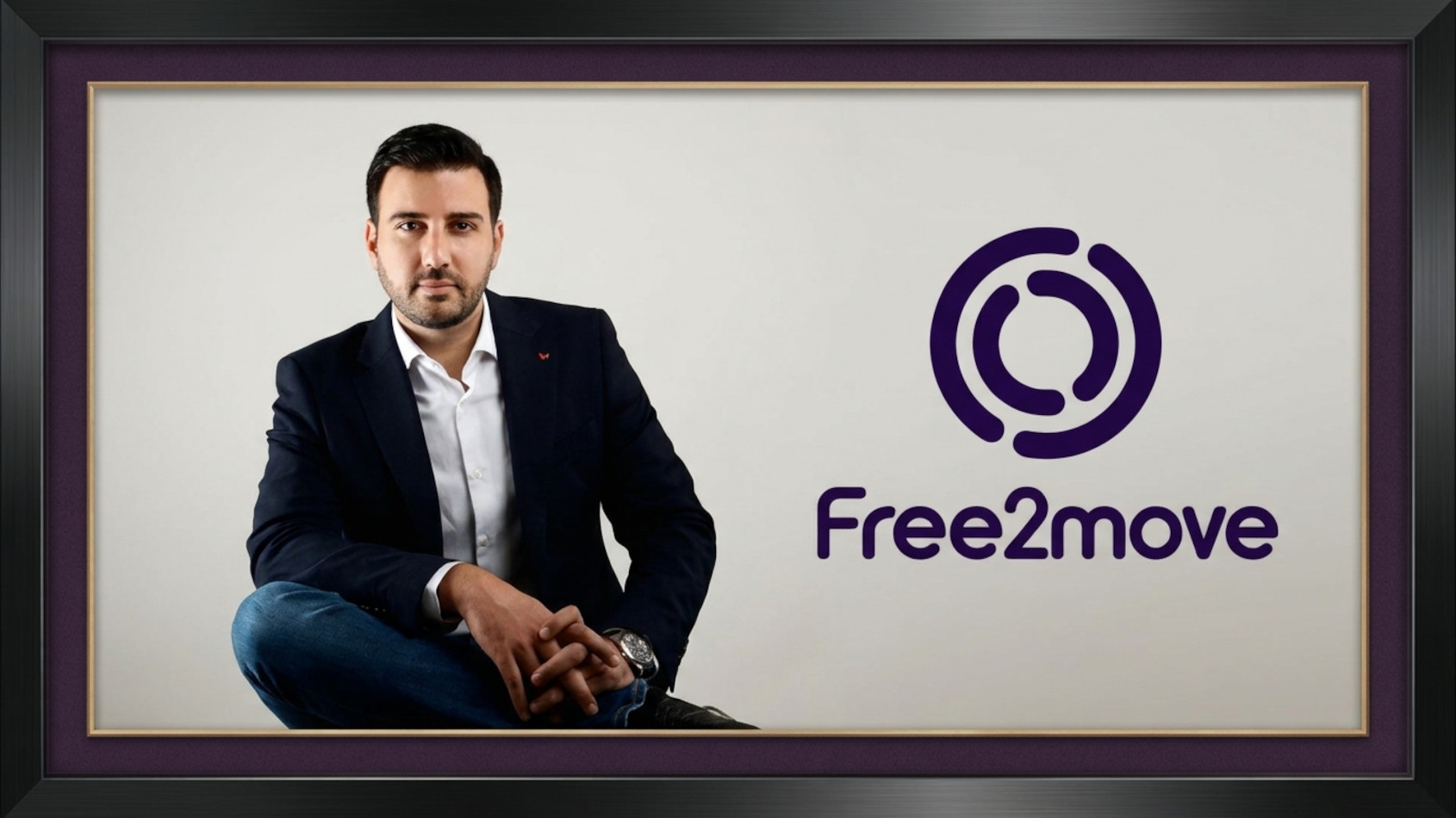
Ahmed Mhiri is the co-CEO of Free2move. Images courtesy of the company.
By subscribing, you agree to receive communications from Auto Remarketing and our partners in accordance with our Privacy Policy. We may share your information with select partners and sponsors who may contact you about their products and services. You may unsubscribe at any time.
With Used Car Week opening on Monday, used-car leasing and short-term vehicle subscriptions will be among the multiple possible solutions proposed to solve the challenge for consumers seeking affordable transportation.
Ahmed Mhiri is the co-CEO of Free2move, which is the global mobility brand of Stellantis and operates in the U.S. in collaboration with DriveItAway Holdings.
Mhiri suggested the solution to vehicle affordability and the future of mobility is to put capital where it makes every vehicle more productive: the orchestration, operations and infrastructure that connect dealers, operators and customers.
Mhiri elaborated about his strategy in this Q&A:
Would you still invest in adding more vehicles to the market?
Ahmed Mhiri: Yes, but selectively and intelligently.
Subscribe to Auto Remarketing to stay informed and stay ahead.
By subscribing, you agree to receive communications from Auto Remarketing and our partners in accordance with our Privacy Policy. We may share your information with select partners and sponsors who may contact you about their products and services. You may unsubscribe at any time.
There will always be a need for more vehicles in the right places, whether that means short-term rental vehicles, subscription fleets, dealer inventory, ride-hailing fleets or commercial mobility assets, and tomorrow autonomous fleets. The key is not simply adding supply. The key is ensuring that supply is positioned where there is proven demand and managed to deliver strong utilization.
A vehicle that sits idle is not mobility. It is capital waiting to become productive.
I would invest in fleet expansion where it creates clear customer value and where the operating model is ready to support it. But I would not separate fleet growth from fleet intelligence. Every additional vehicle should be connected, visible, efficiently maintained and actively managed through a digital platform.
How would you invest the $1 billion?
Ahmed Mhiri: Not in building more cars, that’s for sure. I would invest less in creating more vehicles and more in making every vehicle more productive.
And I would not spread it evenly across the stack. I wouldn’t put half of it directly into autonomy today. Not because I don’t believe in autonomy, quite the opposite: the technology has reached the point where the opportunity increasingly sits around it.
Tens of billions are already competing to build the autonomous driver. With $1 billion, I don’t want to compete with Waymo, Uber or the largest Chinese players. I would rather invest in the bottlenecks that appear when electric and autonomous fleets scale: the parts of the stack that either remove a major cost or increase asset productivity.
First, fleet orchestration, because it improves utilization, pricing and downtime. Second, the energy and operating infrastructure underneath it, to reduce one of the biggest operating costs of an electric fleet. Third, the physical operating layer around those assets (maintenance, cleaning, repositioning), which becomes more valuable as fleets become autonomous. And finally, the enabling technologies around autonomy. Many of the players who know how to do this are already part of our ecosystem.
Why is vehicle productivity such an important investment opportunity?
Ahmed Mhiri: Because mobility has a particular reality that is easy to underestimate: it is one of the few technology industries where the physical world sends you an invoice every single day.
A digital platform can be incredibly sophisticated, but vehicles still need energy, maintenance, parking, cleaning, repositioning, insurance and customer support. Every minute a vehicle is unavailable, incorrectly positioned or out of service affects both the customer experience and the economics.
Software creates the promise. Operations create the margin.
That is why vehicle productivity is so important. The future winners in mobility will not necessarily be the companies with the most vehicles. They will be the companies that can make each vehicle available more often, serve more customer needs and generate more value throughout its lifecycle.
What does “fleet intelligence” mean in practical terms?
Ahmed Mhiri: Fleet intelligence means using data to make better decisions before a customer experiences a problem.
It means understanding where demand will emerge, where a vehicle should be positioned, when it needs to be moved, when it should be charged, when it requires maintenance and how pricing can reflect real operating conditions.
At Free2move, this is central to how we think about mobility. A connected vehicle generates valuable operational signals. When those signals are combined with demand data, customer feedback and real-time market conditions, they can help create a much more responsive mobility ecosystem.
The objective is simple: the right vehicle, in the right place, at the right time, in the right condition.
What is Free2move building to capture that value in the U.S.?
Ahmed Mhiri: An orchestration model. We connect the players who supply vehicles with customers and mobility demand in all its forms, and each of them captures its own benefit. Dealers are an important part of it, alongside independent operators and booking platforms: everyone keeps doing what they do best.
The dealer keeps selling vehicles, including to Free2move. We turn those vehicles into mobility products that match different needs in duration and ownership: short-term rental through our network of independent mobility operators, and subscription with a pathway to ownership through our partner DriveItAway.
Those offers are distributed where customers already book: consumer platforms, but also the dealership itself, for example when a service customer needs a replacement vehicle. At the end of the cycle, vehicles return to the pre-owned market, and insurance and services are embedded along the way through our partners.
In other words, we are not trying to own every vehicle or run every service. We orchestrate the flows between vehicle supply, customer demand and remarketing, so that each vehicle is used more, by more customers, over its whole life.
How does this investment thesis connect to autonomous mobility?
Ahmed Mhiri: Autonomy will create new possibilities, but it will not eliminate operational complexity. In many ways, it will increase the importance of operations.
An autonomous vehicle still needs charging, cleaning, maintenance, parking, remote support, customer service and fleet supervision. It still needs to be where a customer needs it. It still needs to operate safely and efficiently in the real world.
That is why we are helping rental operators become mobility operators. The network that runs rental and subscription fleets for dealers today, preparing, maintaining, insuring and repositioning vehicles, is the kind of operating layer autonomous fleets will need tomorrow. And the booking platforms where our operators already publish their offers are natural channels for autonomous capacity when it arrives. The companies that can orchestrate fleets reliably, whoever or whatever is driving, will be positioned to capture significant value.
What does this mean for dealerships and other automotive partners?
Ahmed Mhiri: It means that the traditional view of inventory is changing.
A vehicle does not have to be only an asset waiting to be sold. Through the right digital platform, it can support multiple customer needs: short-term rental, monthly access, subscription and a pathway to ownership.
This is where a mobility hub model becomes powerful. Dealers can use vehicles more dynamically, reach new customer segments and create revenue opportunities across sales, F&I, service and mobility operations.
The goal is not to replace the dealership. It is to give the dealership more ways to create value from every vehicle.
Where have you already seen this model work in practice?
Ahmed Mhiri: One of the great examples is our partnership with DriveItAway.
Together, Free2move and DriveItAway have developed a flexible, dealer-native vehicle access model that combines our mobility infrastructure with DriveItAway’s subscription-to-ownership technology. The objective is to help dealerships reach customers who need reliable transportation but may not fit a conventional financing model, while turning underutilized or aging inventory into productive, recurring-revenue assets.
The results show why flexible ownership matters. The model helps dealers reach customers who would not have bought through traditional retail channels, and keeps those customers connected to the dealership for service, retention and, ultimately, ownership.
It is not simply about putting more vehicles on the road. It is about using technology, real-time data, flexible billing and dealer integration to make each vehicle work harder. A vehicle that may have been sitting on a lot becomes a mobility asset, a customer-acquisition tool, a service opportunity and, for the consumer, a practical first step toward ownership.
The future of mobility and the future of automotive retail do not need to be separate. When the right technology and operating model are in place, they can reinforce one another.
What is the real investment question for the next decade?
Ahmed Mhiri: The question is not only who will build the future of mobility.
The more important question may be: who will capture its economics?
The winners will be those that connect vehicles, customers, energy, data and operations into one intelligent system. They will understand that mobility is not just about producing a vehicle or building an app. It is about operating a reliable, flexible and profitable service in the real world.
That is where I would invest: in making mobility more productive, more intelligent and more accessible, one vehicle at a time.