Newest Santander consumer survey reinforces vehicle need amidst changing work scene
Graphic created with information from Santander US using Nano Banana 2.
By subscribing, you agree to receive communications from Auto Remarketing and our partners in accordance with our Privacy Policy. We may share your information with select partners and sponsors who may contact you about their products and services. You may unsubscribe at any time.
The Santander US Paths to Financial Prosperity Q3 2026 survey of middle-income householders reinforced the importance of having a vehicle.
And findings also showed the magnitude of consumers who plan to keep their current vehicle longer than previously anticipated.
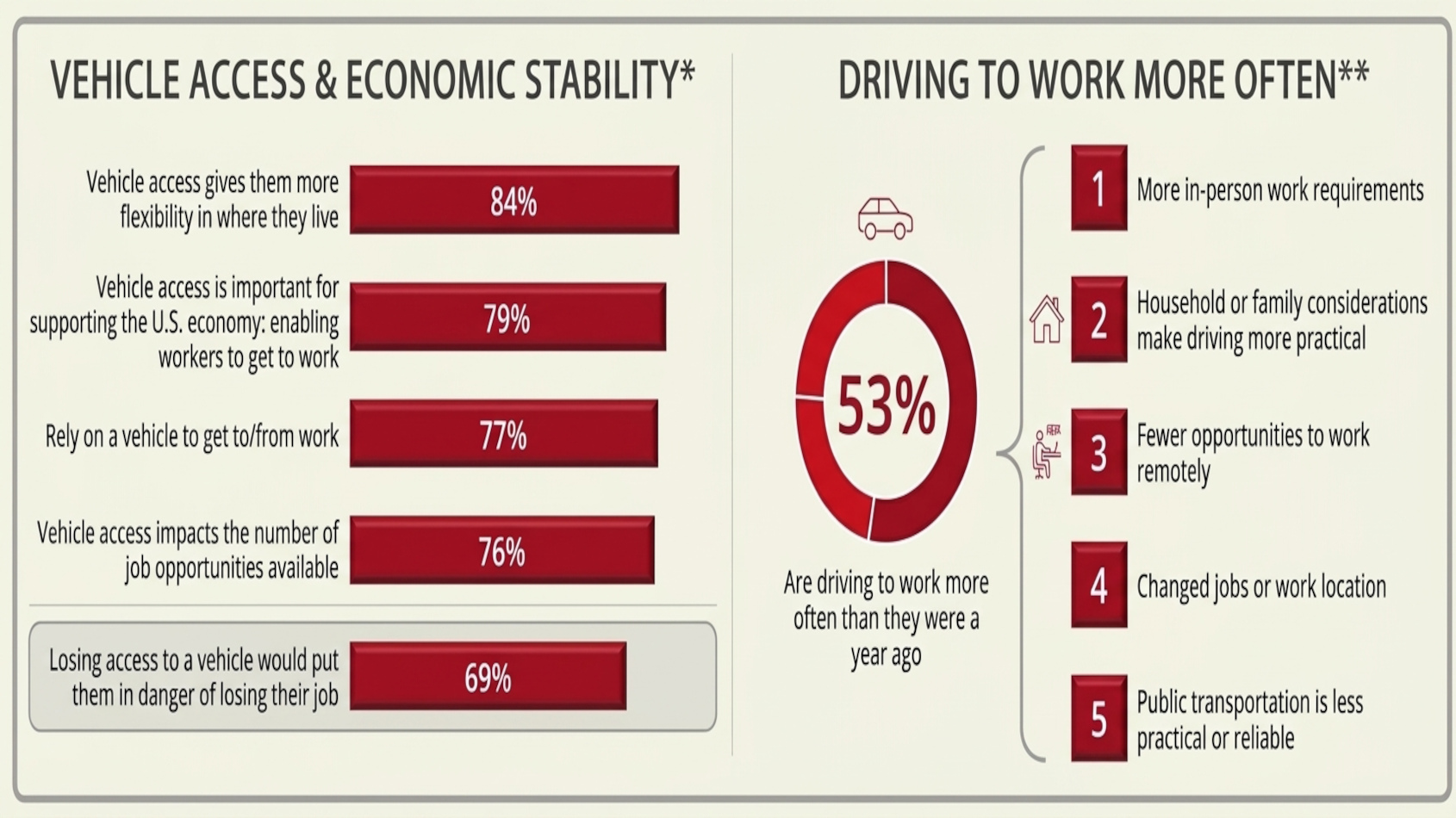
Santander highlighted vehicle access is important for middle-income households’ economic opportunity. According to survey participants, more than three-quarters (77%) rely on a vehicle to get to work, and more than half are driving to work more often than a year ago, as a result of more in-person work requirements.
Researchers insisted vehicle access is essential to the economic stability of everyday Americans because:
—84% said vehicle access gives them more flexibility in where they live
—77% said they rely on a vehicle to get to/from work
Subscribe to Auto Remarketing to stay informed and stay ahead.
By subscribing, you agree to receive communications from Auto Remarketing and our partners in accordance with our Privacy Policy. We may share your information with select partners and sponsors who may contact you about their products and services. You may unsubscribe at any time.
—76% said vehicle access impacts the number of job opportunities available
—69% said losing access to a vehicle would put them in danger of losing their job
—79% said vehicle access is important for supporting the U.S. economy: enabling workers to get to work
The survey also pinpointed the top five reasons why consumers are driving to work more often, including:
—More in-person work requirements
—Household or family considerations make driving more practical
—Fewer opportunities to work remotely
—Changed jobs or work location
—Public transportation is less practical or reliable
With the connection of a reliable car to gainful employment, researchers acknowledged that maintaining vehicle access requires consumers to make financial trade-offs.
According to Santander’s survey, more than two-thirds (68%) say they would sacrifice other budgetary items to access and maintain a vehicle, while 67% have cut discretionary spending in the past three months to cover vehicle-related costs.
Furthermore, the survey showed the top four reasons for keeping vehicles longer included:
—My current vehicle is still reliable and meets my needs
—The cost of buying a replacement vehicle is too high
—Avoid taking on new or additional debt
—Focused on other household expenses or financial priorities
Santander also found that recent buyers are adapting in various ways to manage affordability.
Nearly three-quarters (73%) switched brands to find the right price and 70% purchased a smaller or less expensive vehicle.
With seven in 10 recent buyers feeling priced out of the new vehicle market, more than 80% of prospective buyers are considering a used vehicle.
Researchers also indicated consumers use multiple sources of information and guidance during the shopping journey, with dealerships central at all stages and the preferred place to buy and finance a vehicle.
Among recent buyers, dealerships were cited among the most relied-upon sources during initial research, preparing to buy, and at final decision.
Nearly eight in 10 (78%) also relied on a dealership to find financing that works for their budget, according to the survey.
“Vehicle access remains fundamental to how middle-income Americans get to work, and consumers are prioritizing their vehicles — amid competing budgetary demands — to maintain that access,” said Betty Jotanovic, president of auto relationships at Santander Consumer USA, the auto business of Santander US.
“When it comes time to purchase a new vehicle, dealerships remain central to helping customers find the right vehicle and financing for their budgets,” continued Jotanovic, who is among the executives set to appear during Used Car Week that begins Monday in San Diego.
The full report and more information about the Santander US survey is available here.