COMMENTARY: The service drive is broken — here’s what fixes it
By subscribing, you agree to receive communications from Auto Remarketing and our partners in accordance with our Privacy Policy. We may share your information with select partners and sponsors who may contact you about their products and services. You may unsubscribe at any time.
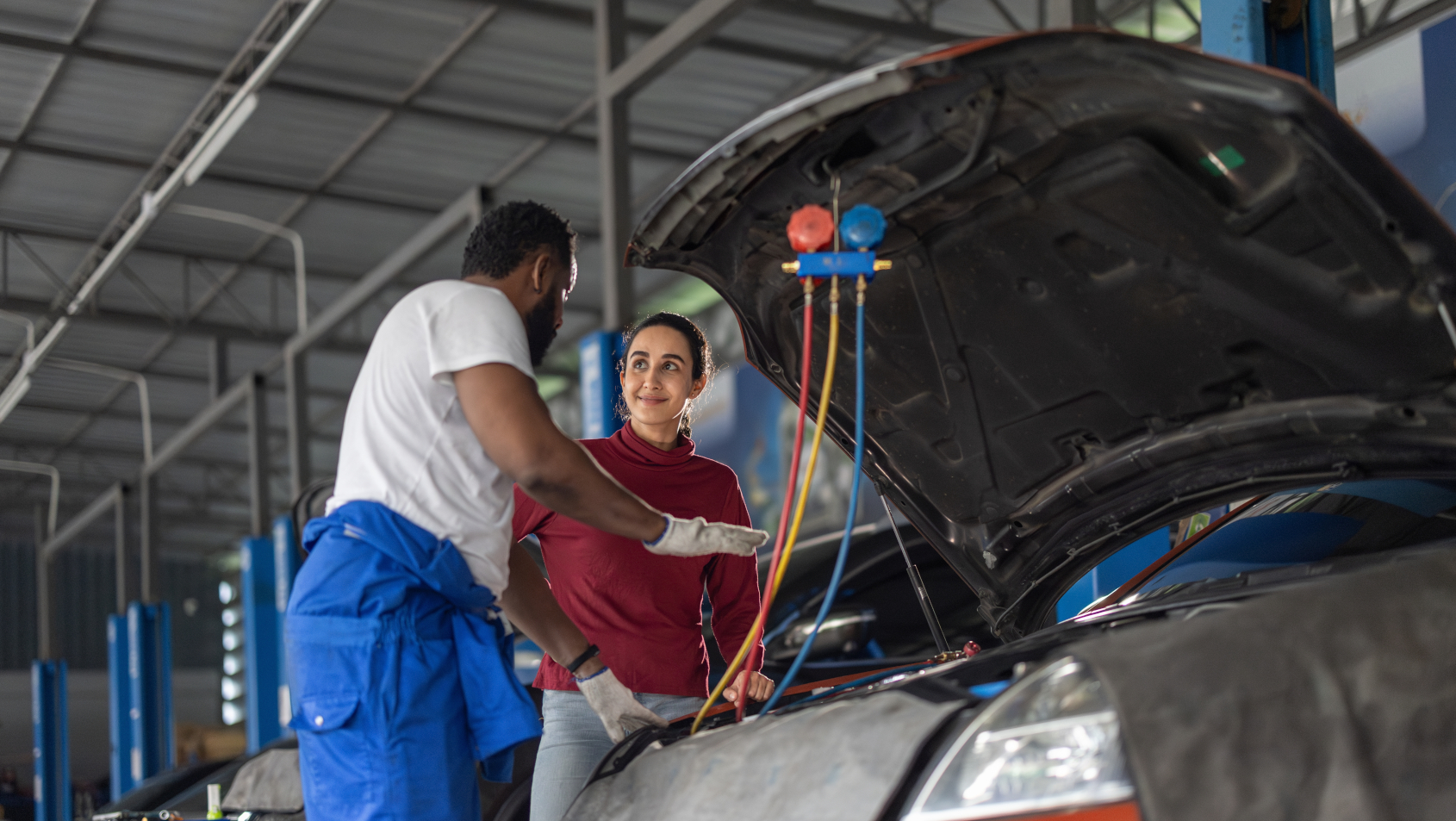
There’s an uncomfortable truth hiding in plain sight at most dealerships: fixed operations, the department that should be the most predictable and profitable engine in the building, is running on duct tape and good intentions.
Not because the people aren’t talented. They are. But because the infrastructure underneath them was never designed for the complexity they’re managing today.
The numbers tell the story. Fixed ops revenue is up 33% since 2018, according to the 2025 Cox Automotive Service Industry Study. But dealership market share has dropped to 29% — down 12% over the same period. The demand is there. The customers aren’t staying.
Now consider a common scenario inside the building. A dealership sitting on 10,000-plus DMS records with four BDC agents — who are also tasked with managing sales leads — and 24 hours in a day. Run the math, and roughly 90% of the opportunity dies in what I call the “un-mined gap,” the space between what your team could act on and what they actually have the bandwidth to reach.
That’s not a staffing problem. It’s an architecture problem. And no amount of hiring is going to solve it.
The complexity tax is real
Walk into any service department and count the disconnected systems. Scheduling over here, reputation management over there, digital MPI in one silo, parts integration in another, status updates through a third. Dynamic pricing, mobile pay, loyalty programs: all running independently, all creating friction, all bleeding revenue.
Subscribe to Auto Remarketing to stay informed and stay ahead.
By subscribing, you agree to receive communications from Auto Remarketing and our partners in accordance with our Privacy Policy. We may share your information with select partners and sponsors who may contact you about their products and services. You may unsubscribe at any time.
Think of it as the “complexity tax.” It’s the invisible cost of running a dozen disjointed solutions that were never designed to talk to each other. And it’s where customer loyalty goes to die.
The instinct is to keep layering on point solutions. A digital voice assistant here. A chatbot there. Another vendor for service reminders. But every new island you add to the archipelago just widens the gaps between them.
And the data confirms it. CDK’s Service Shopper 5.0 study found that 48% of customers leave dealerships not because of price, but because of convenience. The average spend at a general repair shop is actually higher than at a dealership. Customers aren’t chasing cheaper. They’re fleeing friction.
The hardest job in the dealership
And caught in the middle of all this? The service advisor.
No one in the building juggles more competing demands. They’re managing customer expectations, upselling maintenance, coordinating with technicians, fielding phone calls, navigating a half-dozen disconnected screens, and trying to keep the lane moving. They’re part concierge, part air traffic controller, part therapist.
Meanwhile, 61% of service appointments are still booked by phone, and customers are sitting on hold for an average of 9.3 minutes — a full minute longer than last year, according to CDK. That’s not a customer experience. That’s a countdown to defection.
And the tech stack they’ve been given was never built to make their lives easier.
That’s the real cost of the complexity tax. It doesn’t just bleed revenue. It burns out the people you can least afford to lose and we all know turnover and re-training are expensive propositions.
The fix isn’t asking advisors to do more with less. It’s giving them a foundation that does the heavy lifting before the customer even pulls into the lane.
Stop buying islands: Build a continent
The fundamental shift happening in fixed ops right now isn’t about any single technology. It’s about unification. Inbound, outbound, voice, web, email, SMS, direct mail, all orchestrated from one control tower, powered by one intelligence layer, across the entire ownership journey.
Think about what that actually means in practice. A customer’s DMS history, service intervals, and driving behavior feed into predictive outreach. Not a generic “we miss you” message, but a specific, VIN-aware communication that reads like a concierge, not a blast. When that customer calls back and nobody picks up — which, depending on the store, can happen on nearly four out of ten service calls — AI captures the call, books the appointment via text, and flags the high-value opportunity for the advisor, with full customer history and context. No additional headcount required.
The service advisor, meanwhile, sees everything in a single pane of glass: conversation history, engagement signals, follow-up priorities, and real-time alerts. No toggling between tabs. No guessing who to call first. No context lost in the handoff.
This is the autonomous service drive. Not “autonomous” in the sense that humans disappear, but in the sense that the system handles the VINs so your people can handle the people.
Hyper-personalization kills the generic
Here’s the dividing line between dealerships that retain customers and dealerships that lose them to the independent shop down the street: specificity.
“Hi Sam, just checking in” is noise. Every dealership sends that. “Hi Sam, your 2022 F-150 is due for its 30K service. I reserved a loaner for Thursday so you’re not stuck waiting.” That’s a concierge experience. It’s the kind of message that earns a response, books an appointment, and builds the trust that keeps customers coming back for years.
The difference isn’t effort. It’s intelligence. AI makes the concierge version possible for every customer, simultaneously, analyzing service history, purchase data, and real-time engagement signals to deliver the right message, through the right channel, at exactly the right moment.
And the numbers back it up. Across our dealer network, dealerships running this kind of unified experience are seeing double-digit increases in ROs from existing customers, a 24% lift in vehicle repurchase rates, and they’re winning back customers who had stopped servicing entirely.
The real ROI is efficiency
Let’s talk about what dealer principals actually care about: the bottom line. The autonomous service drive isn’t just a retention play. It’s a strategy for operational efficiency.
When AI handles predictive outreach, inbound capture, callback, appointment scheduling, and follow-up prioritization, you’re not just filling more bays. You’re freeing up hundreds of labor hours per store. That’s capacity redirected toward higher-value human interactions in the service lane.
Lower cost per appointment. Higher retention per rooftop. Massive SG&A savings through intelligent orchestration. That’s the new growth equation for fixed ops.
The future isn’t more tools
The industry spent the last decade buying point solutions. A widget for this, a vendor for that. The result is a tech stack that’s too complex and underutilized by your team.
The next decade belongs to dealerships that orchestrate. It’s time to replace the islands with an operating system purpose-built for modern fixed operations. Not a single vendor that does it all, a platform that connects every spoke to a single hub, learns from every interaction, and gets smarter over time.
The service drive is the heartbeat of long-term profitability. It’s time we built the infrastructure it deserves.
Matthew Muilenburg is the chief product officer at Impel