
Wholesale car prices normalize, stable, as first half closes
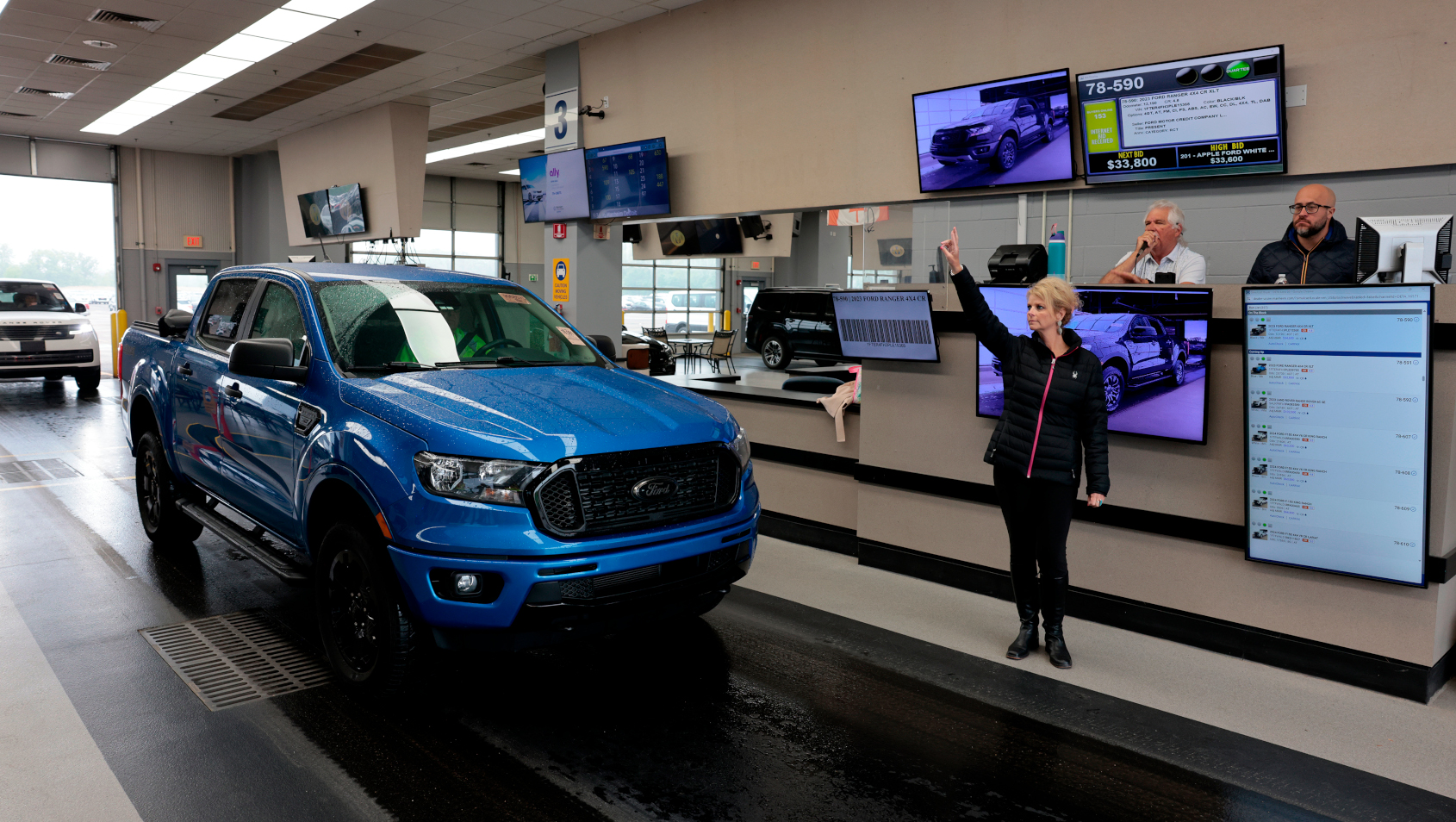
Manheim Detroit location in Carleton, Michigan on May 21, 2025. Photo by Jeff Kowalsky. Image courtesy of Cox Automotive.
By subscribing, you agree to receive communications from Auto Remarketing and our partners in accordance with our Privacy Policy. We may share your information with select partners and sponsors who may contact you about their products and services. You may unsubscribe at any time.
“Finished on solid footing.”
“The bigger picture remains one of balance.”
“Settled into a much more normal pattern.”
“Depreciation trends returning at a measured pace.”
“Expect the used market to continue normalizing.”
These were all used by analysts at Cox Automotive and Black Book to describe the wholesale vehicle market in June as the first half of the year closed.
Subscribe to Auto Remarketing to stay informed and stay ahead.
By subscribing, you agree to receive communications from Auto Remarketing and our partners in accordance with our Privacy Policy. We may share your information with select partners and sponsors who may contact you about their products and services. You may unsubscribe at any time.
Each firm released their respective monthly used-car price indices in recent days, with the general consensus being one of a stable wholesale car market.
Starting with Black Book, its Used Vehicle Retention Index for June came in at 147.3, down 0.1% from May and off 0.5% from a year ago.
“As anticipated, the market continued its transition out of the extended spring selling season in June, with depreciation trends returning at a measured pace,” Black Book vice president of data & analytics Laura Wehunt said in analysis around the index.
Though there the overall change in values was “modest,” Wehunt pointed some variance among the segments. For example, full-size cars had “resilient” demand and showed month-over-month and year-over-year price gains, she said.
Conversely, full-size picks and full-size vans had declines that were more “pronounced” than other segments.
Wehunt added, “Increased new-vehicle incentives from OEMs placed additional pressure on late-model used vehicles, particularly in segments where new inventory became more competitive.
“As we move further into the summer, we expect the used vehicle market to continue normalizing, with depreciation trends driven by the balance between consumer demand, new vehicle pricing strategies, and broader economic conditions,” she said.
Over at Cox Automotive, the company’s Manheim Used Vehicle Value Index came in at 212.9 for June. Adjusting for mix, mileage and seasonality, wholesale prices were up 2.1% year-over-year and 0.1% from May.
The long-term average increase is 0.5%, Cox said.
Unadjusted, wholesale prices climbed 2.9% from June 2025 and fell 1.3% month-over-month. The average long-term move on an unadjusted basis is a 0.5% drop
“The first half of the year is officially in the books, and wholesale values finished on solid footing,” Cox Automotive senior director Jonathan Gregory said in a news release. “We shouldn’t read too much into the softer gains in June.
“Much of the slowdown reflects tougher comparisons against last summer rather than a meaningful change in market conditions at the end of the first half. The bigger picture remains one of balance,” Gregory said.
“Dealer demand at Manheim is still running above historical norms, wholesale supply remains within seasonal ranges, and the market has settled into a much more normal pattern following an unusually strong spring.”
In an extended analysis, Gregory said the month-over-month change in prices for June was only marginally lower than what’s typical and that the slowdown in year-over-year increases (going from 3.6% in May to 2.1% in June), “is mostly a base effect, as we’re now lapping last June when values were still climbing on tariff-induced demand.”
Sales conversion rates were at 57.5% in June, Gregory said, beating the three-year average by 2.6 percentage points, indicating strong dealer demand in the lanes. Wholesale days supply was at 26.9 days, up slightly year-over-year and “comfortably within seasonal bounds,” he said.
“Affordability is the throughline in the first half of 2026. We’ve seen stronger appreciation in older units this year, and the most affordable segments have been among the year’s best performers,” Gregory said.
“The risk we’re watching for the second half is that steep ramp in off-lease supply, EVs especially, which could pressure specific segments even as the headline holds firm. Gas is the swing factor: If pump prices keep falling, some of that EV demand could fade as availability increases.”