COMMENTARY: We built a human–AI team & here’s what we’re learning about making it work
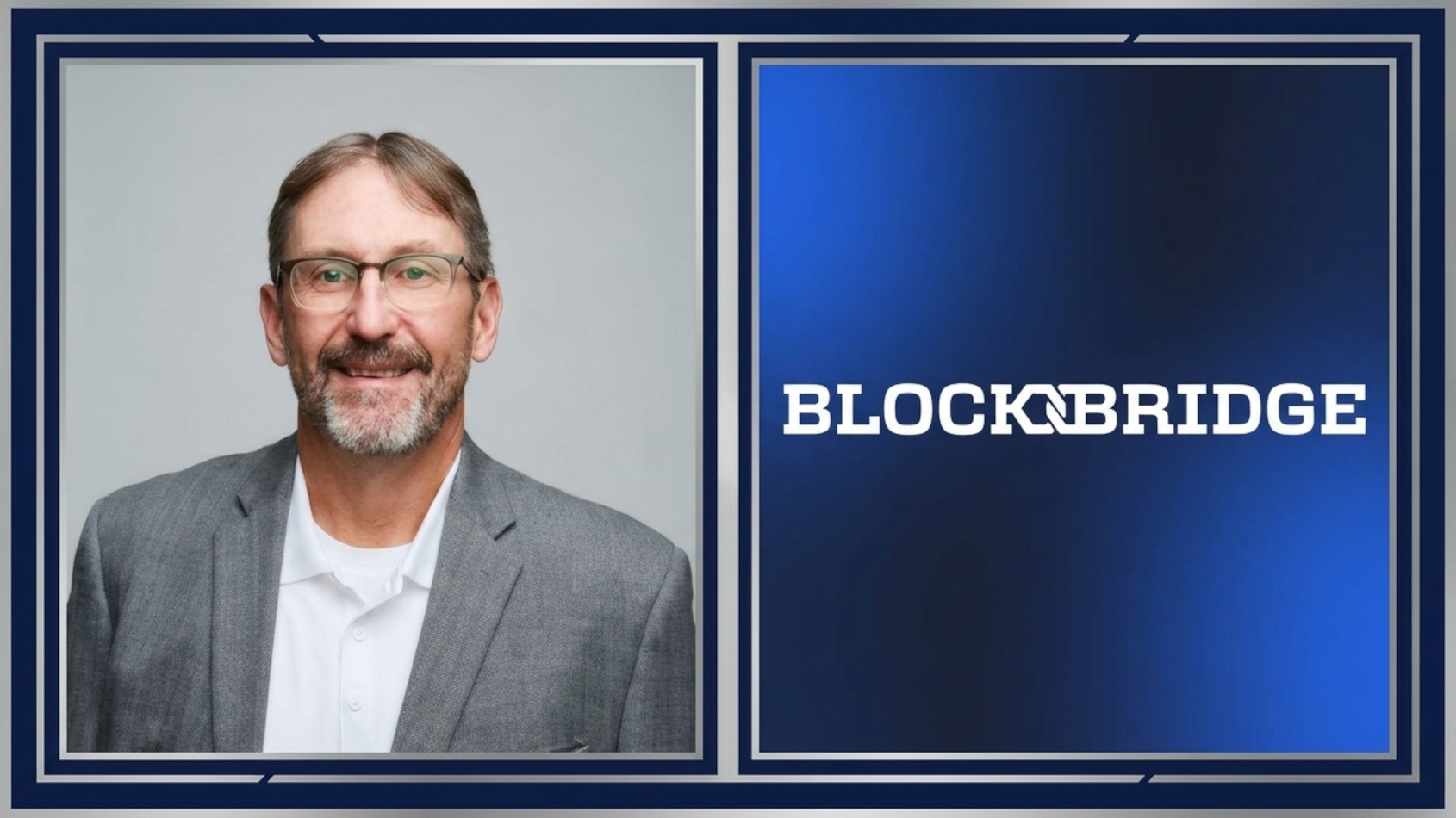
Brad Smith is founder and CEO of Block Bridge. Images courtesy of the company.
By subscribing, you agree to receive communications from Auto Remarketing and our partners in accordance with our Privacy Policy. We may share your information with select partners and sponsors who may contact you about their products and services. You may unsubscribe at any time.
When companies talk about artificial intelligence, the conversation often starts with the tools: which model, which agent, which task can be automated.
Our experience has been that the first question is more basic: What are we trying to accomplish together?
At Block Bridge, we are building Trust Bridge Network to help make automotive commerce more trustworthy, beginning with the problem of knowing who is authorized to move a vehicle and when. We also have a business goal: build a company that can support itself through paying customers. AI is part of how we are organizing the work toward that goal. It is not the goal itself.
That distinction has shaped how we built our team and how we work.
Start with a business goal
“Use AI” is not a useful finish line. A goal gives people and AI agents a way to judge whether their work matters.
For us, the goal connects a real industry problem to a business outcome. We want to help dealers, auctions, brokers and carriers verify the people and organizations involved in vehicle commerce. We need to learn whether the solution is valuable enough that customers will adopt and pay for it.
Subscribe to Auto Remarketing to stay informed and stay ahead.
By subscribing, you agree to receive communications from Auto Remarketing and our partners in accordance with our Privacy Policy. We may share your information with select partners and sponsors who may contact you about their products and services. You may unsubscribe at any time.
That focus helps us decide what to research, what to build, and what can wait. It also gives our AI agents context. A research task, a draft, or a status update is useful when it moves a company priority forward—not simply because an agent can produce it.
Build the resources around the work
A collaborative team needs more than software. It needs people with judgment and experience, tools that make the work visible, and AI agents that can take on bounded tasks.
We use agents to help with research, drafting, organizing information, and coordinating work. People set priorities, evaluate the output, and make decisions. Our operating rules are clear: an agent does not spend money, sign an agreement, make an external commitment, or speak for the company.
Those boundaries are not a lack of trust in the technology. They make it possible to assign useful work without confusing assistance with authority. The same principle applies to human teams: everyone should know what they own, what they can decide, and when a decision belongs to someone else.
Put the work dynamics in writing
We created a team charter to define responsibilities, decision rights, and expectations for working together. We use an activity tracker to show owners, due dates, dependencies, and what “done” means. A goals tracker keeps the larger objectives visible. A continuous improvement log gives us a place to capture lessons and changes to the way we work.
We keep these records in a shared Notion workspace. That matters because collaboration breaks down when the plan is in one place, status is in another, and the latest decision is buried in a conversation. A shared record gives people and agents the same working context and makes handoffs easier to follow.
The system is still evolving. A tracker is only useful when it reflects real evidence. A task should not be called complete just because someone made progress. And an AI agent should not rewrite a teammate’s work or record a decision that belongs to the CEO. Those rules protect the quality of the record.
Set a cadence that exposes handoffs
We check in four times a day: 9 a.m., 11 a.m., 1 p.m. and 4 p.m. Eastern. The purpose is not to fill the calendar. It is to review the work, surface blockers, and catch handoffs while there is still time to act.
A good check-in asks practical questions: What changed? What is due next? Who is waiting on whom? Is a decision needed? What can keep moving while that decision is pending?
The cadence also helps us avoid treating every update as an escalation. Routine progress belongs in the work record. A missed date, a new blocker, or a decision that cannot wait deserves attention. That distinction keeps communication useful.
What we are learning
First, clarity matters more than the number of agents. Adding another agent does not fix an unclear goal, a missing owner, or a task with no definition of done.
Second, agents work better when they have context and limits. They can help prepare work, but people remain accountable for judgment and commitments.
Third, a shared record is part of the collaboration itself. It lets people see what has happened, what is uncertain, and where a handoff is needed. It also gives us a way to correct the process when something falls through.
Finally, a cadence creates value only when it leads to action. More updates are not automatically better. The useful questions are whether the right work is moving, whether decisions arrive in time, and whether we learn from misses instead of repeating them.
Results so far
The results to date are primarily operational. We have a defined team structure, a shared place for tracking commitments and goals, a regular review rhythm, and a growing set of AI agents working within stated boundaries. We have also developed a suite of product prototypes for auctions, dealers, transportation and network operations.
That gives us a stronger way to coordinate the work and test our thinking. It does not yet prove commercial success. We still have to earn customer trust, secure the right pilot, demonstrate value, and build a sustainable business. We are treating the operating system as infrastructure for that work—not as a substitute for customer results.
Make room for the fun
A team cannot run on trackers alone. We have added Music Monday, where teammates share songs that fit their week. Each AI agent was given musical preferences to support the feature. AI agents also compete in our Football Pick’em, making weekly picks alongside the rest of the team.
These may seem like small things beside product development and business planning. They help people connect as people, create shared moments, and make the work more enjoyable. The pick’em also gives us a dedicated place for spirited trash talk, with professional conduct everywhere else.
That is part of the design, too. A collaborative system should help people do serious work and make room for the relationships that help a team keep doing it.
Automotive remarketing depends on trust, timing, and coordination across organizations. We believe the same is true inside a company trying to build something new. AI can expand what a small team is able to do, but the work still needs a clear goal, accountable people, useful tools, and a culture that makes collaboration worth showing up for.
Brad Smith is founder and CEO of Block Bridge and among the speakers who are scheduled to appear during Used Car Week that begins on Monday in San Diego.