Q&As with Game Changers in Auto Retail: John Foley of Recharged

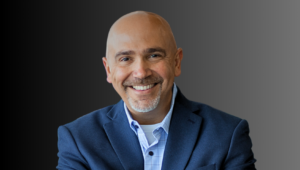
Recharged CEO John Foley answers a question during the 2025 Auto Intel Summit in Cary, N.C. Photo by Jonathan Fredin.
By subscribing, you agree to receive communications from Auto Remarketing and our partners in accordance with our Privacy Policy. We may share your information with select partners and sponsors who may contact you about their products and services. You may unsubscribe at any time.
Auto Remarketing and Used Car Week are showcasing the dealers who are changing what it means to be an auto retailer through a new program called “Game Changers in Auto Retail,” presented by Conversica.
The inaugural honorees will be recognized on site next at UCW during an awards program and several will participate in a panel discussion during the event. They will also be spotlighted in the December issue of Auto Remarketing.
Next up in our Game Changers honoree Q&As is John Foley, CEO of Recharged.
What does it mean to be car dealer in 2026 and how has that definition changed since you’ve been in the industry?
I’ve been in the industry for more than 25 years, starting in traditional franchise retail and eventually leading operations at CarLotz, which pioneered the consignment model for used cars. I’ve had a front-row seat to watch how access to information has completely reshaped the relationship between dealers and consumers.
When I started, being a dealer meant controlling information — the less the customer knew, the better your margin. Dealerships sold locally, marketed through TV, newspaper, and radio, and relied on drive-by traffic to fill the lot. That model worked because customers had no alternative.
Subscribe to Auto Remarketing to stay informed and stay ahead.
By subscribing, you agree to receive communications from Auto Remarketing and our partners in accordance with our Privacy Policy. We may share your information with select partners and sponsors who may contact you about their products and services. You may unsubscribe at any time.
Today, some of those dealers still exist, but the best operators view their market as the entire country. Data drives acquisition and pricing decisions. Transparency isn’t optional — it’s expected. At Recharged, we publish detailed battery health reports, provide a 100-day bumper-to-bumper warranty, and offer a seven-day return policy because that’s what today’s customer demands. The dealers who will lead this industry going forward are the ones listening to customers, challenging legacy norms, and removing friction from every step of the process.
What are some of the challenges and opportunities that come with focusing on a growing but still somewhat niche market such as used electric vehicles?
Honestly? Everything has to be built from scratch. The entire automotive retail infrastructure — from acquisition tools to reconditioning processes to warranty products — was designed around ICE vehicles. There’s no off-the-shelf playbook for inspecting a used EV battery, reconditioning a Tesla drive unit, or helping a first-time EV buyer understand home charging.
That’s the challenge. The opportunity is that demand is already here and growing fast. We’ve more than doubled our volume year over year and are scaling aggressively with new locations and new markets. We’re building EV-specific reconditioning processes, launching AI-powered inspection tools, and creating a buying experience tailored specifically to EV customers — things like charger options at delivery and education on ownership costs. The companies that build these solutions first will define how used EVs are bought and sold for the next decade.
After launching in Richmond, Va., Recharged has since rolled out new locations in Fairfax, Va., Charlotte, N.C., and Jacksonville, Fla. What have you learned as you’ve scaled the business?
One of the most important — and frankly surprising — learnings is that physical location matters far less for sales than we initially expected.
The majority of our transactions are completed online with customers across the country. We’ve delivered EVs to buyers in 45-plus states. Our Experience Centers matter enormously for sourcing, reconditioning, and creating a hands-on buying experience for local customers, but the sales engine is truly national.
That insight has shaped how we think about growth. We’re not just chasing population density — we’re strategic about where we open based on sourcing opportunities, logistics, and market dynamics. We raised millions to fuel this expansion, and the demand we’re seeing tells us what we’ve built is well-suited for EV buyers everywhere. Our mission is to scale quickly enough to meet that demand while maintaining the quality and transparency our customers expect.
How has the used EV customer base shifted in recent years?
When we launched, the typical used EV buyer was an early adopter — tech-forward, environmentally motivated, and already sold on electrification. They didn’t need convincing; they needed inventory.
That profile has expanded dramatically. Today we’re selling to families looking for a reliable second car, business owners managing fleet costs, retirees who want lower maintenance, and first-time car buyers who’ve never owned a gas vehicle. The shift accelerated as more EV owners shared their real-world experience — the ease of home charging, the lower cost of ownership, the driving experience — with friends and neighbors. Word of mouth has been the single most powerful driver of EV adoption, and it compounds every year as more vehicles hit the road.
What excites me most is that used EVs are making this technology accessible to buyers who were priced out of new. A three-year-old Tesla Model 3 or a Chevy Bolt at under $20K opens the door for millions of people. That’s what Recharged is here to do — make the switch easy, affordable, and trustworthy.