
Carvana to join S&P 500, the latest milestone in its comeback story
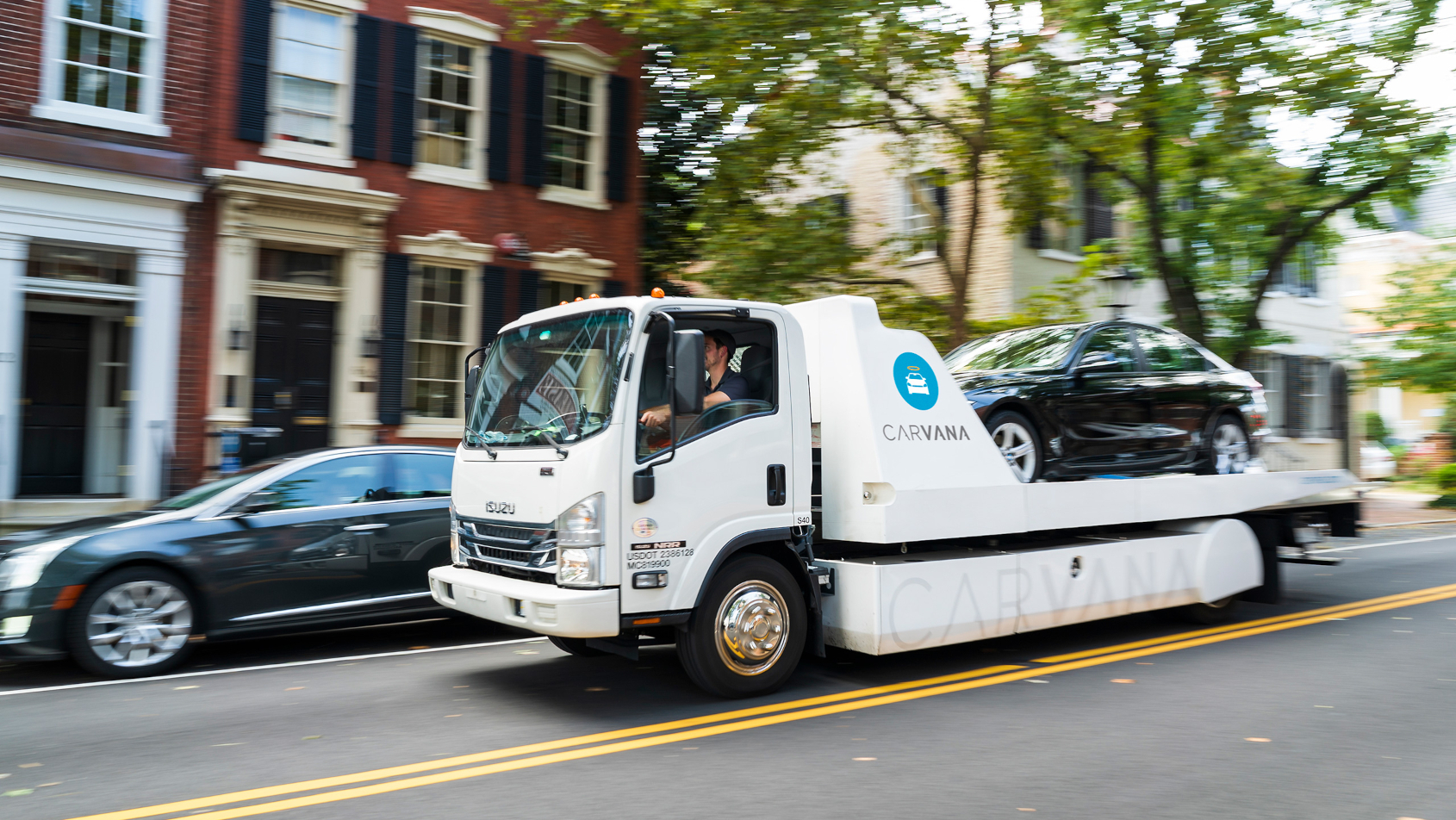
Image courtesy of Carvana/Business Wire
By subscribing, you agree to receive communications from Auto Remarketing and our partners in accordance with our Privacy Policy. We may share your information with select partners and sponsors who may contact you about their products and services. You may unsubscribe at any time.
In December 2022, Carvana’s stock plummeted to the depths amid talk of bankruptcy.
Three years later, the online used-car retailer is being welcomed into the S&P 500, an announcement that’s driving its stock price to record levels.
S&P Global said Friday that Carvana will be included in its index of 500 of the nation’s largest public companies, effective Dec. 22. That news sparked a pre-trading surge that Reuters reported drove Carvana stock value up 9% by Monday’s market opening.
Joining the S&P 500 is the latest milestone in the company’s comeback story, a revival that became necessary when sales fell and debt rose in 2022 amid a used-car market affected by high inflation and interest rates. The bottom dropped out of Carvana stock, which sank 99% from its 2021 high of $370 to just $3.72.
The company now has a market valuation of some $87 billion — higher than that of giant automakers General Motors and Ford. Its stock opened Monday at $434. In its recent third-quarter earnings call, Carvana announced it sold 155,941 retail units in Q3, up 44% year-over-year, with revenue up 55% to $5.6 billion and net income up $115 million to $263 million.
The recovery was fueled by a shift in focus from growth to efficiency and profitability, according to founder and CEO Ernie Garcia, who said in his Q1 letter to shareholders earlier this year, “We achieved a relative change of this magnitude in a short, three-year period by focusing our efforts on driving fundamental gains and realizing operating efficiencies across all aspects of the business.”
Subscribe to Auto Remarketing to stay informed and stay ahead.
By subscribing, you agree to receive communications from Auto Remarketing and our partners in accordance with our Privacy Policy. We may share your information with select partners and sponsors who may contact you about their products and services. You may unsubscribe at any time.
As a result, Garcia wrote, his company now claims the title of “the fastest growing and most profitable automotive retailer.”
Carvana, founded in 2012 by Garcia, chief operating officer Ben Huston and chief brand officer Ryan Keeton, sold its first car in January 2013 in Atlanta. It went public in 2017 and in 2021 became the third-fastest company ever to make the Fortune 500.
In May 2022, Carvana acquired ADESA’s U.S. physical auctions and has begun adding inspection-reconditioning centers to those facilities to improve its retail sales infrastructure.