Best January for used-car sales since 2021 suggests ‘sustained buyer activity’
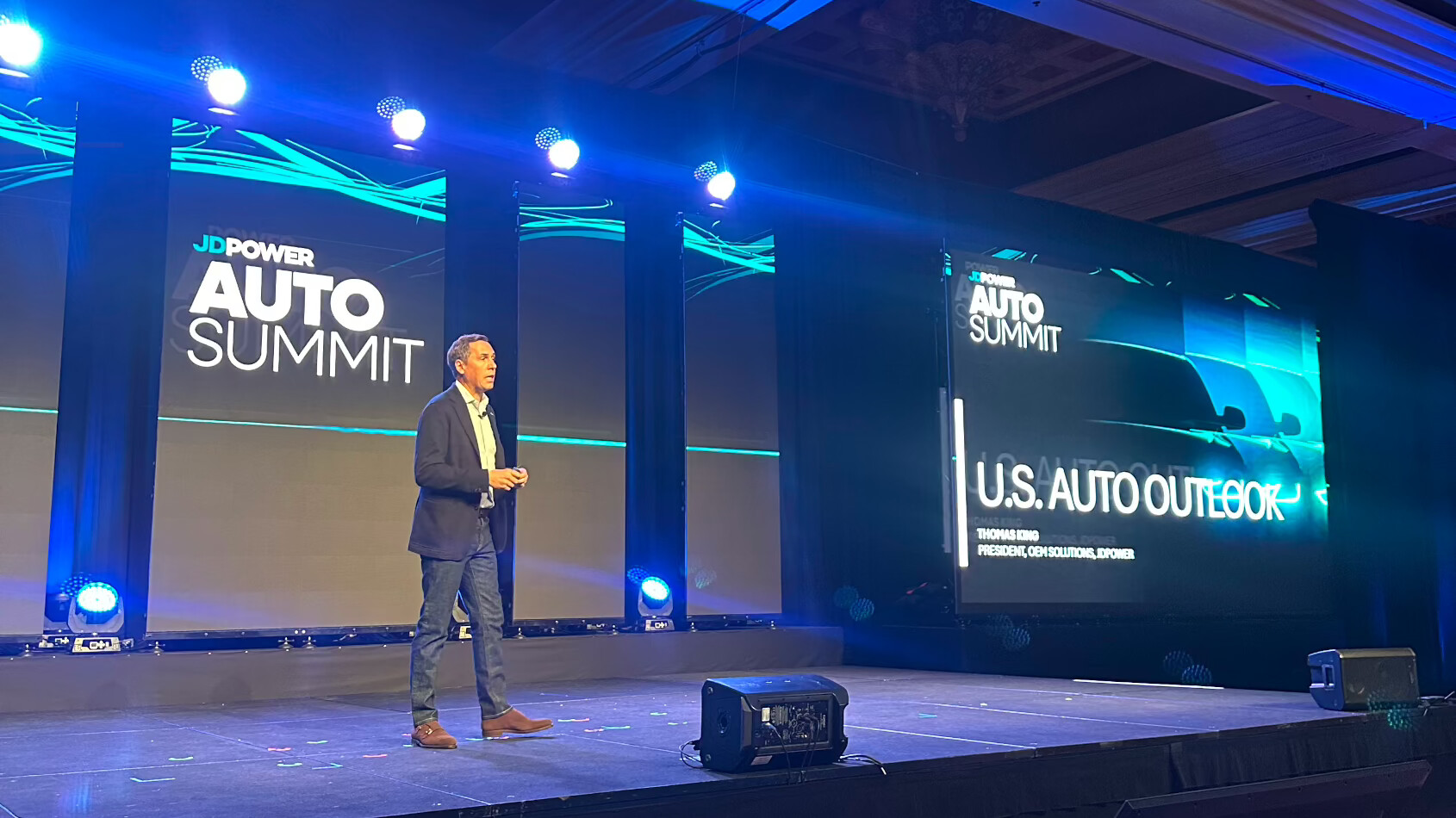
Thomas King during the JD Power Auto Summit earlier this month in Las Vegas, ahead of NADA Show 2026. Photo by Joe Overby.
By subscribing, you agree to receive communications from Auto Remarketing and our partners in accordance with our Privacy Policy. We may share your information with select partners and sponsors who may contact you about their products and services. You may unsubscribe at any time.
Used cars could be the “rational choice” for many shoppers re-entering the market.
And that viability is already showing up in the numbers for early 2026.
There were nearly 493,000 used-vehicle retail units sold last month, which was the strongest January for pre-owned sales since 2021, according to the latest Used Market Report from JD Power.
January’s numbers were down 5.4% from December, but that is typical for the season, JD Power said. Year-over-year, retail used-car sales soared 17.7%.
“Strong January volume indicates sustained buyer activity even as average transaction prices declined from year-end levels,” the company said in the report.
In January, retail used vehicles took an average of 49 days to turn, which is down from 51 in December and up 4.2% year-over-year, JD Power said.
Subscribe to Auto Remarketing to stay informed and stay ahead.
By subscribing, you agree to receive communications from Auto Remarketing and our partners in accordance with our Privacy Policy. We may share your information with select partners and sponsors who may contact you about their products and services. You may unsubscribe at any time.
The month-over-month easing shows “improved inventory flow early in the year,” and the days-to-turn in January indicates, “inventory is clearing efficiently, without signs of emerging demand weakness.”
Another good sign: there was a 4.5% month-over-month hike in used retail gross and F&I profit in January, even with transaction prices lower than the previous month, suggesting “stable execution,” JD Power said.
Specifically, retail prices for used cars fell 4.4% from December and were up 2.1% year-over-year. The sequential decline indicates “a pronounced post-holiday reset” after a bounce in December, but retail used-car prices remain relatively robust.
“Despite the larger month-over-month pullback, price levels remain elevated relative to much of 2024 and early 2025, preserving a firmer baseline entering early 2026,” JD Power said. “Pricing pressure remains uneven across the market, with affordability dynamics weighing more heavily on select segments, while higher-quality inventory continues to perform more consistently.”
And according to a separate JD Power analysis released Wednesday, used-car prices in February have averaged $29,488, which is a $448 year-over-year hike.
“This reflects the continued low supply of recent model-year used vehicles due to lower new-vehicle production during the pandemic,” Thomas King, president of OEM solutions at JD Power, said in that analysis.
The average trade-in equity for February appears like it will reach $7,013, a $16 decrease from 2025. JD Power is projecting 31.5% of used-car trade-ins this month will have negative equity, compared to 28.1% a year ago.
“The ongoing strength of used-vehicle prices continues to be good news for new-vehicle buyers with a trade-in, with average trade-in equity in February at $7,013, essentially flat from a year ago. However, the number of new-vehicle buyers with negative equity on their trade-in is expected to reach 31.5% — an increase of 3.4 percentage points from February 2025,” King said.
And shoppers could have some sticker shock on both new and used cars this year, as prices are considerably higher on both than they were when many buyers were last in the market.
Consumers paying $569/month for a new car in 2019 are now paying $750/month, JD Power’s Jonathan Banks said in a presentation earlier this month at the JD Power Auto Summit ahead of NADA Show 2026.
Shoppers who were paying $438 per month for a used car are now paying $600, he said.
“We’re seeing people move from the new to the used market,” said Banks, who is the company’s vice president of the retailing product portfolio. “In fact, when you do research on consumer psychology, used has become not a fallback, but rational choice.
“And cross-shopping, across all credit tiers. Even people who can afford that $750 payment, they are shopping used,” he said. “So, you’re going to get, in your showroom, a lot of people that are going to be flowing through, looking at both new and used vehicles and not thinking about it as a trade-off anymore.
“Because it’s all about affordability and rational behavior to keep my budget (intact).”