COMMENTARY: Why dealers need more than a broker when planning an exit
By subscribing, you agree to receive communications from Auto Remarketing and our partners in accordance with our Privacy Policy. We may share your information with select partners and sponsors who may contact you about their products and services. You may unsubscribe at any time.
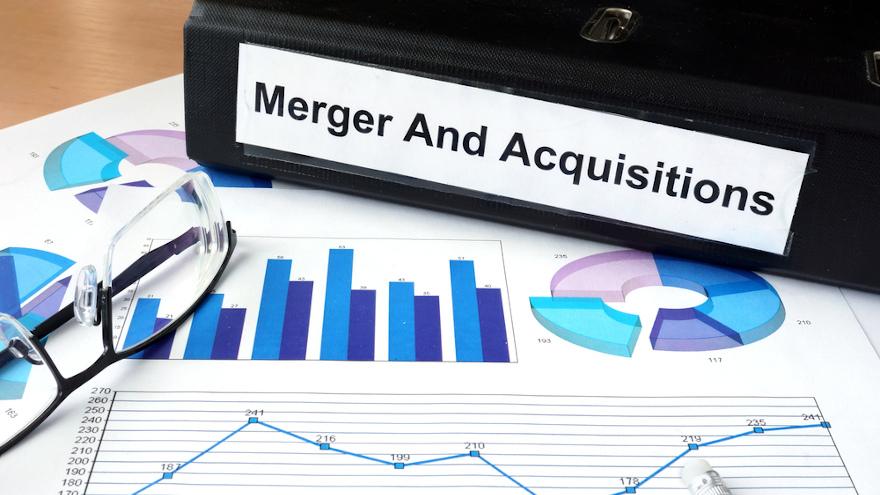
Automotive retail M&A has matured. Capital is abundant. Buyer demand is strong. Close to 700 franchises changed hands in 2025, with a similar volume expected across the nation’s 18,300 dealerships in 2026.
On paper, dealers are in the driver’s seat. In reality, when a serious opportunity surfaces, an unsolicited offer, a strategic inquiry, a succession decision, many dealer principals realize they are not as prepared as they thought. With eight buyers for every seller in the current market, demand isn’t the issue. Readiness is.
The advisory illusion
Most M&A advisors operate as transaction brokers. They are effective at marketing, buyer outreach, match making, and closing deals. But execution is not optimization.
Very few M&A brokers are set up to help improve a dealership’s profitability and enterprise value before it goes to market. By the time they’re engaged, the financials are largely set. And that’s where value is won or lost.
The current automotive M&A advisory landscape
The advisory ecosystem serving automotive retail can generally be divided into four categories:
- Investment banks and intermediaries
These firms specialize in transaction execution. Their strengths include buyer networks, valuation guidance, emphasis on marketing materials, structured sale processes, and negotiation expertise. Their involvement typically begins when a dealer has decided to sell, not years in advance. And it should be noted that generally, they are not automotive industry experts.
Subscribe to Auto Remarketing to stay informed and stay ahead.
By subscribing, you agree to receive communications from Auto Remarketing and our partners in accordance with our Privacy Policy. We may share your information with select partners and sponsors who may contact you about their products and services. You may unsubscribe at any time.
- Private equity groups and strategic acquirers
These groups are disciplined buyers. They underwrite sustainability, leadership depth, and risk concentration. Their objective is return on capital. They are counterparties, not performance optimization advisors. And while some may preserve legacy, their mandate is typically clear: acquire, scale, and exit at a higher multiple without regard for the legacy the dealer created.
- Automotive M&A brokers
M&A advisors with automotive as their specialty offer more tailored services that are anchored in brokerage, incl. assist with valuation, due diligence coordination, OEM navigation, and transaction execution. While some provide strategic insight, most remain transaction-centric rather than readiness-focused.
- M&A advisors offering operational expertise
A select group of M&A advisors, including Mach10 Automotive, bring another dimension to automotive M&A advisory; following a deep-dive assessment, we provide expert insight on how to improve operational performance across the dealership, including sales/inventory mgt., fixed operations, marketing efficiency, F&I performance, customer management, digital strategy, etc.
Generally, these services are designed to help improve dealership performance and profitability that can directly translate into measurable valuation impact and transaction strategy.
The role of attorneys
Attorneys play a critical, but often narrowly defined, role in the automotive retail advisory ecosystem. They are not deal originators, valuation strategists, or operational consultants. They are risk managers, deal structure architects, and legal gatekeepers in one of the most regulated sectors in U.S. commerce. It is also important to recognize that attorneys who specialize in a specific area of law support dealers as they evolve.
Regardless of timing and what kind of exit a dealer chooses, an estate attorney should be consulted to structure the business to safeguard one’s family and fortune.
Where the gap exists
Despite the breadth of advisors in the marketplace, dealers consistently face three challenges when considering a sale, recapitalization, or transition.
- Readiness is reactive, not proactive
Most dealers only engage M&A advisors when:
- An unsolicited offer arrives
- A health or succession issue arises
- OEM pressure increases
- Market valuations appear strong.
In any of the scenarios above, it can be expected that gaps are discovered under buyer scrutiny rather than addressed in advance.
Buyers today underwrite sustainability, not peak performance. They stress-test earnings. They assess leadership depth. They evaluate operational systems and compliance exposure. The result? Deals can become defensive exercises rather than strategic processes where the seller remains in control.
What’s typically missing: A structured, multi-year enterprise readiness approach that strengthens value drivers long before a transaction decision is made.
- Valuation drivers are often misunderstood
Many dealer principals focus on headline EBITDA or recent profitability. But sophisticated buyers assess:
- Normalized earnings
- Working capital discipline
- Fixed operations durability
- Leadership bench strength
- Operational documentation
- Risk concentration.
Two dealerships with identical EBITDA can receive materially different valuations depending on perceived sustainability and execution risk.
Yet few advisors provide a clear roadmap that answers:
- Which operational improvements increase valuation multiples?
- How do documentation and reporting discipline affect underwriting confidence?
- What specific steps reduce perceived risk in diligence?
Without clarity, preparation becomes guesswork.
What’s typically missing: A valuation intelligence framework that links operational decisions directly to real-world buyer underwriting behavior.
- Diligence is still treated as a phase — not a discipline
In many transactions, due diligence becomes the moment where issues surface:
- Financial adjustments
- Undocumented processes
- Leadership dependency on the owner
- Compliance gaps
- Inconsistent reporting
When diligence reveals surprises, leverage shifts.
Preparation is not about assembling documents in a data room. It is about building a dealership that withstands scrutiny without erosion of value.
What’s typically missing: A simulated pre-diligence assessment that mirrors buyer review before going to market.
What dealers are actually looking for?
Conversations with dealer principals reveal consistent themes:
- How would a sophisticated buyer really view my store?
- What would be adjusted out of my EBITDA?
- Is my leadership team strong enough to support valuation?
- If I waited one, two, or three years, what should I improve?
- How do I protect optionality?
In short, dealers are not only seeking transaction execution. They are seeking clarity, leverage, and control. They want to choose their timing — not be forced by circumstance.
The emerging advisory model: Enterprise readiness
What dealers should be looking for from their M&A advisor should not simply be what real estate agents do when they sell your house. Dealers should expect more than that. The next evolution in automotive retail M&A advisory is not just identifying a buyer to match with the seller, facilitating the deal execution. To make a difference, dealers should – at a minimum – challenge the advisor to assess where opportunities to improve profitability may exist.
Time permitting, with the objective of integrated readiness, an effective readiness framework would include:
- Financial normalization & transparency
Independent review of earnings quality, working capital patterns, and reporting consistency aligned with buyer underwriting standards.
- Operational discipline
Documentation of processes, reporting cadences, and accountability structures that reduce perceived execution risk.
- Leadership depth assessment
Evaluation of management continuity, succession planning, and owner dependency.
- Risk identification
Early identification of compliance exposure, concentration risk, or structural weaknesses that could impair valuation.
- Performance optimization modeling influencing valuation
Performing an assessment of opportunities that exist across the dealership business with an associated action plan that quantifies how performance improvements in specific areas will improve profitability. That in turn will indicate how improvements in performance will improve EBITDA, resulting in a higher valuation.
Why this matters now
The automotive retail M&A market remains active and competitive. Buyer capital is available. OEM approval standards are structured. Processes are sophisticated.
But underwriting rigor has increased.
Today’s buyers reward:
- Predictability
- Transparency
- Sustainability
- Leadership continuity
They discount:
- Owner-centric operations
- Inconsistent reporting
- Improvised processes
- Earnings volatility
In this environment, preparedness directly influences leverage.
The strategic advantage of preparing early
Preparing a dealership for a sale provides three powerful benefits:
- Optionality
Owners can choose to sell, recapitalize, transfer internally, or continue growing – from a position of strength.
- Leverage
When diligence reveals strength rather than weakness, negotiation dynamics shift.
- Control
Prepared operators control process timing, buyer selection, and outcome structure.
Unprepared sellers often react to pressure, whether market-driven, personal, or operational.
Controlling the outcome: Moving from transaction mindset to enterprise mindset
Automotive retail M&A is not inherently disruptive. But it does expose what already exists. The traditional advisory model focuses on transaction execution. That remains essential. What is increasingly missing is the bridge between daily operations and enterprise value.
Dealers who treat readiness as a discipline, not an event, consistently preserve more leverage, command stronger valuations, and retain greater control over their future.
The question is no longer whether capital exists.
It is whether your dealership is operating optimally and positioned to command it.
George Pero is an accomplished leader in the automotive industry. George began his career in the automotive retail sector, where he held various management positions. George’s career achievements include successfully launching, operating, and selling Auctions In Motion (AIM), a regional mobile auction company that brings the auction to the dealer. George has extensive knowledge and expertise in mergers and acquisitions in the automotive sector, having overseen more than $1 billion in transactions. His sales and general management experience coupled with his success in M&A activities led George to establish Mach10 Automotive, a dealer advisory firm offering a suite of services to include dealer performance improvement, succession planning, and M&A.