
CPO sales estimates for May reflect current choppy used-car sales environment
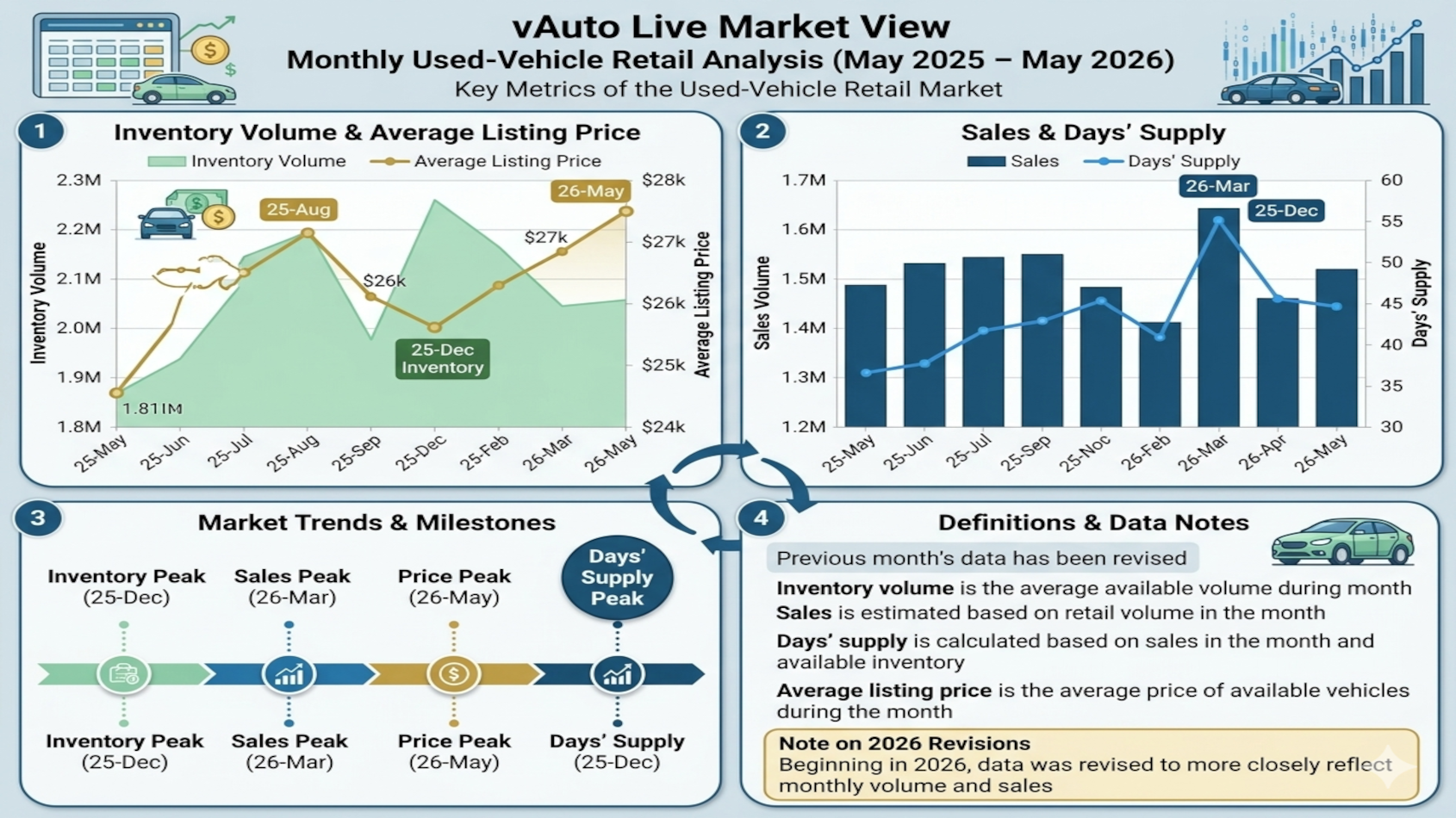
Data courtesy of Cox Automotive and graphic generated using Nano Banana 2.
By subscribing, you agree to receive communications from Auto Remarketing and our partners in accordance with our Privacy Policy. We may share your information with select partners and sponsors who may contact you about their products and services. You may unsubscribe at any time.
Certified pre-owned sales illustrate what it’s like to be in the car business in 2026. There’s some positive momentum, but softer performance, too, depending on your time comparison.
According to data reviewed by Cox Automotive and recapped by Scott Vanner, a manager of economic and industry insights, CPO sales in May decreased by 0.9% year-over-year, but they were 6.1% higher versus the previous month.
Cox Automotive estimated May CPO sales came in at 228,521 vehicles. That’s up from 215,354 in April.
Vanner also calculated that the CPO share of total used-vehicle retail sales in May came in at 15.7%. That’s up from 15.0% in April.
Year-to-date, CPO sales are running approximately 3.3% below the same period last year, according to Cox Automotive.
What about the used-car retail market as a whole?
Subscribe to Auto Remarketing to stay informed and stay ahead.
By subscribing, you agree to receive communications from Auto Remarketing and our partners in accordance with our Privacy Policy. We may share your information with select partners and sponsors who may contact you about their products and services. You may unsubscribe at any time.
Well, according to Cox Automotive’s analysis of vAuto Live Market View data released on Friday, used-vehicle inventory increased in May as the retail sales pace slowed.
Vanner said average listing prices rose for the third consecutive month, reaching $26,918. That’s the highest reading since the middle of 2023, thanks to a 6% lift year-over-year.
Cox Automotive tabulated that franchised and independent dealers combined to have a total supply of 2.12 million used vehicles on their lots in May. That figure is 0.6% lower compared to a year ago, but it’s 4% higher versus April.
“Despite the monthly gain, used-vehicle inventory remains tight by recent historical standards,” Vanner said in the analysis.
Like in the CPO space, Cox Automotive noticed retail used-vehicle sales slowed in May, sliding 3.9% compared to a year ago and 2% from April.
Vanner estimated total used-car retail sales volume at 1.45 million.
“Growing economic pressures and rising vehicle prices likely weighed on demand,” Vanner said. “At the same time, improving credit availability, which reached its highest level since April 2022, and the continued value proposition of used vehicles relative to new most likely provided an offset.
“Ford, Chevrolet, Toyota, Honda, and Nissan were the top-selling brands again in May, accounting for nearly 50% of all used vehicles sold,” he added.
Vanner wrapped up his analysis by delving into what might be the leading topic in the car business — affordability.
“While listing prices increased across every segment, age group, and price tier, the overall increase was driven primarily by a shift in what sold. Both inventory and sales of vehicle priced under $20,00 declined in April, while sales of higher-priced units grew. Near-new SUVs posting the largest gains. The top five sellers of the month had an average price of $25,043, approximately 7% below the average listing price for all used vehicles sold,” Vanner said.
“The higher prices at used retail right now are reflective of strong wholesale values earlier in the spring, particularly for older and more affordable vehicles. Auction prices — an important source of used-vehicle inventory — ran well above year-ago levels earlier in 2026 and have held, carrying through to retail and helping explain the sustained gains,” he continued.
“Price-conscious buyers continue to face limited options in the used-vehicle market, with inventory in the lowest-priced segments remaining scarce. Vehicles priced under $15,000 carried 33 days’ supply in May, 12 days below the overall market average of 45,” Vanner went on to say.