AI at car dealerships: a ‘crawl, walk, run’ evolution with data at foundation
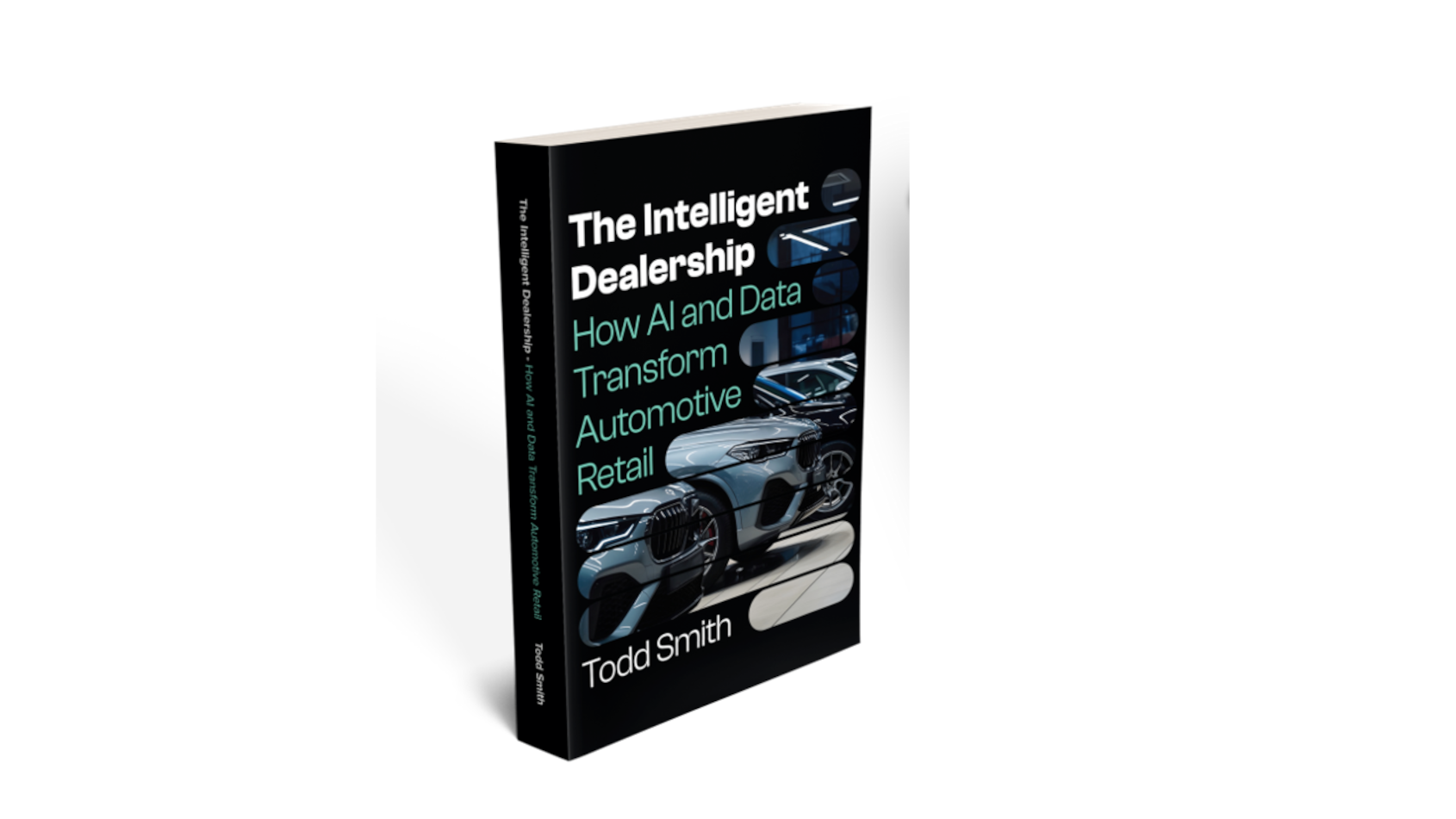
Image via screenshot at https://book.qoreai.com/.
By subscribing, you agree to receive communications from Auto Remarketing and our partners in accordance with our Privacy Policy. We may share your information with select partners and sponsors who may contact you about their products and services. You may unsubscribe at any time.
LAS VEGAS –
When it comes to practical applications of artificial intelligence for car dealers, it’s a marathon, not a sprint.
Or a “crawl, walk, run” approach, says QuoreAI founder and CEO Todd Smith.
“There’s no (case where you) plug in AI and it’s magic,” Smith said in an interview on the sidelines of the J.D. Power Auto Summit, ahead of NADA Show 2026.
“A lot of it is training and coaching. And I look at AI as like hiring a really good intern today where I have to teach (the AI tool), train it, give it feedback,” he said. “It has to mess up. I have to accept the mess up. And I have to keep working with it.
“I think when you do that, AI becomes a very viable co-conspirator to your organization,” Smith said. “And then at a point, it can do more and more of the work.”
But don’t think of it as a product or a SaaS tool, Smith says. It’s more of an evolving, collaboration-based technology that grows with its user and becomes “smarter” over time.
That’s the “framework” and approach to AI that Smith is trying to help dealers change through his book, The Intelligent Dealership: How AI and Data Transform Automotive Retail, which was released in January.
He was inspired to write the book in October 2024, when Anthropic released computer use capability, “where AI could actually access a system, go look something up for you or fill out a form for you,” Smith said. “And realized everything was going to change at that moment.”
Subscribe to Auto Remarketing to stay informed and stay ahead.
By subscribing, you agree to receive communications from Auto Remarketing and our partners in accordance with our Privacy Policy. We may share your information with select partners and sponsors who may contact you about their products and services. You may unsubscribe at any time.
Smith would spend the next 14 months or so writing, with the goal of building a foundation on the governance, compliance, data organization/management for AI in dealerships and dealer groups.
He acknowledges the writing process was challenging and a “whole new experience for me.”
Though he’s a wordsmith when it comes to Op-Eds and analyses, this project wasn’t just a “56,000-word article.”
Smith dedicated an hour each morning to writing, but his “cheat code” was voice notes, which allowed him to document middle-of-the-night ideas or breakthroughs from his dealer customers.
There was also multiple rounds of editing and figuring out the framework. And the beyond the writing process, there’s the production and operational aspect: getting it to a publisher and printed.
For some of these tasks, Smith leaned on auto industry marketing, public relations and consulting extraordinaire Peyton Hoffman, who helped him with editing and connecting with a publisher.
“Petyon was definitely glue for me to go through that. And because she had already written a couple books, she had been through the process,” Smith said.
“So I think aligning with someone who’s already done that job was super valuable to me. And it just happened that I’ve known Peyton a long time, so everything clicked up. Honestly, she was definitely the glue that made that book become a reality to me.”
One challenge or at least consideration that Smith faced in writing the book is the speed at which AI and technology, in general, develop.
He didn’t to write something that was obsolete by the time the book was published.
“I have to think deeper into a construct of foundational things that are going to live for the next few years,” Smith said of his approach. “So that took a little bit longer for me to work through that.”
But he found some foundational consistency in the importance of data.
“Because data is going to be here” for the long haul, Smith said. “And it’s (about) organizing that and making it valuable for a dealer, which also is different. Dealers never put data first. I feel they put selling cars, servicing cars (first).
“No GM ever goes to data school to learn how to use this data technology and really leverage AI. So I felt like that was my inspiration. That was my driver,” he said.
“In the end, I feel like the output was good. I’m really happy.”
While there might not be a “data school” for dealership managers to learn how to leverage AI, a good starting point is in the data queries themselves.
“Once dealers have their data organized, the first thing is replacing a lot of their dashboards with just being able to query the data and get your answers,” Smith said.
“I think that’s going to be a massive step for dealers to operationalize instead of living inside 14, 15 dashboards and your KPIs and scorecards — just to be able to ask questions of the data and then get feedback from that to make better business decisions faster,” he said. “So I think accelerating decision making is going to be one of the biggest first things that dealers can really leverage with AI.”
Smith also sees AI being used to help dealers become more efficient at marketing. It can help them better understand their customer data and pinpoint the most loyal customers and those who perhaps aren’t.
AI can be deployed for “cutting through large data sets” to accomplish such tasks, he said.
The technology also has its pitfalls and areas to which dealers should pay caution, Smith said.
“I believe we’re heading into a world where dealers are either going to choose to own their intelligence or continue to rent it from third-party vendors,” he said. “If you choose to rent your intelligence, realize every time you unplug that vendor and their AI, you start over. That, to me, is a bad path to take.”
Those who choose to “own their intelligence layer” will be able to continue evolving it and increasing its intelligence, effectiveness and efficiency, Smith said.
“And I think the dealers who choose to become owners are going to find efficiencies they couldn’t even have imagined a few years ago,” he said.
Smith estimates there are about 265 workflows to operate a dealership. A single employee might handle 10-20 of those.
“So I look at AI in stores. There’s plenty of workflows that AI can now support and do those workflows,” he said. “I don’t see it replacing employees today, but I see it replacing the workflows the employees are currently doing today.
“So easy ones are just looking at lead management.I think lead scoring, lead managing, prioritizing the leads, even doing text-email response can be pretty much automated,” Smith said.
He gives the example of phone systems that can answer inbound calls, set appointments and “triage” tasks of determining what department a call should go (sales, service, etc).
“You have to look at your dealership from a workflow perspective, and then you look at, is AI enabled today to do that workflow? And some of the workflows, no.”
For example, payroll. Smith said his company has tried applying AI to automate payroll at various groups and can get “65%, 70% there,” but it’s “still too complex” to automate entirely.
“Because sometimes there’s still so much human (intervention needed) in the loop, the workflow requires the GUI, the human, to be the connector of, ‘I need to print this data set and go hand it to this guy.’ There’s no AI that solves to that,” Smith said. “So for us, everything is a workflow, and then figuring out how to optimize against that.”
The Intelligent Dealership: How AI and Data Transform Automotive Retail is available at book.qoreai.com.