
Central Dispatch upgrades mobile app to let carriers do more business in their ‘office’ on the road
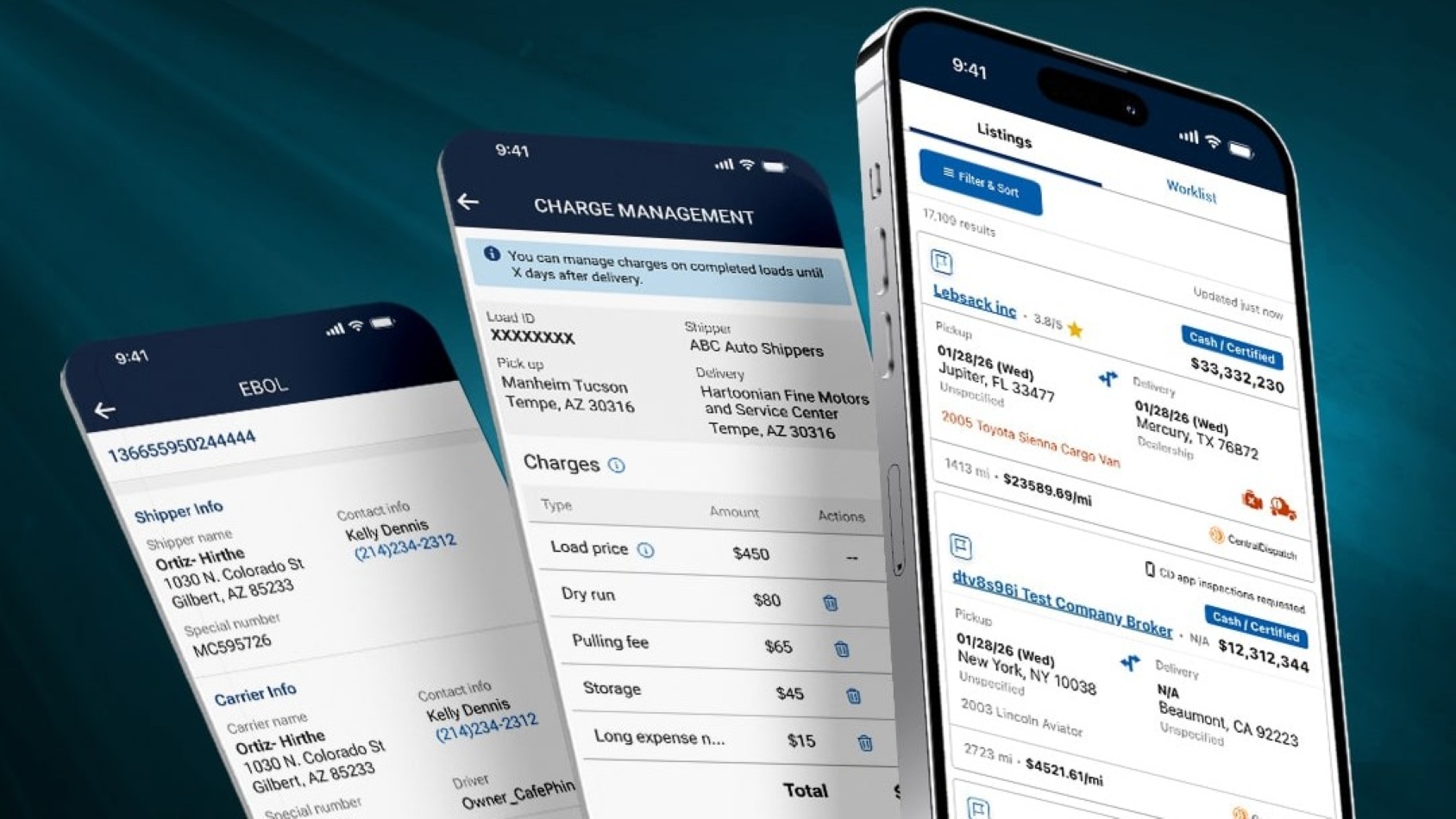
Central Dispatch's carrier app now includes tools to access electronic bills of lading, generate invoices and search for loads. Image courtesy of Cox Automotive.
By subscribing, you agree to receive communications from Auto Remarketing and our partners in accordance with our Privacy Policy. We may share your information with select partners and sponsors who may contact you about their products and services. You may unsubscribe at any time.
To do business with auto transportation carriers, Central Dispatch wants to reach them at their office.
The tricky part is their office is often in the cab of a hauler headed to their next destination. Which is why Cox Automotive’s logistics brand is expanding its mobile technology with a “new wave” of upgrades to the Central Dispatch carrier mobile app.
In a news release, Cox Automotive said the new capabilities are the next step in the app’s evolution from an inspection tool into a more connected platform from which carriers can find loads on Central Dispatch’s automotive logistics marketplace and execute key parts of the transaction on the go.
The app is designed to include more of a carrier’s core workflow, allowing them to search for loads, access and share electronic bills of lading, and generate detailed invoices from their phones. The goal is to create a single mobile experience for carriers to manage key steps of the transport process without switching tools or returning to a desk, the company said.
“Carriers spend much of their time moving between jobs, yards and deliveries, and they need tools that work the way they do,” said Lainey Sibble, Cox Automotive’s head of Central Dispatch. “We started by solving one important need with inspections, then kept building based on what carriers told us they needed next.”
Cox said the Central Dispatch carrier app has been downloaded more than 141,000 times and used for more than 4.7 million inspections since its launch in 2024, noting more than half of the carriers currently using Central Dispatch access it from a mobile device.
Subscribe to Auto Remarketing to stay informed and stay ahead.
By subscribing, you agree to receive communications from Auto Remarketing and our partners in accordance with our Privacy Policy. We may share your information with select partners and sponsors who may contact you about their products and services. You may unsubscribe at any time.
With the new tools, Cox said, those carriers can now search for loads directly from the app by origin and destination, look along preferred routes and refine results, as well as viewing, sharing and downloading eBOLs in the app, making it easier to send over documents and shipment updates.
In addition, carriers can add incidental charges such as tolls or storage fees directly to invoices within the app, giving them greater visibility into total shipment costs so they can communicate them to their customers.
Those upgrades are added to the app’s previous functions, including mobile inspections, completed by capturing photos, documenting damage, adding notes and collecting signatures; and real-time tracking — automatically activated when carriers use the app for inspections — which gives shippers location updates and pickup and delivery notifications.