COMMENTARY: Best practices for dealers ready to scale vehicle acquisition & go from 10 cars to 100 monthly
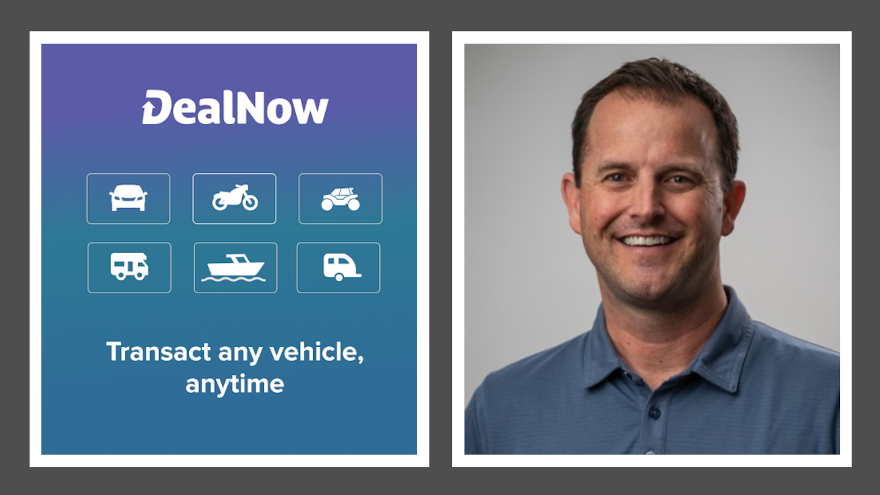
DealNow co-founder and CEO Brad Parker. Images courtesy of the company.
By subscribing, you agree to receive communications from Auto Remarketing and our partners in accordance with our Privacy Policy. We may share your information with select partners and sponsors who may contact you about their products and services. You may unsubscribe at any time.
Direct vehicle acquisition has become one of the most talked about strategies in the dealer community, and for good reason. Traditional sourcing channels are tighter and more expensive than they used to be. Wholesale prices have stayed elevated, with the Manheim Used Vehicle Value Index closing June up 2.1% year-over-year as the used vehicle market wrapped the first half of the year on stable footing, according to Cox Automotive.
Franchise brands tracked in the Q1 2026 Haig Report averaged just 53 days of supply in April, roughly 5.9% below the five-year average, a sign that inventory remains historically tight even as production discipline improves, according to Haig Partners.
At the same time, the pipeline that once refilled used lots automatically has thinned out. Off-lease returns, once averaging more than five million units a year, are expected to bottom out before climbing to only about 3.2 million units in 2026, still millions short of a well-stocked market. Dealers who built their acquisition strategy around auctions and lease returns are discovering that model no longer holds. Many are turning instead to private party and direct buying as a primary source of retail ready inventory.
That shift creates a new problem. A dealer who proves the channel works at 10 or 20 units a month often assumes that scaling to 100 is simply a matter of spending more on advertising. It is not.
Leads are not the bottleneck
Platforms like KBB, CarGurus, and Facebook Marketplace do an important job. They generate consumer interest and fill the top of the funnel. Most dealers already have more leads than they know what to do with. The real constraint sits downstream, in everything that happens after a seller accepts an offer: identity verification, paperwork, title work, loan payoff, and the transfer of funds.
That stage of the transaction rarely runs through a dealership’s existing systems. It tends to be handled manually, differently by whoever happens to be at the desk that day. At low volume, that inconsistency is an inconvenience. At high volume, it becomes the ceiling on growth. A dealer trying to move from 20 acquisitions a month to 100 does not need five times the leads. They need an operational backbone that can process five times the transactions without breaking.
Subscribe to Auto Remarketing to stay informed and stay ahead.
By subscribing, you agree to receive communications from Auto Remarketing and our partners in accordance with our Privacy Policy. We may share your information with select partners and sponsors who may contact you about their products and services. You may unsubscribe at any time.
What growth actually stresses
Rapid volume increases put pressure in places many dealers do not anticipate until it is too late. A fivefold jump in acquisition volume changes the math on loan payoff processing timelines. It multiplies the administrative workload tied to title work, and title clerks who could keep pace with a trickle of deals often cannot keep pace with a flood. Cash flow becomes a different equation entirely, since funding rapid turns at 100 units a month requires a different level of working capital than funding 20.
None of this is a reason to avoid growth. It is a reason to plan for it. Dealers who scale without addressing these pressure points tend to become cautionary tales rather than success stories, not because the demand was not there, but because the infrastructure behind it could not keep up.
Building the back end before the volume arrives
A handful of practices separate dealers who scale successfully from those who stall out.
First, audit the current process before adding volume. Growth exposes every gap in a workflow, and it is far better to find those gaps internally than to have a customer or a regulator find them first.
Second, treat lead platforms as one input among several, not the entire strategy. They remain valuable for generating interest, but they were never designed to manage what happens after an offer is accepted.
Third, standardize the process from offer acceptance through funds transfer. Every step, from document verification to payoff confirmation, should be documented and repeatable regardless of who is handling the deal.
Fourth, build fraud prevention into the process from day one rather than reacting to it later. Fraud risk grows with volume, and retrofitting protection after a problem surfaces is far more costly than designing it in from the start.
Fifth, understand the cash flow breakeven point at different volume levels. The economics of funding 20 acquisitions a month look nothing like the economics of funding 100, and dealers need to model that before they need it.
Sixth, train staff on a consistent, digital first process before scaling begins. Human inconsistency, more than any external market force, is the most common reason scaling efforts fail in this channel.
A practical path, not a hype cycle
The dealers succeeding in today’s acquisition environment are not the ones buying the most ads. They are the ones who recognized early that acquisition volume and acquisition infrastructure have to grow together. As auction supply stays tight and off lease inventory remains scarce through 2027, the ability to source vehicles directly from consumers, reliably and at scale, will only become more valuable. The dealers who build that operational foundation now will be the ones positioned to take advantage of it.
Brad Parker is the co-founder and CEO of DealNow.com, a platform transforming how cars are bought and sold between private parties and dealers. DealNow looks to make every transaction fast, secure, and effortless. For more details, visit www.dealnow.com.