
COMMENTARY: Separating fact from fiction in the fight against transport fraud
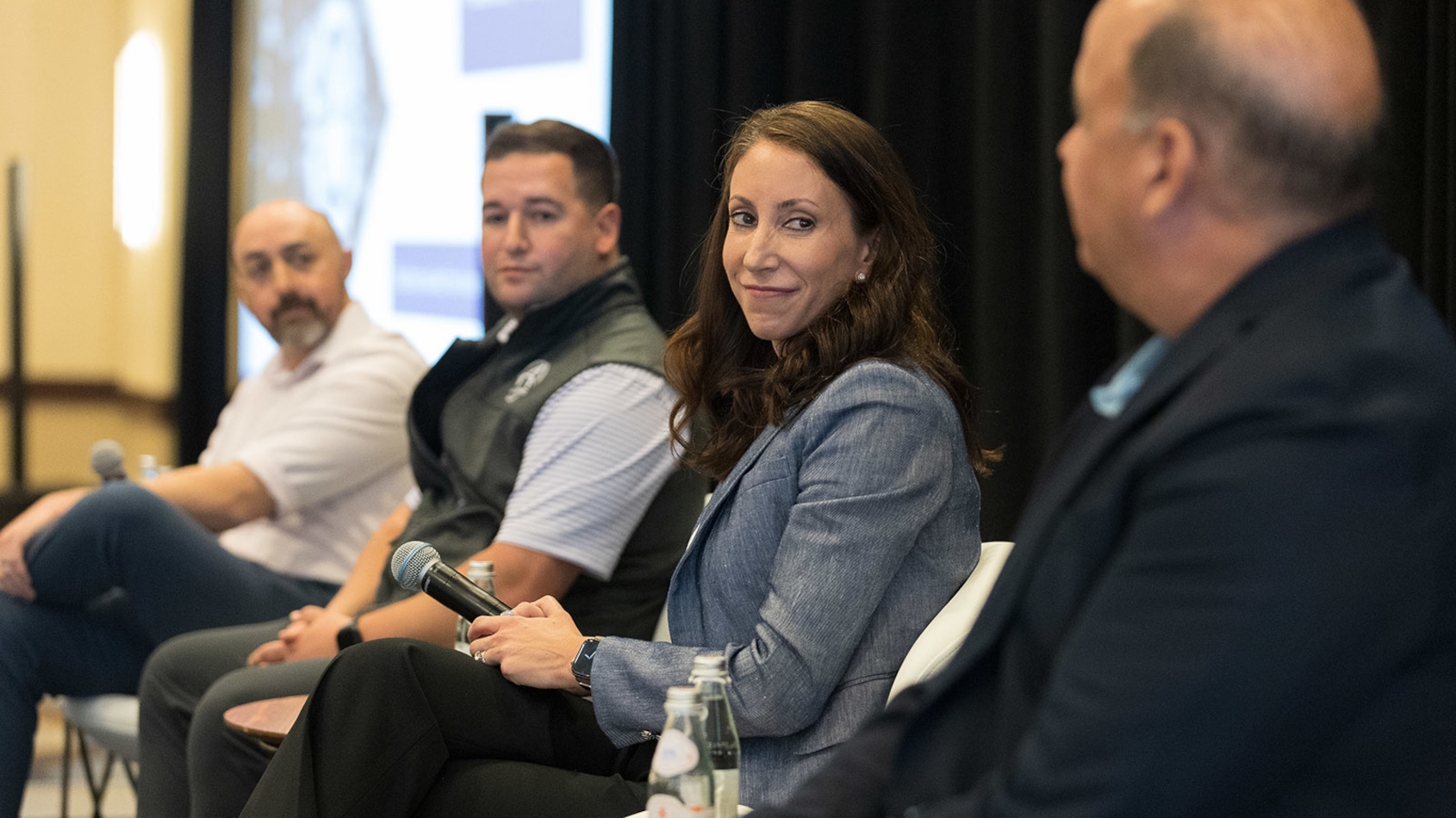
Lainey Sibble of Central Dispatch was part of a Fraud Forum panel at the Used Car Industry Summit in Miami. Photo by Jonathan Fredin.
By subscribing, you agree to receive communications from Auto Remarketing and our partners in accordance with our Privacy Policy. We may share your information with select partners and sponsors who may contact you about their products and services. You may unsubscribe at any time.
After speaking on a Fraud Forum panel at the Used Car Industry Summit, I kept thinking about how fraud prevention is not only about the latest tactic or tool, but also about the assumptions that influence how our industry approaches risk in the first place.
As fraud in automotive logistics continues to evolve, so do the misconceptions surrounding it. How marketplaces work, who can see what and where responsibility lies all matter. When those details are misunderstood, dealers, carriers and brokers can be left exposed.
Today’s fraud landscape spans both digital and physical moments across a move. It can show up as phishing, identity theft, synthetic carrier profiles, double brokering or improper vehicle releases at pickup. That breadth is exactly why it’s worth setting a few things straight.
Misconception: Going digital is what’s driving transport fraud.
Reality: Technology itself is not the problem. Uneven adoption is. When used consistently, digital tools can help reduce fraud by enabling measures such as stronger identity checks, more controlled visibility, real-time tracking, and anomaly detection within end-to-end workflows that help reduce reliance on emails, texts and paper processes.
With Central Dispatch, more than 80% of dealer-shipped loads are dispatched within the platform — a step that encourages carriers to use the mobile app. Real-time tracking and enhanced visibility are available when carriers actively use the app during transport.
Risk increases when these tools are only partially used or bypassed for speed. Moving conversations off-platform, skipping verification steps or failing to document handoffs creates gaps that fraud can exploit. Fraud rarely breaks systems at their strongest point. It targets the space between them.
Subscribe to Auto Remarketing to stay informed and stay ahead.
By subscribing, you agree to receive communications from Auto Remarketing and our partners in accordance with our Privacy Policy. We may share your information with select partners and sponsors who may contact you about their products and services. You may unsubscribe at any time.
Industry leaders are finding that when digital tools are applied more consistently across the transaction, from assignment to delivery, they can improve efficiency and strengthen overall security.
Misconception: In a “public” logistics marketplace, anyone can see what’s on the load board—including transport details.
Reality: Leading automotive logistics marketplaces have tight controls in place for both the business and people who access the platforms, especially for sensitive details such as VINs, exact locations and vehicle custody information. A “public” marketplace still requires user credentials, verification and role-based access to participate. In leading marketplaces, core details like the VIN are only visible to the assigned carrier.
In this context, “public” refers to the ability for vetted participants to access the marketplace — not unrestricted visibility into shipment data. Information is generally shared in a structured, step-by-step way through defined workflows like assignment and dispatch, designed to limit visibility so users typically see the information relevant to their role at that stage.
So, while bad actors are finding ways to obtain VINs and other details, they are rarely getting that information directly from leading logistics marketplaces. More often, they are piecing it together from external sources such as public websites, search engines or off-platform communication, exploiting gaps that exist outside the platform itself.
Misconception: Verifying the transport company alone is enough.
Reality: For leading marketplaces, a part of keeping bad actors out starts with verification. Verifying a business is a critical first step, but it is no longer sufficient on its own. Effective prevention must now answer not only “Who is this business?” but also “Who is this person?”
That shift is contributing to broader use of stronger identity measures, including biometrics, to help confirm individual users. What is already standard in many industries is now being applied in automotive logistics — requiring every user on a platform to be individually verified.
These controls don’t stop at onboarding. Leading marketplaces have added protections at higher-risk moments, such as re-triggering multi-factor authentication when profile information changes. Looking ahead, more advanced measures like biometric re-verification are expected to expand into these critical points.
As a result, leading approaches focus on verifying the specific driver assigned to each load, providing greater transparency into both the company moving the vehicle and the individual responsible for it.
Misconception: Fixing one weak point will solve logistics fraud.
Reality: It’s common to hear some version of “If platforms would just do more,” or “If carriers or pickup locations were handled differently, fraud would go away.” In reality, fraud prevention is a shared responsibility across the automotive logistics ecosystem from shippers and carriers to pickup locations and the digital platforms that connect them. In short: everyone plays a role in fighting fraud.
And effective prevention increasingly requires building new muscles across that entire ecosystem: proactive monitoring, stronger verification and account controls that help reduce misuse and account sharing.
These behaviors may add time upfront. But they are what prevent far greater losses in time, money and disruption later. And like any muscle, they take time to develop. The organizations that commit to them—and the partners that reinforce them—are the ones creating a more secure, more resilient automotive logistics industry.
Moving forward in fight against fraud
The ultimate reality is that tens of millions of vehicles are safely moved every year. Fraud represents a small share of those moves, but it is sophisticated enough that every shipper, carrier and broker needs a plan—and every partner that supports them has a role to play.
The good news is the industry is starting to make meaningful progress. We’re having more conversations. We’re working together. More safeguards exist today than ever before, from real-time tracking to stronger data and better education around common fraud patterns.
We’re leaning into the idea that everyone truly does play a role in fighting fraud. And we’re not going to stop until we win this fight.
Lainey Sibble is Head of Central Dispatch at Cox Automotive.