EBlock enters deferred prosecution agreement with DOJ
By subscribing, you agree to receive communications from Auto Remarketing and our partners in accordance with our Privacy Policy. We may share your information with select partners and sponsors who may contact you about their products and services. You may unsubscribe at any time.
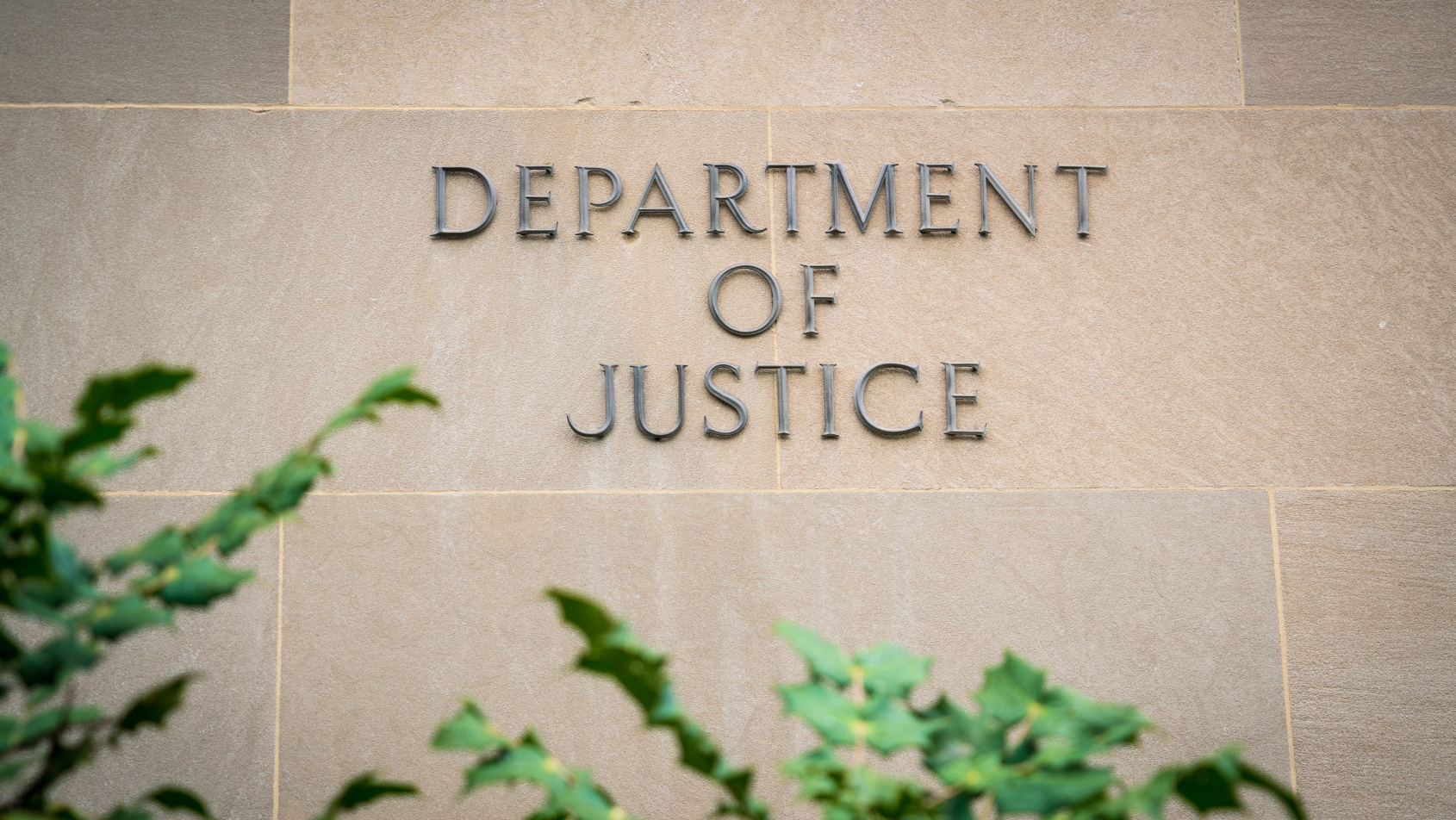
EBlock Corp. has entered into a deferred prosecution agreement with the U.S. Department of Justice, Antitrust Division, and agreed to pay a $3.28 million criminal fine for charges of “entering into and engaging in a combination and conspiracy — through individuals who became employees as a result of an asset acquisition — to suppress competition by rigging bids and pooling profits in online used vehicle auctions, in violation of the Sherman Antitrust Act, 15 U.S.C. § 1, and for engaging — through individuals who became employees as a result of an asset acquisition- in deceitful bidding practices, in violation of 18 U.S.C. § 1343,” according to a DOJ news release and court filings.
As part of the deferred prosecution, EBlock must also take remedial measures like adapting an appropriate compliance program, and they must also cooperate with DOJ’s ongoing criminal investigation into the matter and any prosecutions that come from that.
In conjunction with this, DOJ said in a news release Thursday that its Antitrust Division and the U.S. Postal Service are making their first-ever whistleblower reward, providing $1 million to a whistleblower who provided information leading to EBlock resolving the aforementioned criminal antitrust and fraud charges.
And as explained in both court filings and the Justice Department news release, the case goes well beyond EBlock.
In the release, DOJ notes that EBlock acquired another online used-vehicle auction platform — “Company A” — in November 2020.
The Justice Department says that, as outlined in the Criminal Information and Deferred Prosecution Agreement filed Thursday, “EBLOCK did not take immediate action after the acquisition to end the bid-rigging conspiracy and fraud at Company A.
Subscribe to Auto Remarketing to stay informed and stay ahead.
By subscribing, you agree to receive communications from Auto Remarketing and our partners in accordance with our Privacy Policy. We may share your information with select partners and sponsors who may contact you about their products and services. You may unsubscribe at any time.
“From November 2020 to February 2022, individuals at Company A conspired with individuals at Company B to suppress and eliminate competition for used vehicles sold on Company A’s online auction platform, in violation of the Sherman Act, 15 U.S.C. § 1. EBLOCK also did not take immediate action to end ‘shill bidding’ on Company A’s platform, resulting in the placement of fake bids intended to artificially increase the sales prices for used vehicles, in violation of 18 U.S.C. § 1343,” DOJ said.
The Statement of Facts within the Deferred Prosecution Agreement provides more details and context.
Specifically, the document notes: “Through a multi-step transaction in California in November 2020 during Covid, EBLOCK acquired the assets of Company A.
“Due to Covid, EBLOCK executives were not able to travel to the United States to conduct due diligence, meet the potential new employees, or facilitate integration, and instead relied on a management agreement to run day-to-day operations,” it continued.
“Company A was an auction company that provided a digital platform for sellers to put their vehicles up for auction to commercial buyers in the Central District of California.”
Following the purchase, the document notes, EBlock retained certain employees of Company A, including its CEO, district managers and operations managers.
Several of those employees continued working at EBlock in the Central District of California for at least a year after purchase.
Company A kept hosting online sales on its separate, third-party hosted auction platform until July 12, 2021, the court documents said.
At that point, Company A “migrated” over to EBlock’s auction platform.
“Prior to EBLOCK’s acquisition of Company A assets, Company A employees had been engaged in a long-standing conspiracy with Individual B, the owner of Company B, a used auto wholesale company,” the document states.
DOJ is alleging that going back as far as October 2015, “Company A employees conspired with Company B and Individual B to manipulate online auctions of used vehicles, in violation of the Sherman Act, 15 U.S.C. § 1, and engaged in material misrepresentations to place shill bids, bids placed for the purpose of artificially increasing bid prices, in violation of 18 U.S.C. § 1343.”
The Justice Department has alleged that Company A, “for the purpose of forming and carrying out the charged combination and conspiracy wire fraud,” did the following eight acts, “among other things,” as listed in the doc:
(a) Allocated placement of bids with Company B;
(b) Exchanged bid information with Company B, including the maximum amount Company A or Company B would bid on vehicles;
(c) Provided special access and user permissions to Company B, enabling Company B to see the confidential bidding information of other buyers and sellers on the auction site;
(d) Maintained a shared inventory of vehicles with Company B consisting of vehicles Company A or Company B purchased during Company A’s auctions.
(e) Coordinated with Company B to place shill bids, with the intention of artificially increasing the prices paid by legitimate buyers;
(f) Misrepresented the numbers of bidders during online auctions by commissioning the development of software that would automatically place shill bids at set time intervals;
(g) Misrepresented the identities of bidders by placing shill bids under the names of actual auto dealerships without those dealerships’ consent; and
(h) Pooled and split profits with Company B for vehicles purchased and re-sold during the course of the conduct.
DOJ emphasizes that those eight aforementioned items “were all unknown by EBlock” when it bought Company A’s assets on Nov. 20, 2020.
EBlock executives first discovered “coordinated bidding activity between Company A and Company B, which included an automated shill bidding functionality on Company A’s platform,” in or around Jan. 21, 2021, DOJ said.
At the time of migration onto the EBlock platform on July 12 that year, EBlock “refused to incorporate that functionality into the EBLOCK platform.”
Furthermore, the court document indicates that EBlock and its leadership, “had no intention of continuing the conduct initiated by Company A and Company B pre-acquisition, and tried to stop the conduct outlined above, including by not giving Individual B special access to the EBLOCK platform, taking steps to end, and in fact ending, the profit sharing agreement, and tracking down the dealer names that Individual B was using to cover up the fake bids.
“But despite the ongoing efforts of EBlock executives and employees, legacy Company A employees continued to pursue certain conduct with Company B and Individual B post migration, including, among other things, using other dealer names to cover up and hide Individual B’s fake bids, and continuing to give Individual B information about the vehicles outside of the controls on EBLOCK’s platform, all to hide their continued conduct from EBLOCK,” the document said. “EBLOCK did not condone the conduct and took steps to stop it, and due to EBLOCK’s efforts, the conduct decreased after July 12, 2021, with bids from fake dealers dropping significantly.”
However, this did not stop entirely until Feb. 2022, as legacy Company A employees “intentionally hid their on-going conduct,” court documents say.
The Statement of Facts notes that EBlock and DOJ agree that “although EBLOCK did not stop the conduct immediately, the conduct stopped because EBLOCK’s repeated efforts made it stop.”
The Justice Department has determined that the purchases and sales affected by the charges attributable to the Company A legacy employees totaled about $16.24 million.
But DOJ also emphasizes that “The penalty under this Agreement does not purport to quantify any individual damages or harm to an individual dealer and represents only the amount the Company has agreed with the United States to pay, and is not intended as a conclusion as to antitrust injury as that concept is interpreted in civil antitrust law.”
Considerations
In the court filing, the DOJ listed seven “relevant considerations” that led to it entering the agreement with EBlock.
Those considerations are listed in italics below:
(a) That the Company inherited the problem conduct in an acquisition of assets (“Company A”) via a multi-step transaction in California in November 2020 during Covid; Covid prevented travel from Canada, where the Company’s parent and executives are located, to the United States and hampered due diligence and integration;
(b) The problem conduct was carried out by Company A employees who joined the Company through the acquisition in November 2020 on a separate auction platform not under the Company’s control until Company A’s auctions were migrated to the Company’s auction platform on July 12, 2021;
(c) The Company was not aware of the problem conduct taking place at Company A until on or about January 2021. The Company rejected the problem conduct, did not install the functionality that facilitated the conduct from Company A’s platform onto the Company’s platform, and took concrete steps to stop the problem conduct. But, Company A’s legacy employees intentionally hid their continued problem conduct, making it difficult for the Company to stop it.
(d) Upon being alerted to the United States’ investigation, the Company timely cooperated with the United States, including producing all requested documents, data, answering all questions from the United States about the documents and data, and making current employees of the Company available for voluntary interviews. The Company has further agreed to cooperate with the Antitrust Division, as provided in Paragraph 6 below. The Company’s cooperation will aid the United States’ prosecution of other non-Company-employed individuals and companies not yet charged.
(e) By the end of 2023, financial strains on the Company caused the Company to cease selling on its platform in the eastern United States, Northern California, Oregon, and Arizona.
(f) The Company has committed to continuing to enhance its compliance program and internal controls, including by ensuring that its compliance program will satisfy the minimum elements set forth in Attachment C to this agreement, and by conducting specific antitrust training for Company employees; and
(g) This Agreement can ensure that integrity continues to be a focus of the Company’s operations and preserve its financial viability while preserving the United States’ ability to prosecute it should material breaches occur.
Additional details
In the DOJ news release, Deputy Assistant Attorney General Omeed Assefi of the Justice Department’s Antitrust Division, said: “Whistleblowers serve as the Justice System’s greatest disinfectant against criminal antitrust conspiracies. A car is the second largest purchase most Americans will make in their lifetimes. This whistleblower helped expose a brazen $16 million scheme that made it more expensive for hardworking Americans to afford second-hand cars across the country.
“This $1 million reward not only recognizes a whistleblower for bravely stepping forward to report crimes to the Antitrust Division, but also underscores the indispensable role whistleblowers will continue to play in the Division’s criminal enforcement program. Remember, the first company in an antitrust cartel that reports its collusion to the Antitrust Division might receive Leniency — but the race is faster now, because employees and their attorneys are incentivized to blow the whistle and beat their companies to the Division’s doorstep.”
Acting Assistant Director Mark Remily of the FBI’s Criminal Division said in the release: “Whistleblowers play a critical role in helping law enforcement to identify and investigate a wide variety of criminal activities. In this case, information from a whistleblower led to the identification and dismantlement of a criminal antitrust conspiracy, that if unreported, would have continued to harm American consumers who were unknowingly overpaying for automobiles.”
A spokesperson for EBlock said the company is unable to comment on the matter.