Manheim said Thursday it is amid what’s close to a $100 million investment to further connect its digital and physical offerings to meet the needs of its clients.
As Manheim executives emphasized in a call Wednesday, the “digital transformation” of auction processes are not limited to sale day — there’s a lot that happens in the auction process beyond the buying and selling.
For instance, the company said in Thursday’s release this investment continues the auction redesign it began a few years back, where Manheim launched digital tools designed to cut back on paperwork and simplify dealer transactions.
The moves this year are designed “to connect all of Manheim’s auction processes for greater consistency and efficiencies, while positioning Manheim’s teams and services to work better for all client segments,” Manheim said in a news release.
“Our continued focus on process improvements will further drive Manheim’s commitment to make it easier for our clients to do business with us,” Manheim president Grace Huang said in a release. “While our investments in this area began prior to the pandemic, it’s been fulfilling to see the benefits they provide to enhancing our clients’ experience.”
While more initiatives are on the way, the auction company has already made a few moves to better connect the client experience, which are included in the aforementioned investment, along with future moves the company is making.
For example, Manheim has implemented a more streamlined arbitration solution, a project it started on before COVID-19 and finished installing in 2020.
The streamlined arbitration solution aims to keep Manheim staff connected to one another and to clients, through a blend of tech enhancements and digital tools.
Manheim has also invested in a cloud-based client response center, a move it says allows the company to more efficiently route calls and get them to the right person.
Meantime, Manheim added virtual block specialists in 2019 as offsite auction sales gained traction. And then COVID-19 underscored the need for these workers, as Manheim moved its 76 U.S. auctions to all-digital early on in the pandemic.
While Manheim is no longer all-digital, these specialists — which now includes nearly 200 employees — “went into high gear to continue serving clients” during the all-digital phase and continue to support Manheim’s Simulcast-only sales.
Another initiative the company has already rolled out is its Market Centers. These launched in 2019 as a means for field locations to share resources and support functions. Manheim has 24 of these centers.
“Throughout this year, we’ll be introducing even more initiatives that will offer added value to our clients, regardless of how they choose to do business,” Huang said in the release.
Patrick Brennan, Manheim senior vice president, Marketplace, said during Wednesday’s call that these investments the company has made are “continuous improvements,” and that it is not done making improvements in these areas.
Editor's Note: This is Part II of a three-part series on how the auto auction industry was impacted by and responded to the destructive winter storm that hit the central U.S. in mid-February. This piece examines the strategies of independent auto auctions.
Part I looked at ADESA's use of technology to facilitate remote sales allowed it to carry on without much interruption. Part III will explore the strategy at Manheim.
Tim Bowers remembers what he wrote in an email sent to auction consignors during the winter storms that brought much of the Heartland, particularly Texas, to a standstill last month.
“(Hurricane) Harvey didn’t shut me down; (during) Hurricane Harvey, we had a sale that week … we never stopped selling cars when COVID hit us,” said Bowers, who is the president and general manager at Houston Auto Auction.
“But a daggum ice storm sure did do it to us,” he said. “It got us good.”
In Houston and elsewhere in Texas — particularly in areas along the coast — they’re used to handling natural disasters like hurricanes. But nothing like the bitter cold that hit the Lone Star State in mid-February, amid the winter storm that was knocked out power and heating and busted water pipes.
“Hell, dealing with it in our personal lives was bad enough. I was 58 hours at my house without power and when it was 14 degrees here on Tuesday night, it got down to 40 degrees in my house,” Bowers said in the Feb. 22 interview, referring to the prior week.
“And we were just trying to figure out a way to, you know, get another blanket and stay warm,” he said. “We’re not used to this here in Texas. It’s 72 degrees today and I’m wearing shorts.
“So, 14 degrees, they can have that weather back, whoever sent it to us, I can tell you that.”
He’s not alone. In fact, the entire state might be in agreement with Bowers on that.
Bowers is also not alone among independent auto auctions, large and small, that had to navigate power outages, icy roads and below-freezing conditions and determine if sales could happen safely, and how.
While business is back on track and humming along in the auction industry now, Auto Remarketing connected with several of these independent auctions the week after the storms to gauge their impact and see how they adapted
Storm impact
From a business standpoint, the biggest issue for Houston Auto Auction was the power outages. Bowers estimated the power was not consistently back on at the auction until Friday of that week (Feb. 19). Its sale days are on Wednesdays.
Bowers had initially pushed the sale back to the Friday of that week, but ended up having to cancel anyway, mainly because it wasn’t possible for employees to get to the auction.
“A lot of my employees live on the north side of Houston, and they were dealing with broken pipes and couldn’t get on the road because of ice,” Bowers said.
He was able to get into the facility himself on that Thursday (Feb. 18), but “I just decided, I’m not going to pressure my people. Logistically, it’s almost impossible to throw a sale together at the last minute, and then cram it down both consignors' and buyers' throats and hope that it’s a success.
“We don’t need to go through the motions, right? If we’re going do a sale, we need to make sure it’s successful,” he said.
The icy roads also prevented transporters from picking up vehicles, further complicating the ability to host a sale.
“It just wasn’t going to happen. So, it really put a crimp in everything,” Bowers said. “And of course, employees’ health and safety is the most important thing. We can sell cars any time.”
Ashley Dietze is the owner of the W Walker Auction Group, whose San Antonio Auto Auction canceled its Feb. 16 sale and closed its offices amid snow and ice. Later that week, the area was dealing with rolling power outages and no access to water.
Still, the San Antonio auction managed to put together a two-lane, digital-only sale that Thursday (Feb. 18), which Dietze said had a 60% conversion rate on the small number of vehicles up for sale.
However, the group’s Corpus Christi Auto Auction was not able to hold its sale that week, as much of the staff had no power or water and dealing with the same rolling blackouts and other issues as San Antonio. Plus, that auction does not have the same backup power source as the San Antonio auction, Dietze said, so losing power during a sale there would have been far worse.
The San Antonio auction installed the backup generator a few years ago and also is next to a hospital, she said. Being on the same grid as that hospital meant they weren’t likely to see the same kind of blackouts found elsewhere in the areas.
Without the backup generator, Dietze said, losing power during a sale at that auction “would have impacted us quite a bit more.”
America’s Auto Auction is headquartered in Dallas and six of its 23 locations are in Texas. It had to cancel every sale in Texas the week of Feb. 15-19 — the first time this has ever happened, said senior vice president John Swofford.
“For the most part, the roads weren’t the big problem in the Metroplex and Dallas-Fort Worth and down in Houston. Roads were more of a problem in Austin, because of the ice they had,” Swofford said.
“If it hadn’t been for the power outages and water outages, I think we all could have carried on business without it. But we had sites without power,” he said. “We had employees without power, we had customers without power. And so, it just kind of brought commerce to a standstill in the entire state. And we were a victim of that.”
Like America’s Auto Auction, XLerate Group has national footprint, including several auctions and mobile auctions in Texas.
They deal with all kinds of inclement phenomena, in markets stretching from Southern California to Pennsylvania down to Florida.
“But this particular one was a deep-reaching cold snap with some bad weather,” said Pat Dudash, senior vice president of sales at XLerate.
He said its Texas sales “fared fairly well from a cancellation standpoint.” Its two mobile sales in Austin were canceled, as the two dealership properties where those sales are hosted were closed. XLerate’s Lubbock location was particularly challenged with ice, Dudash said.
“And the ice is very unpredictable. So, you’re looking at the radar and you’re trying to dissect which way it’s going to move and what the precipitation is going to be like, but you can’t predict how bad it’s going to be from the ice standpoint,” he said.
“And once the ice came, with their sale being on a Wednesday, and the way the storm came through, they had limited pickups and only locally. So, they weren’t going to the outer cities of Abilene and Midland, Odessa, etc., where we’re typically going for a lot of commercial vehicles,” Dudash said of that week. “They were just staying locally with commercial and dealer vehicles on Monday. And then no pickups at all Tuesday or Wednesday.”
Online sales provide a lift
Like many auctions who have had to lean more heavily on digital during the pandemic, the online sales practices that the W Walker Auction Group has taken up during COVID-19 helped during the winter storm.
“Just having gone through COVID and having to do so many digital-only sales and really kind of tweaking that entire system with condition reports and things like that, it helped us be better prepared for something like this,” Dietze said.
“Granted, like Tim (Bowers at Houston) said, we’ve been through hurricanes, we’ve been through other things, but when it comes to ice and cold, you can’t run your shops, detail shops are down, it really cripples you,” she said.
Like Dietze’s group and others, XLerate became more accustomed to online sales during COVID-19, and that certainly came in handy during the winter storm in Texas.
“Well, we got plenty of practice during the pandemic, although the state of Texas was not one that was critically impacted for an extensive amount of period where we had to close and had no dealers in the lanes. But we did for a period,” Dudash said.
During the pandemic, some dealers got used to buying online, he said. They might browse vehicles on site the day before and then buy from home on sale day.
“Well, they sure did when the weather got this cold, too. And specifically, in Lubbock, we couldn’t drive the vehicles through the lane because of safety issues with ice …,” Dudash said.
So, he said, that sale “was online in the sense that they couldn’t drive through the lane because of the ice out in the parking lot. Some dealers did attend and stayed within the auction lanes and just bid against the people online in the lane.
“What we learned during the pandemic enabled us at all of our auctions in Texas to move on safely by orchestrating more buyers online and our percentages and online sales more than tripled last week,” Dudash said, referring to Feb. 15-19.
America’s Auto Auction took a different approach, deciding against hosting online sales for its Texas auctions the week of Feb. 15.
“And the main reason we didn’t is just because commerce was brought to a stop in the state. And we’re in the spring market, it’s a strong market,” Swofford said. “And the sellers were like, ‘You know what? We’d rather wait until next week. We’re not going to short-sell anything this week. The market is strong. We need to wait for people to be back doing business.’
“While we had the technology to pull it off and we had the manpower to pull it off, we didn’t feel there was a strong enough appetite for business (that) week,” he said.
Emergency preparedness
As unpredictable as such storms and their aftermath can be, auctions do often rely on emergency playbooks to respond to these kinds of disasters.
There are a lot of moving parts, literally and figuratively.
Auctions must consider employee/customer safety, protecting the assets and facilities and consider the logistics of holding a sale itself.
At America’s, its Houston location and “any of the auctions down along the Gulf Coast have a hurricane preparedness plan,” Swofford said, “which works just as well for an ice storm coming or a snow storm coming in, where we have the group text messages going out.
“We have conference lines dedicated to us, where everyone can stay in contact with the managers and the employees. And keeping the facilities secure is No. 1 — securing all of the inventory,” he said.
“And then limiting access to the dealers, until we feel the facility is safe,” Swofford said. “And we had to shut the facility down in Austin and Houston because of all the ice that was on the lot … it just wasn’t safe to let anybody walk around on our lot.”
Swofford gave special thanks to America’s employees at its locations in the storm’s wake, for their response to the natural disaster, taking care to move vehicles and protect assets.
“We owe it all to our employees at the locations,” he said. “It’s just the dedication that they had, and the sense of responsibility they had to take care of customers’ property was amazing.”
Swofford later pointed out that America’s runs 24-hour security at its locations, which is exceedingly more complicated during an event like this.
“And in the city of Buda where our Austin location is located, there was nothing open. There was one convenience store open. There were no restaurants open, no drive-throughs, nothing. And so, just trying to keep security on property and keep them fed, with water and things like that, became difficult,” Swofford said. “We do have generators at all of our locations, but it’s really to operate a sale, not so much to run an entire building. So, trying to overcome the logistics of all of that took a little bit of effort on the GMs’ part.”
At XLerate, much like other auction groups with a diverse geographical footprint, the natural disaster one of its facilities deals with differs by location.
While its auctions in Wisconsin or Michigan might be dealing with sub-zero weather, its Florida, Georgia and South Carolina locations face the threat of hurricanes.
With commercial vehicles at those locations, the sellers require updates on the status of their consignment during such times of natural disaster, so XLerate have developed a program for that, Dudash said.
“We have the safety of our employees and we have the safety of our dealers. So, storms that you can track — which are hurricanes and these big snowstorms or freezing weather that’s coming through — we’re on the phone with our operators early on in the process,” Dudash said.
“And we have a certain amount of steps that we go through: communication with our general managers, they’re communicating with their staffs and their people. And talking to local state and municipalities of what’s happening,” he said.
Dudash brings up the example of XLerate’s Charleston, S.C. auction. That area, a coastal one at that, has a lot of bridges, and those are often shut down during weather events.
“It’s going to cut off our employees’ availability to either leave and get home or to leave their home and come back to work. So, there’s a lot of discussions. We’re doing conference calls with our corporate staff, myself and sales,” Dudash said. “And the operators themselves and what are they communicating or hearing from locally that can help all steer and make a decision together.”
Stay tuned for Part III of this series.
Global digital marketplace IAA has opened a new Kansas City branch location, with the company’s president of U.S. operations Tim O’Day saying the location provides much-needed capacity in a rapidly growing market.
The new Kansas City East location, at the Southeast corner of Old State Hwy. 40 and Reich Rd., in Odessa, Mo., more than doubles IAA’s current Kansas City-area footprint, O’Day said.
The location will be the second branch in the area, IAA said, adding that it will help accommodate increased customer capacity needs.
A listing of the location’s preview and sales days is available.
“Our investment strategy demonstrates our commitment to improving the buying and selling experiences for our Midwestern customers while continuing to advance our leadership position in the area,” O’Day said in a news release.
America’s Auto Auction has promoted Jordan Clark to fleet/lease manager at America’s Auto Auction Bowling Green.
America’s Auto Auction senior vice president Brian Thomas said Clark did well in helping the Bowling Green auction’s clients get through the challenges of remarketing vehicles during the pandemic.
Clark, who has worked at the Bowling Green facility since 2014, has been a member of the auction industry since starting with ABC Detroit/Toledo in 2011 as a part-time clerk scanning titles.
After just two weeks at ABC, he accepted a full-time post as a CR writer even though he said he knew little about cars. The company named him head CR writer within 18 months, in charge of redemptions.
Clark said that during the training period for that position he learned skills that would allow him to help wherever he was needed, and to step in for fellow employees when they were absent. He went on to add experience in posting charges, submitting reports to clients, assisting dealers with paperwork and working as a block clerk.
All of that prepared him for work in the fleet/lease department.
ABC Bowling Green in 2014 asked Clark to help out as the auction prepared for a major new account. After a week of helping in that area, the general manager asked him to stay on, and today he is the longest-tenured full-time employee at America’s Auto Auction Bowling Green.
“Jordan is the kind of person everyone depends on, employees and clients alike,” auction general manager Mike Goodsell said in a news release.
Goodsell also said, “He’s honest, works wells with customers, is very knowledgeable and is always willing to do what it takes to get the job done: from checking in cars, detailing vehicles, taking photos and handling CRs to following up with sales results to the customers. He is a great choice for fleet/lease manager here at Bowling Green.”
Clark said moving from a Friday title-scanner to fleet/lease manager is a huge jump.
“But all the steps I took along the way helped me grow and succeed,” Clark said.
He also said, “I’ve been privileged to work with many great mentors along the way who have helped guide and direct me on this journey. We’ve built great relationships with our accounts at Bowling Green, and we’re poised to add more. I’m excited to lead the fleet/lease department as we gain even more momentum and build a process that will encourage sustainable growth.”
Global digital marketplace IAA says its AuctionNow platform improves the bidding experience and allows for enhancement based on customer feedback and recommendations. It has been in use throughout IAA’s Canadian operations since 2016 and in the United States since 2019.
On Thursday, the company said its UK-based business unit has launched IAA AuctionNow, which is the company’s exclusive bidding interface.
IAA said the AuctionNow platform, built on IAA’s patented software, offers global buyers the ability to create their own customizable bidding experience, which the company says provides greater flexibility and control. It also adds more value to the auction process, according to IAA.
The company said AuctionNow has consistently added value to buyer businesses and received positive customer reviews.
Improved auction monitoring options are one highlight of the new platform’s bidding and buying experience. The company said buyers can now view and participate in multiple auction lanes through the same view.
Buyes can also use enhanced search features to find vehicles quickly.
Additional highlights of the new platform’s bidding and buying experience include:
— New bidding features allowing buyers to use the new “jump bid” option to speed up the bidding by skipping to a higher bid.
— Improved visual and audio signaling to ensure buyers know when their vehicles of interest are scheduled to be available for bid. IAA says that means they will never miss a buying opportunity.
— Integrated auction reminders. IAA said that with notifications, buyers can better manage their time and priority bids. IAA says that can help ensure they do not miss an auction.
— Expanded vehicle details. Directly within the AuctionNow bidding platform, increased vehicle information is now available on the Run List and Product Details.
Steve Hankins, UK managing director for IAA, said the company is working to improve customers’ experience by increasing flexibility for buyers to research, bid and buy, while at the same time streamlining the entire process.
“AuctionNow has been extremely well received in Canada and the U.S., so we are excited to introduce this market-leading technology to the U.K. market, and to sell our vehicles to the global buyers,” Hankins said in a news release.
Saying that it is looking to improve the experience of car buyers who communicate in non-English languages, Copart has added auction sounds to its web site in five languages.
The auction sounds were previously available only in English, and Copart said its live auction sounds are now available in six languages at www.copart.com, www.Copart.ca, and www.CrashedToys.com.
Copart added auction sounds to its website in the following five languages: Spanish, Arabic, Russian, Polish and French-Canadian.
To hear the new audio cues, Copart members can join the company’s live auctions.
“We’re proud to have served buyers with diverse backgrounds since we were founded and are glad to continuously advance our technology to improve all our users’ experience with Copart’s online auctions,” Copart CMO/CPO Scott Booker said in a news release. “Copart is thrilled to pioneer innovative solutions that meet the needs of our buyers across the globe.”
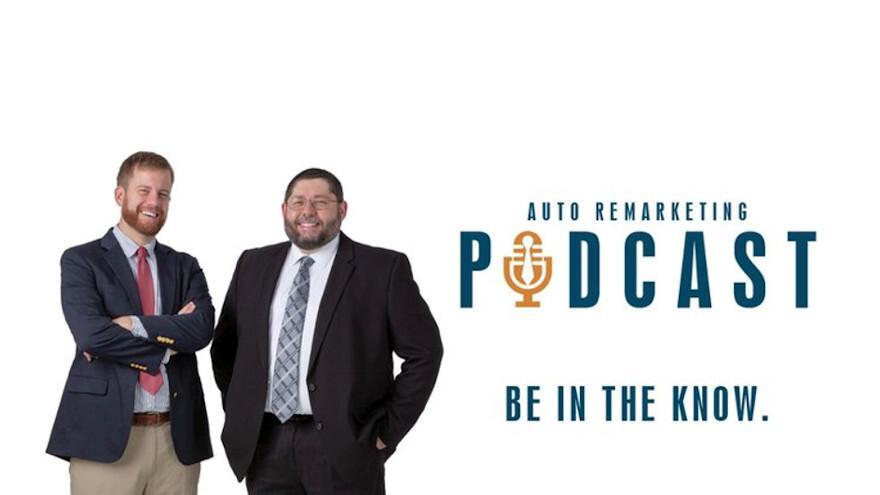
On Thursday, which was Data Privacy Day, Privacy4Cars founder Andrea Amico joined the Auto Remarketing Podcast to discuss the top data privacy concerns in automotive, including how dealers and auto auctions may be impacted.
Amico shared his advice for the industry and how his company is helping auto auctions scrub personal data from vehicles set to be remarketed.
To listen to the entire conversation, click on the link available below, or visit the Auto Remarketing Podcast page.
Download and subscribe to the Auto Remarketing Podcast on iTunes or on Google Play.
ADESA has launched a new inspection technology solution and software platform designed to provide “high quality, industry-leading inspections — making significant leaps in transparency, relevance and accuracy.”
The upgrades come as the wholesale auto industry, and ADESA parent KAR Global, is shifting further digitally, thus underscoring the need for reliable condition reports in an online format.
“The most important element for the digital transformation of our industry is the condition report —the ability to emulate that in-lane tire kicking through a virtual format,” ADESA chief operating officer Srisu Subrahmanyam said in a news release.
“So we’re investing heavily in enhanced digital inspection tools to support a more consistent experience and give dealers the confidence and peace of mind they need when purchasing vehicles through digital channels,” he said. “Everyone benefits — sellers can access information faster to make smarter reconditioning choices, and buyers will have high resolution images and inspection details to make the most informed bidding decision.”
The inspection platform uses hand-held phone-based technology and software that are designed to pull up more complete, precise details on vehicles. It also is designed to improve condition reports by generating higher quality and higher resolution photos of vehicles.
This platform is now at all U.S. ADESA locations. The company plans to finish rolling it out to its Canadian locations this quarter.
“As dealers turn to digital marketplaces to source and buy inventory, having a complete view of each vehicle’s condition has become essential,” said Richard Carpentier, who is KAR’s head of inspection solutions and AutoVin’s chief operating officer and senior vice president of operations.
“By aligning resources, including personnel, technology and data from across KAR, we’re optimizing and streamlining the entire inspections process for our customers. Buyers and sellers alike will have more data, faster, to make intelligent decisions and drive greater success.”
Selling all vehicles digitally is the “ultimate goal” for Manheim, says president Grace Huang, but the company and the industry at-large aren’t quite there yet.
There are steps yet to be taken, and Huang discussed these and more in an online press conference with reporters and in a follow-up interview with Auto Remarketing last week.
“It’s really an aspiration. I don’t have a fixed date,” Huang said when asked when that all-digital goal might be reached.
Auctions were largely forced to go all digital at the outset of the COVID-19, and while many of Manheim’s customers are comfortable with all-digital buying, some are not onboard with going 100% online just yet, Huang said.
Going digital for many clients was a necessity, not necessarily a preference, Huang said.
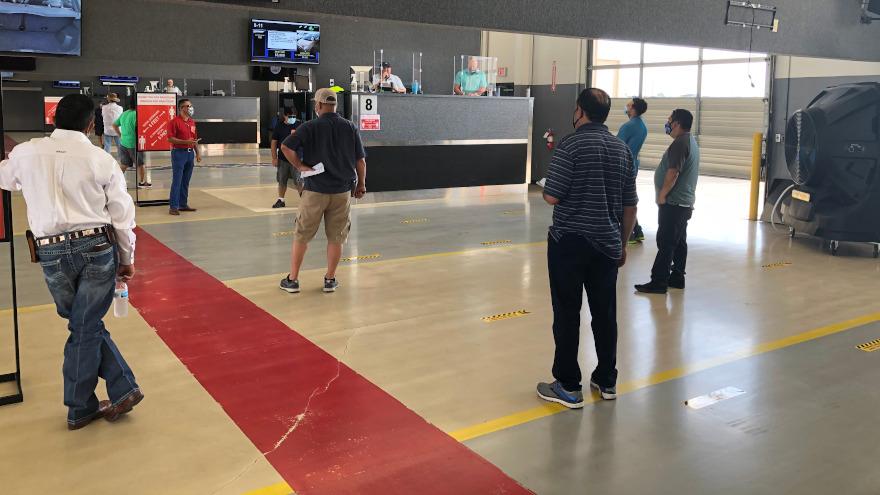
With that in mind, Manheim has resumed some in-person in-lane sales at some of its auctions. But the company has its eye on a digital future, though, and is putting together the puzzle pieces around processes like condition reports and vehicle imaging in order to meet that goal.
That’s a major reason why parent Cox Automotive purchased Fyusion, a company in the computer vision and vehicle imaging solutions space, to begin the year.
"Until we really get condition reports and vehicle representation online as good as seeing it in person, regardless of the type of vehicle, that's when I feel like we can get to 100% (digital),” Huang said.
Going all-digital will require that clients and dealers have a high level confidence in online buying, she said.
“Personally, if you ask me not (as) president of Manheim, yeah I would love to go 100% — I would love to have stayed 100% (digital). But we're here to serve the entire marketplace,” Huang said. “At some point the client feedback was so clear that we knew we had to bring them along. And so, we're going to continue to invest and we're going to continue to work on improving our inspections, vehicle information and condition reports. That's the Holy Grail.”
The company has invested “hundreds of millions of dollars” in the digitization of Manheim in recent years, Huang said. While that was investment was already important and beneficial prior to COVID-19, the pandemic certainly underscored the necessity of those efforts, to put it mildly.
“We have clear benefits of why we did that back then, but boy it could not have been more clear of why we did that and why we needed to do that when March hit in 2020,” Huang said. “Had we not made that investment; we would have been in a very different situation. Could we have operated 100% digital? Yes. Would it have been very, very difficult to send all of our front office home? Yes.
“We've had the luxury of being able to invest ahead of time. We've also, in the last year, obviously invested a lot even prior to COVID 19 in Manheim.com, with the new experience and in the new Simulcast, which we launched in the last half of 2019. And again, we knew we had to upgrade the technology. We knew we had to do something. But boy, when March came around, we were glad we had launched the new Simulcast.”
And while Manheim has begun to run cars through lanes again in select spots, digital is the driving force of growth. In fact, digital dealer sales for the auction company climbed 190% last year. And 83% of its transactions were digital.
As 2021 got underway, Huang outlined in an update several product updates, in addition to the Fyusion purchase, that can lend some support in the digital space.
Among those is a Digital Buyer Protection Program described is as an “umbrella” plan that protects digital buyers throughout the Simulcast, OVE and Manheim Express platforms.
The company is also investing specifically in the Manheim Express dealer-to-dealer sales app, including upgrades to the Manheim Express Concierge program, which gives dealers a specialist to take care of listing their on-the-lot vehicles for sale.
The company is adding a Concierge Inspection Guarantee to the tool, whereby Manheim would arbitrate inspection-related claims on the selling dealer’s behalf. The company is also doubling the staff of Concierge.
Additionally, Manheim has partnered with vAuto to create a Manheim Dashboard that helps vAuto Provision customers in buying decision-making within Manheim Marketplace.
Regarding the Concierge staff increase, Huang said in a Q&A with reporters that increased demand for off-site sales amid the pandemic led to that decision.
“And really what's driving it is, back in March of last year, our physical locations weren't able to continue to necessarily operate in the same way. We were running Simulcast sales. Our concierge though was still able to go onto dealer sites. And so increasingly, we're seeing greater adoption of selling cars off-site,” Huang said. “I know we've got lots of competitors — but Manheim brings to the space is that ability for us to do both.
“We can create a cascade for dealers. Listing cars quickly off-site, and if that doesn’t sell, they can then move the cars quickly off to one of our locations to sell on site, whether it's through Simulcast, OVE or through the lanes,” she said. “So, for us, it’s about …creating that omnichannel experience. and what we've learned is that that off-site Manheim Express piece is a critical piece to that.”
It’s a piece of Manheim’s larger overall digital strategy, which includes a host of platforms and methods of online buying and selling. And they’re not alone in the industry, obviously.
KAR Global, the parent company of Manheim’s chief rival ADESA, has not resumed vehicles running in lanes and in November closed a $425 million purchase of BacklotCars, a deal that added to its digital marketplace arsenal that already included the likes of ADESA.com, OPENLANE and TradeRev.
Independents have upped their digital game, as well, including those working with EBlock, which last year began facilitating online dealer-to-dealer sales for independent auctions.
And standalone companies digital wholesale marketplaces, like ACV Auctions, continue to show growth. That includes big news on Thursday when CarGurus completed its acquisition of a majority stake in CarOffer, an automated instant vehicle trade platform.
As online-only channels in the wholesale space continue to grow, Huang said one way Manheim can set itself apart is through the space it can provide.
"At the end of the day, physical space is still really important in our industry,” she said. “We saw that through the peak of COVID-19 when consignors had nowhere to bring their off-lease vehicles. Manheim Pennsylvania hit over 40,000 vehicles, when normally they have about 27,000.
“We were stuffing cars everywhere, in every nook and cranny back in March and April of last year. And so, it's still a huge benefit and asset that we have,” Huang said.
That benefit is also seen in Manheim’s retail reconditioning service, which “continues to grow,” she said.
“And as we focus more and more on fleets, that space becomes more and more important in our retail recon space,” Huang said.
She points out that dealers don’t necessarily want to have trade-ins sitting on their lots for an extended period of time.
“So, we were able to create a cascade for them. We come out, inspect the vehicle, get it listed online quickly. if it sells, great. If not, we immediately come back, pick up the car, take it and so they never see it again, and take it to one of our physical locations,” Huang said.
"And dealers have told us, they don't want these cars sitting around forever on their lots. At some point they want it gone so that they have space for the next batch of trade-ins,” she said. "So, we see that definitely as a competitive advantage when we couple all of it together."
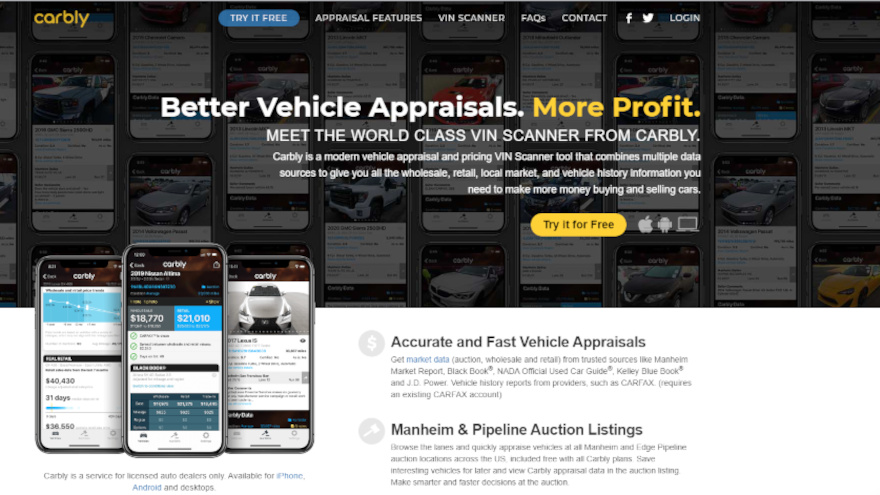
Through a new partnership between Ambient Automotive and Auction Edge to integrate EDGE Pipeline auction run lists into Ambient’s dealer software Carbly VIN Scanner, dealers can view complete Pipeline auction listings for more than 165 U.S. auction locations.
Carbly dealers can now browse EDGE Pipeline auctions to source their preferred inventory. At the same time and all in one place, they can review vehicle details, history, and appraisal data for retail, wholesale and auction values.
Carbly also uses what it says is an advanced analysis to summarize all vehicle information into a combined valuation dashboard. That helps make faster, data-driven decisions while in the lanes, according to the company.
The partnership brings Carbly's total coverage to more than 260 auction houses.
EDGE Pipeline auction run lists are now available free of charge to all Carbly users.
Auction Edge and Carbly said that with the joining of pricing data and auction listings, dealers can prepare for upcoming auctions, browse run lists, and appraise vehicles with integrated data feeds.
With options from Black Book, NADA, Manheim Market Report, Kelley Blue Book, Real Retail and other sources, dealers can select their preferred appraisal data. With CARFAX and AutoCheck fully integrated, vehicle history can be added into the Carbly environment.
“This partnership unifies our common goal,” Ambient Automotive chief executive officer Scott Roth said in a news release. “Merging the technology to help dealers efficiently source inventory and accurately appraise vehicles with a data-driven model. It gives our users a major advantage in the marketplace.”
“Carbly’s user experience is one of the best in breed to meet dealers’ real time needs, and adding our inventory was a natural fit,” said Auction Edge CEO Dan Diedrich. “We are excited to partner with Ambient on this integration, and others to come.”