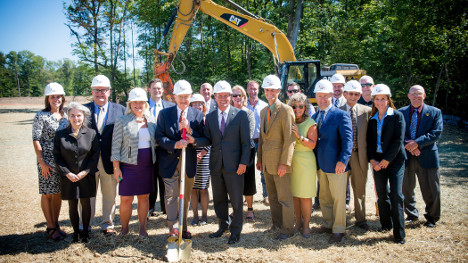
Bel Air Auto Auction has broken grown on its new facility in nearby Riverside, Md.
The auction held a groundbreaking ceremony on Sept. 16, parent company BSC America announced.
The new Bel Air Auto Auction facilities will tout a 75,000 square foot, 10-lane auction facility, as well as a 35,000-square-foot mechanical and body shop.
BSC America’s president, R. Charles Nichols, estimates construction will take about 15 months.
“Our new site is one mile east of I-95, making access much easier for our dealers. We are installing campus-wide Wi-Fi for the convenience of our customers, and to avoid data usage issues on their smartphones and electronic hand-held devices,” Nichols said.
During the groundbreaking event, county executive Barry Glassman joined the auction team and presented a certificate to the Nichols family during the event.
Billy Boniface, director of administration, along with other Harford County department heads, elected officials, representatives and special guests attended the groundbreaking, as well.
“Our second building will house an eight-lift mechanical shop, five-lane detail shop, two-paint booth body shop, and a brand new condition report and imaging area — all under one roof.” Nichols said, providing more specs on the new facility. “We will have 80 paved acres for our customers and clients to utilize. There will be 8,190 spaces for customer parking, truck loading and inventory/storage. Our additional Marshaling Services facility in nearby Riverside Business Park has 22 acres paved and fenced for additional secured vehicle parking.”
Michelle Nichols Neff, vice president of BSC America, also noted the new facility will hold the parent company’s corporate offices as well as Bel Air Auto Auction’s administrative offices and regional staff.
“One main location for our dealers and a much easier environment for employees were the objectives for the new complex!” Nichols Neff said. “We’re also excited about our new dealer restaurant, customer service suites with Wi-Fi provided workstations for customers. Those new service facilities will be attractive to dealers. They will be able to enjoy Bel Air Auto Auction’s delicious fare while attending our weekly auctions and bi-weekly GM Financial Factory auctions.”
Raymond C. Nichols, chief executive officer of BSC America companies, added, “Charles, Michelle and I, as partners in Bel Air Auto Auction Inc., are most enthused to have all the required permits and approvals for building this new modern facility to be located on our 175 acre property in Riverside. The new facility will be able to accommodate continued growth in the marketplace and will better serve our customers’ needs. Sellers and buyers will benefit from our state-of-the-art auction that will serve their needs within this growing marketplace and region.”
XLerate Group, formerly known as American Auto Auction Group, announced the addition of two experienced and respected individuals in the remarketing industry to its corporate sales team.
On Tuesday, the company promoted Kelly McAllister as director of business development, joining XLerate’s newest hire Julie Heichel, who will be director of sales operations
Both McAllister and Heichel will report to senior vice president of sales Pat Dudash.
McAllister is transferring to the XLerate corporate team from Texas Lone Star auction where he established himself as a thought leader and operator in both the online and traditional auction spaces. He has managed, directed and grown new and existing private label auctions for the company.
McAllister’s experience also includes 10 years as the AutoNation accounts manager for Manheim and two years at Dealertrack Technologies.
“I have watched our industry approach auction sales as either online or in the lane,” McAllister said. “Online buyers and sellers are a growing part of our overall sales strategy, but they are not that different from the buyers and sellers we want in our physical lanes. Our auctions are learning how to blend and tailor their approach to both."
Dudash shared perspective on what McAllister’s impact will be in his new role with XLerate, which is one of the sponsors again for this year’s National Remarketing Conference at Used Car Week.
“We see the opportunity in multi-platform sales from both dealer feeds and auction feeds to create another sales month in the calendar year,” Dudash said. “That opportunity represents a large volume of units, and we need a quality and experienced person to manage this business unit for us.
“Kelly has proven that he can both develop and successfully execute in — this emerging business model,” Dudash added.
Heichel comes to XLerate with a strong grounding in sales management, strategic business development, CRM and marketing within the automotive industry. Notable is the decade she spent with ADESA developing dealer sales infrastructure and CRM for buyer and seller acquisition.
Heichel worked closely with auctions and institutional/commercial customers to positively impact retention. Recently, she spent four years with Automotive Finance Corp. (AFC) as a sales director and was instrumental in creating and implementing multiple operational initiatives for its business development and sales programs.
“Pat Dudash and I are excited to now have Kelly McAllister as a full-time corporate resource for our XLerate group auctions and their general managers,” XLerate’s chief executive officer Cam Hitchcock said. “We look for Kelly’s impact to grow in his new role.”
“Pat and I are honored to have worked with Julie Heichel in the past. Hitchcock continued. “We are aware of her significant skills, strong work ethic, powerful communication style and passionate commitment to her team.
“The XLerate Group auctions and our corporate staff are pleased to welcome Julie to the team,” Hitchcock went on to say.
XLerate is an established group of dealer-centric auctions with physical and satellite sale operations in California, Texas, Florida, South Carolina, Mississippi, Wisconsin and Michigan.
Manheim has created a new position that will have responsibility for auction operations, digital services, vehicle solutions and product management.
Named to this the newly created post of senior vice president of inventory services is Grace Huang, who had been vice president of enterprise product planning for Manheim parent Cox Automotive.
Huang reports to Manheim North America president Janet Barnard in the new role. Her areas of focus will be on product management and Manheim’s operational, revenue-generating organizations.
“In this ever-changing industry, it’s important to continuously evaluate our business practices to ensure we are aligned to address customer needs and marketplace opportunities,” Barnard said in Tuesday's announcement. “Ultimately, this new area of our business is about how we help customers manage their inventory and provide data and insights that enhance their future success.”
In addition to leading the areas mentioned above, Huang will be called to look for new solutions that could one day be crucial for Manheim customers.
She primarily will work to make sure that dealers are able to work “effectively and efficiently” throughout the wholesale process and take advantage of the group’s solutions.
Huang has been with Cox Enterprise since 2007, when she came aboard as director of business development for Cox AutoTrader before moving on to other leadership roles for Cox Media Group and Cox Enterprises.
A new era for how the wholesale industry will gather annually for its largest event is just a year away from dawning.
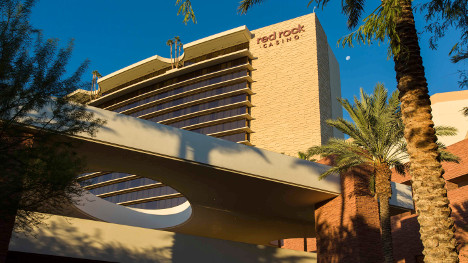
The National Auto Auction Association is gathering for its annual convention this week in Orlando, Fla. But next year, the event will be a part of the National Remarketing Conference during Used Car Week at the Red Rock Casino & Resort in Las Vegas.
The team at Cherokee Media Group (which publishes Auto Remarketing) orchestrates Used Car Week, which includes not only the National Remarketing Conference, but also the CPO Forum, the SubPrime Forum and the Re3 Conference.
They will be on-site at the NAAA Convention this week in exhibit hall booths 205 and 207. Stop by to learn more about next year's event — and meet baseball legend Lou Piniella during the opening reception from 4 p.m. to 6 p.m. on Wednesday.
“It’s amazing to consider that in a little more than 12 months from now all of the great elements of the NAAA’s annual convention will be combining with the NRC to form an event that’s aimed to benefit all players in the wholesale space,” Cherokee Media Group president and Used Car Week chairman Bill Zadeits said.
“The addition of NAAA’s convention to Used Car Week is a natural fit for everyone concerned and allows industry professionals to concentrate their networking,” Zadeits continued.
“Our team not only is doing a great job of organizing this year’s NRC coming up in November, but also looking ahead at how to plan for NRC/NAAA 2016 to make it not only meet but exceed the industry’s expectations,” he went on to say.
The meeting will be known as the National Remarketing Conference and National Auto Auction Association Convention and will be held each year during Used Car Week.
Getting both organizations to this point in the process has taken more than a year.
Dave Angelicchio, a past NAAA president who spearheaded the effort for a combined meeting, said when the combined conferences were announced last year: “I am extremely pleased that we have reached agreement to combine our conferences beginning in 2016.”
He went on to say that one of the many benefits to be realized will be when people can make one conference trip instead of two.
Another former NAAA president, Jack Neshe, also expressed support when the deal was announced in 2014, noting that the combination of the two meetings could not be accomplished until 2016 because of existing hotel contracts.
One registration fee will be used for the NRC/NAAA, said Frank Hackett, NAAA’s chief executive officer.
He said when the combined conferences were announced that some professionals who normally attend a NAAA convention but not the NRC will now be able to network with other industry professionals, and the same is true in reverse, as there are some people who traditionally attend NRC but not NAAA. “This will be a great value to everyone involved,” he said at the time.
Ron Smith, chairman emeritus of Cherokee Media Group, said the relationship with NAAA further enhances the value and importance of Used Car Week.
“The vision we’ve always had for UCW was that professionals from different segments of the industry can meet over a one week period to get to know each other better and find common areas where it is beneficial for them to work together,” Smith said.
If you look at the cars sold via Auction Edge, more than 93 include a photograph.
Meanwhile, roughly 63 percent include a condition report.
That gap shown in these statistics — provided during an Auction Edge presentation at the Digital Managers Session of the Auction Academy near Chicago this summer — doesn’t necessarily mean, however, that the condition report isn’t vital.
“The importance to the buyer — it’s already there,” Auction Edge senior vice president Dan Diedrich said in a follow-up interview with Auto Remarketing.
Closing the gap between the percent of cars with pictures and the percent of cars with condition reports is, “a matter of the auction having the boots on the ground to actually do the work, and for that matter, the technology to efficiently do the inspection,” Diedrich said.
“Condition reports still just take a tremendous amount of time to do properly. And there are some really good products out there to help the auctions, and even the dealers, inspect their own vehicles, but I don’t know if anybody has gotten the silver bullet yet, in terms of the right technology to really do it quickly,” he continued.
“Everybody’s trying, we’re trying, but the big limiting factor is time, when it comes to getting the inspections done on that 90 percent number. You’re going to see the gap close; I don’t think you’re ever going to see a 93 or 94 percent condition report (rate), not from most auctions,” Diedrich added.
“There are some, they’re going to do them on every single car,” he continued. “But the time factor, for your average sale, I just don’t see it getting that high. I think you’re going to see 80, 85 (percent) of vehicles having CRs in the simulcast environment.
“In the online only — the upstream or non-simulcast venues — that’s where you’re going to see a higher percentage, because you don’t’ have the bidder in the lane keeping the bidder online honest. So the condition report is absolutely needed in those upstream venues.”
A 2013 white paper from Manheim also shares just how important those CRs can be.
The report, titled Condition Report Impact on Dealer Sales, indicates that CRs tend to affect three areas, those being, “Simulcast, the ability to attract buyers and arbitration rates.”
First looking at Manheim’s Simulcast product, the white paper indicates that reach of Simulcast, on average, is impacted positively by more than 22 percentage points for vehicles with electronic condition reports than those without.
The report shows that the degree of positive impact is even larger as the price tier climbs, with cars in the $20,000-and-up ballpark having an ECR-driven reach increase of 30 percentage points.
As for buyer exposure, Manheim’s report finds that if a vehicle has a CR, the buyer’s distance to auction is 35 miles higher for an in-lane purchase and 95 miles higher for a Simulcast purchase.
Looking at arbitration, the report notes that vehicles with CRs had an arbitration rate that was 7 percentage points lower than for those without a CR. The decline in arbitration rates was most noticeable in vehicles priced below $15,000.
(Note: Manheim said its report includes one full quarter of dealer sales; it excludes Total Resource Auctions, Specialty and OVE sales; and it is limited to U.S. auctions. The white paper was released in the second half of 2013. It was based off results from the first half of 2013.)
At the company’s Manheim Pennsylvania location, general manager Julie Picard says some dealers do opt for the “image-only” route with CRs, but she does see an equal amount of importance placed on condition reports and photos.
“I wish somehow we could pipe the smell through for them,” she said with a laugh, but added, “because that’s truthfully very important, as well.”
And when asked to talk about some of the most important considerations for the online wholesale buyer, Picard honed in on the precision of the condition reports. But that goes beyond the online bidder, as she would explain.
“They definitely want to make sure that our CRs are accurate. They totally rely on that,” Picard said. “And I think Manheim has done a really good job of staying focused in that area of our business, to continually try to enhance our condition reports and really make them be representative of what the car’s condition really is. So, we continue to work on that day in and day out.
“You know, I can’t even liken that just to online any more. Our in-lane dealers will print out CRs,” she added. “They use that for their homework at night; they use it to view the condition of the car. When they walk up to a car, they want to know that it’s represented in the fashion that it was on the CR, so they can make a quick decision or whether or not to buy and move on to their next purchase.”
That’s something Pat Simmons has noticed, as well. The DAA Northwest director of technology points out that most buyers, even those who end up buying the cars at the physical auction sale, start doing their homework online.
So, it’s important for those buyers to be able to know as much as possible about the car ahead of time.
Simmons said the auction likes condition reports on all vehicles, and acknowledges the challenges of doing so, but also the benefits that make this process worthwhile.
“It’s labor-intensive. That’s certainly a challenge,” he said.
Plus, Simmons mentioned, all the logistical steps involved. However, the benefit of putting CRs on vehicles is well worth it.
Having a CR adds value to the vehicle, increases confidence in the buyer and portrays a better picture of the car, Simmons said.
“And that is worth doing,” he said.
Worth it on many levels, in fact. Not only do CRs increase confidence for dealers and help them make quicker decisions, but they can also give sellers a leg up on the competition.
That’s something that ADESA Cincinnati-Dayton general manager Geoff Parker emphasized in a Q&A with Auto Remarketing in our Aug. 1 Power 300 issue.
We asked Parker how his auction emphasize to sellers the benefits of including these on the vehicles they sell.
“As part of our commitment to providing the best possible service to our customers, including our sellers, we make it a priority to highlight and explain the benefits of including an accurate and thorough condition report with each vehicle at every opportunity,” Parker said.
“From gathering insight from our buyers, we know that dealers find important value in condition reports — they increase confidence, and they save time, because dealers know going into the auction the exact condition and details of the cars they want to purchase, making the in-lane or online decisions faster and easier,” he continued. “In today’s mobile-driven world where buyers are scouring websites and apps prior to auction day to help guide their purchasing decisions, providing complete, accurate condition reports offers sellers a competitive edge.”
It is late summer 1995 in New York.
Meeting in the singles finals of the U.S Open tennis tournament are, arguably, some of the generation’s greatest stars: Pete Sampras beating Andre Agassi in the men’s final, Steffi Graf defeating Monica Seles in the women’s.
What, you might ask, does that have to do with remarketing?
Nothing, other than this:
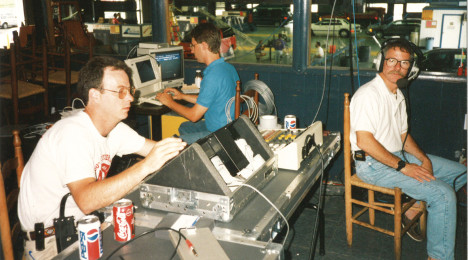
Some of the satellite trucks at that tournament would end up, weeks later and some 200-plus miles to the northwest, playing a pivotal role in what is described by at least one account as being the first car ever sold via simulcast.
The sale happened on Oct. 12, 1995 at State Line Auto Auction in Waverly, N.Y.
According to a retelling of events shared by ServNet, of which State Line is a member, the first vehicle sold to a remote bidder in conjunction with a live sale occurred that day, with the car going to Farnsworth Chevrolet in Canandaigua, N.Y.
In 2014, nearly two decades after this event, 17.9 percent of auction sales were Internet-based, according to the 2014 NAAA Annual Review, included in NIADA’s Used Car Industry Report. Simulcast alone had a 13.8-percent share.
Online-only and simulcast sales have come a long way, to where it’s one of the focal points of auction industry discussion and training, stirring up discussion at events like one hosted this summer, nearly 20 years after State Line’s simulcast sale.
‘Trying to find the right combination’
It’s late July 2015 just outside another iconic American city.
A few dozen remarketing industry professionals have gathered at a hotel conference center near Chicago’s O’Hare airport.
They’re mostly independent auction personnel and executives at online wholesale marketplaces or technology providers, and they’re here for the “Digital Managers Session” of the Auction Academy program.
Throughout the event, the crowd would hear presentations from OVE, OPENLANE, Auction Edge, Whann Technology Group, Smart Auction and Liquid Motors.
Naturally, some of the topics they chatted about included increasingly digital wholesale world, how to maximize it and how to balance it with the brick-and-mortar auction environment and the various technologies within the market.
During his presentation, Peter Kelly, chief technology officer at KAR Auction Services, said his company wants to be at the forefront of industry technology. But it also recognizes the importance that physical auctions add to the mix.
“We don’t think one or the other is the recipe for success,” says Kelly, who is also president of KAR Digital Services Group.
In fact, it’s both that are important. Kelly adds: “We’re trying to find the right combination.”
And so, it would appear, is the rest of the industry.
Making online and in-lane work together
If used effectively, technology and online wholesaling can blend well with the in-lane environment.
This has been the case, for example, with simulcast sales for Pat Simmons, the director of technology at DAA Northwest.
Simmons, one of the attendees at the Digital Managers Session, said that simulcast sales can actually help create some additional buzz in the on-site lanes themselves.
Think about it: a dealer watches the video screen light up with bids as the folks in the lanes simultaneously do the same.
Not to mention, Simmons told Auto Remarketing in a follow-up interview, a bidder who is attending a physical sale can use simulcast to his or her advantage.
While standing in one lane, the dealer can bid on cars there, while simultaneously bidding on cars in a different lane via simulcast; in essence, the bidder can be in two places at once.
Spreading the reach
And then, there’s the bidder who is miles away from your auction, bidding on cars in online-only sales or via simulcast as the vehicles run through the lanes.
When the supply of cars dried up, the online auction sales environment became a way for dealers to expand their reach on the buying side, Simmons said.
That eventually led to “opening Pandora’s box,” he added. Once a dealer has tried buying cars online and had some success in doing so, Simmons said, he or she has become more willing to utilize this channel even with supply increasing.
When looking at all SmartAuction sales — which has seen its dealer-owned, fleet/rental, and midstream auction sales climb this year — the average distance that one of its buyers has driven is 350 miles, according to a presentation from the company during the Digital Managers Session. For SmartAuction buyers purchasing from independent auction, the average distance goes up to 369 miles.
Separately, Auto Remarketing spoke with Manheim Pennsylvania general manager Julie Picard, who said the Internet has allowed her auction to sell in 120 countries and all 50 states, “because they have that opportunity online.”
Granted, Manheim Pennsylvania’s in-lane buyers come from far away, as well. But it helps to illustrate just how expansive the Internet can help auction sales become.
For KCI Kansas City, selling online has allowed the Midwest auction to attract buyers from the coasts and as far away as India, says e-commerce manager Cody Boswell.
In fact, Boswell — another attendee at the Digital Managers Session — said in a follow-up with Auto Remarketing that he has talked with faraway buyers who are getting online at 3 a.m. in their time zone to buy cars from KCI.
The auction having an online presence “provides a separate marketplace,” Boswell said. Because of this, his seller customers have a second source of buyers.
Dedicated person to online
One of the themes repeated often that day in Chicago was this: auctions need a dedicated manager for online.
Simmons at DAA Northwest certainly sees the value in it.
“There is a very real benefit in ownership of that process,” he said.
Historically, Simmons says, having a dedicated online manager has been more “reactionary to specific requests” from consignors.
These days, though, it appears to be more in a more proactive direction.
“Putting people in that role,” Simmons said,” it increases the focus on it and brought it more into the mainstream as a viable sales tool.”
And as a chance to growth the business, says KCI’s Boswell.
“Getting one person, if not more,” Boswell said, adding that it probably does require more than one person devoted to online, “it provides that business idea that this is a growth opportunity.”
Simulcast becomes ‘standard’
Some 1,700 miles from Chicagoland, Jim DesRochers and his team at Dealers Auto Auction of the Southwest in Phoenix focus more on the older cars in the wholesale arena.
And for this niche of the market, using simulcast is a must if you’re going to be in the online space, DesRochers said.
Still images of older cars just won’t cut it, he says; buyers need more information.
DesRochers said that about 11 percent of his dealers are on simulcast. Most of his audience is from the nearby, surrounding areas of the Southwest.
Interestingly enough, he has found that simulcast buyers will often come by the auction the night before the sale to check the cars out, then go buy from home the next day.
But it’s not just his area of the market.
Overall, simulcast has been a “standard process” in the auction business that he said “only gets better with both imaging and condition report improvements.”
Say you’re a consignor and you have run a vehicle through the auction lane, and it doesn’t sell.
According to a new white paper released today by Manheim, if you post that no-sale car on the company’s OVE platform instead of re-running it through the auction lane, it is likely to generate a higher percentage of the MMR price.
Not only that, it is likely to take fewer days to sell. The findings of the report — titled “Increase Auction Values up to 3 percent by Listing ‘No-Sales’ on OVE” — were compiled based on an analysis of the top 15 commercial fleet/bank national consignors who post only no-sale vehicles on OVE (meaning they don't put fresh vehicles on that site).
The study’s time frame was January through June, included only Manheim’s U.S. sales and excluded TRA/salvage and specialty sales.
Manheim came away with four key findings from conducting this research.
First, the aforementioned increase in percentage of MMR for vehicles that are re-run through OVE instead of the physical auction.
And as the vehicle grade on the car goes up, so does that percent of MMR gain.
In other words, as the vehicle grade goes up, so does the gap in percent in MMR between vehicles re-run in the auction lane and vehicles re-run on OVE.
“The lift attained from selling a ‘no-sale’ on OVE ranges from $144 for grade 2 vehicles up to (approximately) $396 for the highest grades,” the paper states.
As for the third finding, Manheim noted that no-sale vehicles listed on OVE immediately sell an average of four days quicker than those re-run in the physical lane a week later.
Lastly, the study points out that greater reach that sellers can have via OVE. It notes that just under a fifth (18.6 percent) of buyers only conduct vehicle purchases online and that more than a third (35.7 percent) of OVE buyers bought a car that was more than 500 miles from them.
Less than a tenth (7.7 percent) of physical lane buyers did the same when it came to traveling and transporting.
Auto Remarketing talked with Jenifer Eggert, vice president of digital services at Manheim, to get some more insight on the study. She emphasized that they’re not suggesting that all vehicles should go in-lane before going online or vice versa.
“There’s just a category of cars that perform better online versus in-lane, either from the get-go or vice versa. So it’s really up to the consignor to know what works best for them, and we help them as much as we can. That’s what the consulting arm of Manheim helps them with,” Eggert said.
The point is to be educated, she added, and understand which will generate the most money on the sale and the greatest efficiency.
Almost 20 years ago to the day, State Line Auto Auction hosted a sale that is said to be the first time a car was sold via simulcast.
Two decades later, almost 14 percent of auction sales are simulcast, according to the 2014 NAAA Annual Review. More than 4 percent are online-only, the same report says.
So, yeah, things have changed in the auction business, just as they have in the dealership world or for anyone else that buys and sells a product, be that Amazon, Best Buy or Domino’s (emoji your pizza!).
But many of the foundations of a successful business in the wholesale market — adapting to meet the customer’s needs and the importance standing behind a quality product, instilling confidence, and so forth — still stand firm today.
As we celebrate the National Auto Auction Association at the NAAA Convention this week, you will see much of this theme in our special convention edition magazine coverage — the balance between the emerging technologies and digitalization of the wholesale world with what has made the in-lane auction model work over the years.
In his column for this issue, our guest contributor and friend Jim DesRochers shares how after more than 25 years in the business, he still hears a lot of talk about the importance of lane location and run position.
At the same time, DesRochers also goes on to talk about the advanced technology the physical auctions offer, which again shows the change in the remarketing business.
His column also touches on a couple handfuls of factors that impact auction prices, and interestingly enough, these drivers are a mix between traditional market factors (having a rep on the block, vehicle history reports, seasonal demands) and conditions brought on by technology and the Internet (simulcast, imaging).
And some, still, really have to do with both. For instance, DesRochers lists this as one of the price drivers: “Dealer attendance to total consignment ratios, including targeted niche vehicle buyers, in-lane and online.”
Our feature on “How auctions balance technology: In-lane & online” discusses some of this dance, as well. That feature delves further into State Line’s simulcast sale and where simulcast and online sales have gone in the last 20 years.
Change is a big theme in the auction business. It’s also an opportunity, and incoming NAAA president Mike Browning points this out in a profile story on the Manheim San Antonio general manager.
“I feel like our biggest challenge is also our greatest opportunity. Change … It’s a word often used but not always understood. What needs to change and what needs to stay constant?” Browning said. “I think we should always be challenging the status quo. In-lane or online, we have to be looking forward.”
Full coverage can be found in our Sept. 15 NAAA Convention issue of Auto Remarketing, which includes auction feature stories (one of which is a look at condition reports), a profile on Browning, DesRochers’ column, your Auction Life photos, our Spotlight on Commercial Consignors and a look at the National Remarketing Conference and NAAA Convention coming together in 2016.
Look forward to seeing you in Orlando!
Thanks to a partnership between AuctionACCESS and wholesale floor planning software provider Sword Apak, the lending partners in Sword Apak’s network are now included in the AuctionACCESS floor plan system.
This means that current floor plan availability of lenders in the Sword Apak network can be transmitted to all AuctionACCESS auctions. Additionally, floor plan transactions can be automated through the AuctionACCESS system, the companies explained in an announcement on Thursday.
AuctionACCESS says its network includes more than 260 subscribing auctions in the U.S. and Canada.
“We are thrilled to be integrated with Sword Apak and to be automating floor plan data for their lending partners,” said Charlie Adams, director of business development at AutoTec, parent company to AuctionACCESS.
“This one-time integration will enable all current and future Sword Apak partners to automate their floor plan data through AuctionACCESS to our subscribing auctions. This integration is a giant step in our work to grow this network and continue to provide efficiency to the wholesale floor plan process.”
Sword Apak sales director James Powell said: “At Sword Apak, we have a long track record across the world in developing innovative wholesale funding technology and adapting it to seek the very specific country needs that exist. Partnering with AuctionACCESS is yet another step in this direction. Making stocking easier is what we are all about and we will continue to seek all opportunities to support this mission.”
After 25-plus years as an auction general manager, one thing never changes, and that is the ongoing discussion of lane location and run position.
In 1995, Manheim honored me with a “Big Idea Award” for creating an incremental cost factor for “perceived” better run placement that I labeled “Prime Time.”
Has life changed in 20 years? You bet. Auction consignors started making “gentle requests” to run earlier, in the center, with their consolidated dealerships, away from their competitors.
And the better the perceived location and the greater the volume, the less they tended to share in selling fees, and price became an industry market share tool.
But what truly comes first? The cart, the horse, the driver, or is it a combination of all three? Is the make, model and year more important than run placement, or are price and announcements?
If lane placement is the key factor in driving price, why aren't “early-ish” numbers driving higher selling fees as they drive higher prices?
Or is it like MPS/CPS, where consignors say build it, and we will come because it's needed and will drive price, but with no ROI adjustment to those costs, just like normal net selling is?
The truth of the matter is ALL the above drive price and more:
1. Images
2. Simulcast
3. Accurate condition reports on all vehicles run
4. Timely arrival at the auction so they can be properly marketed
5. Floor prices and a representative on the block
6. Dealer attendance to total consignment ratios, including targeted niche vehicle buyers, in-lane and online
7. Vehicle history reports
8. General market and seasonal demands
It’s not a simple business, but it’s a seamless and very cost-effective one on both sides of the auction transaction. I have said it before and I will repeat it again here: the industry needs to stand up for its technologically advanced brick-and-mortar facilities and value them for the true partnerships they have created in the automotive industry.
Editor's Note: This column is part of our special coverage of the NAAA Convention in the Sept. 15 issue of Auto Remarketing, which includes in-depth features on top auction trends, auction photos from the past year and much more.
Jim DesRochers is vice president at Dealers Auto Auction of the Southwest. As with any contributed content, the opinions expressed in this and other editorial columns are solely that of the author's and do not necessarily reflect those of Auto Remarketing or its parent company.