In a special preview for our CMG Premium subscribers, Auto Remarketing is offering an early look at the data and insights from our Best Auto Auctions to Work For program for 2020. The full study and feature story will be available in the November issue of the magazine.
Part II of our Best Auto Auctions to Work For issue preview can be found below.
Part II
The impact of COVID-19 extends far into the workplace across the wholesale auto industry, from preparation and sale adjustments to new workplace safety procedures.
Workplace safety, in general, has been a big topic in the auto auction industry, particularly for the traditional brick-and-mortar auctions where cars are running through the lanes.
A pandemic certainly adds another layer to safety, no matter the workplace.
Asked how the COVID-19 pandemic has impacted the safety strategy at Louisiana’s 1st Choice Auto Auction — a traditional, brick-and-mortar auction — auction manager Matt Alombro said: “Safety is more important now than ever before with the advent of government mandates and stricter health and safety guidelines.
“Our most valuable asset has always been our team members. COVID brought new challenges to the table with health and safety restrictions that we put in place. We canceled our large all-employee meetings, which has led us to conduct smaller team meetings more frequently,” Alombro said.
“We have several meetings per week, and safety is always the main topic. Safe T. Sam is excellent for our new hires as an introduction, and we always supplement it with the years of experience we have run a safe workplace,” he said, referring to the National Auto Auction Association’s safety training program that was developed by KAR Global.
Be it a physical auction or a company in the digital space, having a safety plan is crucial, particularly in the COVID era. And so is being able to adapt it to new situations.
At CarOffer, a wholesale trading platform, founder and CEO Bruce Thompson emphasized the importance of being able to adapt safety strategies to crises like a pandemic.
“The pandemic and sheltering in place requirements served to remind us of how nimble we are as a company. I am extremely proud of and grateful for our team who adapted to change so seamlessly,” Thompson said.
“In every crisis situation, there is opportunity to improve one’s response and preparedness strategy. Since our business is inventory management, one of the biggest challenges we faced was managing inconsistent protocols in different states,” he said. “So, access to some critical services like state inspections, for instance, were delayed. How can we ensure the process continues to move forward during a safety or health issue? We are exploring all aspects of our operations to fine tune the preparedness. If the pandemic has taught us anything, it’s never say never, and keep your crisis plan up to date!”
In general, a safety strategy is paramount to companies in the remarketing space, whether it’s a physical auto auction or a digital platform — during a pandemic or otherwise.
Jason McClenahan, who is president and CEO at EBlock, certainly understands both sides of that coin. He leads a digital auction company that facilities online dealer-to-dealer sales for brick-and-mortar independent auto auctions.
And his background includes time in the traditional physical auction space.
“For brick-and-mortar auctions, auction day is extremely exciting. With this excitement, comes this fear in the back of your mind in regards to the safety of your staff and customers,” McClenahan said. “Thousands of units crossing several auction blocks, drivers all over the yard and in the lanes and hundreds of staff and clients everywhere. It’s easy to understand how critical the right safety strategy is.
“Now, digital auctions don’t have the same challenges presented, when it comes to safety. Safety is always a priority, as on any given day we may have hundreds of team members in dealerships all over North America,” he said. “Due to the nature of working remotely, it really comes down to communication and ensuring that the staff is trained and using the proper PPE.”
Asked how the pandemic has impacted the safety strategy at EBlock, he said: “Due to the fact that we’re a digital auction, our safety strategy hasn’t been impacted as much as the physical auctions.
“That being said, we have had to make some major changes in order to ensure our staff and clients remain safe during these times. The largest change we had to make as a group, was to transition our workforce to be 100% remote,” McClenahan said. “There are certain departments that couldn’t perform their jobs remotely, so we do have skeleton staff in some of our locations following all the precautions set out. We have eliminated travel as a company, and like everyone managing far more video calls than face to face visits with our clients.”
And for the record, Best Auto Auctions honorees appear to be doing quite well when it comes to safety, based on survey responses from their employees. In the Work Environment category of the Employee Benchmark Report (where the category average was 89% positive responses), 94% of the responses to the “I feel physically safe in my work environment” prompt were positive.
Training initiatives
Safety certainly involves training and learning a playbook. So, too, does general workplace operations and handling one’s day-to-day job.
With that, we asked our Best Auto Auctions honorees about the training and development measures they have in place.
At IAA, which had four locations make the list, president and CEO John Kett said the company’s training and development initiatives have continued during the pandemic, as most of it had been digital anyway.
“Given our workforce is located in 200 plus locations and across the globe, our training and development resources are largely online. This benefitted us with COVID — as training remained uninterrupted,” Kett said.
“We are also focused on employee engagement and community, because we know this is benefitting our employees during this difficult time,” he added. “With COVID, employees need and benefit from the IAA family and community. We’ve enjoyed Fun Friday events such as Wear Your Favorite Super Hero T-Shirt to a Recipe Sharing section on our intranet to additional employee resources focused on child/dependent care.”
Cross-training between departments was also found to be important to give employees a holistic, well-rounded view of how the company operates.
At EBlock, new hires undergo classroom-stye learning and in-field training to give them some “hands-on experience before they hit the ground running,” McClenahan said.
“Cross-training within other departments is another key strategy that we encourage. This allows our workforce to get a much better understanding of other departments in which they rely on. This puts our staff in a better position to be more well-rounded to move up within the organization,” he said.
Over at ACV, chief sales officer Michael Waterman noted that vehicle condition inspectors are given both in-classroom training, which is now done virtually, and with the cars themselves.
“Team members from various departments will do ride-alongs in the field so that Managers are able to assess and help improve processes and vehicle assessments,” he said.
“We haven’t let COVID slow us down from a training perspective,” Waterman said. “We are continuing to invest in training our team members in new types of inspections including cross training our VCIs on all three kinds of inspections that we provide (wholesale, retail and off-lease) so they can become experts in each area and grow in their skillset and within the company.
“During these challenging times, we are providing additional instructor-led training via online learning as well as socially distant field visual training to enhance their inspection skills and overall knowledge of ACV,” he said.
Five-time honoree
Lastly, 2020 is Auto Remarketing’s fifth year of conducting the Best Auto Auctions to Work For program.
And one physical auction has made the list each and every year: Louisiana’s 1st Choice Auto Auction (Digital auctions were not eligible until 2018).
Being the only auction that has made the list of Best Auto Auctions to Work For in each of the award program’s first five years, we asked LAFCAA management what makes the auction stand out from the pack, and what gives it such a strong workplace culture.
“Culture, exactly that. We have been open since 2002, 18 years, and our management team has been here for an average of 12-14 years,” Alombro, the auction manager, said.
“We stay true to our values and do everything we can to hire people that align with our culture and cherish the same core beliefs,” he said. “This also attributes to our extremely low turnover rate and allows everyone to work so well together year after year.”
Part I of the feature can be found here.
A full list of the 2020 honorees can be found here.
Auto Remarketing’s Best Auctions to Work For, presented by CARS Recon, is a free workplace study for the auto-auction industry that recognizes the best auto auctions to work for on an unranked basis.
The program, now in its fifth year, is designed and intended for individual physical auction locations and digital auctions, as well.
Auto Remarketing, teaming with the Best Companies Group (BCG) in Pennsylvania, underwrites the study. The study is managed by BCG, and the data is analyzed 100% by the staff at BCG. Best Companies Group directly administers all surveys and manages and analyzes all data and information that is gathered.
The Best Companies Group assesses the data from the group of auctions choosing to participate and develops metrics and standards based on that data to determine which auctions are named to the list of Best Auto Auctions to Work For.
And without further ado, here are the 2020 Best Auto Auctions to Work For, listed in alphabetical order:
ACV Auctions
Auctions In Motion
CarOffer
EBLOCK CORP USA
IAA Baton Rouge
IAA Fremont
IAA Northern Virginia
IAA Taunton
Louisiana's 1st Choice Auto Auction
Thank you to all who participated this year, and congratulations to those recognized in this year’s study. Stay tuned for a more in-depth feature on honorees in the upcoming November edition of Auto Remarketing.
It was a “punch in the gut,” says Sam Chaple.
Manheim Nashville, an auto auction where Chaple has worked for 20 years and whose current location he helped launch, took a direct hit from an F3 tornado during the devastating and deadly storms that hit Tennessee in early March, he said.
“To bring this one out of the ground, and for the sun to come up that morning to really see how hard we were hit, it was devastating,” Chaple, the auction’s general manager, said in a phone interview late last month. “It's kind of a punch in the gut … but the thing was, we had boots on the ground that day by 2 o’clock in the afternoon. And were assessing the damage.”
The damage, as it turned out, was extensive.
But just over six months and a near $14 million rebuild later, Manheim Nashville began hosting in-person Digital Block sales in mid-September.
To tell the story of the auction’s comeback, Auto Remarketing connected with Chaple and Matt Trapp, Manheim’s regional vice president for the East, by phone in late September.
‘We were moving quick’
The team at Manheim Nashville had initially expected that the severe weather approaching the area that day would be a hailstorm, something they took seriously but had been through before, Chaple said.
The team was able to secure the facility the evening of March 2, knowing inclement weather was coming through. Late that night, about three or four hours before it ended up hitting, the forecast changed to project a tornado, Chaple said.
“It hit us at 1 o’clock in the morning. And thank goodness for that, because having all my teams on the property at that point, there would have been 350 to 400 people on the property at any given time, in those workspaces in recon and operational buildings,” he said. “So, we're blessed it hit us in the night.”
All seven buildings at Manheim Nashville were affected. One was a total loss, four required rebuilds and others had cosmetic damage, Chaple said.
As Chaple mentioned, it was tough to see the damage when the sun rose. But the auction went right to work, assessing the damage, but also connecting with team members to make sure they were OK.
“That was our main focus. At the time, we had just over 600 team members at our location. So, we really wanted to make sure we (connected with) everybody. And that took us about two-and-a-half days, to get in touch with everyone,” Chaple said.
“But from there on, it was boots on the ground,” he said. “We were moving quick.”
Adapting to pandemic
And then, less than two weeks later, COVID-19 was declared a pandemic.
Prior to that, Manheim Nashville had lined up a digital sale to happen in March and they were looking at ways they could continue doing sales.
“With that said, we were all learning with the pandemic. Every week we were learning something about it. We were well-informed," Chaple said. “Matt (Trapp) and our team, our region, were on the phone daily, updating (one another). It was just changing, every day.”
He added: “The most challenging part I think was, we could sell cars digitally, but how do we continue to stay focused on safety and protecting our auction families, and our clients, and our dealers? And it was changing.
“You never got used to one thing … you had to be very flexible and very receptive to change. And it was something that we all experienced,” Chaple said.
He emphasized the auction “never took our eyes of the severity of this pandemic. We never took it lightly.”
The auction continued to have online-only sales during the spring and summer months, with an adjusted schedule. Where they would normally have three sales each week at the auction, Manheim Nashville was able to combine its Tuesday and Wednesday sales — running that one on Wednesday — and maintain its Thursday sale.
Of course, during all of this, there was the rebuild, which also had to bear in mind restrictions from COVID.
But Chaple said the construction company, as it scheduled subcontractors and projects, “did a really good job of keeping compliant and making sure we didn’t have a lot of overlap in the social distancing.”
With all various projects, crews managed to stay spread out, he said.
One of the challenges to the rebuild, however, was the lead time with supplies, particularly with mechanical and electrical tasks and ordering parts associated with those jobs.
"There was a lot of lead time. We had a lot of facilities were shut down during this time. So, for us to be up and running between six and seven months from the tornado is a blessing,” Chaple said.
“Our construction company did a very good job of scheduling and making sure these products and this material that needed to be ordered was timely,” Chaple said. “That was probably the biggest challenge.”
Game plan
A big part of the rebuild and comeback was the business continuity plan at Manheim.
“Our business continuity plan really came in play. It's definitely been updated because … there's a lot of findings and things you learn. Every facility is different. We're all made up differently … our footprints are different. With that, when you look at the opportunities to go after it, you have to first handle the disaster. There was probably a good 45 days of just de-trashing and tearing the buildings apart and just getting to what was there,” Chaple said.
“Then you had a structural engineer that comes in and makes sure the existing buildings are safe to rebuild. So that took a lot of time,” he said.
Trapp pointed out that Chaple and the team had put together a command center in one of the auction’s conference rooms, where they plotted out their strategy in phases. The first phase of the plan was Manheim’s overall business continuity plan, related to the recovery.
Manheim Nashville also had to think about aspects specific and unique to its own facilities. Tasks like rebuilding a body shop might take several months or more, so you have to think about you would gradually bring clients back for that work in phases.
“It had elements of communication and those pieces within the plan, but you still have to tailor it to the specific situation. And so that war room was critical to phasing out the recovery and understanding you have the physical piece of it, and security and the team members that we have to take care of, then you have the market itself and the auction,” Trapp said. “We have to bring that back within a certain order, and then the client services that go along with that. And those each have dependencies on one another.
“For me, I have the benefit of kind of seeing it a little bit from afar. I came up a few times during that early period and each time you go into the war room, you can see it adapt and shift based off of new things they're learning and then the timelines get updated,” he said. “And the construction crews got in there so quickly, we were able to pull forward a few months on that execution. And really just got it done in such a quick time, it was pretty impressive.”
The new facility
After the rebuild, the new Manheim Nashville facility now has a bigger body shop with four paint booths, Manheim’s Lot Vision GPS-tracking technology, two state-of-the-art paint booths, two lanes dedicated to support enhanced vehicle imaging, and new LED lighting and various fixtures in the shops that can not only save energy, but improve the technicians’ work environment.
“It sounds kind of funny, but it's a huge thing in your shops,” Chaple said of the LED lighting. “Because it's all about quality control (in) different processes you might have in the detail and body shop.”
The auction’s imaging building had been completely destroyed and the rebuild was still underway at the time of the interview, but was scheduled to be completed this fall with new technology and software.
All in all, a rebuild does present some silver linings.
“You take the opportunity to take a step back and see what are the new technologies and things that we wish we could have upgraded and yet, what has worked well and been tried and true and tested over time. And Sam and the team did a great job at kind of blending those two, bringing in the environmental impacts, the things we care about in terms of LED lighting, going more efficient, and also adjusting operational flow to reduce carbon footprint, to reduce the number of movement of vehicles,” Trapp said.
“But then (with) some things, the recon shop is built where it is. We don’t have much choice but to rebuild it. But also, it's worked over time. So, you keep what's worked and you bolt and throw the stuff you wish you could have changed and you bolt on the stuff that you want to bring to the table this time around,” he said.
‘Big step for us’
Manheim Nashville began hosting Digital Block sales the week of Sept. 14, but had already been allowing previews three days a week and since had been offering Simulcast-only sales.
“But rolling our doors open and letting the dealers into the lanes was a big step for us,” Chaple said.
That said, the auction didn’t necessarily have hundreds of folks back in the lanes, as a lot of the buying is still done online, he said.
“It's funny. Most people came out to see the facility and see how it looked. They had not been down the road in seven months, and they still see devastation or empty lots. So, they came out to see that. It was somewhat a reunion, to be honest with you. It was fun,” Chaple said of opening back up.
Trapp added: “There's always a magic to sale day. And so, any time you can welcome clients back into the auction on sale day, it gets the blood flooding, it gets the juices going, it gets the team excited.”
And having a rebuild makes it all the more meaningful.
In closing, Trapp really summed up what Manheim Nashville’s comeback story is all about.
“To me, the summary of this story is just the resiliency and the community of the auction, the clients and the greater Nashville community itself and how it all came together, in particular with Sam's leadership (in the recovery),” Trapp said. “We almost take it for granted. It seemed pretty seamless but it's a great story, all around, and I can't be more proud to see it and have Sam be leading it.”
Online vehicle auction company Copart this week launched its proprietary product suite with enhanced digital offerings that the company says make selling vehicles through Copart more cost-effective, convenient and efficient, especially for finance and insurance companies that must deal with total-loss units.
The product suite is called Copart Max, and one of its offerings is Preliminary ProQuote. That is Copart’s proprietary predictive vehicle valuation tool. With the tool, Copart says insurers are empowered to make total-loss determinations more quickly, informed by a preliminary pre-accident and post-accident vehicle valuation estimate.
With the Preliminary ProQuote tool, insurers can make total loss decisions earlier in the claims process, including at first notice of loss, to expedite claims processing and reduce costs.
Another part of the product suite is a customizable tool that provides exterior and interior HD 360° views. It also provides with the manufacturer build sheet, and HD images of vehicles for Copart’s sellers. Copart says it can provide an accurate, 360-degree view of vehicles, and it can eliminate adjusters’ need to inspect vehicles in person. It provides the tools for “accurate and efficient vehicle evaluation,” according to Copart.
An additional Copart Max tool is called E-Signature, or E-Sign. Sellers using the tool can generate and send state-approved documents, such as power of attorney and odometer disclosures, to vehicle owners for electronic signature.
Copart says reduced costs, better compliance, quicker turnaround and increased customer satisfaction are the benefits of E-Sign to its sellers. The company said that with its support of various regulatory and legislative bodies, E-Sign has been adopted in 20 states. Most recent adoption was in Ohio, with adoption from additional states expected soon.
Loan Payoff with Letter of Guarantee, or LOG, is another part of Copart Max, and with that tool, sellers can digitally obtain real-time payoff quotes with per diem, and to request letters of guarantee. Copart launched its loan payoff and LOG program in 2019 and says it helps save time and resources for insurance carriers and lenders.
Another Copart Max tool is Loan Payoff with Integrated ACH Payment, which facilitates the online exchange of loan payoff quotes and letters of guarantee and accepts ACH payments for supported lenders.
That makes paying for vehicles more efficient and convenient for vehicle sellers and finance companies, Copart said.
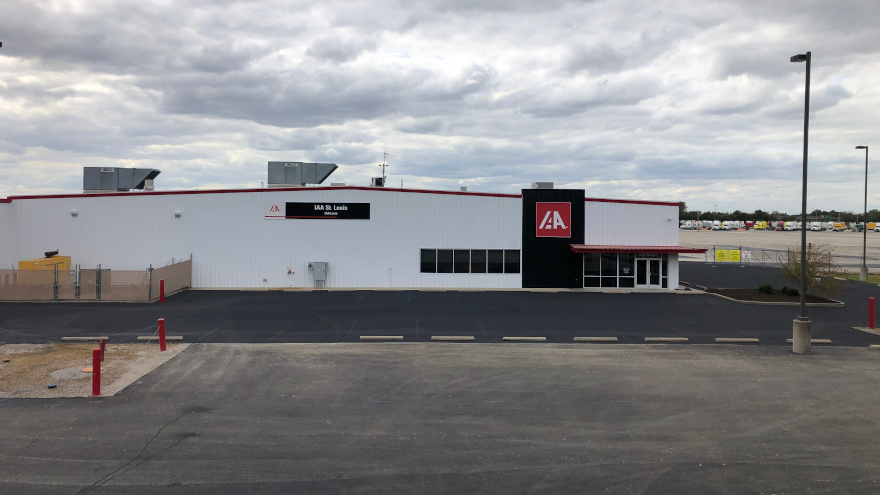
Stating that the move supports the company’s growth in an expanding market, global digital marketplace IAA is expanding and relocating its St. Louis East branch to Caseyville, Ill.
IAA said the new location updates the branch facilities and accommodates its customers’ increased capacity needs.
The new site, which features a covered vehicle inspection center building and dedicated offices for insurance clients, is located approximately 12 miles from St. Louis.
The location also includes covered motorcycle storage and indoor high line storage, along with a paved load-out, drive aisles and drop-off/check-in areas.
It also features an expanded lobby and conference rooms that IAA says provide space for meetings and training.
The site, located at 2436 Old Country Inn Drive, Caseyville, Ill., is accessible from State Highway 157, near Route 64. A listing of preview days and sales days at the branch is available.
“IAA is pleased to further serve our growing client needs in the St. Louis metro area,” IAA president of U.S. operations Tim O’Day said in a news release.
O’Day continued, “We continue to strategically invest in our facilities to provide an industry-leading experience for buying and selling vehicles. The relocated and expanded St. Louis East branch doubles our inventory capacity to further support our growing clients’ needs in the Midwest.”
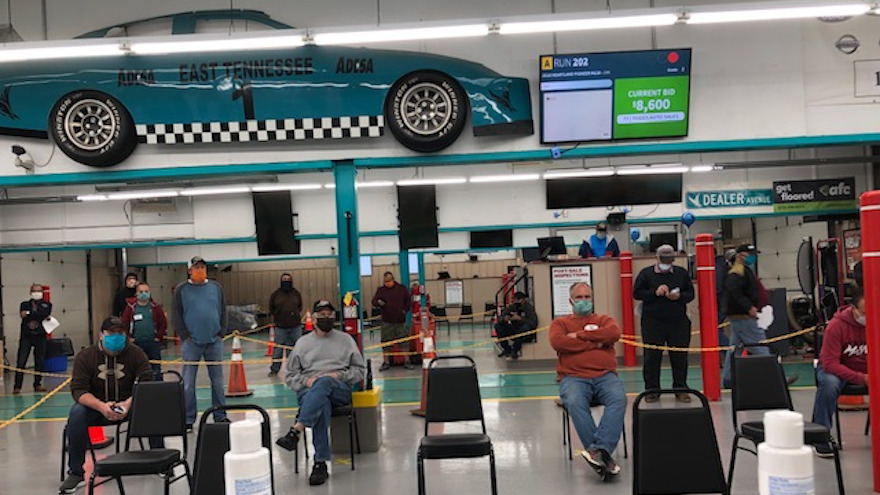
Exactly seven months ago Friday, KAR Global announced all ADESA auction locations in the U.S. and Canada would temporarily, but immediately, move to simulcast-only amid the COVID-19 pandemic.
Four days later, KAR would temporarily halt all ADESA physical auction operations, including simulcast, before gradually resuming some simulcast activities beginning in early April.
Operations have been opening up more broadly ever since, with all ADESA locations providing ADESA Simulcast and DealerBlock sales, a company spokesperson confirmed, with all locations are also eligible for Simulcast+ sales. Meantime, in-lane bidding allowed at most facilities, albeit with no vehicles running through the lane.
“We're pretty much fully open for business,” KAR president Peter Kelly said earlier this month.
Those early COVID announcements may seem like they were both eons ago and also just yesterday, but in any case, the auto auction business has been on quite a ride ever since.
Things have “come a long way,” ADESA president and KAR chief commercial officer John Hammer said when discussing how the past seven months have played out at ADESA.
Auto Remarketing caught up with Hammer and Kelly by phone to get a sense of where operations stand currently at ADESA and what may be in store for the auto auction business going forward.
Though it is not running vehicles through the lanes, ADESA resumed in-lane bidding at some auctions in mid-May and has continued to expand that availability, with 80% of its auctions now offering in-lane bidding, Hammer said.
Sellers are allowed to attend sales and represent cars on the block, and reconditioning services have returned “in some level” at all locations, he said.
Meantime, buyer previews are available at all ADESA locations, which has resonated with dealers.
“That seems to be the biggest thing that our customers really want, is just to get out and be able to look at the cars,” Hammer said.
Digital sales pick up
After coming in to kick the tires in person, many dealers will then bid remotely.
“We have some that are coming in and buying in the lanes. And then we have a whole lot more that are buying online,” Hammer said. “It's been interesting for us to watch.
“You have a lot of buyers that will come in — even on sale day — in the morning, and look at cars and then they'll go home and bid,” he said. “A relatively small percentage of cars are being bought by in-lane bidders and a much higher percentage are being bought by online bidders.”
If there’s one person who has been at the forefront of this intersection between online and in-lane wholesale, it’s Kelly, who more than 20 years ago co-founded OPENLANE — once a competitor to physical auctions — and now serves as president of the physical auction-rooted company that eventually acquired it.
One of the remarketing trends he’s watching going forward is the continued “digitization of our industry,” Kelly said.
“With a little bit of hindsight, our industry has been on a path towards increased innovation for many, many years,” Kelly said, pointing out the increase in digital wholesale and online transactions.
"That's just been going on for two decades now," Kelly said. "And I think COVID has really accelerated that — massively accelerated that."
Within KAR, Kelly has found that the, “increased adoption of our digital tools over the last six months has been phenomenal.”
New dealers are registering on ADESA.com, buying cars on ADESA Simulcast for the first time, registering for TradeRev in droves and pushing records on the OPENLANE platform, the KAR executives said.
"These are pretty massive trends and we're watching all of these really carefully," Kelly said. "But I think it points to an ever-more digital future for our industry, more data-driven — a lot of the things we've talked about for many, many years.
“There's no question, this has been a real accelerator of that trend,” he said of COVID.
And within KAR’s TradeRev dealer-to-dealer online platform, “thousands of new dealers” have registered, Hammer said, as the online platform never shuttered during the pandemic and gave dealers a way to buy and sell remotely.
The company also eliminated sale fees on the platform in August.
"We've also taken steps to start integrating TradeRev into ADESA.com. So, dealers can go to ADESA.com and now see inventory on TradeRev,” Hammer said. “We're pulling together the buyer bases of those businesses to strengthen the pricing and conversions, and make it easier for buyers to find more inventory."
KAR has found that many dealers are finding opportunities in more than one of its platforms.
“They may have some inventory that does really well on one product or they like to send the inventory through both products. They might have a full-service approach, where they launch it on one and then if doesn’t sell, they sell it on the other,” Hammer said.
Flexibility, transparency a perk to online
Of course, the acceleration in digital goes beyond COVID’s impact, as Kelly alluded to. Hammer points out that a lot of the excitement about digital for both sellers and buyers is around flexibility and data transparency.
Previously, Hammer said, sellers were “really kind of anchored around an event, once a week. Now we can start thinking about things like launching a car at any time that we want to from really any location we want. So, they can sell from our auction, or they may have a marshaling yard or distribution center. And we can launch them together. The cars don't have to be all at one location, which will improve their outcomes.”
With digital sales, KAR can more effectively capture all bids, something that can be more challenging in the physical environment when you’re trying to monitor every wink, nod or hand-raise in the crowd. The bids are easier to collect and track for data purposes when they are digital, Hammer said.
"Once we're able to get that, the analytics of the business improves substantially. We know exactly what people are interested in. We know what they bought,” Hammer said.
“We also know what they didn’t get that they wanted to buy. And things start coming into play, like marketing direct to a second highest bidder or a third highest bidder; we can match a car that we have somewhere else to a car that they were clearly interested in,” he said. “And sellers then have the tools, with all this data at their hands, and with all of it digitized, they can make real-time, in-auction decisions … They can adjust on the fly, they can change reserves, they can change pricing. They can communicate to each individual buyer with chat and things like that.”
There are similar benefits for buyers in terms of convenience, Hammer said.
“Whether that's buying from home, buying from the office or we've had some that say they now buy from the beach,” he said.
Again, instead of being tied to having to be present at one location at a specific time, they can buy anywhere. Not only that, they can buy from more locations, given them a broader geographical reach, he said.
“And there's an element of transparency when it's digitized too,” Hammer said. “Not only do we know every bid that's out there, but every seller and every buyer has transparency into that as well. And we're hearing a lot of feedback from buyers that are saying, 'we love the transparency of knowing exactly who is bidding and we don’t feel like there's any funny business. We just see everything out in front of us.'"
Addition of BacklotCars
KAR’s most recent major move in this space was its announcement in September that it reached a deal to buy online dealer-to-dealer wholesale platform BacklotCars. The company is limited in what it is able to say about the pending transaction, but Kelly did note KAR’s excitement about the deal and pointed out the company’s fast growth.
“Their volume's been growing fast. So, our goal really is to get the deal closed and then really support the growth of that business … we think it's going to be a very, very strong offering and a great fit within KAR family of companies,” Kelly said.
A recap of a KAR teleconference in September that explains more about the deal and the similarities and differences between BacklotCars and TradeRev can be found here.
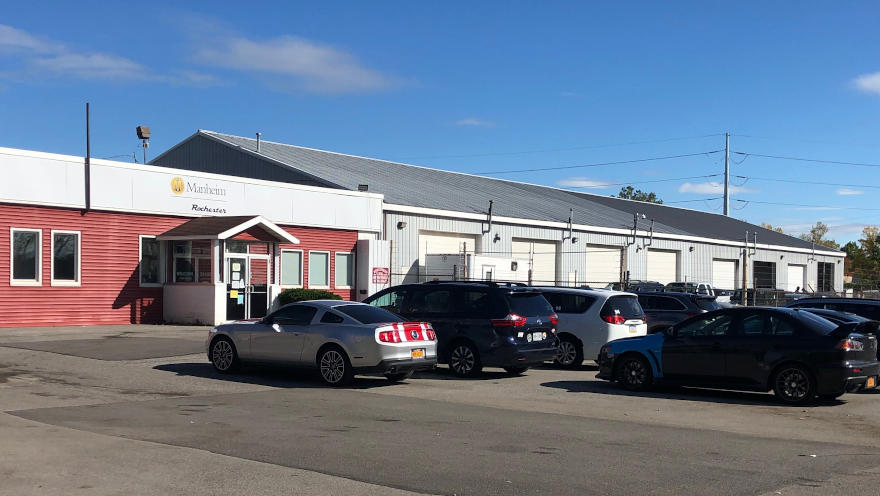
Manheim has expanded its mobile auction network, with a new mobile sale launching Wednesday in Rochester, N.Y.
The company is conducting the Manheim Rochester site in partnership with Bob Johnson Automotive Group.
Manheim Rochester, which was previously Central Auto Auction, is the auction company’s first physical presence in the area.
(A Manheim spokesperson confirmed that the site is still owned by Bob Johnson Automotive and that the sale is a partnership between the dealer group and Manheim).
Manheim added a mobile sale in Novi, Mich., which is hosted by Manheim Detroit, in August.
The company now hosts more than 45 monthly mobile sales.
Among those are 27 recurring sales and 18 event sales. The mobile auctions are held at “non-traditional locations” including dealerships, hotels, race tracks and beyond.
In short, all the usual technology and amenities needed to run a traditional auction sale, Manheim brings to the site to facilitate the mobile sale.
“We created mobile auction sales over a decade ago to offer dealers local access to inventory, and they continue to play an important role today, especially with the industry’s tight supplies,” Manheim regional vice president Tim Janego said in a news release. “We’re excited about growing sales, with Manheim Rochester being our largest dealer offering in the East.”
Particularly in the COVID-19 era, the importance and growing presence of simulcast auction sales cannot be overstated. From corporate giants to independents, the ability to simulcast is a necessity in the tool belt of an auto auction.
Digital-leaning wholesale may now be ubiquitous, but it has been years — decades, even — in the making.
In fact, Monday marks the 25th anniversary of what ServNet has said was the first-ever auto auction sale to be simulcasted.
That sale happened at State Line Auto Auction in Waverly, N.Y.
“400 vehicles were offered that day, and 400 were sold. 125 bidders were in attendance on the floor, and 15 bidders chose to stay at their respective dealerships and bid remotely,” State Line owner Jeff Barber said in a news release. “Forty-five cars were purchased electronically by these remote bidders. At the time, all of us at State Line felt that we were involved in something ground breaking, one that would shape the future of the auto auction industry. Looking back now, we all realize we were right!”
In light of the 25th anniversary of this sale, below you will find an Auto Remarketing feature from August 2015 about that sale.
1 of simulcast's first steps to becoming grand slam
It is late summer 1995 in New York City — one year before its Yankees reignited their baseball dynasty and won their first of four World Series in five years, one year after its Rangers reached hockey’s mountaintop and its Knicks got oh-so-close in basketball.
And meeting in the singles finals of the U.S Open tennis tournament in the city that summer are, arguably, some of the generation’s greatest stars: Pete Sampras beating Andre Agassi in the men’s final, Steffi Graf defeating Monica Seles in the women’s.
What, you might ask, does that have to do with remarketing?
Not a whole lot, other than this:
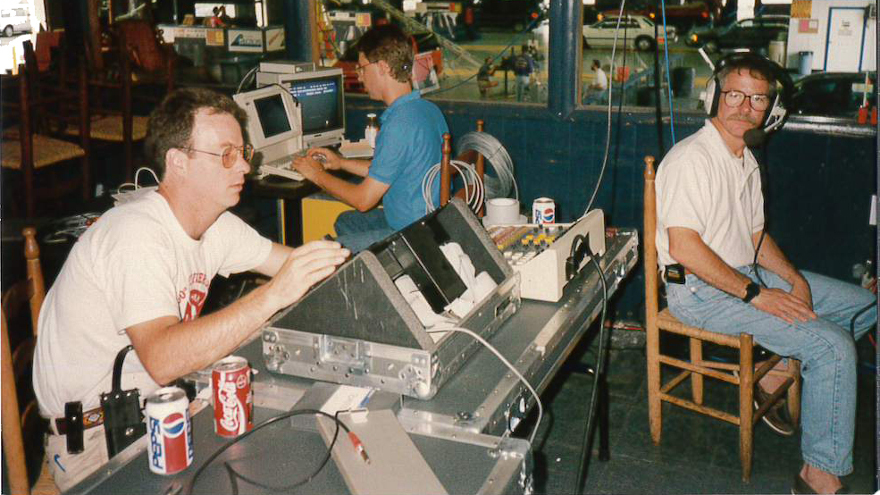
Some of the satellite trucks at that 1995 tennis tournament in Queens would end up, weeks later and some 200-plus miles to the northwest, playing a pivotal role in what is described by at least one account as being the first car ever sold via simulcast.
Executive meeting sparks interest
ServNet has shared an account of the events that happened Oct. 12, 1995 at State Line Auto Auction in Waverly, N.Y.
A few months before that sale, the group’s report says, ServNet’s then-executive director Harry Beyer introduced Campus Group Companies chief executive officer Steve Campus to the auction group.
Campus had technologies that he felt auctions could use; for instance, there was a device that let conference attendees vote electronically, and then those votes could be tabulated.
A large pharmaceutical company was a client of the Campus Group and wanted physicians to be able to use the technology in real time. In essence, doctors at separate conferences could all vote their opinions at the same time. The Campus Group utilized satellite technology to accomplish this.
Campus thought this might be useful for the auction business, as well, so he presented this to the ServNet group.
Jeff Barber, the owner of State Line Auto Auction, decided to give it a shot, as long as there was interest in the product.
With State Line having been a GM Sponsored Auction since 1989, Barber and Beyer approached then-GM Remarketing director Ford Sims, who gave them the greenlight to use this satellite technology at one of their sales.
Plan moves forward
Some serendipity in all of this: there were already satellite dishes available at GM dealerships, who would be the folks actually bidding at the sale. These stores used them for their parts departments, the story goes.
With this in play, the auction’s sales and marketing team sought out permission to use this existing equipment for remote bidding.
This foundation of the idea bubbled into a project: GM could hold a closed auction, and allow dealers who weren’t present in the actual lanes in Waverly to bid on cars remotely at the same time the sale was happening.
The report explains the technology involved in the project worked like this: Live video was streamed via satellite and audio was streamed through a phone bridge in Kansas. No Internet was involved.
And the satellite trucks transmitting that video signal? Those were the ones that had come from the aforementioned U.S. Open.
Results of sale & legacy
State Line included 400 vehicles at its sale that day, all of which sold. There were 125 bidders who were in the lanes at Waverly, with 15 bidders who chose to test out this new remote bidding from their respective dealerships.
Thirteen of those 15 ended up buying at least one car remotely, and they combined to purchase 45. The first was sold to Farnsworth Chevrolet of Canandaigua, N.Y., which ended up purchasing eight remotely that day. Bob Johnson Chevrolet purchased 12.
So how has the industry been impacted some 20 years later?
Consider this: in 2014, 17.9 percent of auction sales were Internet-based, according to the 2014 NAAA Annual Review.
Simulcast alone had a 13.8-percent share.
And for the record, Sampras and Graf happened to win a few more Grand Slam titles in the years since.
The Knicks, well, their time is coming.
As it invests further into strategic growth areas, ACV Auctions has appointed three new independent members to its board of directors.
Those new board members each offer decades of experience from their respective industries, according to ACV. That can “enrich ACV’s perspective in key growth areas from transportation and capital to product innovation,” the company stated in a news release, adding that the additions come at a time of rapid growth for the business.
The three new board members are Eileen Kamerick, René Jones and Kirsten Castillo.
ACV says Kamerick’s experience involves service on boards of public and private companies. Her experience also includes enhancing stakeholder value, helping to usher in successful IPOs, assisting in mergers and acquisitions and executive leadership mentoring.
Currently, Kamerick is a non-executive director and adviser to several companies. Those include Legg Mason Closed-End Funds, AIG Funds, the Alzheimer’s Association, Associated Bank-Corps, and Hochschild Mining plc.
As for Jones, his more than two decades of management experience includes his current position as chairman and chief executive officer of M&T and its principal banking subsidiary, M&T Bank. That company is headquartered in Buffalo, N.Y., where ACV is also based.
ACV notes that Jones is one of four African-American chief executive officers in the Fortune 500.
“ACV Auctions and M&T Bank, together with many others across the community, are working together to expand and extend Buffalo’s technology, innovation and entrepreneurial ecosystem, and to position our community for success in the new economy,” Jones said.
Castillo has worked in the logistics and transportation sector for decades. In 2010, she joined her family business, Logistics Planning Services, as chief operating officer and went on to lead the sale of the business to GlobalTranz.
She currently leads engagement for AWESOMELeaders.org and serves on the board of directors of The Marvin Companies and Ocugen.
She also serves on academic and non-profit boards. Those include United Way and Duke University – Fuqua Center for Entrepreneurship & Innovation advisory board.
Expanding on how the company has experienced rapid growth, ACV noted that through COVID-19 challenges, ACV has shown “ongoing record-breaking performance” since May.
Along with donating 150,000 masks to three of the largest public school districts in Texas, GM Financial recently named five regional 2019 Auction of the Year winners and the recipient of the Most Valuable Auction of the Year Award.
These accolades are part of GM Financial’s annual nationwide Auction of Excellence program, recognizing the highest-performing auction locations in 2019.
The Regional Auction of the Year winners included:
ADESA Dallas, Hutchins, Texas
ADESA Kansas City, Belton, Mo.
Manheim Denver, Aurora, Colo.
Manheim Pennsylvania, Manheim, Pa.
Manheim Mississippi, Hattiesburg, Miss.
And the Most Valuable Auction of the Year is Manheim Pennsylvania.
“We value our longstanding relationship with GM Financial and are truly honored to be chosen for this award,” said Joey Hughes, vice president and general manager of Manheim Pennsylvania.
“This is a testament to the commitment our team puts in every day to help our clients achieve their goals, while delivering outstanding service. I’m excited to see them recognized in such a meaningful way,” Hughes continued in a news release from GM Financial.
GM Financial said recipients were selected after reviewing each of the consignor’s 45 auctions’ performance in retention, operational metrics, presale activities and overall auction operations.
“These auctions helped GM Financial produce outstanding results throughout the year and provide outstanding service and value for our dealer customers,”GM Financial senior vice president of remarketing solutions Bob Winn said in a news release.
“They perform reliable and key services for our continued success. Congratulations to each one being honored this year,” Winn continued.
Mask donations
In other company news, GM Financial is helping thousands of students, teachers and staff members in San Antonio, Fort Worth and Arlington have a fresh disposable face mask to wear each day at school, by donating 50,000 masks to San Antonio ISD as well as donating 50,000 masks to Fort Worth ISD and another 50,000 to the Arlington ISD.
Being based in Fort Worth, with large operations in both San Antonio and Arlington and nearly 5,000 employees in the metroplex, GM Financial president and chief executive officer Dan Berce said, “GM Financial has a longstanding commitment to supporting the health and welfare of the communities where we live and work.
“With the continued threat of COVID-19, these masks are one way we can contribute to a safe learning and working environment for our local school districts,” Berce continued in a news release.
GM Financial’s mask donations joins a larger effort by its parent company General Motors, which will have donated more than 6 million masks by the end of September.
Overall, GM Financial and GM employ more than 13,000 Texans in facilities across the state, according to the companies.
Leaders from each of the school districts shared reaction to the efforts by GM Financial.
San Antonio ISD chief operations officer Willie Burroughs said: “We are very appreciative of this donation as it helps our staff and students have a clean mask to wear. Wearing face masks is one of the most important safety protocols we’ve put in place to be able to offer classroom learning this fall.”
Arlington ISD superintendent of schools Marcelo Cavazos said: “GM has looked out for the staff and students in the Arlington ISD for years. It’s amazing to have partners like that, especially in times like this. We will be able to put these masks to great use to ensure that our staff and students are safe, which has always been our No. 1 priority.”
Fort Worth ISD superintendent Kent Scribner said: “We believe the best place for a child to learn is in the classroom, with a teacher. And for those learning on campus our overarching priority is the health and safety of students, teachers, staff and the community. GM Financial’s generous donation of 50,000 masks has a major impact on helping us help children and our employees.”