Along with sharing its latest update on the specialty markets, Black Book reported that wholesale prices remained steady and volume a bit constricted as the calendar flipped to September.
The latest Market Insights report highlighted the strength mainstream sedans have had in the market. Coupled with the effects of increased SUV inventory over the last few years, editors acknowledged possible swinging of the pendulum for cars.
“Used sedans are hot in the market as value-conscious consumers look for affordable transportation,” said Anil Goyal, executive vice president of operations at Black Book.
Volume-weighted, editors found overall car segment values increased just a little last week — 0.03 percent. In comparison, Black Book reported market values for cars had decreased by 0.15 percent on average during the prior four-week period.
As Goyal referenced, the midsize car segment experienced the biggest increase, rising 0.24 percent or $21.
Volume-weighted, editors determined overall truck segment values (including pickups, SUVs and vans) softened by 0.11 percent last week. In comparison, the market values had decreased by 0.14 percent on average during the previous four-week period.
Within trucks, Black Book noticed the compact luxury crossover/SUV segment performed the worst, sliding by 0.36 percent or $70.
Among the anecdotes collected by Black Book representatives stationed at sales nationwide, the talk was as much about volume as price, especially in the Southeast.
— From Georgia: “The volume is still down, but the prices are not. Buyers are not thrilled about the extra bidding it takes to secure inventory for their lots.”
— From Florida: “Fewer no-sales today, and about the only vehicles not selling were the large commercial vans.”
— For North Carolina: “An auction GM in North Carolina says that they are consistently selling around 65 percent and believes the high conversions will continue until more supply comes to the physical auctions.”
And talk about volume percolated in the North, too, with the story in Pennsylvania being, “One thing that stood out today was the dealers’ acceptance to higher mileage vehicles which points to the lower supply.”
Finally, a familiar scene unfolded in Massachusetts where Black Book lane watcher said, “The nicer vehicles still bring really strong money but the older, condition challenged ones are a tough sell.”
Update on the specialty markets
As they share regularly, editors also opened a new month by recapping their latest observations of what’s happening in the specialty space.
— Collectibles: With a cumulative total of nearly $370 million, “it’s safe to say that Monterey 2018 was a success,” Black Book said.
— Recreational Vehicles: Editors indicated the average selling price of towables at auction last month crept up about 1.5 percent, reaching another all-time high at just above $15,000.
— Powersports: Black Book determined all segments are down this month in the powersports market. “Most of these are normal seasonal drops, but a few normally strong fall vehicle segments are also down a bit more than is typical for the time of year,” editors said.
— Heavy-Duty: Black Book pointed out that new heavy-duty truck orders are being delivered although the turn-in units are not showing up at auction at the same rate.
— Medium-Duty: Editors closed by noting the used market remains strong despite new inventory adding some downward pressure to wholesale prices.
On Tuesday, Copart announced the opening of its seventh location in Brazil.
The facility is located at Estrada da Roseira, 6.725, bairro Borda do Campo, Sao Jose dos Pinhais, near the city of Curitiba, the capital of the state of Parana.
Copart highlighted the new Curitiba location, which can store up to 7,000 vehicles, is strategically located to meet increasing buyer and seller needs in Brazil. The operation hosts weekly auctions on Tuesdays at 1 p.m. UTC-3.
“Our new facility in Paraná state reinforces Copart’s long-term commitment to the Brazilian market,” Copart Brazil president Adiel Avelar said. “We continue to build a national footprint to support the needs of insurance companies and other sellers.”
Copart chief executive officer Jay Adair added, “The addition of locations accommodates increasing market demand and reflects our continuing growth in Brazil. We are better positioned to provide greater convenience and an enhanced experience to all of our customers, both buyers and sellers.”
In addition to conducting online vehicle auctions, Copart reiterated that it is a proud community partner. Copart Brazil is proud to assist community daycare Elydia Bertaiolli Duarte by donating toys for its Children’s Day. It also donates food baskets to Instituto Ellus each month.
To learn more about Copart Brazil, visit http://www.copart.com.br.
ADESA is looking to make returning a vehicle back to the auction as easy as what dealers might experience when those shoes or pants just don’t fit correctly.
On Wednesday, the business unit of KAR Auction Services, launched a new return guarantee product called ADESA Assurance. The company highlighted the new service can allow participating dealers to return eligible vehicles within 21 days for a full refund of the purchase price and associated buy fee.
The program is available to dealers at all 60 ADESA physical auction locations in the U.S. as well as DealerBlock and LiveBlock, ADESA’s online and simulcast auction platforms.
“Everything we do at ADESA is aimed at simplifying the auction experience for our customers,” ADESA president John Hammer said in a news release.
“ADESA Assurance gives dealers greater confidence and flexibility in their purchases to help them keep pace with the always changing market conditions,” Hammer continued. “By reducing the risk of wholesale transactions, ADESA Assurance will help our dealers stay fast, focused and successful.”
Across ADESA, there are thousands of vehicles up for auction at any given time, the duration of which can vary from a few days to just seconds. To capture the inventory they want, dealers often make purchasing decisions with incomplete or deficient information regarding market conditions, a vehicle’s condition or potential reconditioning needs.
The company explained the ability to return a vehicle through ADESA Assurance is aimed at alleviating the uncertainty of these transactions and helping dealers deploy their capital and shift their inventory more quickly.
For customers who enroll in the subscription service, ADESA Assurance will be automatically applied at the time of purchase to all eligible vehicles purchased at ADESA physical auctions, LiveBlock, ADESA UVA and ADESA mobile auctions.
The company added that buyers who only purchase DealerBlock vehicles on ADESA.com can add protection on a vehicle-by-vehicle basis at the time of check-out.
ADESA Assurance applies to vehicles 21 years or newer with a maximum sale price below $100,000 and fewer than 250,000 miles on the odometer.
In a separate message to Auto Remarketing, Hammer responded to an inquiry regarding what kind of feedback from dealers regarding vehicle returns ADESA has receive that helped to cultivate this program.
"ADESA currently offers several different products that help our customers buy with confidence — helping reduce the risk of purchasing a vehicle with undisclosed damage or problems," Hammer said. "We have had a version of ADESA Assurance within our upstream marketplace providing return guarantees to a select sub-set of our inventory. However, we didn’t have a similar product offering for customers buying at our physical auctions.
"Our customers have been asking for this kind of product for some time — our buyers want to buy with confidence. We were able to use our upstream version of ADESA Assurance as a template and customize the product for our in-lane customers," he continued.
Hammer indicated that the company began to develop what now is ADESA Assurance back in January. He described the hurdles ADESA had to clear during the process to get to Wednesday's official launch.
"ADESA Assurance is a combination of two products — upstream and physical auction offering. It took participation from many areas of the company to create a product that is fully integrated into our various platforms and is part of a seamless auction experience," Hammer said.
"We were trying to increase conversion rates and remain profitable. ADESA Assurance gives our customers the confidence they need to make fast purchases in the lanes while alleviating the uncertainty of these transactions and helping dealers deploy their capital and shift their inventory more quickly," he continued.
Now that ADESA Assurance is in motion, Hammer also mentioned some of the metrics and trends the company might be watching to make sure the program is executing well.
"We will be looking at customer adoption and cancellation rates, claims rate percentages and expenses overall and by dealership and the overall financial performance of ADESA Assurance," he said.
"Just like any product at ADESA we are fully committed to its success and the success of our customers who use our products. We will continue to listen to our customers and create programs and solutions that improve their auction experience," Hammer went on to say.
For additional details or to enroll in the subscription service, visit ADESA.com/Assurance.
Black Book explained why used-car managers should not get frustrated when they see new utility vehicles frequently rolling over the curb on the new side of their dealerships. Turns out, those cars lined up in used inventory are a pretty valuable asset nowadays.
This week’s Market Insights report from Black Book illustrated the continued support of wholesale prices with cars demonstrating greater overall strength than trucks despite America’s appetite for trucks and SUVs.
“Another banner week for used-vehicle values. While consumers prefer SUVs to cars in the new market, cars are in strong demand as the more affordable option in the used market,” said Anil Goyal, executive vice president of operations at Black Book, who also is among the experts on tap to be a part of Used Car Week 2018 that begins on Nov. 12 at the Westin Keirland Resort and Span in Scottsdale, Ariz.
Volume-weighted, Black Book indicated that overall car segment values decreased by just 0.06 percent last week. That’s just a fraction of the comparison as editors mentioned values had decreased at a rate of 0.15 percent per week during the previous four weeks.
Among car segments, Black Book reported full-size car values increased by 0.22 percent or $25 last week. The most noticeable car decline involved subcompacts, which saw prices soften by 0.35 percent or $21.
Again reviewing volume-weighted information, editors noticed that overall truck segment values (including pickups, SUVs, and vans) dipped by only 0.16 percent last week. That’s on par with what Black Book reported during the previous month when the rate came in at 0.15 percent per week.
Within truck segments, editors pointed out that small pickup values increased by 0.40 percent or $64 last week, showing that used trucks still will command attention.
Let’s turn next to some of the highlights of what Black Book representatives stationed at nearly 60 sales observed in the lanes. The top anecdotes covered the major regions of the country, reinforcing the ongoing challenge to keep that used-vehicle inventory appealing.
—From Florida: “The market here remains steady, but there were a lot of no-sales in the dealer lanes.”
—From California: “Prices were holding strong with an above-normal number of buyers. We have seen very good sales for several weeks in a row.”
—From Illinois: “The institutional lanes did very well today. One of the independent used-car dealers stated that his business is doing very good on lower-priced vehicles.”
—From Georgia: “There were few no-sales in the highline sale. The dealers continue to complain about a shortage of nice vehicles in the auction lanes.”
Southeastern Auto Auction of Savannah hit the double deuce and celebrated on Aug. 15.
Southeastern AA held its 22nd anniversary sale and offered a variety of vehicles from franchised and independent dealers as well as institutional accounts. The auction said a huge crowd was in attendance both in the lanes and online.
Dealers enjoyed free hamburgers, hotdogs and had an opportunity to win the $20,000 in cash and prizes being given away. The day started with a first-time attending dealer winning $1,000 in the early bird drawing. At the end of the day, prizes given away included:
— A customized Club Car golf cart
— Automotive wall art
— Signed and framed jerseys from legendary University of Georgia running back and Heisman trophy winner Herschel Walker and previous NFL MVP Matt Ryan, the Atlanta Falcons quarterback
— $10,000 in cash
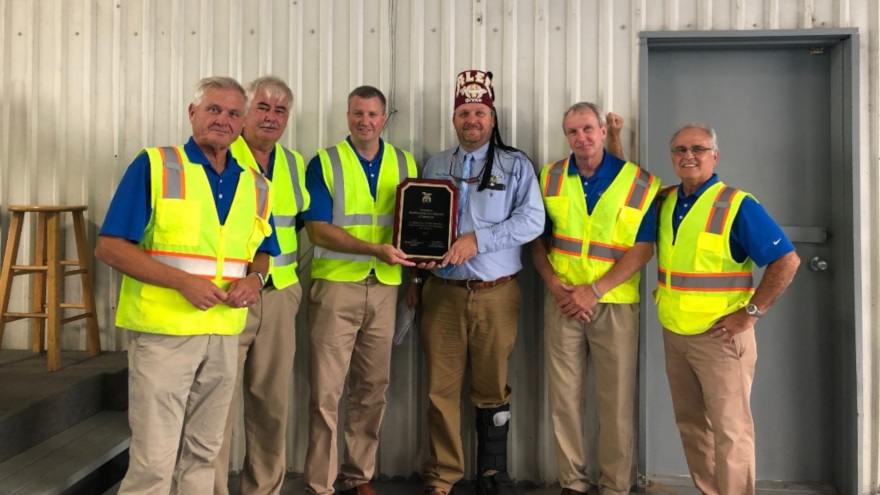
As with all promotional sales, a specific charity was featured during the sale. Approximately $1,000 was raised and donated to Shriners Hospital for Children.
SEAA also unveiled to dealers and employees its newly acquired, adjoining property featuring additional office and parking space as well as a four-bay mechanical facility.
“It is great to have this additional space for both customers and employees. An onsite mechanical shop will result in faster diagnosis and repairs for both our institutional clients and dealers,” said Bill McCready, vice president of operations.
“It was another great anniversary sale,” McCready continued. “As usual, our amazing team went above and beyond to make sure it was a success.
“For an auction to be in business this long you need to have great employees and great customers,” he went on to say. “We are all looking forward to another great year.”
Southeastern AA is located in Savannah, Ga., and offers more than 900 vehicles weekly during its dealer-only sale every Wednesday at 9:30 a.m. and public sale every Thursday at 7 p.m.
For more information, visit www.southeasternaa.com.
Through July, auction volume of late-model vehicles is up 4.2 percent from where it was after seven months of 2017.
That’s according to the latest Guidelines report from J.D. Power Valuation Services, which defines late-model, in this case, to be vehicles up to 5 years in age.
And the increase in that slice of auction volume gets a little bigger each month, and will likely culminate with a full-year increase well over 6 percent, according to J.D. Power.
The latest figures follow a July where there was a 5.1-percent month-over-month dip in late-model volume, but a 13.1-percent year-over-year hike, according to the report.
Driven by lease returns — of which there will likely be 14.2 percent more this year — the crop of vehicles aged 5 years or less is expected to climb 6.5 percent for full-year 2018, says J.D. Power.
That increase is down, but not dramatically, from the 6.6-percent uptick last year.
Late-model rental volume is expected to climb 8 percent, and what J.D. Power dubbed “regular retail purchase supply” is likely to jump 2.7 percent.
Look for next year to be the “peak” in supply, the company said.
In a separate report from RVI Analytics, analysts spotted a 15.9-percent month-over-month and a 4.6-percent year-over-year hike in overall auction transaction volume for July. That comes with a caveat, however.
“Although auction volumes are ahead of last year, more institutional consigners, especially rental companies and captive finance companies, are using alternative channels to realize a higher net result,” analysts said in the wholesale market report released last week.
“Alternative channels, including direct sales to dealers or customers can convert the asset into cash faster while eliminate auction fees and transportation expense,” the report continued. “It can also have the effect of boosting auction prices by reducing the supply in that channel.”
RVI is calling for continued increases in used-car supply over the next few years.
The RVI Used Vehicle Stock Index is likely to climb 6.8 percent this year, followed by 3.8 percent and 3.4 percent gains in the following two years, before scaling back 1.3 percent in 2021.
This is playing a role in the company’s predictions for declines in its Used Vehicle Price index. Though projected to climb 0.4 percent for 2018, the RVI UVPI – Real is projected to fall 2.9 percent in 2019 and dip 1.3 percent in 2020.
“The UVPI forecast is trending downward over the next two years. This is due to strong new vehicle sales and high lease penetration leading to higher used vehicle supply over this timeframe,” the report notes. “In addition, continued high incentive spending leads to lower prices in the used vehicle market.”
RVI points out in the report that all of the data is through RVI, while the industry commentary and analysis is through Maryann Keller & Advisors, which is a member of the Automotive Intelligence Council.
Basic mathematics says that five times any number except zero can result in a significant figure. While five times one equals five, five times 500 equals 2,500. And five times … OK, let’s not have to retrieve the calculator on your smartphone.
However, Black Book executive vice president of operations Anil Goyal broke out the math concept of five times an amount when describing depreciation trends highlighted in this week’s Market Insights Report.
“The overall used-vehicle market is doing extremely well, bucking the seasonal trend seen in previous years. This time last year, the weekly drop in values was five times the rate seen today,” said.
Volume-weighted, Black Book reported that overall car segment values decreased by just 0.11 percent last week. In comparison, editors mentioned values had decreased at a rate of 0.20 percent per week during the previous four weeks.
Among car segments, Black Book indicated prestige luxury car values decreased the most last week, declining by 0.63 percent or $221.
Again volume-weighted, editors noted that overall truck segment values (including pickups, SUVs, and vans) softened by only 0.10 percent last week. Like among cars, Black Book said truck values also had dropped at a rate of 0.20 percent per week during the previous four weeks.
Within truck segments, Black Book noticed that full-size van values declined the most last week, dropping by 0.41 percent or $61.
Perhaps Black Book’s observers at nearly 60 sales nationwide did some quick math figures as they watched vehicles go over the block while collecting anecdotes from the lanes.
Along with watching prices, the observations also captured what else is happening at dealerships as well as their neighborhoods.
— From California: “The market is very good, although most of the vehicles coming through the auction lanes are covered in ash due to the widespread forest fires.”
— From Georgia: “Plenty of buyers and inventory. Auctioneers are not having to work hard at receiving bids.”
— From Michigan: “Prices continue to remain strong. Trucks and cargo vans are attracting a lot of the attention. Older vehicles that look good and have reasonable miles are doing well due to back-to-school buying.”
— From Florida: “Dealers are searching for acceptable mileage and good vehicle history. Lots of no-sales on the dealer lanes but the financial lanes did really well.”
The National Auto Auction Association has seen four states that are reclassifying vehicles that previously have been given a clean title as a salvage unit.
As of Aug. 8, NAAA said the locations now following this protocol include Nevada, Ohio, Virginia and Wyoming. The association explained that upon transfer of ownership, some jurisdictions have begun branding/notating previously issued clean titles as salvage titles based on JSI (junk, salvage and insurance) reporting in the National Motor Vehicle Title Information System (NMVTIS).
As part of the Anti-Car Theft Act of 1992, NAAA pointed out that various entities (including salvage pools/auctions) are required to report to NMVTIS inventory that comes into its possession that meets the federal definition of “salvage” or “junk.” The association added that insurers are required to report all total losses.
“These reporting requirements were implemented to prevent bad actors from utilizing the VINs and/or titles of severely damaged or destroyed vehicles in order to obtain clean paperwork to create cloned vehicles,” NAAA officials said, adding more explanation directly from NMVTIS, which stated:
“Both the Department of Justice and the state and local law-enforcement community are concerned that a significant number of these junk and salvage automobiles purchased from salvage pools have their VINs or titles used to create cloned vehicles, or otherwise make stolen vehicles appear legitimate. Such entities must report all salvage or junk vehicles they obtain, including vehicles from or on behalf of insurance carriers, that can reasonably be assumed to be total loss vehicles.”
NAAA acknowledged a question that auctions and dealers are likely asking. If the vehicle was required to be reported to NMVTIS, why didn’t the vehicle already have a salvage title?
NAAA officials explained that the federal definition of “salvage” and “junk” that would trigger a reporting requirement is not the same as states’ definitions for salvage/junk that would trigger a title branding/notation. NAAA reiterated states are not required to brand titles based on NMVTIS reporting. However, the association said some states are choosing to do so as they have modernized their operating systems and pulled NMVTIS information into their normal process flow for title issuance.
To clarify the point further, NAAA pointed to more details from NMVTIS, including:
“The Department of Justice recognizes that many state laws have differing requirements and definitions of terms of such as ‘junk’ and ‘salvage.’ The NMVTIS requirements do not alter these state laws and the state laws do not prevail over federal definitions and requirements. The information reported to NMVTIS is not required to be used by any future state that titles a vehicle included in an auto recycler, junk or salvage yard report. The NMVTIS reporting requirements do not replace or negate any state reporting requirements.”
NAAA closed its latest update on the matter saying that the association “is working with the industry on this issue.”
If auctions experience any issues regarding this title matter, they are asked to contact Tricia Heon at NAAA by sending a message to [email protected].
A ServNet Auction Group member located in the heart of the Midwest is making sure its standing within the wholesale community remains strong as leadership changes unfold.
According to a news release delivered to Auto Remarketing on Friday, Missouri Auto Auction owners Gregg and Dagmar Boswell have announced a change in the management and ownership structure at the auction. In conjunction with the reorganization, Justin Brown assumes duties as the auction’s general manager while previous managing partner Kevin Brown leaves the company to pursue other interests.
The Boswells also shared that as part of the transition, Cody Boswell and Candice Boswell-Bray will assume greater oversight responsibilities and play more strategic roles in the next generation of leadership at Missouri AA.
“This is an exciting time for us at Missouri Auto Auction,” Gregg Boswell said. “We wish Kevin well and appreciate his efforts over these many years in helping to build the auction. He has overseen the many physical improvements made to the facility and has been instrumental in developing vital relationships in the industry.
“His departure marks a new focus on the next generation of leadership, and we look forward to an exciting future as Cody, Candice and Justin devote their energy and skill to our business,” Gregg Boswell continued.
Justin Brown has worked for Missouri AA since 2006, beginning his career with the company as a sales representative and working for the past several years as the auction’s sales manager. Under the leadership of Gregg Boswell and Kevin Brown, Justin Brown has advanced within the company, learning all aspects of operations over the 12-year span prior to his appointment as general manager.
Justin Brown also is a recent graduate of Auction Academy.
Cody Boswell and Candice Boswell-Bray both have more than a decade of auction management experience, learning firsthand from their work at the auction and from their parents, who have been in the auction business for more than 40 years.
Also a graduate of Auction Academy, Cody Boswell is an auctioneer at Missouri AA.
“Both Cody and Candice share a depth of knowledge about the auction and the industry that will serve them well in their leadership roles as Missouri Auto Auction continues to grow,” Gregg Boswell said
“I have great confidence in Justin’s move into the senior role as general manager overseeing the day-to-day operations. This next generation in leadership will serve our auction and our customers well.” Gregg Boswell went on to say.
Missouri AA has experienced solid, continual growth since its founding 18 years ago in 2000. Today, more than 500 vehicles are offered for sale each week at a greatly enhanced and more advanced facility.
“Much of Missouri Auto Auction’s success can be attributed to a supportive employee culture and belief in promoting from within,” Justin Brown said.
“Our staff has always been and will continue to be the distinguishing factor that sets Missouri Auto Auction apart, playing a pivotal role in building the lasting relationships that contribute to our ultimate success,” he added.
Missouri AA holds a consignment sale every Friday at 9 a.m., with monthly vehicle and equipment sales for the government, businesses and dealers that are open to the public. Missouri AA operates within the Auction EDGE technology system, which can deliver live online auction lane bidding, market reports of auction sales results and available inventory from auto auction affiliates nationwide.
During auction sales where thousands of vehicles are presented on multiple auction blocks, buyers are benefiting from receiving text message notifications that alert them prior to a vehicle they’re interested in coming up for sale.
With Manheim’s Lane Alert service, buyers can maximize profits and ensure that they can bid on specific units without having to use their time reviewing run lists or planning out their sale day strategy. Now, just six months post-launch, Manheim said that more than 700,000 Lane Alert text messages have been sent and more than 33,000 vehicles have sold to a client who signed on to receive text message notifications.
“The adage, ‘you can’t be everywhere all the time’ is never truer than during a busy auction sale day when it is critical that a buyer be in the right lane to bid on the cars they need most,” vice president of Manheim Digital Marketplace and RMS Automotive Zach Hallowell said in a news release. “Lane Alerts is another example of how Manheim is ‘meeting our clients where they want to be’ by augmenting the auction experience with technology in order to make doing business with us easier and faster.”
Whether buyers are using Simulcast or visiting physical sales, Lane Alerts is designed to help them not miss out on the opportunity to purchase specific cars that they have identified as needing the most.
According to Manheim, in June, almost 60,000 clients had already chosen to take advantage of the new service following its launch in January.
“The new Lane Alert is one of the best improvements I have seen in years,” said Robert Christensen, president of Apple Auto Sales. “Until now, I have had to look at each of the presale lists for the lanes that had cars I wanted, find out how many unfilled lane spots there were and then try to calculate when my vehicles were going to be running through so I could bid on them.
“Now, it is so easy. I like that I get an alert on my phone when the vehicle is 10 vehicles away from entering the auction block. It is perfect for me to be prepared for bidding,” Christensen continued.
In addition to being able to sign up for Lane Alerts through their dealer profile at manheim.com/lanealerts, interested dealers can also register for the service from vehicle details pages and search results pages on Manheim.com.