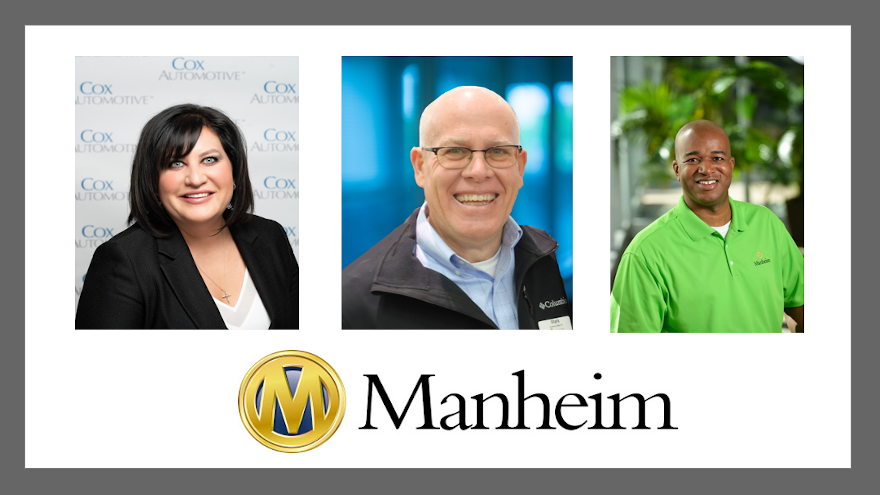
Manheim shared a trio of management moves Monday, announcing first that its regional vice president for the Florida region, Mark Ford, is set to retire at the end of 2021.
The company also announced two promotions in its Manheim Mid-Atlantic Market Center. Chad Spearman is now auction manager at Manheim Baltimore-Washington and Danielle Sweet is now auction manager at Manheim Fredericksburg.
As for Ford, he has been with Manheim since 1989, when he joined the company from Bishop Brothers Auto Auctions in Atlanta.
Ford has held leadership posts at Georgia, Utah, Indiana and Ohio auctions for Manheim. In 2010, he became market vice president of the North Central Market.
In his current role, which he has held since 2013, Ford heads up the 12 Manheim locations in Florida.
“There’s no question that Mark has been a driving force for Manheim’s Florida operations and an inspiration to those who worked alongside him,” Manheim division vice president Alan Lang said in a news release. “We can’t thank Mark enough for his many contributions to helping shape Manheim’s future and for all he’s done for our company, clients and teams.”
As for the Mid-Atlantic promotions, Spearman was most recently the assistant general manager at Manheim Baltimore-Washington. He has been with Manheim since 2013.
Sweet has been with Manheim since 2015, when she joined as a field sales manager serving Detroit, Cleveland, Indianapolis and Ohio. Sweet’s most recent post was as assistant general manager for the company’s operations in Pittsburgh, Cleveland and Rochester, N.Y.
She also held several management posts at Enterprise Rent-A-Car.
Consumer Portfolio Services is quite impressed with performances by independent auctions.
In fact, independent auctions swept all categories, as the subprime auto finance company announced its 2020 Auction Award recipients.
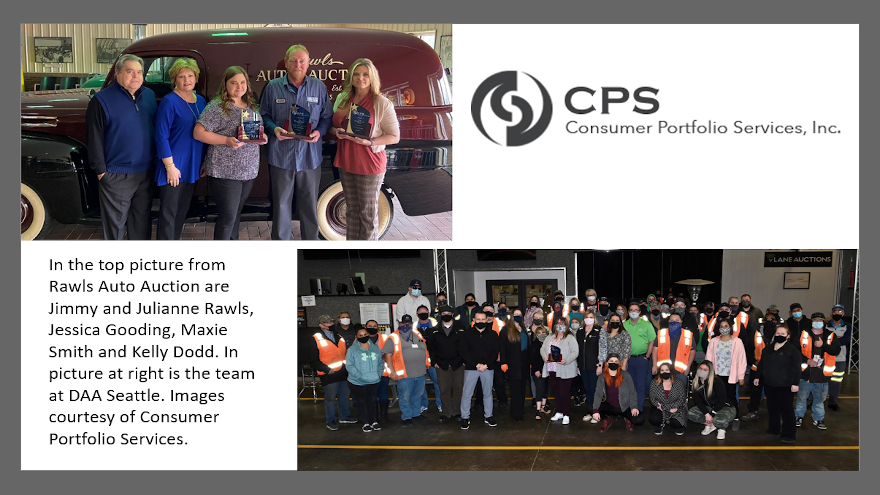
Three of the four accolades went to Rawls Auto Auction, which earned honors in all three categories for the large CPS volume auctions.
Rawls has earned the CPS Heavy Hammer Award in consecutive years and its second CPS Top Gun Award in the past three years.
The finance company said DAA Seattle continued its impressive commitment to client satisfaction in 2020, backing up its 2019 CPS Top Gun Award for auctions with a lesser volume of CPS vehicles.
“In an extremely challenging year, all of our auction partners went above and beyond normal standards to facilitate a well-balanced approach to provide a channel to reintroduce our repossessed collateral into the marketplace,” CPS remarketing manager Mike Scott said in a news release. “In a difficult time, our auction partners faced adversity at every turn, but met that challenge with a mantra of quitting not being an option.
“While we are honoring two auctions for their achievements, we would like to thank all our 2020 auction partners for their efforts. The success of our remarketing program is a direct correlation to our auction partners,” Scott continued.
CPS Top Gun Award – Auction of the Year (Small CPS volume): DAA Seattle – Auburn, Wash.
CPS Top Gun Award – Auction of the Year (Large CPS volume): Rawls Auto Auction – Leesville, S.C.
CPS Heavy Hammer Award – Highest Sales Retention: Rawls Auto Auction – Leesville, S.C.
CPS Operational Excellence Award – Best Fleet/Lease Department: Rawls Auto Auction – Leesville, S.C.
Auto dealers should consider letting sunlight power their location. They can install photovoltaic solar systems that can benefit the environment and also save money.
That is one tip that Manheim is sharing for dealers to increase their green efforts in celebration of Earth Day earlier this week.
Manheim is also taking on new sustainability initiatives of its own.
Manheim said that as a Cox company, protecting the environment is at the heart of its operations. The company said the national sustainability program that Cox Enterprises chairman Jim Kennedy founded in 2007 has set a goal of achieving zero waste to landfill status by 2024.
That national sustainability program is called Cox Conserves, and it also sets a goal of being carbon and water neutral by 2034.
Cox Enterprises director of sustainability Stephanie Valdez-Streaty offers the following tips for dealers looking to boost their own sustainability efforts:
Upgrade to energy-efficient light bulbs
Dealers looking to cut lighting energy consumption by up to 90% can invest in energy-efficient lighting. Valdez-Streaty said LED lighting lasts longer than traditional incandescent lighting. It can also use up to 90% less energy. Because LEDs also emit less heat, that can reduce air conditioning needs.
Let sunlight power your dealership
More on photovoltaic solar systems: Valdez-Streaty said that in many cases, energy costs are a dealership’s third highest operating expense. She said dealers should consider installing solar panels to power all or part of their business. Federal investment tax credits of up to 26% of the cost of the solar investment are available for eligible companies. Many states, counties, municipalities and utilities also offer other incentives for solar. Dealers can check with their local government for availability.
Place recycling bins in key areas
Dealers can place recycling bins in areas such as the showroom, customer service areas, office and break room areas, and vehicle service areas. Recycling bins that are easily accessible encourage customers and employees to recycle. They can show your dealership’s commitment to operating sustainably.
Recycle and reuse car-wash water
Dealers who are rebuilding their dealerships or adding carwashes onto their existing dealerships should consider that option. Recycling and reusing car wash water involve upfront costs, but the savings could be notable, depending on the number of cars washed and the price of water in your area, Valdez-Streaty said. It could lower monthly water fees and sewer fees. It could take time, but it could eventually pay for itself.
Choose native greenery
Dealers can choose native plants when landscaping their property. The extra effort and cost to use native plants is minimal for dealers who are already planning on spending money on landscaping, Valdez-Streaty said. They can save on water costs because when native plants are in their natural habitat, they can typically survive on rain.
Manheim’s own green efforts
Three locations are currently undergoing major energy savings upgrades. The upgrades include a large solar array at Manheim New Jersey and campus-wide LED installations at Manheim San Diego and Manheim Southern California. Manheim said the initiatives build on eco-conscious initiatives at many of its locations across the country. Results of these initiatives include:
— Photovoltaic solar installations at 20 locations collectively prevent more than 5,000 tons of carbon from entering the environment, annually.
— LED lighting projects across many locations reduce carbon consumption by approximately 35,459 tons annually.
— Xeriscaping, rain harvesting, reclamation and replenishment projects save up to 74 million gallons of water annually.
— Thirty seven Manheim locations are diverting at least 50% of their waste away from landfills each year. Manheim Houston and Manheim Nevada diverting more than 80%. Manheim also recently launched a program to ensure that every auction location will divert at least 60% of their waste from landfills, with at least five locations attaining zero waste to landfill status this year.
“Protecting the environment is one of the most important ways we live out our company’s purpose — to build a better future for the next generation,” Manheim divisional vice president Alan Lang said in a news release. “We’re proud of the progress Manheim has made and will continue to find every way possible to operate sustainably and help our clients and partners do the same.”
Manheim and Cox have launched company-wide campaigns during Earth Month to encourage team members to take more sustainable actions at home and at work. The company has provided resources such as educational webinars with conservation tips and has implemented fun challenges to increase participation.
The new Cox Collective Impact Report is available, showing how Cox is making an impact in “the communities where we live and work.”
With precautions in place to ensure attendee safety, the Greater Rockford Auto Auction will host the 4th Annual GRAA’lapalooza Anniversary Sale to celebrate 47 years in the auction business.
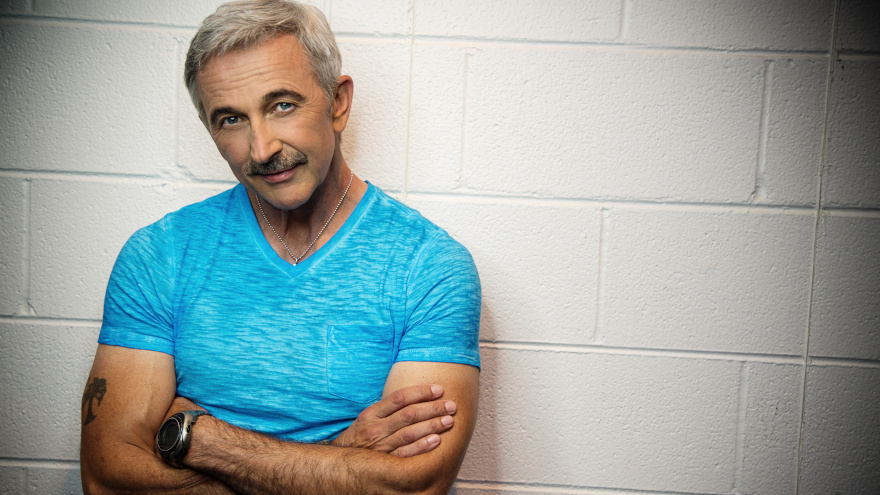
The two-day event will take place July 20 and July 21, with country music artist, Aaron Tippin performing July 20 following an evening auction.
“We are planning a safe customer and employee experience, full of cars, music, giveaways, and excitement,” auction general manager Chad Anderson said in a news release. “We are looking forward to a fantastic event.”
On the morning of July 21, the auction will welcome dealers back for the main auction event, with more than 1,000 vehicles running and $10,000 in giveaways after the sale.
Customers will have a selection of vehicles from fleet/lease and dealer consignors, with extra safety precautions in place. All guests will be required to wear face masks, social distance, and have their temperatures taken before entering the facility.
Anderson said the auction is excited to announce Tippin as the event’s headliner. Tippin, has been recording music for more than 25 years, with songs such as “You’ve Got To Stand For Something,” “Workin’ Man’s PhD,” and “There Ain’t Nothin’ Wrong With The Radio.”
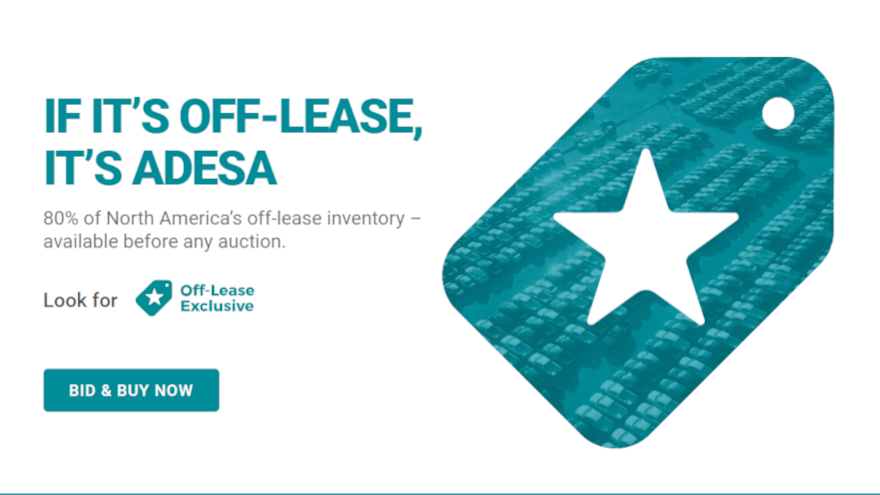
ADESA has launched “Off-Lease Exclusive” on ADESA.com, with new filtering and search functionality.
With that functionality, dealers gain one-click access to approximately 80% of North America’s off-lease inventory days before it is available through any other auction, according to ADESA.
The company said buyers can look for the new teal-colored “star tag” icon on all Off-Lease Exclusive inventory to instantly identify fresh, certified pre-owned-quality vehicles on ADESA.com.
ADESA refreshes Off-Lease Exclusive listings daily, and the listings are available for only 24 to 48 hours depending on consignor.
Dealers can make sure they don’t miss out on desired inventory by using the site’s integrated data-driven search functionality to set personalized alerts and in-app notifications.
In addition, ADESA has deployed new interactive technology within ADESA.com. That technology can help customers optimize the benefits of the Off Lease Exclusive functionality through an interactive, step-by-step instructional tour.
In addition to Off-Lease Exclusive inventory, ADESA.com also features more than 60,000 commercial, dealer, fleet, rental and repossession listings each day. For buying dealers, it provides access to the company’s live auction simulcast sales and run lists.
ADESA’s proprietary data analytics engine powers the entire site. The engine provides customers with vehicle recommendations that are tailored to their specific dealership and local retail market conditions.
Current ADESA.com dealers can use the new Off-Lease Exclusive functionality the next time they log into the site. Dealers who are not currently transacting on ADESA.com can click on the “REGISTER” button at www.adesa.com/off-lease to enroll.
“In today’s supply-constrained market, dealers need a quick, easy way to source quality, late model, low mileage inventory,” said John Hammer, chief commercial officer of KAR Global and president of ADESA, in a news release.
Hammer also said, “Thousands of these cars become available every day — fresh off our commercial private label platforms and available only on ADESA.com. By using our new Off-Lease Exclusive functionality, we’re giving franchise and independent dealers an early and exclusive opportunity to purchase the very best inventory out there before it goes to auction.”
Off Lease Exclusive is just another ADESA innovation to make wholesale easy so its customers can be more successful, Hammer said.
“We hope ADESA.com and Off-Lease Exclusive help dealers save time and effort, secure the very best cars for their lots, and continue to meet the demand of their retail customers,” Hammer said.
ServNet executive director John Brasher is leaving his leadership post at the auction group on April 30 to pursue other opportunities in the industry, the group said Wednesday.
ServNet administrative director Robert Sullivan will be interim executive director while the group conducts a search for its new leader.
Brasher has been executive director of the group since Jan. 1, 2020, when he and Sullivan took over ServNet’s leaders for Pierre Pons, who was the group’s chief executive officer for 12 years.
ServNet had announced in August 2019 that Brasher and Sullivan would be the next leaders of the group, a move that became effective at the start of last year.
“It is with regret but with sincere thanks that we announce John Brasher’s departure from ServNet,” ServNet president Bruce Beam said in a news release.
“He has worked tirelessly on behalf of the ServNet auctions since being named executive director in 2019,” Beam said. “His leadership during the pandemic has been invaluable to the 24 members of the ServNet Auction group, all of whom benefited from his expertise in auction operations and his understanding of the national remarketing process. We wish him all the best in his future endeavors.”
Brasher has spent close to his entire career as part of the ServNet organization as an organization executive or member-auction owner.
ADESA acquired the Brasher family’s auctions in 2016. Two of its auctions were among ServNet’s founding members when the group started in 1988.
“I leave my friends, mentors and companions at ServNet with mixed emotions,” Brasher said in the release. “The trust and confidence I have in this group of auctions is as strong as ever. The auction owners are wise, experienced, competitive, aggressive women and men whose place and influence in our industry is needed now more than ever before.
“I am proud of what I have seen them accomplish over the many years I have been associated with them, and specifically over the past 14 months. These folks will always have my support and a piece of my heart.
“I look forward with excitement and anticipation to the challenges and opportunities the next chapter of my career will bring,” Brasher added. “I hope to continue to contribute to the progress and advancement of our industry.”
Manheim Pennsylvania brought back its annual Xtreme Spring Sale last week, seeking to fulfill its commitment to raise funds for Make-A-Wish Philadelphia, Delaware and Susquehanna Valley.
The event was canceled last year because of COVID-19.
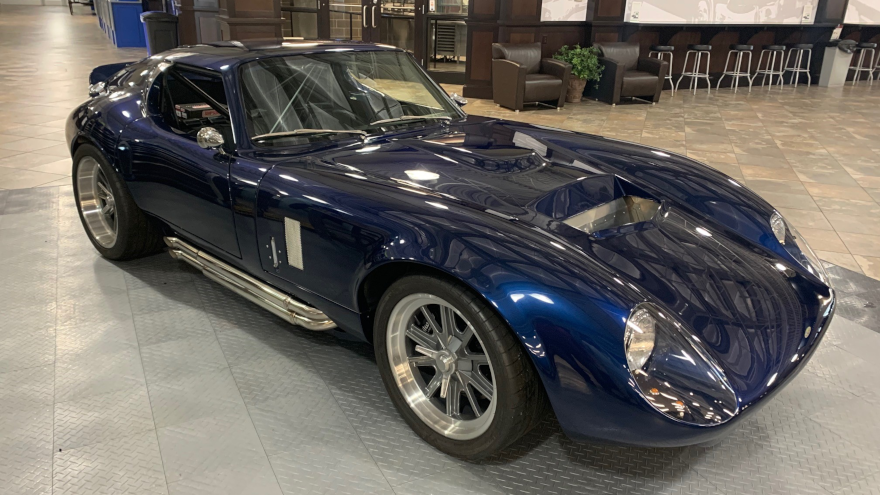
Participating dealers in the physical and digital sale event had an opportunity to bid on nearly 400 unique vehicles. A replica 1965 Shelby Daytona Coupe was auctioned off for $154,000, with proceeds benefitting the Make-A-Wish Foundation.
Manheim technicians and body shop employees assembled that vehicle in-house.
Of the 398 cars offered during the sale, 259 were sold. This year’s Xtreme Spring Sale offered in-lane, physical attendance, but approximately 90% of dealers participated via Simulcast.
A time-lapse video is available, showing the assembly of the Shelby Daytona Coupe, which took approximately 1,000 hours to build.
Because Manheim Pennsylvania remains unable to offer ongoing in-lane, physical sales because of COVID-19, the Xtreme Spring Sale was a one-time sales event. The company said it continues to be guided by CDC guidelines and Cox Automotive’s pandemic data. Manheim said it also seeks to do the right thing to keep its team members, clients and communities safe.
“Safety remained at the center of this event, and we want to thank our dealers for doing their part to support our safety protocols on this special day,” Manheim Pennsylvania vice president and general manager Joey Hughes said in a news release.
“I cannot say enough wonderful things about our great friends at Manheim Pennsylvania,” said Dennis Heron, chief executive officer of Make-A-Wish Philadelphia, Delaware & Susquehanna Valley. “Not only was this auction the most heart-pounding half hour I have ever spent in my 25-year history as CEO of Make-A-Wish, raising an unbelievable $162,000 to support granting wishes, but it was the sheer joy that was evident from everyone associated with building the spectacular car that made this event so special.”
Heron also said, “In a time when very little of the news is positive, this is truly a celebration of all the good in people, and the folks at Manheim Pennsylvania should be considered the perfect example.”
“Manheim Pennsylvania was thrilled to bring back sale day excitement for dealers while also raising money for Make-A-Wish,” Hughes said. “Our team put their hearts and souls into building the Shelby Coupe, and I could not be more proud of their commitment to helping this meaningful organization grant wishes to children with critical illnesses.”
ACV Auctions is now a publicly traded company.
The online wholesale auto marketplace launched its initial public offering Wednesday on Nasdaq, with chief executive officer George Chamoun ringing the opening bell.
Auto Remarketing caught up with Chamoun on Wednesday afternoon to talk about the IPO and what ACV has planned next.
“When I was looking around the room, all of my partners and teammates all had these really big smiles,” he said of the opening bell ceremony. “And what was going through my mind is just, 'This is going to be really a massive momentum moment.'
“We've done amazing things,” Chamoun added. “We're still young. But this is a rather big moment for the company. And when you think about going forward, I look at today as momentum in so many ways: Momentum in having capital to grow, momentum in being able to hire additional, really unbelievable teammates, (and) momentum for my current teammates.”
ACV said Tuesday that it priced its 16.55 million Class A common stock shares in the offering at $25 per share. The shares opened trading Wednesday on Nasdaq at $32/share, reaching a high of $34.50, a low of $29 and closing the day at $31.25.
That's up 25%, or 6.25 points, from the prior close of $25.
The offering is expected to close Friday.
Opportunities ahead
When asked what opportunities may come from the IPO and some of the next steps, Chamoun boiled it down to three areas.
First is increasing employee headcount to drive geographic expansion.
"One is additional expansion of our territories and hiring inspector teammates across the country. So that's just increasing our expansion here in the U.S. from 125 territories to 160 plus, hiring more and more inspectors across the country so we can get to every dealership and any consumer's driveway on behalf of our dealer and commercial partners,” Chamoun said.
Next on the list is further expanding ACV’s product, technology and R&D.
Chamoun points to the S-1 filed with the Securities and Exchange Commission and said it indicates, “we're increasing our spend by 150%.”
He added: “We've already created pretty amazing things for the industry like AMP — Audio Motor Profile — Virtual Lift and extraordinary marketplace capabilities. We'll now have the resources to invent even more."
The third involves the potential expansion of ACV’s capabilities.
In April of last year, ACV purchased ASI, which was previously part of SGS Transportation Services in the U.S. ASI provides a variety of inspection services to the auto industry — including off-lease, which was said at the time of the purchase would be a major piece of its work with ACV.
That 2020 purchase followed ACV acquisition of TrueFrame in December 2019, a move that added retail inspections to ACV’s offerings. TrueFrame provides True360 vehicle inspections, which aim to provide dealers and consumers more context when they’re buying used vehicles
With the IPO, ACV has “both cash and stock currency” to continue broadening its capabilities, Chamoun said.
ACV can now, “Expand what we're doing even more; we've got the cash, we've got the currency to add to our capabilities,” he said.
In the “Use of Proceeds” section of its S-1/A filed with the SEC, ACV said: “The principal purposes of this offering are to increase our capitalization and financial flexibility, create a public market for our Class A common stock and facilitate our future access to the capital markets. As of the date of this prospectus, we cannot specify with certainty all of the particular uses for the net proceeds we receive from this offering.
“However, we currently intend to use the net proceeds we receive from this offering for general corporate purposes, including working capital, operating expenses and capital expenditures,” the company said. “We may also use a portion of the net proceeds we receive from this offering to acquire complementary businesses, products, services or technologies. However, we do not have agreements or commitments to enter into any material acquisitions at this time.
“We will have broad discretion over how to use the net proceeds we receive from this offering. We intend to invest the net proceeds we receive from this offering that are not used as described above in investment-grade, interest-bearing instruments.”
Public markets add used-car players
ACV is at least the fourth company in the used-car space to go public in the past year. Online auto retailer Vroom went public through an IPO in June, while rival Shift and retail remarketing platform CarLotz subsequently went public through respective mergers with special purpose acquisition companies.
So, what does this kind of activity tell Chamoun about the used-car space?
“I think it's massive," Chamoun said. "When you look across other industries, other sectors, we're in one of the largest sectors, one of the largest market opportunities.
“Consumers are buying 40 million cars a year, whether buying it from a dealer or another consumer,” he said. “And then wholesale in and of itself is a massive opportunity. So, when you look at how we fit into that ecosystem … we're here to help dealers compete in the digital world, with our auctions product, helping them buy and sell in wholesale. And True360, helping them retail, helping them promote their ecommerce business.
“The dealers continue to shift to digital. We're here to help them. And the industry's massive. So, I think you're just seeing (that) partially that's reflective of how big this industry is.”
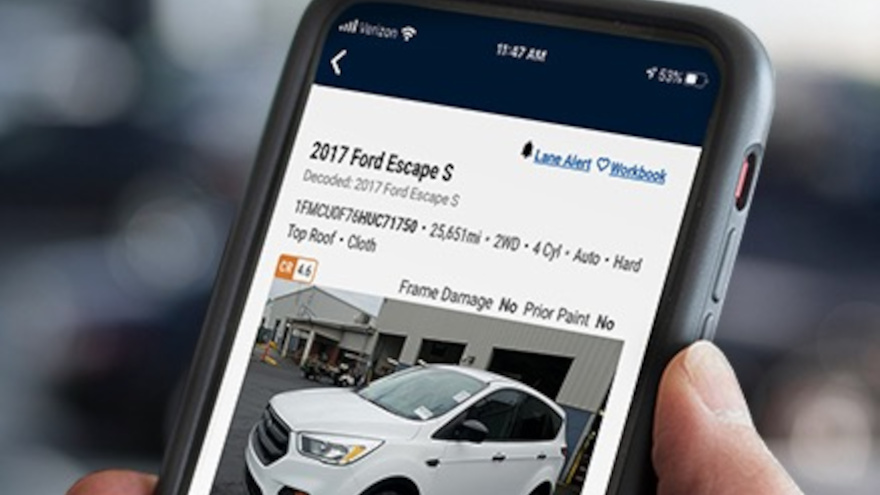
Replacing its former app that about 70,000 unique users have used each week, Manheim has launched its all-new mobile app.
Manheim said the new app is reimagined from the ground up, allowing dealers to make quicker and smarter purchase decisions in what it describes as the world’s largest wholesale automotive marketplace.
The app provides an easier and faster way to buy, sell and value inventory, Manheim said, adding that development of the app took place in collaboration with clients from conceptualization through final design.
The company designed the app to serve dealers while they are on the go, with features such as personalized recommendations based on each dealer’s individual purchase history.
Other features include:
— An upgraded mobile Simulcast experience, which includes audio of live sales, transaction status, condition reports, scrolling run lists, auction updates and more
— New Smart VIN Scan that has knowledge of client location and vehicle status
— Quick access to vehicles in Workbook, Saved Searches and Lane Alerts
— Better search functionality, which Manheim said brings faster decisions with more information in every search
— Easy MMR search, which allows dealers to obtain vehicle values at their fingertips
The app is part of what Manheim describes as a drive to create an intuitive and connected client experience across its platforms. Design of the app is based on the look and feel of the recently redesigned Manheim.com and offers an individualized experience for clients, providing the most relevant information a dealer needs based on his or her interactions with Manheim.
The all-new Manheim app is not an upgrade to the previous version, so Manheim said clients interested in using it should download it from the App Store or Google Play.
Zach Hallowell, senior vice president, Manheim Digital Solutions, said the company designed the app from scratch with its clients’ needs and feedback at top of mind.
That created a new experience allowing clients to gain access to needed information quickly in the palm of their hands, Hallowell said.
“From smart, location-based features to a more personalized experience, dealers will be able to buy, sell or value cars with ease,” Hallowell said.
Editor's Note: This is Part III of a three-part series on how the auto auction industry was impacted by and responded to the destructive winter storm that hit the central U.S. in mid-February. Part I looked at ADESA's strategies. Part II focused on independent auto auctions. Part III explores the strategy at Manheim.
Exactly one year ago Tuesday, Manheim temporarily converted its 76 auction locations to digital-only, amid the then-recent arrival of COVID-19 in the U.S., the World Health Organization’s pandemic declaration and a swirling surge of uncertainty.
The company has gradually scaled back those restrictions, allowing physical access to is auctions and even restarting the running of cars down auction lanes, as Manheim president Grace Huang outlined in an update Tuesday.
But the practice of going further digital (and for a time, all-digital) and the investments in the back-end technology to facilitate such sales certainly has paid off in the last year.
Particularly about a month ago, when a quite bizarre winter storm blast in the Heartland left much of Texas at a business standstill.
‘More prepared’ this time
Pre-COVID, when weather events such as the recent Texas winter storm would strike, the decision to go fully digital had to be a quick one, which “was not a fun experience for anybody that was involved,” said Patrick Brennan, senior vice president of Manheim Marketplace, in an interview last week.
This time around, though, Manheim and its clients were better accustomed to online sales and were ready to make the online shift, given the past year.
“It was a very difficult couple of weeks for everybody involved, there's no doubt about that,” Brennan said of the February storm. “But we were definitely more prepared, on all different fronts.”
Clients had a better understanding of Manheim’s digital process and services and had actually been using them for quite some time.
“There’s no question, the last year prepared everybody for the ability to navigate a tough couple of weeks with Old Man Winter that reared its ugly head for us, for sure,” Brennan said.
And even during the winter storm and its aftermath, Manheim was able to keep sales activities rolling, albeit digitally as it temporarily suspended physically running vehicles in Texas and at certain Midwest auctions.
Alan Lang, who is a division vice president at Manheim, has noticed a greater comfort level among customers in transacting digitally when situations like this arise.
“The difference for me has been what we've seen in our learnings through the pandemic,” Lang said in a February interview shortly after the winter storm.
“And it hasn't been, necessarily, operationally being able to prepare for a digital-type transition where we physically enclosed a sale but continued to utilize our Simulcast or OVE channels and things like that,” he said. “It's the response that our clients have had, being more comfortable with buying in a digital environment.”
That increased comfort level among customers has been accompanied and perhaps even driven by an increased investment by Manheim in its digital tools.
“Our clients can thrive in an all-digital marketplace if provided with the right tools and technology, while understanding that some may still prefer more traditional options to buy and sell cars,” Huang said in Tuesday’s update, recapping one of several things Manheim has learned through COVID-19.
“That’s the goal behind our commitment to deliver a more effective, efficient and connected client experience,” Huang said. “Similar to connecting the pieces of a puzzle, Manheim is investing nearly $100 million in 2021 to continue integrating our digital and physical offerings to better align with the varied needs of our clients, regardless of how they choose to do business.”
Lot Vision allows for eyes on vehicles remotely
Beyond that investment in its “connected client experience” and a host of other projects, one tech investment that paid dividends during the winter storm was Manheim’s Lot Vision tracking system.
“With Lot Vision specifically, it's a tracker on each vehicle, where our clients and employees can track a vehicle, know exactly where it is from their mobile device,” said Manheim associate vice president of operational excellence Bob Grounds in the same February interview.
“So, instead of having to find a car, wipe the snow off of it and actually get out of their van or vehicle. They don't have to do any of that; they know exactly where the vehicles are,” Grounds said. “From a safety standpoint, from a client experience standpoint and both internal and external, it's just changed the game in general, but certainly when the inclement (weather) and these types of scenarios happen.”
Lang added that utilizing Lot Vision to find vehicles fostered a “more efficient process,” one where Manheim could “get a lot more cars cycled through the sale to get them ready,” he said.
“Because you can imagine, sitting under two inches of ice or six inches of snow in markets where we typically don't, would have taken a lot of time, which makes throughput and getting cars ready would have been a lot less than what it. So, Lot Vision played a critical part,” Lang said.
And even at an auction in an area that does see a lot of wintry weather — Manheim Pennsylvania — the remote tracking technology came in handy.
The auction had just finished installing more than 20,000 Lot Vision trackers on its inventory in early February before the storms, said Manheim Pennsylvania vice president and general manager Joey Hughes in emailed comments.
“Prior to Lot Vision, we would scrape the windshields of every car to scan the VIN to identify its location. We could not have been more grateful to have this technology in place to make it much easier for our employees and clients to locate cars,” Hughes said.
Safety first
Beyond technological preparedness, Manheim also has to be ready in advance from a safety perspective, which is where Kenny Jones and his team come into play. Jones is the senior director of, environmental, health and safety at Cox Automotive, Manheim’s parent company.
Part of that preparation includes working with security teams and utilizing services like Accu-Weather, he said. Especially for the Texas auctions, “they were prepared,” Jones said.
“They didn't get ready last week; they were ready the week before,” Jones said in the Feb. 22 interview with Lang and Grounds.
For example, making a decision during the prior week not to have employees in the path of the storm come in to the auction that Monday or Tuesday (Feb. 15 and Feb. 16).
Back-end technology lends a hand
There are also operational preparations to be made, like coordinating through Manheim’s “buddy auction” system and staging facilities ahead of time.
And the investments in back-end technologies that Manheim has made in recent years help facilitate such preparedness.
“Where in the past, we would physically have to have a block clerk come to the facility, we'd have to have an auctioneer come in … but (with) the investments we made around the distributive workforce, you can work from home and virtually block-clerk,” Lang said.
“Auctioneers who can auctioneer a sale from home, we utilize those on top of some of the buddy auction systems, where an auctioneer may be sitting in Florida is actually able to run and conduct a live sale for Manheim Dallas.”
Manheim also prepared locations that weren’t slated to get hit by the weather to virtually pinch-hit for auctions in the path of the storm, Grounds said.
The back-end systems allow for a call going into one auction location, for instance, to be routed to another location that is more equipped at the moment to handle that issue, he said.
“So, if you're calling in Dallas, you might get answered by somebody in San Francisco (who) can handle those issues” be it arbitration, titles and so on, Grounds said.
The system allows Manheim to “handle that from a distance,” he said.
Huang said this of Manheim's Client Response Center in Tuesday's update, “Investments in cloud technology are making it possible to route calls quickly and seamlessly to the right expert who can best resolve an issue, regardless of where it originates. Not only does this process improvement save time for dealers, it also strengthens relationships and drives increased satisfaction.”
And through the aforementioned “buddy system,” each auction is paired with another in a different region to lend a hand when need to help facilitate flexibility. And it’s not just around winter weather.
“Even when we ran through the hurricane season, all of our Florida auctions are married up to teams in the Northeast or out West. and we're able to conduct these sales,” Lang said. “At the end of the day, if the car is on site, available to sell, then we're going to have a sale. And it may not be conducted by the host auction; it may be through that buddy system.”