Dealership GMs wishing to run World Series-style reconditioning centers can borrow a few winning lessons from Joe Maddon, most recently of 2016 Chicago Cubs World Series championship fame.
During an interview at Tropicana Field when Madden managed the Tampa Bay Rays, Men’s Journal writer Pat Jordan noted how the future Chicago Cub’s World Series skipper tweaked a dish being cooked up at in the ballpark’s commercial kitchen. “Joe Maddon,” he wrote, “stirs the sauce, sprinkles in brown sugar … ”
If there were six better words for building winning reconditioning center teamwork too, I can’t think of any. A great dealership GM who wants to build and manage highly productive recon operations learns how to change things up — and sweeten the mix to get everyone’s buy-in.
It’s a strategy Maddon brought to the Cubs when he took that job in early 2015. In a video interview with the Chicago Tribune, he talked briefly about orienting the team. “I couldn’t break my tradition of talking to the team on the field,” he said. “I got them up and walking around and improving their concentration skills.”
All those philosophies and “concentration skills” were evident during the World Series and especially during the nail-biter Game 7!
Dealers have been playing recon for many long innings now. Frankly, their teams are not looking too good. Their processes are costing them too many errors, and they’re not putting runs on the board as they should.
I am suggesting the coaches reconsider the teams they field, work on their fastball and get better at performing the basics.
In recon, it’s the team that generates the highest profit per vehicle and does so at the lowest reconditioning cost that wins at this game.
Improve the basics
Put a stopwatch to old game films — your old recon processes — and be prepared to be shocked. Most everyone believes they are moving vehicles through recon in five days or less, but the clock does not lie.
Dealers using recon workflow software to manage, track, and report on recon’s many individual steps learn their shop’s actual efficiency is more often eight to 10 days — or greater! You can’t manage what you can’t measure, whether in reconditioning or baseball.
To get better, focus on skills development. Better understand recon’s flow from vehicle acquisition to a vehicle’s reconditioned placement on the retail used-car lot. Establish rules for the time you allow for each phase of reconditioning flow of work.
Reconditioning, fine-tuned this way, moves from being a cost center to a profit center. Highly productive workflow — achieving a consistent three-to-five-day cycle — looks like this when applied to reconditioning:
Acquisition and Onboarding > Parts > Mechanical > Paint-Body-PDR > Detail & Photos > Frontline Ready
Reconditioning workflow organizes, structures, and accelerates the many reconditioning steps, managing all according to strict clock times to achieve a three-to-five-day input to output goal.
The right lineup
For this strategy to bear these results, it is critical teammates are at the right positions and know the rules of the game. This table summarizes these positions and their output requirements; you may need to adjust resources to achieve these best practices:
Advisor & Technician
Task: Inspection/RO/mechnical
Time: 4 hours
Used-Car Manager
Task: Approval
Time: Under 15 minutes
Dispatch-Advisor
Task: Shop loading/project management
1 hour
Detail
Task: Cosmetic detail/delivery prep
Time: 4 hours
Digital Specialist
Task: Online photos/web upload
Time: 4 hours
Every action in the game must support time-to-market objectives. Time-to-market defines the clock time required to get inventory on-boarded into the reconditioning department, reconditioned through all phases, and ready for the retail lot.
Time-to-market software provides clarity and transparency into each step in the recon process. When you can clearly see where productivity, dollars, and time leak from your processes, you can address and fix them faster.
Relevancy for the future of the game
Processes run and managed by recon workflow software build a rhythm that creates happier teammates. More satisfied workers stay put longer.
By achieving and consistently holding to improved time-to-market, these benefits typically flow out:
- Reduced Holding Costs
- Improved Gross Margins
- Increased Inventory Turns
- Fewer Units Wholesaled
- More Engaged Players
- A More Competitive Dealership
Both time and cost can be taken out of the normal reconditioning process when they’re managed by workflow software’s accountability clock.
Dealers who put this discipline into their shops enjoy increased volume and productivity, converting their reconditioning departments into profit centers for their dealerships.
One aspect of Joe Maddon’s performance especially on display during the Series was his command of himself. He was calm — on the outside, at least — watchful, appreciative, and carefully studying his playbook.
Your team will respond well to your particular recipe of stir the sauce, sprinkle in the sugar.
Dennis McGinn is founder and chief executive officer of Rapid Recon.
There is a considerable contrast between actual start-to-finish transaction times car buyers experience and what dealers believe is ideal, according to eLEND Solutions' survey of dealers nationwide published on Wednesday.
While 36 percent of dealers surveyed said the ideal amount of time shoppers should spend in their dealership during the buying process is less than an hour and 79 percent said less than two hours, the survey found that more than half of the dealers have a process that takes more than two hours.
An overall account of actual transactions times given to eLEND Solutions from the same group of dealers showed that only 11 percent of them see their buyers out in an hour or less and 42 percent in two hours.
Though most dealers have yet to meet their ideal time on average, transaction times reported by dealers have been improving.
Forty percent of dealers surveyed in 2014 reported an over three-hour process and this year only 25 percent said their process took more than three hours.
“We are pleased to see that transaction times are improving for some dealerships, but this continues to be a pain point for many dealers, costing them significant dollars in resources and lost opportunities,” said Pete MacInnis, chief executive officer of eLEND Solutions.
Seventy-three percent of dealers surveyed point to the completion of the finance and insurance (F&I) portion of the car buying process as the main reason for long transaction times.
“These are symptoms of the ‘silo’d’ sales and F&I process,” MacInnis said. “If information flow were consistent and uninhibited across departments, a connected car buying process would be facilitated, time in F&I would be reduced, and the overall transaction times would accelerate.”
The nearly two-thirds of dealers who claimed their transaction times have improved credit their decision to change the finance process, such as pulling credit reports earlier within the transition time from the sales floor to starting steps related to F&I.
But of dealers who say they pull car buyers credit, most wait till far into the purchasing process to do so.
The following figures are surveyed dealers’ response to this question: “At your dealership, when do you normally first pull a customer’s credit?"
• Before the handoff to F&I: 44 percent
• Before the first pencil: 38 percent
• In the F&I office: 10 percent
• Before the test drive: 8 percent
“We believe that pulling credit sooner is a critical — and simple — step to streamlining the process and achieving better CSI and higher closing ratios,” said MacInnis.
J.D. Power’s 2016 U.S. Tech Experience Index Study found that owners who learn how to operate the technologies in their vehicles from their dealer have higher overall satisfaction than those who learn how to handle the technologies through some other source or from prior experience.
On average, across all technologies, satisfaction drops 98 points when owners have technologies they report to be difficult to use (DTU).
“Owners can be challenged with the complexity of today’s vehicles,” said Chris Sutton, vice president of the automotive retail practice at J.D. Power. “More dealerships are employing product specialists and more brands, especially the luxury brands, are requiring that the dealers have them to help the customer have a more thorough ownership experience with their new car or truck. Having a product specialist show the technology to the owner can really ensure the customer gets the most benefit out of their vehicle.”
The product specialist can help lessen DTU issues with technology and increase satisfaction.
A product specialist’s key role is to make the new owner aware of the technology in their vehicle and help them learn how to use it.
Sutton explained that when product specialists describe technology or provide buyers demonstrations they are more likely to continue to use the technology and because they see the value want them in their next vehicle as well.
According to J.D Power, owners who work with a salesperson in addition to a product specialist are overall more satisfied with the car buying experience than those who work only with a salesperson. On a 1,000-point scale, customers rated experiences with a product specialist 836 and without 829.
Another study by J.D. Power, the U.S. Sales Satisfaction Index Study, found that only 24 percent of luxury vehicle owners and 16 percent of mainstream vehicle owners who purchased or leased a new vehicle in 2016 worked with both a salesperson and a product specialist.
“Whether it’s taking a few minutes with repeat buyers to refresh their knowledge of the technology or a few hours with first-time buyers, it’s a small investment with long-term benefits,” said Sutton.
Nearly 1 out of 3 car shoppers have negative equity on their trade-ins when they’re purchasing their next vehicle, according to Edmunds.com.
Edmunds’ data shows that an estimated 32 percent of all trade-ins toward the purchase of a new car through the first three quarters of 2016 were underwater.
It’s the highest rate on record, and it’s up from 30 percent of all trade-ins toward new car purchases from January to September last year.
These “upside down” shoppers had an average of $4,832 of negative equity at the time of trade-in — also a record.
“It’s curious to see just how many of today’s car shoppers are undeterred by how much they owe on their trade-ins,” says Edmunds.com senior analyst Ivan Drury. “With today’s strong economic conditions at their back, these shoppers are willing to absorb a significant financial hit to get into a newer vehicle.
“In fact, shoppers with this mindset may want to consider jumping on the leasing bandwagon. They can get into a new car with great technology every few years without having to worry about how much they still owe on their trade-in.”
Edmunds found that the difference between the average monthly payment on a new car purchase ($505) was $77 more than the average monthly lease payment ($428) in the third quarter. And new car leasing is at its highest level ever, making up an estimated 33 percent of new car transactions in 2016, through October.
Upside down trade-ins are not limited to new car purchases. According to Edmunds’ Q3 Used Vehicle Market Report, a record 25 percent of all trade-ins toward a used car purchase in the third quarter had negative equity. These shoppers had an average of $3,635 of negative equity at the time of trade-in — also a Q3 record in the used car market.
Edmunds tends to recommend that car shoppers wait until they have equity in a vehicle before they trade it in for another car. But in cases where shoppers feel that their only choice is to trade in a car when they’re underwater, Edmunds lays out a few strategies to minimize — or even avoid — the financial blow in its consumer advice piece “Upside Down and Under Water on a Car Loan,” which may be viewed by clicking here.
Marketers are using mobile’s targeting capabilities to more adeptly find their prospects and customers. Although certain best practices are universal, sometimes you need a unique approach to best navigate industry-specific challenges. The auto purchase journey is more fragmented than ever before, and people are doing more research online before visiting a dealership. Marketers need to keep up with these changes.
Advertisers can harness the targeting powers of mobile not only to find the right person, but also to deliver a custom message to them at a precise place and time. These three mobile marketing strategies can help you increase foot traffic to your dealerships, poach customers from competitors and reimagine the test drive. Most importantly, they will empower you to get more from every dollar you spend.
1. Get Specific with Targeting
The use of mobile devices in the car shopping process is growing at a rapid pace. The numbers doubled from 2014 to 2015, according to research from AutoTrader.com, which found that 39 percent of people used a mobile phone and 35 percent of people used a tablet as part of their car-buying process in 2015. According to research from J.D. Power, 51 percent of new-vehicle internet shoppers use their mobile devices to conduct research.
Mobile targeting technology allows advertisers to target with precision and to serve their message to people in a specific geographic location. For example, dealerships can serve their ads to prospects who are nearby and encourage them to come in for a test drive. When creating mobile ads, marketers should be sure to remember the nuances of the mobile format. Keep the creative simple, use a strong call-to-action and include a promotion or incentive whenever possible.
In addition to targeting a location, marketers can overlay additional factors, such as demographic info, time of day, behavioral profiles and even intent, to more precisely reach their target audience and eliminate wasted spend. For example, you can serve your ad to people who have searched for a particular brand or previously visited your website. You can also target based on demographic information such as income and age to help you not only find the person most likely to make a purchase, but to craft the message that is most likely to resonate.
2. Try Digital Poaching
The auto industry is fiercely competitive, and it is a common practice for auto-intenders to compare models, brands and dealerships before making their decision. Mobile technology allows you to target people who have shown interest in your competition. Let’s say you are a marketing manager for Toyota. You can serve your ad to people who are visiting Honda dealerships. Or, if you are running a used car dealership, you can target people who have visited your competitor’s lot. Consider offering a promotion to make your ad especially enticing. You can even serve your mobile ad to a consumer while he or she is at your competitor’s dealership with an invitation to “come next door for a better deal.”
3. Rethink the Test Drive
It’s no secret that people dread the dealership experience. According to research from Accenture, 75 percent of people would consider conducting their entire car-buying process online. Yet the overwhelming majority of consumers want to test drive a car before pulling the trigger. A study from Autotrader revealed that 88 percent of shoppers will not buy a car without test driving it first. So what is a marketer to do? Get creative.
Hyundai partnered with Amazon Prime earlier this year to offer on-demand test drives to its Los Angeles customers. It was a limited-time program, but it is indicative of what modern customers have come to expect, especially millennials, who also happen to be particularly distrustful of the dealership experience. According to a survey by Beepi Inc., an online marketplace for buying and selling cars, millennials would rather clean their homes, wait in line at the DMV or do their taxes than go to the dealership.
But millennials are buying cars. In fact, they bought 4 million cars and trucks in the U.S. in 2015 alone. Innovative businesses can create their own version of the Amazon Prime program to make it easier for millennials, and all potential customers, to experience their vehicles. Consider developing an app to help customers manage the process. To increase downloads, include other features, such as tools for searching inventory, comparing models and scheduling appointments.
By embracing mobile solutions, auto marketers can find prospects more effectively, connect with them in a more personalized way and demonstrate that they’re forward-thinking and committed to prioritizing the customer experience.
Ted Dhanik is the chief execitve officer of engage:BDR
Not only are millennials becoming a bigger chunk of today’s car shoppers, they are squashing some stereotypes in the process.
Edmunds’ newly released Car Shopping and Gender Report reveals that the idea of the man as the confident decision maker and the woman as the clueless sidekick doesn’t hold so much weight these days.
Of the 3,000 men and women age 18-65 commissioned by Edmunds and surveyed by the research firm Hypothesis, 70 percent said they feel self-assured during the car buying and negotiating process.
However, Edmunds found that millennial men and women share more similar feelings about car shopping than Gen X-ers and baby boomers. For example, when asked if they believe if women are equal or better than men at car shopping, 64 percent of millennial women and 54 percent of millennial men agreed. When baby boomers were asked the same question, 67 percent of women agreed while only 48 percent of men did, resulting in an opinion gap nearly twice as large.
“The world where millennials grew up was very different than that of older generations. For many, both parents worked and financial decisions were made equally, which is reflected in their different attitudes about gender roles in car shopping,” said Jessica Caldwell, executive director of industry analytics at Edmunds.
“Millennials are poised to become the predominate consumption group in the automotive industry, making it key that automakers, dealers and marketers understand how their perceptions are changing the way consumers approach car buying.”
The survey revealed some notable differences between millennials and older generations, including:
—Millennial men are more likely than older men to believe that women are equally or more logical than men during the car buying process.
—Millennial men are more confident in women than in men from older generations.
—Millennial women and men feel nearly equal levels of confidence during the shopping process as compared to older generations.
Other findings:
—80 percent of all female respondents feel assured that they made the right purchase versus 75 percent of men.
— 30 percent of all female respondents stated that they didn’t know where to start the car shopping process, compared to 18 percent of men.
—Additionally, 67 percent of all female respondents wish there was a faster, more efficient way to shop for a car, compared to 57 percent of all men.
“Gender inequality has been in our society for a very long time,” said Lacey Plache, chief economist at Edmunds. “Shifting gender roles have been a main catalyst for lowering gender inequality, but this change is still in motion and the differences aren’t fully dissolved yet. As this continues to decrease on a societal level we’ll see its impact manifested in major industries like automotive, but until gender inequality is completely gone, the old fashion notion that men control the garage will still linger.”
The survey also showed differences within each gender based on the needs of individual shoppers during various phases of their process. For example, a millennial female who is a luxury buyer has a different set of needs than a Gen X non-luxury buyer. This finding is supported by Edmunds’ site engagement data, which shows that men and women engage in similar shopping activities, such as new inventory search and dealership research.
“With the amount of consumer data available to us, we’re no longer forced to look at shoppers under the lens of these over-generalized stereotypes,” said Michelle Shotts, senior director of customer insights at Edmunds. “As more research continues to debunk these outdated assumptions, there is no excuse why automakers, dealers and marketers can’t begin to engage with car shoppers on a highly personalized, individual level.”
Along with the stereotype that women aren’t as savvy as their male counterparts when it comes to car shopping is the unsavory one that females' supposed automotive naivete will be taken advantage of at the dealership.
Not in this day and age, said Ron Montoya, senior advice editor at Edmunds.
“I think any shopper, regardless of gender and age, who goes to a dealership unprepared, is at risk for paying more than they should,” he told Auto Remarketing. “It is hard to be ‘preyed upon’ when you have done your research on pricing and are equipped with the tools you need for negotiation.”
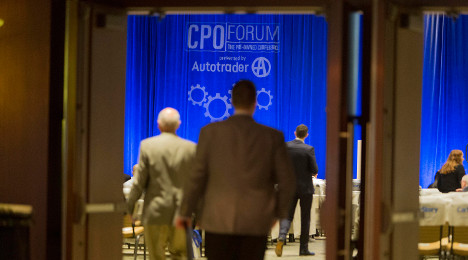
When Charlie Bass of PureCars presents his discussion on “Embracing Change: Importance of Evolving with Your Shoppers” at next month’s CPO Forum, there’s one central digital marketing theme that will likely be top of mind, says PureCars chief executive Jeremy Anspach.
“How to show the right message at the right time.”
It’s often the new-car market that gets the bulk of the attention in the digital advertising space, as it’s perhaps easier to navigate. But things get more complicated with pre-owned and budgets are limited.
That’s where PureCar’s discussion will come into play.
“So, Charlie’s going to hit on great things like which vehicles on your lot actually need to be marketed. How do you define those vehicles and then how do you execute a media buy for the vehicles that need a boost?” Anspach said. “And then lastly, how do you know what you’re doing is working?”
The presentation from Bass will also include some material that Anspach has not shared in prior presentations.
Among the key takeaways:
- Building an adaptable advertising campaign
- Adjusting your dealership’s initiatives to mirror consumer demands
- Embracing change across platforms
The workshop begins at 1:00 p.m. (PT) on Nov. 14. For more information about CPO Forum and all of the Used Car Week Conferences — which are being held Nov. 14-18 at the Red Rock Casino, Resort and Spa in Las Vegas — visit www.usedcarweek.biz.
Experian’s latest State of Auto Finance Market Report made headlines, painting a rosy picture for the used-vehicle market. Overall, pre-owned vehicles accounted for 55.61 percent of all financing in the second quarter of 2016.
Consumers across all credit tiers are flocking to pre-owned vehicles, with super-prime and prime consumers accounting for 44.95 percent of all pre-owned loans — a 2.6 percent year-over-year increase.
Dealers have ample opportunity to capitalize on this market dynamic with certified pre-owned programs and F&I products tailored to the pre-owned market.
Remember, the one hurdle pre-owned vehicles have always had to overcome is vehicle reliability. Even in this current market, you can bet vehicle reliability is still a hot button.
In addition, those prime and super-prime consumers are used to another level of sophistication when it comes to customer service and they will expect no less when shopping for pre-owned vehicles. This combination makes strong CPO programs market differentiators.
According to research from EFG Companies, 71 percent of consumers expect a CPO program to consist of:
— Thoroughly checked vehicles that are in working order
— Additional coverage
— Roadside assistance
Evaluate your CPO program based on this criteria. To be certified, your pre-owned vehicles need to pass a stringent inspection and repair process. Some dealers may be tempted to consider the inspection enough for a CPO sticker. However, by doing so they are leaving significant money on the table. Now, I know what you’re thinking: “providing complimentary coverage is an extra cost to me, what benefit do I get by giving away coverage and roadside assistance?”
To answer this question I ask that you go to your top-producing F&I manager and ask, “Which is easier to sell F&I products on: a car that comes with a warranty or coverage of some sort, or a car with no coverage whatsoever?”
I’m willing to bet your F&I manager will say they get the best penetration rates and the highest margins on vehicles that have a warranty or coverage built in.
Why, you ask? Because with those “built-in” products, your F&I manager has the opportunity to create a need by specifying where and how the coverage ends. Once they create the need, they then discuss the benefits of purchasing additional coverage to fill that need.
When a vehicle doesn’t come with a warranty or any type of complimentary coverage, F&I managers are often left floundering, trying to discover where to start the product presentation. This makes their jobs that much harder.
So yes, providing complimentary coverage is an added cost, but when weighed against the benefits of increased F&I product penetration and back-end margin, that cost turns into another area to generate revenue.
Of course, the complimentary coverage can’t be just any F&I product. Good CPO programs come with some form of limited powertrain coverage with roadside assistance, and possibly a short-term maintenance plan. With limited powertrain coverage, F&I managers have the potential to upgrade customers to a full vehicle service contract with nationwide roadside assistance.
With a short-term maintenance plan, your managers in finance and in the service drive will have ample opportunity to upgrade customers to longer-term and/or more comprehensive maintenance plans. In addition, these products offer good spring-boards into discussions around interior and exterior protection products.
John Stephens is executive vice president at EFG Companies. Other commentaries from EFG can be found at efgintelligence.com/dealershipcorridor.
BW Dealership Advisors — a Brady Ware-affiliated retail automotive consulting firm dedicated to offering consulting, fraud mitigation, accounting and tax services — announced this week that it has expanded its services to help dealers attract and engage clients online. The new digital capabilities will be led by Nick Brunotte, who joined the firm as senior operations consultant.
With Brunotte's added expertise, BW Dealership Advisors highlighted that it can help retail automotive clients with the online customer engagement aspect of their business, including web presence management strategies, business development centers, customer relationship management software processes, website effectiveness and other digital efficiencies.
“Dealerships are increasingly seeking ways to help them stand out from their competitors and build stronger relationships with customers,” Brunotte said. “I look forward to putting my dealership operations expertise and digital experience to work for the retail automotive clients we serve at BW Dealership Advisors.”
The firm highlighted Brunotte brings hands-on experience in dealership general management and operations to BW Dealership Advisors.
The firm went on to stress that clients will benefit from Brunotte’s ability to identify and solve the specialized challenges faced by retail automotive dealers, as well as his expertise in strategies for improving the profitability of service and finance and insurance (F&I) departments.
Brunotte studied finance at the University of Cincinnati and has more than a decade of management experience. He is actively involved in the National Automobile Dealers Association and has F&I certification from United Development Systems (UDS).
In an effort to bolster the collections industry, the ACA International board of directors recently adopted a revised version of the ACA Code of Conduct that applies to all association members.
Officials explained ACA’s longstanding code has provided its members a firm foundation for industry engagement. The organization indicated the newly revised code is designed to meet the needs of the association into the future, especially as members navigate the industry’s changing environment.
“The structure, guiding principles and provisions of the newly revised code provide the flexibility necessary for the changing environment and a stable, modern and workable approach for the future,” ACA said.
The newly revised code will become effective on Nov. 12 and can be accessed here.