Choose your words carefully.
Turns out this adage is as relevant on the showroom floor as it is anywhere else.
Through its “Language of Closers” research, CDK Global found there is optimal verbiage car dealers can use to boost their chances of sealing deals.
The top word used by closers was “provide,” used mostly in the context of sharing information.
“People tend to assume that positive words like ‘love’ and ‘amazing’ will be the most persuasive to potential car shoppers,” said Jason Kessler, data scientist at CDK. “Our research found the opposite and proved that dealers who used proactive language articulating clear next steps for action in their email were the highest closers. Car shoppers need to be guided through the process and the research supported using language to help them on their journey.”
CDK used cutting-edge natural language processing techniques to analyze the email responses of car salespeople. Starting with a network of 1,300 auto dealers, CDK compared email responses to online mystery shoppers from dealerships within such networks that historically have had the highest email close rates to email responses from dealerships with the lowest email close rates, to determine what set them apart. The study revealed the importance of guiding the customer through the buying process.
Phrases using “give me a” and “feel free to” were typically used by low-closers in requesting that a shopper contact the dealer at some indeterminate time in the future. “Give me a call when you are free” or “feel free to email any time” were ineffective because they put the onus back on the shopper.
Descriptions, details about the buying process and quotes all help the shopper gain a better understanding so they can feel secure in taking the next step. However, words like “body style” and “options” were used more often by low closers, possibly indicating that jargon and industry terms are not persuasive when used to answer shopper questions.
“This research is exciting because it is so actionable,” Kessler said. “By focusing on communication styles that shoppers prefer, dealerships can improve their effectiveness and sell more cars.”
For full study results, click here.
The dog days of summer are here. The typical BHPH dealer will sell 30 percent to 35 percent of their annual units in the first three months of the year. They will also realize about the same percentage of their annual profit in the first quarter.
So, if you got off to a slow start this year, summer could be the only way to salvage your annual sales; however, it’s going to be a lot harder.
But you can profit in the summer — with the right plan.
Good sales in the summer are no different than selling in the first-quarter heydays. It just requires more focus and drive because your customers have less money and can be harder to find. The four steps I outline below will give your team the skills and focus on making sales, even in the most challenging months.
Step One: Develop the right skills
The first of the key ingredients, and most important, is simply training. Well-trained salespeople can sell any time of year.
Set up a training schedule to get your team on point. Both phone training and basic sales skills training should be done weekly, at a minimum. Specifically, address how to overcome objections; role playing is a good way to accomplish this.
Educate your staff on how to set effective appointments by recording and reviewing the calls. Lot traffic is at a premium during the dog days, so make sure your people know how to handle effectively what opportunities they do have.
Step Two: Keep up appearances
Appearance is critical. Now, I’m not necessarily talking about your employees’ appearance, which should always be neat and professional, but your overall lot appearance.
Over my many years in the business and as an executive conference moderator with NCM Associates, I’ve discovered that the No. 1 reason BHPH customers choose a dealership is that it looked good when they drove by. Let’s take this at face value and make sure your lot is the best-looking one in town!
Fortunately, improving your lot appearance isn’t difficult. Make sure it is always neat and orderly.
Arrange vehicles evenly and with a good mix of colors and styles; don’t have them face all four directions of the compass! Host a lot party or rodeo at least once a week to force yourself to keep the lot fresh.
And don’t forget the cars themselves. You should consider the vehicles on your lot as your mannequins and treat them the way a fine department store treats theirs. Keep them fresh, neat, clean and always ready to sell. That goes for overall lot appearance as well. A fresh coat of paint and some weed killer can do wonders.
Step Three: Entice your customers
Successful dealerships understand that you can’t just wait for clients. Good marketing brings people to your lot; develop a plan that offers attractive incentives.
Summer is a time when repeat and referral programs really pay dividends. And it is also a good time of year to focus on referrals, not just with your customer base but with outside companies and people as well. (If you are not already paying referrals to non-customers, it’s something that you should give some serious consideration to. I can assure you some, if not all, of your competitors are doing it.)
Marketing also extends to your Web presence. Make sure your website is up to date. Read through your “About Us” sections and any testimonials — do you need to make changes?
Review your employee introductions — has anyone left or been promoted? Do the photos need to be replaced? Reviewing photos is of particular importance if you display inventory: I was on a dealer client’s website the other day, and the inventory photos had SNOW on the vehicles!
It’s also critical that you check any advertised specials. You don’t want someone stopping in for a deal that’s no longer current!
Step Four: Get your message out
If you want to make the most of the dog days of summer, make sure people know about you. In this very competitive industry, advertising in some form or fashion is a must. The two most popular advertising media are, of course, television and radio. And, contrary to popular belief, use doesn’t drop off in the summer.
Advertising is only effective when it reaches the right folks with the right message. When promoting in these channels, remember to advertise to your customer, not yourself. Chances are your buyers watch different television stations than you do and may even listen to different radio stations.
Select ad placements where your clients are watching and listening. If you aren’t certain what media your customers are using, survey both new and existing customers to gauge their entertainment preferences. In other words, just ask them.
Moving past traditional media, there are many options in social media to get your message out. I won’t go into them here, but I recommend you get the basics by reading last month’s article from Trevor Robinson , NCM Associates’ director of retail solutions, training and development.
As you can see, the formula for selling in the dog days is the same as selling in the heydays. Although there are usually fewer opportunities, you can capitalize on what you have when you pay more attention to detail.
And it doesn’t need to be expensive — the two most important I outlined above are the least expensive. With the right mix of training, lot maintenance, and marketing and advertising, I know you can keep the dogs at bay.
Brent Carmichael is the executive conference moderator at NCM Associates.
It’s not just about reaching the most consumers. Sometimes, it can be just as beneficial — if not more — to tap into what’s important for a specific niche of clientele.
In other words, “clients that are the most profitable for you,” says Cox Automotive Media Group president Jared Rowe.
“Maybe, again, you don’t want to sell a car to everyone; maybe you want to sell a certain kind of car a certain kind of way to a certain kind of clientele,” Rowe said in a phone interview with Auto Remarketing earlier this month.
“This is kind of the foundation on which the retail environment is built, in particular on the used-car side and in particular on the independents’ side. These are folks who have found unique niches in the market and unique segments, and they service it very well,” he said. “We also see it on the franchised side.”
Reaching that buyer niche requires some differentiation, a major theme of the comprehensive data set from the company that Rowe discussed on the call. The data, in a nutshell, explains how dealers can set themselves apart and the statistical benefits of doing so.
As part of its study, Cox Automotive Media Group evaluated more than 60 differentiators a dealer might use to set itself apart — things like transparent pricing, the ability to finish paperwork online or offering a free extended warranty — to gauge how important each one is to building confidence in a vehicle purchase.
Two of the five top findings from the study point out the importance of using differentiators to carve out a niche, as listed below:
- While the top differentiators are relatively consistent for most consumers, certain demographic and shopping persona subgroups show strong propensities for a variety of differentiators beyond the most commons ones.
- Increasing reach alone may not produce the best results. It may be better for some dealers to decrease their reach overall in favor of reaching more of the right audience.
It may be true that the further a dealer differentiates itself, the better the store is able to fit into a niche.
But dealers also should think about this, Rowe said: “Can you be great at 10 things? And if the answer is no, but you can be great at three things, pick the right three things. Pick the three things that are optimized to how you want to do business.”
You might be able to be top-notch when it comes to every single differentiator, “but you could be good at a few things, so let’s make certain we’re focused on the right ones that help you realize your desired business outcome as a retailer.”
So, what might be some of the differentiators best suited for the used-car side, specifically?
The ones that deal with “peace-of-mind around the transaction,” Rowe explained.
Beyond the five differentiators that were consistently important across all buyer groups — low-price guarantee, free extended warranty, free maintenance service with purchase, competitor price match and offering a relaxed, pressure-free experience — the differentiators that are more important for used-car buyers than new or new/used combined are the following:
- Used inventory has in-depth reconditioning
- Exchange or return policy/money-back guarantee
“On the new-car side, consumers are really focused on the process and the experience more than anything else,” Rowe said. “They want to make certain that it’s a fair price, a transparent price, and they want to get in and out quickly.
“The difference on the used-car side, and this makes perfect sense because it’s the nature of used cars, is they’re more focused on … ‘OK, do I have peace-of-mind around the transaction?’ Money-back guarantee, reconditioning process, these sorts of things,” he said.
“Which again make perfect sense,” Rowe added, “because from a used-car perspective, I’ve got two big questions I want answered: Is it a good car? And is it a fair price?”
When I think about advertising trends that automotive dealerships should adopt, my thoughts immediately jump to social media.
Let’s be honest: Social media is a hard sell. It’s nearly impossible to track its ROI.
It’s tough to manage well and can take up an enormous amount of time. But with people spending more hours online than ever before, your dealership cannot afford to dismiss social media as an important marketing vehicle.
Instead, take a few minutes to learn about the channel and discover the recommendations from our marketing team at NCM Associates.
Facebook is home base, especially for women.
The largest social media space in the world, Facebook serves content to an estimated 1.04 billion users daily. Yes, that’s with a B.
A 2015 study from Pew Research Center found that 62 percent of the world’s entire adult population uses the social media platform, and it is most popular with women (77 percent of online women regularly use Facebook).
The numbers certainly suggest that Facebook is a universal social hub, but our marketing team proposes that many users 25 and younger maintain a profile, but rarely post on it. It’s actually trending older.
Facebook’s older- and woman-focused demographics shouldn’t discourage automotive dealerships from having a strong presence there. If anything, this is a phenomenal opportunity for you to reach female decision-makers. Just do it in a way that resonates with the audience.
Here’s an example. Do you have a car seat safety program? Post an infographic about the essential elements of car seat safety. Share a compelling video about the dangers of driving unrestrained children.
And remember: One of the best things about social media is that you don’t have to create all the content yourself! Feel free to share great work from other organizations; just be sure to give them the appropriate recognition.
Next, use social media (and regular press) to publicize a child safety seat inspection day — this brings an online audience into your dealership.
Not only have you done a public service and received great press, you’ve brought online customers to the lot and deepened their trust in your business. Even if they don’t purchase the day of the event — and they probably won’t— where do you think they’ll go when the family car needs to be replaced?
Surprise! Google+ isn’t dead.
I’ll be honest: I can’t think of a single Google+ page that I’ve visited in the last three years. There was a lot of excitement when the search giant announced its privacy-focused social media platform, but it just couldn’t compete against the Facebook juggernaut. Most people abandoned their “circles” within a year or two.
Our marketing team is currently ramping up its efforts in this channel. And the key to their strategy is regularly updating Google+ content. Why should you do this?
Even though most customers have abandoned the space, Google cleverly has tied its page rankings with it — Google+ carries significant weight when it comes to search engine optimization (SEO) and organic search position.
How do you use it? Google+ operates very similarly to Facebook, and visual content such as video and photos perform well. Short, digestible news is good, too.
Because G+ trends technical, consider sharing information about franchise innovation. It’s a fantastic spot to share content appealing to gearheads.
The easiest way to incorporate Google+ into your social media mix is to select a few Facebook posts to tweak and share on Google+. (NCM Marketing advises: Never share identical posts across platforms.)
When you have an active Google+ account along with a verified business profile, you can create a well-organized network of Google-based content and information for your customers.
LinkedIn – Where the wealthy spend their time.
I’m not going to lie: I love LinkedIn. There’s fantastic content related to the business and financial world, and I’ve found insightful articles about management and leadership. I’m in good company, too: About 25 percent of adult Internet users frequent the business networking and publishing site.
Nearly half of those people earn annual household incomes of $75,000-plus. LinkedIn also trends older, with the bulk of its users falling between 30 and 49 years old.
So, what does this mean for your auto dealership? A couple of things.
First, LinkedIn in one of the best resources available to recruit manager- and executive-level staff. Join one of the many automotive groups to find talent; at the very least, you’ll gain useful guidance and insights.
In terms of retail advertising, LinkedIn isn’t always a good fit for dealerships. However, if you sell a high-value luxury line, establishing a presence here could work; the users certainly can afford your product.
Make sure not to sell, though; the best way to interact with your potential clients would be to share interesting news about the franchise and its products. Think of it this way: You’d never ask for a job at a networking event, so don’t try to sell a car on LinkedIn, the social media equivalent.
Twitter: Young, hip and urban.
Twitter offers excellent marketing opportunities for dealerships in major metropolitan areas wanting to attract a younger customer base. (Millennials, anyone?) About a fifth of the world’s adult population uses Twitter, and it is widespread with youth living in cities.
It moves fast, though. So, if you’re going to use Twitter, make sure you understand tweeting conventions, study up on hashtags, and have enough agility to respond quickly to trends and changes.
So, where are all the kids?
Kids are all over the place. Instagram and Pinterest are very popular with the youth demographic, and they’ve captured roughly a quarter of adult users.
Snapchat, Kik and WhatsApp are typical messaging apps used by teens and young adults. While these are resources that replace smartphones’ built-in text-messaging functions, youth-focused retail brands are starting to produce content solely on Snapchat.
Should you use them? Maybe. First, consider your audience. If you sell vehicles that appeal to the youth market, it might be worth it. Second, consider your time and staffing.
Our marketing team believes that expansion into these social media channels should only happen after dealerships have successfully started and managed a robust social media program in the major channels: Facebook and Google+, and LinkedIn and Twitter, if applicable to your market.
Every dealership needs a strong social media presence. It helps create a connection between you and your customers, and it helps them develop loyalty to your business. But you need to be a savvy social media marketer.
Establish a presence in the places that matter, and ensure that you’re producing quality, engaging content. Once you’ve accomplished that, carefully consider the other, less-popular option: If they fit with your target market demographic, go for it. If not, walk away with confidence.
Trevor Robinson is NCM Associates’ director of retail solutions, training and development.
The dealership phone is ringing. It’s a potential buyer interested in a vehicle listed on your store’s website. GWC Warranty offered three recommendations so dealers can capitalize on these Internet leads that find their way to the store phone lines.
GWC Warranty also touched on three pitfalls that can turn that ringing phone into a frustrated consumer who might end up purchasing a vehicle from your competitor.
As one of the latest segments of its Accelerate series, GWC Warranty began with the tips that can help:
1. Have a process.
Without a process, you’re just guessing. Make sure you answer the phone consistently, ask for names, provide your name and treat sales calls as the golden opportunities they are. A Marchex Institute study proved how valuable they are by finding that 53 percent of answered calls were from shoppers with a clear intent to buy.
2. Set an appointment.
Don’t put the phone on the hook without putting something on the books. If you haven’t set an appointment for a customer to come look around the lot or test drive a car they saw online, you wasted your time and your customer’s. They called because something about your dealership caught their eye. Find out what it is and get them in the door to take a closer look.
3. Return calls promptly.
Surprisingly enough, this may not be as simple as it sounds. Only about 20 percent of car shoppers begin their search looking at the brand they’re going to buy. You’re not the only dealer they’re looking at, but you could be if you’re the first to respond.
Conversely, here are the three behaviors GWC Warranty suggested that dealerships should avoid:
1. Don’t try to sell a car over the phone.
Best Mark placed test calls to dealerships around the country and found that 91 percent of salespeople attempted to sell a car over the phone rather than set an appointment. Nothing sells a car better than seeing it in person. A sale over the phone is rarely effective.
2. Don’t wing it.
Best Mark’s survey also uncovered the staggering fact that 95 percent of salespeople don’t have a defined road to an appointment. Like GWC Warranty said about creating a process, guessing at what will get your customers off the phone and into their next vehicle isn’t the most practical way to approach a lead.
3. Don’t wait for an email.
Online shoppers are often searching on a cell phone or mobile device. They have easy access to a call button, plus we’ve already established that they’re three times more likely to place a phone call than type up an email. If you think all your leads will land in your inbox, you could be sadly mistaken.
More best-practice recommendations from GWC Warranty can be found here.
So here’s a statistic you might find alarming.
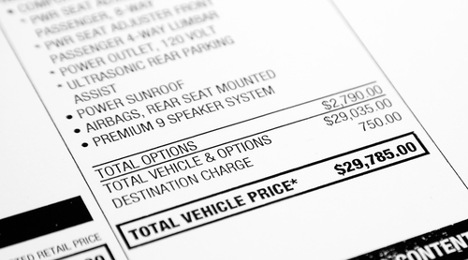
Seventy percent of cars displayed for sale online have missing or improperly described factory option information, says Ned Nielsen, chief executive officer of MonroneyLabels.com.This finding is based on the company’s own internal research when it was building MonroneyLabels.com, Nielsen told Auto Remarketing.
This can lead to dealers leaving money on the table, he says. Nielsen gives the example of a friend who had purchased a Lincoln Navigator from a non-Ford Motor Co. dealership that didn’t include the entertainment package in the online listing.
The dealership may have to eat money to make an issue right once the customer gets to the lot because it was listed improperly online.
Or worse, yet the dealership could be sued.
Describing a car correctly starts by getting it right from the get-go, when the vehicle comes in for an appraisal, he said. And MonroneyLabels.com — which, according to a news release, is “the fastest way to accurately reproduce vehicle window stickers” — is actually working with a few large data providers to help dealers in this regard.
“Usually they can get year, make and model, but they miss the colors and they miss the options on it,” Nielsen said. “And that’s the big thing. And they’re leaving things out, but when they appraise the car, it’s really important to get it correct when the car comes in the dealership. And that way, they don’t miss it.”
NADA UCG finalizes integration with MonroneyLabels.com
One of the companies that MonroneyLabels has worked with is NADA Used Car Guide, with which it recently signed a deal.
This gives dealers a fast and accurate way to reproduce vehicle window stickers containing the NADA Values Online product, the companies said in a news release.
Through the partnership, dealers who use NADA Values Online can print out an accurate, prepopulated, VIN-specific MonroneyLabels.com window sticker, the companies explained.
The sticker includes all original factory options and OEM pricing for the car on one sheet of paper.
“We are excited to work with MonroneyLabels.com on this product enhancement to NADA Values Online,” Mike Stanton, vice president and general manager of NADA Used Car Guide, said in a news release.
“Getting used vehicle inventory accurately priced and marketed quickly is a critical part of the selling process,” Stanton continued. “Our customers are empowered to deliver on that part of the process reliably and even more efficiently with this integration."
Nielsen said in the news release: “NADA Used Car Guide is one of the most trusted names in the industry, and we’re ecstatic about integrating with their leading product, NADA Values Online.
“By using our VIN-specific technology with NADA Values Online, MonroneyLabels.com will help change the way used vehicles are described, appraised and priced by giving everyone the correct factory option packages and pricing as built,” Nielsen said.
Staff Writer Nick Zulovich contributed to this report.
The American Recovery Association recently highlighted the enhanced performances that members who participate in the exclusive ARA insurance program enjoy.
ARA indicated these members have an average loss ratio 20 percent below the industry average. The association explained this program-wide loss ratio allows a dividend back on insurance premiums for all program participants.
The exclusive ARA insurance program, partnered with Harding Brooks Insurance, is where participants can receive a dividend back on their premiums based on group performance. This is the second year in the program’s existence that ARA participants have come out above the industry standard, and officials believe there are no signs of it slowing down.
“Harding Brooks Insurance has always had a wonderful relationship with ARA due to their compliant and well-educated membership,” said Mike Peplinski, account executive at Harding Brooks Insurance. “We know that when we are working with an ARA member, we are dealing with some of the best in the industry.”
ARA members have a plethora of benefits at their fingertips to help them maintain compliance. One of those benefits is the Continuing Education Webinar Series, ongoing monthly webinars that tackle different industry-relevant subjects ranging from new laws being enforced to up-and-coming software on the market.
Webinars are free to all ARA members and offer printed certificates for each webinar completion. In addition to the Continuing Education Webinar Series, ARA members have access to the ARA Compliance Program.
“ARA is the largest association of certified, trained and compliant recovery and remarketing professionals,” ARA president Jerry Wilson said. “The low loss ratio from our insurance program proves that our member benefits are helping our members be the best in the industry.”
For more information about ARA, its partnerships and its member benefits, visit repo.org.
When it comes to finding deals on pre-owned vehicles, it turns out that holidays may be both the best of times and the worst of times.
According to a recent study by iSeeCars.com that analyzed more than 40 million used-car sales between 2013 and 2015, Black Friday is the best time to find a deal, with 33.1 percent more than average available. Conversely, the 4th of July is the worst time, with 28 percent fewer deals than average.
A deal in this case is defined as savings of at least 5 percent below market value.
“It's always nice to save money, and when you are buying something as expensive as a car, saving even 5 percent of your purchase, or $952 off the average price of $19,040, can really add up,” said Phong Ly, chief executive officer of iSeeCars.com.
Other holidays found to be prime times for finding deals were Veterans Day (32.5 percent more than average), Thanksgiving (30.6 percent), Columbus Day (30.5 percent), Martin Luther King Jr. Day (29.4 percent), Christmas Eve (28.7 percent), Christmas (21.4 percent) and New Year’s Eve (21.3 percent).
Holidays found to be not so auspicious were Mother’s Day (27.5 percent fewer deals than average), Easter (22.2 percent) and Good Friday (21.6 percent), with Memorial Day and Father’s Day tied at 18.3 percent.
Dealers tend to make a big push to boost sales in the late fall and early winter, Ly said, while the spring and summer months tend to be when dealers see higher demand, and therefore less of a need to lower their pricing. The five-month stretch from April through August was the worst for finding deals, with 27 percent to 10.2 percent fewer deals than average.
Other key findings from the study:
- The best month to find a deal is November (26.9 percent more than average), while the worst month is April (27 percent fewer).
- The first day of the month (8.5 percent more than average) has more deals than the last day (slightly lower than 5.6 percent more).
- Shopping Monday through Thursday (1.2 percent more deals than average) is slightly better than shopping on weekends (1.6 percent fewer deals).
Taking all these considerations into account, Ly noted, consumers who are planning on buying a used car later this year could be exceptionally well poised for saving money.
“With over 3 million cars expected to come off-lease this year, the used car inventory will grow, making it ripe for dealers anxious to move the cars off their lots," he said.
Before launching Sales Performance Management during the NADA Convention & Expo, CallSource spent a year previewing the end-to-end call management system with a few dealers.
While the company found some encouraging results from the pilot testing — call-to-appointment climbed for the dealers above 30 percent; the industry average is 8 percent, CallSource said — a recent survey the company conducted among dealers had some results the company found a bit more concerning.
Yet it showed why CallSource finds enhanced call management so paramount for dealers.
The survey found that six in 10 dealers believe they do not effectively manage the increasing inbound call traffic, and a third say they lose at least a fifth of shoppers to competitors, the company said.
“While that number is disturbing enough, our research shows that the situation is even worse, with poorly performing dealers likely losing 8 in every 10 sales to another dealership,” David Greene, the vice president of the CallSource Auto Division, said in a news release.
The statistic Greene cites refers to an IHS/CallSource study. The research shows that among car buyers who bought a vehicle within 90 days of making a call to a dealership, 84 percent bought from a different store.
“SPM helps dealers get in front of this growing problem because it trains dealership teams to effectively communicate with (and convert) customers, and it also helps dealers specifically identify where the pain points and vulnerabilities are in their team’s phone skills,” Greene said. “The reality today is that most don’t know what’s happening on their phones. And what they don’t know IS hurting them. SPM aims to change that, and, in turn, drive conversions, sales and profits.”
The increasing prevalence of smartphones plays a big part in the importance of call management, Greene said in an interview at NADA.
The tendency of an online car shopper to sit at a desktop and fill in a lead form is “starting to dissipate,” Greene said. He said the lead-form submissions among the large dealership groups that CallSource tracks were down roughly 30 percent last year, while in-bound phone calls climbed 8 percent.
If this seems counterintuitive, consider this: shoppers are becoming less patient, not more, Greene said.
They want immediacy, so click-to-call can be tempting, he said.
“When they click-to-call and they connect with a dealership, their expectation is that they’re going to have the same type of immediacy, transparency and authentic communication that they would be able to get online."
Unfortunately, Greene said, some dealerships simply haven’t adopted the necessary communication structure to accommodate such a shopper.
He also points out, though, that many dealerships his company works with understand the importance of “having a structure for this new type of shopper” to meet that shopper’s need to get a quick and accurate answer on the phone.
How popular, and ultimately impactful, is video in advertising and marketing?
Consider some of the motion-based displays at exhibit hall booths at this year’s NADA Convention & Expo in Las Vegas. Or the host city itself, where brightly lit motion-based advertising sparkles in the desert skyline.
Flick Fusion’s Gina Reuscher gave the example of the NADA booths during an on-site interview with Auto Remarketing and actually spotted a similar display mid-sentence.
Point is, that type of advertising grabs your attention.
Same goes for consumers and their use of video in the car-shopping process.
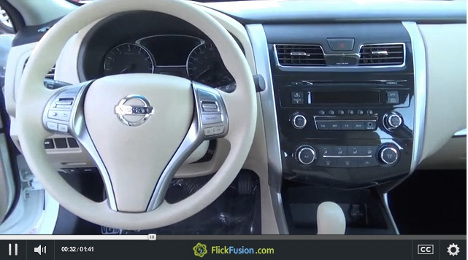
“If you’re serving somebody up something with movement, and it’s showing the walk-around or it’s showing the F-150 that has the voiceover … that’s pretty compelling, especially when you’re on Car Dealer A’s lot and Car Dealer B right down the street is showing you this,” said Reuscher, who is director of marketing at Flick Fusion, a company that provides full-solution video hosting, marketing and distribution platform to the auto business and other industries.
In Reuscher’s conversations at the convention, mostly with website companies along with some CRM providers, one of the themes she said came up was this: video can be a key component in each steps of the car-shopping process.
As such, it’s valuable for dealers to have a library of videos they can utilize, Reuscher said.
“We recommend that they start out with a library of 12, and that’s to kind of capture at least something automatically without a lot of effort from the dealership,” she said. “When (dealers) think video, they’re just thinking YouTube video or video on their website. They’re not thinking about the rest of the sales funnel.”
But perhaps they should, given some of the trends spotted by Flick Fusion, which were shared with Auto Remarketing in a follow-up email after the convention.
Vehicle review and test-drive videos may dominate the early stages of the shopping funnel, but thinking beyond those stages can be beneficial for the dealer.
For instance, Flick Fusion gives the example of the salespeople sending personalized video in a lead follow-up email to, essentially, say hello to the customer and give a bit more info about the dealership.
A good word for this, Reuscher said, is “humanizing.”
The company also notes that putting the word “video” in the subject line of an email can increase the open rate by 20 percent.
But the use of video is more than just grabbing attention. It can be utilized in grabbing important information that can be used in follow-up.
Provided that the shopper’s information is already in the store’s CRM and the Flick Fusion platform is integrated into that particular CRM, the company said in the email, Flick Fusion can pinpoint which shoppers are viewing which videos. Additionally, Flick Fusion can decipher the timing and frequency of the viewing.