The U.S. Department of Transportation’s National Highway Traffic Safety Administration hosted a media conference call on Friday, outlining its current actions and future plans to prepare for the impending legislative needs of the United States in regards to future automated automobile technologies.
NHTSA’s communications director Gordon Trowbridge fielded many questions from journalists and industry analysts, including quite a few trying to get a better idea of when we can expect automated technologies, such as self-driving vehicles, to actually become a widespread reality. In short, Trowbridge made it clear that NHTSA’s role in the situation is to make sure it is prepared when such technologies do become widespread, not to decide when it actually happens.
The fact that the automotive and technology industries appear to be getting closer to making self-driving cars a reality in the next decade is evident, however, and NHTSA says it is taking several further actions to prepare.
One such action is to hold two separate public meetings in April to allow interested parties to come and provide feedback to NHTSA with their concerns and suggestions to help the federal body develop guidelines for the safe development of automated safety technologies.
The first will be held on April 8 in Washington, D.C.; the second will be held later in April at a yet-to-be-disclosed location in California, according to Trowbridge. He says that additional information for the California meeting, including the time, location and how the public can participate, will be released soon.
Trowbridge also said that NHTSA has engaged in a number of conversations with state legislations to get a dialogue rolling to keep the lines of communications open between state and federal governments on the topic of automated vehicle technologies. In terms of who will decide whether a vehicle’s automated technologies are safe, whether it be state or federal authorities, is still undefined.
In a release from NHTSA, Transportation Secretary Anthony Foxx commented on the organization’s goals in this situation.
“We are witnessing a revolution in auto technology that has the potential to save thousands of lives,” Foxx said. “In order to achieve that potential, we need to establish guidelines for manufacturers that clearly outline how we expect automated vehicles to function — not only safely, but more safely — on our roads.”
Establishing operational guidelines is just one of five of NHTSA’s initiatives that Foxx announced in January during the North American International Auto Show in Detroit. Here are the other four, as NHTSA listed in the release:
- President Obama’s budget proposal for a 10-year, $3.9 billion investment in advancing autonomous vehicle technology, including large deployment pilots in communities around the country.
- Working with states to develop model state policy.
- Using NHTSA’s existing authority to interpret current regulations, and offer limited exemptions from those regulations, in pursuit of advances that could increase safety.
- Determining what new regulatory tools and authorities might be required to meet NHTSA’s safety mission in an era of rapidly changing technology.
NHTSA also released its initial assessment of current Federal Motor Vehicle Safety Standards to identify the key challenges ahead between now and the full deployment of automated vehicles.
The report, prepared by the USDOT’s Volpe National Transportation Systems Center, basically found that there are very few existing federal regulatory hurdles for the deployment of automated vehicles that feature traditional designs and equipment that accommodate a human driver, for example those containing traditional controls like a steering wheel, gas and brake pedals, etc. According to Trowbridge, the biggest challenge will be in the area for new automated vehicles designs that don’t feature such traditional designs.
NHTSA Administrator Mark Rosekind commented on the findings of the report in a release from the administration earlier today.
“The Volpe Center report is a great first look at current standards, and it highlights the need for the actions Secretary Foxx outlined in January,” Rosekind said. “It also shows there are few current restrictions on some automated vehicle concepts, which highlights the need to establish clear expectations for their safe operation. At the same time, for other vehicle designs, the agency has more work to do to ensure the safety of new innovations, and we look forward to learning more from stakeholders as we start that work.”
The full report from The Volpe Center can be accessed here.
Want to know the best bargain in the automotive industry today? It’s the average selling fee for consignors at wholesale auto auctions in the U.S.
Let's have some fun and look at a typical fee of, say, $100 — and I am being generous, as we all know, when chain auctions are offering less than that with transportation, car washes and month-end rebates, all deducted from that price.
What do auctions provide in the way of value?
— Pickup and delivery while paying all the related fees to simplify the process for their customers, including repo fees and related
— Thousands of acres of secure and paved storage
— Condition reports with qualified staff and auto grade technology in many cases interfaced with the customer's proprietary software and/or AutoIMS
— CFPB compliance measures and responsibilities
— Bonding, liability and garage insurance
— State-of-the-art simulcast products along with multi-image uploads
— Backside guarantees of announcement issues through the NAAA arbitration policy
— Title services
— ACH services to insure day-after-sale payments while floating the buying side
— Access to flooring companies to insure that a wider base of buyers can bid on their products
— Marketing both in-lane and online and promotional activities along with detailed-oriented and firewall-protected websites and databases
— Audit compliance
— State and local DMV compliance
— Memberships to national industry associations, state independent auto dealers associations and subscriptions to VHR and vehicle pricing guides
— Advertising both digitally and in print media
— Reconditioning, mechanical, PDR and transportation services
Not a bad package of services, processed by well trained and experienced employees.
Well you might be saying, Jim, what is your point here?
It's a simple one: Transferring costs over the past 10-15 years from the seller to the buyer is a short-term vision that in the case of many high volume units just leads to less returns in the sale price or flat out less total sales penetration in consignment in general. This then leads to consignors going around auctions to try and drive returns and hoped for increased distribution.
Giving away anything all the time, clearly states you place no value on it; and in this case it's your service. Time for us to give it the value it truly deserves.
Editor’s Note: Jim DesRochers is vice president at Dealers Auto Auction of the Southwest. As with any contributed content, the opinions expressed in this and other editorial columns are solely that of the author’s and do not necessarily reflect those of Auto Remarketing or its parent company.
FORTUNE magazine recently released its 100 Best Companies to Work For and, as usual, several companies involved in the automotive industry made the list.
These companies include the likes of ARI, Capital One Financial, CarMax, Credit Acceptance, JM Family Enterprises, and USAA.
CarMax celebrates its 12th consecutive year on the list.
“Our associates take pride in maintaining the strong CarMax culture of transparency, respect and integrity,” said Tom Folliard, CarMax’s chief executive officer. “By investing in our associates, we are equipping them to provide the exceptional experience our customers deserve.”
Companies that are included in the listing are ranked by FORTUNE based on its extensive employee surveys, which are given to a random sample of employees from each company. The survey asks employees about their attitudes about management’s credibility, overall job satisfaction and camaraderie.
Companies are also judged based on their pay and benefits programs and a series of open-ended questions about their hiring practices, methods of internal communication, training, recognition programs and diversity efforts.
ARI, a global fleet services provider, was acknowledged on the list for the fourth year in a row.
“We are incredibly honored to be named to Fortune’s 100 Best Companies to Work For list for a fourth consecutive year,” said Chris Conroy, ARI’s president. “Being named to the list year after year is entirely due to our people, who are not only the best at what they do when it comes to fleet management, but also go the extra mile when it comes to their colleagues, offering support when it is needed, celebrating successes when they happen and pitching in to overcome any challenges that come along. It is that atmosphere of teamwork, cooperation, understanding and support that makes ARI such a special place to work.”
For a full listing of FORTUNE’s 100 Best Companies to Work for, click here.
Speaking of the best places to work, do you work at an auction and think it’s one of the best? Designed and intended for individual auction locations, this free workplace study conducted by Auto Remarketing and Best Companies Group is currently working to compile the Best Auto Auctions to Work For.
For individual auction locations to participate, the general manager/leader of that auction needs to opt in at this website by April 22: www.bestautoauctionstoworkfor.com.
More information about the program can be also be found here.
Social media users are bombarded with advertisements and promotions — some obvious, some subtle. But in the automotive landscape, which manufacturers are doing it best? And what about offline, in perhaps the oldest form of promotion: word of mouth?
Engagement Labs, a technology and data company, set out to figure that out and released its findings on Thursday.
If you’ve been seeing a lot of hype about Nissan on Facebook, or BMW on Twitter, or Mercedes-Benz on Instagram, that’s no accident — and those three brands were ranked highest in each of those three respective social media platforms.
As for best brand being talked about via word of mouth? Tesla Motors took the top rank, according to Engagement Labs.
"In a competitive field such as the automotive industry, brands have a tough time standing out,” said Bryan Segal, Engagement Labs’ chief executive officer. "While social media provides an excellent avenue to differentiate one's brand from the competition, it's just as important for brands to understand the power of its offline conversation impact. According to Engagement Labs' data, while many economic automotive brands perform well on social media, they are not creating offline conversations at the scale some luxury automotive brands are."
Here are the full rankings, based on data from Engagement Labs:
Top 10 U.S. Automotive Brands for Social Media & Word of Mouth
| Ranking |
Facebook |
Twitter |
Instagram |
WOM Sentiment |
| 1 |
Nissan |
BMW |
Mercedes-Benz |
Tesla Motors |
| 2 |
Dodge |
Nissan |
Dodge |
Ferrari |
| 3 |
Ram Trucks |
Dodge |
BMW i |
Subaru |
| 4 |
Dodge Challenger |
Mercedes-Benz |
Chevrolet |
Porsche |
| 5 |
Kia Motors |
Ram Trucks |
Mercedes-Benz AMG |
Audi |
| 6 |
Subaru |
Jeep |
Ram Trucks |
Infiniti |
| 7 |
GMC |
Jaguar |
Jeep |
Corvette |
| 8 |
Jeep |
Subaru |
Bentley Motors |
Lincoln |
| 9 |
Tesla Motors |
Acura |
Volvo |
Lexus |
| 10 |
Acura |
Audi |
Nissan |
Cadillac |
According to Engagement Labs, they reached these findings using its proprietary eValue social media measurement tool and TalkTrack, a measurement source of word of mouth conversations from the Keller Fay Group, an Engagement Labs company.
Segal commented on the performance of luxury brands such as Tesla, Ferrari and Porsche, among others, in the word of mouth results.
"Known for their stellar aesthetics and high-end performance, it is no surprise to see luxury automotive brands place higher amongst offline conversations in regards to sentiment," Segal said. "However, luxury appeal is not the only factor in positive word of mouth conversations. For example, Subaru, which recently received high Consumer Reports ratings, also performed well offline. There is an opportunity for Subaru to take this positive momentum to social media to amplify discussion around the brand, both online and offline."
ACA International is raising concerns in a new white paper about a recent report on the credit and collection industry that the organization claims to fail to properly contextualize the data it includes, leading to an incomplete picture of the industry and its practices.
Officials explained the report titled, “Unfair, Deceptive, and Abusive: Debt Collectors Profit from Aggressive Tactics,” from the Alliance for a Just Society analyzed 74,000 complaints submitted to the Consumer Financial Protection Bureau during the last two years.
ACA’s concerns with the findings in the report include the Alliance’s use of the often-repeated statistic that debt collection is the most complained about product in the CFPB complaint database.
“While this is on the surface true, this figure fails to contextualize that number of complaints within the full scope and volume of debt collection in the United States,” ACA director of research Josh Adams writes in the white paper.
There are more than 1 billion consumer contacts made by the debt collection industry annually, according to the most recent data available from 2010. “While the Alliance’s analysis reports the total debt collection complaints in the CFPB database through August of 2015 is 74,376, that number represents just 0.0074 percent of total consumer contacts through 2015,” Adams noted.
ACA also claimed that some of Alliance’s findings regarding complaints for primary and sub-categories within the CFPB database appear to be misleading.
For example, the Alliance report asserted that 17 percent of all debt collection complaints relate to debt disclosure and verification. Of those, 69 percent of consumers report that debt collectors did not provide documentation believed by the consumer to be necessary for verification of the debt. Another 25 percent report they did not receive a “right to dispute” notice, which is required by the Fair Debt Collection Practices Act, one of many laws and regulations that regulate the collection industry.
However, those figures of 69 percent and 25 percent are both fractions of the original 17 percent, according to ACA. So when the report finds that “69 percent of those consumers report that debt collectors did not provide documentation believed by the consumer to be necessary for verification of the debt,” ACA’s white paper said it looks like a significantly larger number of complaints than it actually represents.
“The report leaves debt collectors, consumers, and regulators with no real information on how to make an already highly-regulated industry more compliant and consumer-friendly, something ACA International and its 3500 member companies strive to do,” Adams wrote.
In light of the scope of the debt collection industry in the U.S., ACA maintained that it is important to contextualize the raw numbers reported by the CFPB within this broad framework. Without this practice, Adams asserted that both consumers and policy makers are left with an incomplete understanding of how these industries operate and their approach to customer service.
“Although decontextualized complaint data about debt collection reported by the CFPB seems to only harm debt collectors, the practice can also harm consumers by generating a deep misunderstanding of the role of debt collection companies and depriving consumers of appropriate information to make adequately informed financial decisions,” Adams wrote in the white paper that can downloaded here.
ACA International’s new research initiative aims to collect more original data about the credit and collection industry. The goal of this exclusive research and analysis is to quantify the ways that debt collectors help consumers and the overall economy.
In our urgency to get online inventory frontline ready, the importance of how we merchandise those vehicles can get lost. However, how you image inventory and the order in which you display those pictures online matters — especially if your goal is to sell cars, not just get clicks.
In addition, also important is how many images of the particular vehicle you upload. Furthermore, studies show that which direction you have your pictures leading the viewer’s eyes also either enhances or detracts from their effectiveness with shoppers.
I’m of the view that the more content you put online, the better. I’m a shopper who likes a lot of information. The more information I can get, the more comfortable I am making the purchase. For me — and my guess is, for a lot of car buyers — this need for information is not just for online shopping, but for brick-and-mortar shopping.
Before I’ll take a 30-minute run with the wife and kids to a dealership, I want all the information about my particular interest I can get. So if I’m interested in a vehicle I’ve noticed online, I want to see 20 to 40 photos of that car, in all angles, perspectives, near and far out, and in, under, above and inside.
However, a study last year by a company called CarStory showed that nine photos produce more leads and greater conversion than do more photos. Now, that study has that data, but my clients aren’t necessarily looking for more leads or more emails, but more people on the lot because they want to sell more cars.
So, tip No. 1: List inventory with more photos — the right pictures in the right order — and not fewer photos fearing photo fatigue.
Tip No. 2: Put the most content-rich images, the first 10, at the beginning of the image slides. Point the vehicles to the right, which we know from design studies about visual direction will draw the viewer’s eye in the direction we want it to go: towards the story you want to convey.
If I am showing a particular image of the vehicle, I want the image to point to all the goodies that image is trying to convey: the navigation system, the sunroof, the entertainment system, the Wi-Fi and other convenience items. Or the plush leather seats.
Shoppers are clicking on those photos because they want to see that information. Images confirm that it’s the particular feature or option is there before they visit the dealership or make a call. So, I encourage you to move images that show key details — sunroof, navigation gear, and other essential features — to second and third position in your photo sequence. Then think of the remaining image sequence to work as a vehicle walk-around.
Start your virtual walk-around at the driver’s side with doors open. Then move to behind the wheel followed by dash details, then show navigation details. Move to rear-seat entertainment controls and if the vehicle has it, third-row details. Continue around the vehicle to the cargo area, then the rear fascia, and then around to the passenger side, and the passenger seat interiors. End the walk-around at the front of the vehicle and under the hood.
Yes, the first nine photos — if accompanied by excellent, detailed, descriptive content — could generate more leads.
I agree with that position, as far as that goes, but by providing more visual detail — including close-ups of wheels and tires, carpet condition, bumpers, head- and tail lights — you’re always building more confidence in the viewer’s opinion of and desire for the vehicle. That’s the result you want if you want to convert them into lot traffic.
Here are better-picture how-to tips:
Because it’s so important, a reminder: point vehicles to the right or the direction in which you want viewers’ eyes to follow. To test this, a large dealer group had all images looking to the right on all listings for one month. They pointed images facing left for 30 days. Images facing left to right — looking right — increased conversion rates by 7 percent.
Highlight vehicles’ goodies.
If possible, photograph vehicles in a studio setting, even if a service bay with the back wall draped with soft white cloth.
Backlight any backdrop cloth.
This means placing a light pointed at the vehicle from behind the draping. This will diffuse the light from behind, adding highlights and causing the vehicle to “pop” from the background. Professional backdrops and diffusing products can be purchased at local photo shops and online. A popular commercial diffusing product is known as scrim.
Drape fabric or scrim for above-light diffusing. Keep material away from contact with lights sources, however. Diffused lighting from above evens light out across the vehicle, eliminating harsh shadows that hide detail.
Good images can be captured using smartphone and tablet cameras, but an $800 investment in higher-end imaging equipment and lighting gear will pay dividends — and because crisper, higher quality images help sell more cars, the ROI is immediate.
If interior studio space isn’t possible, move outside. Watch though for how shadows can blot detail, and observe the sun’s position. Long shadows can add interesting contrast if handled skillfully, but often shadows across vehicles destroy necessary details. Be sure the photographer is positioned so his or her shadow isn’t cast onto the vehicle, which is distracting and unprofessional.
The modern dealership showroom is first online. Merchandise your inventory there, new and used both, as visually compelling as you can. These imaging tips apply to either — don’t take the easy way and use factory-supplied new-car photos; they are boring and generic. Try out these suggestions, and then let me know your results.
Jasen Rice is the owner of Lotpop.
St. Louis. Austin. New Orleans. Memphis. Nashville.
Those might be pushpins on a barbecue- and gumbo-stained road map to music’s meccas, but they're also a sampling of cities where consumers are having the best experiences shopping for a car at the dealership.
CarGurus recently released a study ranking the top 10 cities with the most satisfied car shoppers, based on the reviews of dealerships that consumers submitted on the CarGurus site.
Nashville, Tenn. was the highest-rated, with 57.5 percent of reviews being a perfect five out of five stars. San Diego was second (56.9 percent), followed by Austin, Texas (56.1 percent) and Memphis (55.8 percent). Birmingham, Ala., was No. 5 at 55.2 percent.
The complete top 10 is as follows:
1. Nashville, Tenn. (57.5% of reviews were five-star reviews)
2. San Diego, Calif. (56.9%)
3. Austin, Texas (56.1%)
4. Memphis, Tenn. (55.8%)
5. Birmingham, Ala. (55.2%)
6. Tampa (55.1%)
7. Kansas City, Kan. (54.8%)
8. Charlotte, N.C. (54.7%)
9. St. Louis (54.5%)
10. New Orleans (54.5%)
CarGurus compiled the results after looking at the top 51 metropolitan areas in the U.S. and a combined 100,000-plus reviews of dealerships in these areas.
Dealers that were reviewed, on average, received a rating of 3.8 out of 5, CarGurus said. Seventy percent received four- or five-star ratings and 20 percent got a one- or two-star score, it added.
“Consumers often approach the car-shopping process with trepidation, but our data shows that in fact most shoppers end up having a pretty good experience at the dealership,” Amy Mueller, director of PR for CarGurus, said in a news release.
“Still, where you shop matters, and consulting dealership reviews from other shoppers can go a long way to ensuring a great shopping outcome. This is why CarGurus factors dealer ratings in addition to price analysis when we rank search results– we want to help shoppers find the best deals from the best dealers as easily as possible,” she added.
The city with the lowest percentage of five-star reviews was New York, at 45.1 percent. Also in the bottom five were Baltimore (47.4 percent), Chicago (47.6 percent), Oklahoma City, Okla. (48.4 percent) and Miami (48.6 percent).
Following those cities were Atlanta (48.7 percent), Washington, D.C. (48.8 percent), Houston (49.3 percent), Salt Lake City (49.8 percent) and Detroit (49.9 percent).
The remainder of the metros included in the study were above 50 percent. The full list can be found here.
“Why should I buy this vehicle with a CPO warranty over, say, anything else?”
If you’re a dealer on a franchised lot, you've most likely faced that question.
As part of Auto Remarketing’s annual “Best CPO Dealers in the United States” special edition, we connected with some of the top-selling franchised dealers in the CPO space, to get an inside view of what they do to move more certified units.
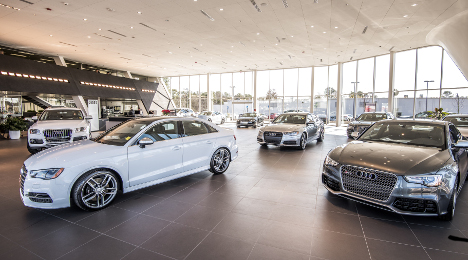
Audi Atlanta topped the charts for Audi CPO sales last year, moving over 50 percent more CPO vehicles than the next dealership on the list, with nearly 1,000 units sold in 2015.
AR reached out to Tracie Maloney, Audi Atlanta’s general manager and vice president, to see what the strongest quality of a CPO Audi vehicle is that their dealership emphasizes to CPO customers that seems to be a solid dealer-maker.
She pointed directly to just how simple and convenient it is to employ an Audi CPO vehicle’s warranty.
“The warranty is attached to the vehicle’s VIN number, which makes it a very smooth process when you take your vehicle in for a repair,” Maloney said. “You don’t need to have pre-approval on repairs or a paper contract. Consumers don’t have to go through the hassle of the aftermarket warranty companies that typically require these things. The dealer can simply pull up your vehicle by the VIN.”
Maloney also tipped her hat to her techs, who she says really are the backbone behind the inherent trust an Audi CPO warranty engenders.
“Another benefit to the consumer is the confidence you can have in that vehicle due to the very high standards set by Audi,” she said. “Our certified Audi technicians take pride in signing off on the CPO inspection books, which require minimum standards on things like tires and brakes.”
Here's the full list of Audi's top CPO dealers in the U.S. last year:
Best CPO Dealers: Audi
| Dealer |
2015 CPO Sales |
| Audi Atlanta |
976 |
| Audi North Houston |
624 |
| Audi Central Houston |
610 |
| The Audi Exchange |
592 |
| Audi Burlington |
556 |
| Santa Monica Audi |
537 |
| Keyes Audi |
531 |
| Audi Palo Alto |
490 |
| Audi Bellevue |
486 |
| Fletcher Jones Audi |
474 |
To check out the other dealers that sold the most CPO vehicles in 2015, as well as sales insights from the top stores from other brands, check out the “Best CPO Dealers in the United States” feature in the Feb, 15 edition of Auto Remarketing.
If you’re embracing technology as a dealer, you’re likely already swimming in a sea of acronyms. You’ve got your CRM. Your DMS. You’ve got things covered from SEO all the way to F&I. But perhaps a lesser known acronym, VRM, or vehicle relationship management, seems to have a bit more vague definition depending on whom you ask.
But if you ask Roger Penske, Penske Automotive Group’s chairman and chief executive officer, what VRM means to him, he may tell you how it means trying to hold on to a car throughout the retail process, from the first sale all the way to its third, perhaps.
Penske Automotive hosted its fourth-quarter and full-year financial results conference call on Thursday, and one question fielded by Penske resonated with the topic of VRM: How does Penske Auto see the impending used-vehicle volume increase from the expected wave of off-lease vehicles? Is it a certified pre-owned opportunity? What’s the net effect on the company?
Pointing out that used inventory is actually down by roughly 1,000 units overall from where they were a year ago, Penske said he sees it as an opportunity to not only work on customer loyalty, but also keep the cars coming back again and again to bolster gross profits.
“I’ll give you a quick example,” he said. “In Atlanta, where we have two BMW stores that do over 300 used cars a month, probably 10 percent would be coming out of their loaner car fleet every month, another 10 percent would be non-BMW trades, and the rest are BMW.
“I think the ability for us to be able to recondition those, we get the benefit of that in our shops, in the parts and service, and then the ability to utilize some of the OEM’s programs,” Penske said. “That’s one of the things I don’t think people realize … both Mercedes and certainly BMW — and I know Toyota does — they have some very attractive programs on used cars that come out of loaner service or come off lease. Especially if you CPO them. So we’re going to take advantage of those.”
Penske says the company is aiming for a 50 percent to 60 percent loyalty rate from his off-lease customers – whether that means they re-lease that same car, buy it, or choose to lease or buy another vehicle. Keeping that initial vehicle to be sold again and again — that’s Penske’s idea of VRM.
“We want to keep that vehicle, we want to take the vehicle from the customer off-lease, we want to sell or lease it to a second person and then get it back and then retail it at the end,” Penske said. “There’s some real opportunity for gross profit on each vehicle. We don’t want to lose those vehicles as they come through the cycle.”
It’s interesting watching the auction industry heading towards more mobile, more technology and less personal contact. It’s also fun watching the continued vertical and horizontal integrations driven by the largest players in the market.
What is not so interesting is the fact that everything we seem to be moving towards, including the automated “if bid” process, takes a little bit more out of the personal touch factor and requires less and less experience in our industry to complete transactions.
Sounds a bit different from the direction I usually take in driving automation and mobility, but after 30 years in the industry, I truly value the personal relationships I have made with my consigning and buying partners.
Every time we sublet a help line to a third party, automate “if bids,” send e-blasts, communicate with email and create more and more buyer-centric arbitration rules to eliminate our natural role in the disclosure and arbitration process, I wonder what we have done to the industry and to the market.
Maybe that’s the reason behind the drop in our selling fees in reality and in inflationary terms, devalue the industry by trying to move share by price rather than service, and then reduce the level of personal service to make up for revenue declines or continue to push everything to the buyer side.
The retail automotive industry has rebounded because it learned from its past failures, and who would have thought we would ever have $70,000 trucks. And it still has a penchant for repeating some tendencies in a cyclical manner.
The auction industry, however, hasn’t yet learned that more disclosure (not less), more personalized service (not less) can and should go hand-in-hand with mobile technology, along with the increased costs that all of those things require. And like retail buyers, our consigning partners would address them if we led with service and not with price.
I look forward to the conversations and the debates at CARS/NAAA in March, a venue like NRC that puts all the best issues on the table and helps make the industry stronger each year.
Editor’s Note: Jim DesRochers is vice president at Dealers Auto Auction of the Southwest. As with any contributed content, the opinions expressed in this and other editorial columns are solely that of the author’s and do not necessarily reflect those of Auto Remarketing or its parent company.