ACA International released its first whitepaper on Tuesday as part of a new research initiative that aims to collect more original data about the credit and collection industry.
Officials explained the goal of this exclusive research and analysis is to quantify the ways that debt collectors help consumers and the overall economy.
This first whitepaper titled, Diversity in the Collections Industry: An Overview of the Collections Workforce, shows that the credit and collection industry has one of the more diverse workforces in the U.S. Using U.S. Census data and information from the Bureau of Labor Statistics, ACA found that while women constitute roughly 47 percent of the overall U.S. workforce, women make up 70 percent of the total collections workforce.
As a further testament to the diversity of the industry, the report highlighted racial and ethnic minorities account for 40 percent of the total collections workforce today. Specifically among women, ACA International noted racial and ethnic minorities also account for 40 percent of the total workforce population.
“The stereotypical image of a debt collector couldn’t be further from the truth,” said ACA International director of research Josh Adams, who wrote the report.
“Women and people of color play a significant and important role at collection agencies nationwide,” Adams continued.
As part of the new research initiative, ACA also conducted a membership survey this past fall.
According to the survey, 24 percent report being a minority of women-owned business; and these firms are creating jobs for even more people.
And while The National Women’s Business Council found that, as of 2012, roughly 89 percent of women-owned businesses “[had] no employees other than the owner,” ACA’s survey found that 95 percent of minority or women-owned firms employed an average of 22 employees.
“The data shows that debt collection professionals reflect the diversity of the US consumer population,” ACA International chief executive officer Patrick Morris said.
“The stereotype of the debt collector portrayed in the media is simply not true, and this is good for the industry as well as the consumer,” Morris continued. “More diversity in the collection agency workforce means more good ideas on how to fairly and amicably resolve accounts with a diverse consumer base.”
The entire whitepaper can be downloaded here.
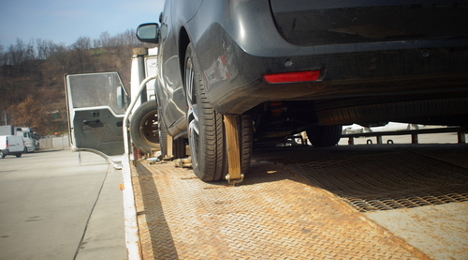
Although there have been plenty of articles written about how to prepare vehicles for shipment and how to save transportation costs and time, not a lot has been written about the other end of the process: how to receive shipments at your dealership.
It doesn’t make sense to spend a lot of time and money arranging for transport only to encounter difficulties at the final destination.
To help ensure easy deliveries, I’d like to offer the following tips on how to prepare your dealership to receive vehicle shipments.
- Have an allocated delivery drop area
- This will help ensure a safe unload of your vehicle(s) while maintaining the safety of the driver, your staff and your customers.
- As a rule of thumb, drivers need at least 150-175 feet of clearance (that includes the length of the truck).
- Communicate with the transport company
- It’s always good to communicate any changes in delivery area or receiving hours to your dispatcher to avoid delays.
- You’ll also want to let your dispatcher know of any changes in infrastructure (e.g., different entry gates, low-clearance bridges, major road construction) in your area.
- Having a point person ensures that the right vehicles are delivered to you. There are times a driver arrives at a dealership and can’t unload because he can’t find a person who knows about the delivery.
- Inspect your vehicles
- When your vehicles arrive, make sure to do a thorough inspection with the driver present. Drivers should perform an inspection at the time of pickup and note any existing damage, if any, on the Bill of Lading. When the origin of the shipment is an auction, any damages found are noted on the vehicle gate pass. Use the BOL to note any damages on the vehicle. The driver will keep a copy of this “condition report,” as will you. Sign the BOL only after you’ve inspected the vehicle.
- If your dealership accepts deliveries after hours, the BOL will have a “Subject to Inspection” stamp or signature written on it. As soon as you are able to take physical possession of the vehicle, you should still do a thorough inspection.
- If you see damage, take pictures and contact the claims department at the transport company as soon as possible. Even if you do not have pictures, the sooner you report the damage to the claims department, the better.
- Signing a clean BOL, or not having one at all, will make it very difficult to file a claim.
- Also keep in mind that normal wear and tear on a pre-owned vehicle is not considered major damage. Defining what constitutes normal wear is perhaps a good topic for a future article.
- Check the driver’s paperwork
- When a carrier arrives at your dealership, have your point person check the BOL to make sure the driver is at the correct location, and verify the vehicles that are intended for your business. A carrier can have a full truckload but only one or two vehicles may be for your location.
- Many times a carrier is transporting two or three vehicles of the same make and model. Always verify that the VIN number on the BOL matches the VIN plate on the vehicle.
Following these steps will ensure a smooth delivery process, and you don’t have to wait until your next order to notify your dispatcher of any changes.
Martha Garcia-Perry is director, account management with MetroGistics (www.metrogistics.com).
With more than 235 model options in the new-vehicle marketplace, customers shopping in that arena are a bit spoiled for choice. Understanding what customers are drawn to, and, perhaps more importantly, turned off by, can be what sets a good car apart from a great car.
That’s where the annual J.D. Power Avoider Study comes in, and this year its analysis has shown an increased concern for vehicle reliability.
According to the study, which surveyed nearly 26,500 owners who registered a new vehicle in April and May of last year, 55 percent said that vehicle reliability was a leading reason for their purchase, up from 51 percent in the previous year’s study.
Looking at it from the opposite angle, 17 percent said perceived reliability was a chief reason why they avoided a certain vehicle, versus 14 percent the previous year.
"Though vehicle reliability and durability have improved significantly over the years, they remain a vital consideration for consumers," said Dave Sargent, vice president, quality practice, J.D. Power. "With so many auto recalls in the news and challenges with the introduction of new technology, consumers are even more attuned to the expected reliability of new vehicles.
“This impacts which models consumers avoid and which ones they ultimately purchase,” he continued. “Bad news can tarnish an automaker's reputation in an instant, yet, can take years to build back up. Automakers need to convince consumers of the true reliability of their vehicles so it is not a reason to avoid selecting a particular model."
Above reliability, exterior and interior styling still remain the top two most frequently cited reasons for buying a vehicle.
Lower gas prices also appear to have made an impact on consumer preferences, as J.D. Power points out that 51 percent of shoppers factored in fuel economy when purchasing their vehicle in 2015, down from 55 percent in the previous year.
Although nothing new, another issue that has stuck around is the fact that some shoppers tend to change brands because they simply want to try something new.
"This is a major challenge for auto marketers," Sargent said. "In the auto industry, building consumer trust, loyalty and advocacy is paramount to ongoing success. However, there are so many great vehicles available to consumers that merely satisfying your customers is simply the cost of entry.
“To truly succeed, automakers must keep their exterior and interior designs fresh, ensure competitive performance and fuel economy levels, offer an array of advanced technology and achieve an excellent reputation for vehicle reliability."
Here are a couple more key findings from the report, as listed by J.D. Power:
- Car Buyers Doing Less Window Shopping: Since 2012, new-vehicle buyers are considering fewer models and shopping fewer dealers. On average, buyers physically shop only three models, one of which they buy.
- Domestic Brands vs. European and Asian Brands: There remains a significant disconnect between perception and reality regarding the reliability of domestic brands compared with European and Asian brands. Avoidance of domestic models due to reliability concerns (24 percent) is nearly twice that of European (13 percent) and Asian (12 percent) models. In reality, the actual reliability of most domestic models is competitive with that of their import competitors.
Businesses today, large and small, are facing what seems to be the most impatient generation of humans ever when it comes to commodity acquisition. They know what they want and they want it now. And that impetus also extends to their vehicle purchase transaction — which they want to be quick and painless.
This is not “new” news, so to speak — companies like AutoNation and General Motors, among many, are trying a variety of new processes to make it simpler and easier for customers. They understand that if it’s easier for the customer, it’s easier for the dealership. Quicker sales equal quicker profit possibilities.
That sense was reiterated by dealers surveyed by eLEND Solutions, who released the results of a study today that it conducted online among U.S. dealerships in November.
Their findings show that those surveyed, despite wanting things to move quicker, are still saying that the sales process is taking, on average, three hours or more to complete.
Here’s a breakdown of eLEND’s survey:
- 85 percent of dealers think it would be ideal to bring the car-buying process down to two hours or less (up from 59 percent in 2014).
- Since eLEND’s similar survey in 2014, dealers, overall, are not showing much of a change in the speed of the sales process. In 2015, 42 percent said the average sale, from start to finish, lasts 3 to 5 hours. Forty percent said the same in 2014.
One key issue that many dealers — 86 percent — fleshed out in the survey is their issues with vendor integration. This majority of dealers agreed that they experience a significant obstacle in the lack of integration and data exchange between their vendors’ systems, hampering the connection between their online tools and their in-store processes.
This 86 percent agreed that improved cooperation and data sharing could eliminate online to in-store information disconnects and bottlenecks.
“The survey confirms that the sales process can’t evolve — or speed up — unless vendors start connecting the online and offline dots, yet the lack of systems integration means that dealers are unable to embrace new processes,” said Pete MacInnis, chief executive officer of eLEND Solutions. “The way to shorten the customer sales journey — and sell more cars in the process — is to create seamless, real-time integrations between the dealer website, CRM, Desking/Finance and DMS platforms.”
Unfortunately, many of the dealers surveyed are not very optimistic in the idea that this may actually be addressed. 54 percent of the dealers said that it is only somewhat likely and 19 percent said it was unlikely that this type of cross-platform integration may actually come to fruition.
Here are a few more highlights from the survey, listed below by eLEND Solutions:
- Of those that think open integration is unlikely, competition and protecting the status quo were cited as the top reasons.
- 86 percent of dealers strongly agreed or agreed that vendor cooperation and coordination could facilitate a greatly reduced start-to-finish transaction time.
- Nearly 60 percent of dealers agree that specialized best of breed solutions are the way to go because of their higher product quality and service levels (70 percent).
Many companies, including dealerships, tend to tout company culture as part of their recipe for success.
Not very many, however, tend to survive three generations of familial torch bearing and reap the rewards quite in the same way as Ohio’s Ricart Automotive Group.
It started with Paul Ricart on Independence Day in 1953 as a single-point Ford franchise in Canal Winchester, Ohio — with four cars and one garage.
And these days? In late 2015, the dealer group was expecting to have retailed roughly 8,500 used vehicles out of its Ricart Used Car Factory by the end of the year.
As part of this year’s “Leading Dealer Groups” issue, Auto Remarketing spent some time talking with Rick Ricart, third-generation member of the group as well as its current vice president of sales and marketing, to see if he could share some sales tips.
Cutting straight to the issue, we asked Ricart what his group’s overall sales strategy is, distilled down into one statement.
“We are very, very consistent with everything we do. We have consistent training. We have a consistent culture,” Ricart said. “But we are dynamic when it comes to each individual customer as we engage them because there are so many types of buyer today depending on how much research they’ve done and everything.
“I would say our strategy is, ‘sustainable growth through consistent processes, by treating each individual customer based on their needs and demands.’”
Well, that seems to make sense — consistent culture, dynamic approach to customer service — but how is that achieved? To start off, Ricart says one key to obtaining quality sales men and women for his new and used stores is to, well, not hire people who have done it before.
“Four years ago now, I adopted a policy where we don’t hire car salesmen,” he said.
How does that work? For starters, Ricart says they don’t hire the “transient” car salesmen that tend to bounce around from dealership to dealership, spending six months or so at one business before moving on to the next — an issue that he says has plagued the Columbus area in the past.
“What we decided was we were sick of hiring people that had been taught bad habits, that had been taught to lie, cheat and steal,” Ricart said. “What we really need are people that are focused on customer service and that don’t have the entitlement of a lot of millennials that refuse to work 40 hours a week, or work weekends, or work nights. So four years ago we took a strategic move and started hiring from the service industry.”
That’s right — former servers, bartenders, hotel front-desk staff, valets — that’s the Ricart sales staff’s bread and butter.
“We found people that have the personality, the customer service training, the character — and brought them into the car business,” he said.
To Ricart, today’s business isn’t about learning how to be a salesman. It’s about letting the customer, who, more often than not, has come into the store following an incredible amount of research, take the reins and have the sales staff simply help them find what they’re looking for.
In fact, that’s exactly how Ricart’s management phrases it to their sales staff. Of Ricart’s 550 employees across its new and used stores, 62 are sales people in the Ricart Used Car Factory. And they’re not allowed to sell anything.
“That’s what we tell them all the time, ‘you’re not to sell a car today. But you’re to let two or three people buy a car that you meet,’” Ricart said.
‘Family owned and people driven’
That “internal tagline” is what Ricart attributes to his company’s cohesive culture — the reasoning behind its ability to retain many of its employees long term and give them a feeling of openness and honesty.
“We are very employee-centric. We don’t shun them for sharing ideas, criticism,” he said. “We let our employees take ownership in their job and the dealership itself. And we have a lot of long-term employees that help reiterate all of those culture-based programs that we do. And we actually have an in-store employee engagement director.”
In an environment where employees take ownership of their positions and care for the overall well-being of the business, Ricart says this helps make his job easier.
“It allows me to do my job better because I’m not worried about what I say, because everything is very honest and transparent and open with everyone,” he said. “Management truly defends the employees, as well.”
Another tip that Ricart gave for dealers is that if you want to build a fan base for your dealership, you have to start with your own employees.
“We learned years ago when we started our culture change that if the employees aren’t advocates of the dealership the customers never will be,” he said “That sounds crazy, but I remember five years ago there’d be someone that worked in the service department that didn’t want to buy a car from the company they worked for because they didn’t get along well with the used-car department.
“It gave us a lot of opportunity to improve those things. You need to make sure that every employee is proud of where they work.”
Success of the used-car recon department
Speaking with Auto Remarketing in late December, Ricart said the turn-time that week in the Ricart Used Car Factory’s reconditioning department was currently 5.2 days, with its peak at one point as low as 3.9 days. The recon team, which utilizes the Motor Trend Certified Vehicle program, tries to get each vehicle show-ready in less than four days so it can go into the “photo lab,” where each vehicle gains 27 high-quality photos and is put online for sale.
Ricart says he enjoys the program because, instead of having six different teams, one for each make, he has one team certifying all of the Factory’s vehicles. That one team, with 20 technicians designated to used vehicles, shares 14 service bays and performs the same inspection on each vehicle. He says the recon department has come a long way — when they first started tracking turn time on vehicles, they stood at 11 days.
The goal of “sustainable growth” is exactly what is reflected in his Used Car Factory’s sales figures. At the end of November, it had sold exactly 7,787 used vehicles in 2015, an over 700-vehicle increase over the first 11 months in 2014 (7,054 used-units retailed) and roughly tying the overall sales figure for 2014. Speaking conservatively, Ricart says the Factory was expected to end the year at 8,400 to 8,500 used units retailed, a 10-percent jump over last year’s figures.
Ricart says he knows the Factory could retail quite a bit more — but the focus is currently on quality over quantity.
“We’re looking for sustainable growth,” he said. “We could go buy a whole bunch of cars as cheap as we can and lose money to market them and say, ‘Hey, we sold 10,000 cars this year.’ But if you don’t sell 10,000 or more next year, then it was false pride, or whatever you call that.”
Enterprise Holdings announced its newest five-year goals for its businesses on Monday, included in its fiscal year 2015 sustainability report.
Within the report, titled The Business of Sustainability, the operators of well-known companies such as Enterprise Rent-A-Car, National Car Rental and Alamo Rent A Car built on their last five years of sustainability results and set new goals through its 2020 fiscal year.
"These new goals reflect a fresh look at our priorities based on conversations with our many stakeholders and leadership teams," said Pam Nicholson, president and chief executive officer at Enterprise Holdings.
The goals Enterprise Holdings listed include the following:
- Waste: Reduce companywide paper use 40 percent by FY 2020.
- Greenhouse Gas Emissions (GHG): Reduce Scope 1 (direct GHG from owned operations) and Scope 2 (indirect GHG from consumption of purchased electricity, heat and/or steam) greenhouse gas emissions 10 percent by FY 2020.
- Energy: Reduce annual direct and indirect energy use and related costs, compared to the previous year.
- Water: Reduce annual water use (per vehicle wash), compared to the previous year.
- Workforce Development: Continue investing in the workplace by providing an average of at least three days' professional development annually per full-time management employee, and also encouraging all employees to attend relevant company sessions, events, programs and forums.
"We still firmly believe providing long-term benefits and seamless solutions to customers, partners and communities is the key to sustainability in the transportation and travel sector," said Brad Carr, vice president of corporate business development for Enterprise Holdings. "However, we're also seeing more and more contract-related questions about top-line sustainability issues. That means we work to help organizations better understand the long-term impact of corporate travel in terms of cost, plus environmental considerations, efficiency and duty of care."
Looking back at the 2010-2015 fiscal years, Enterprise Holdings listed the following achievements in the area of sustainability:
- Energy: Reduced natural gas consumption 14.8 percent and cut electricity use 19.1 percent, compared with FY 2010 baseline. Figures have been calculated using same-store and weather-normalized data (excluding new locations and branch offices where an external landlord is responsible for utility bills).
- Greenhouse Gas Emissions (GHG): Achieved a 10.1 reduction in Scope 1 emissions and a 31.2 percent reduction in Scope 2 emissions since FY 2010. Combined, Enterprise Holdings reduced its GHG emissions intensity 18.6 percent.
- Alternative-Fuel Shuttle Buses: Converted 98 percent of airport shuttle buses to biodiesel, synthetic diesel, compressed natural gas or hybrid models since FY 2010.
- Enterprise Sustainable Construction Protocol (ESCP) Guidelines: Invested more than $150 million, including thousands of new and retrofitted construction projects, since FY 2010.
- Product Lifecycle: Recycled 1.4 million gallons of oil and more than 1 million oil filters for its fleet last year, representing 95 percent of the oil and virtually all of the filters used in its North American service centers.
To learn more about Enterprise Holdings’ sustainability values, click here.
One of the most recent case studies shared by Automotive Personnel founder and chief executive officer Don Jasensky focused on what finance companies can do when they have an underperforming collections manager.
Along with delving into five considerations before replacing this individual, Jasensky set the stage for a scenario that might not be too unfamiliar to top executives.
Suppose a subprime finance company had a collection manager overseeing a trio of collection supervisors and 30 collectors. Jasensky then explained the department began to underperform, and the trend continued for months.
“As you could imagine, each month the finance company lost revenue it should have collected. Big problem,” he said.
Jasensky’s scenario also included the element where no one at the finance company was as knowledgeable about collections as the current collection manager.
“There was no one to mentor him or provide any substantive assistance,” Jasensky said. “This is typical in small through midsize companies.
“Senior management had to make the difficult decision and replace their collection manager,” he continued.
Before making that drastic decision, Jasensky recommended that finance companies take a moment to consider five questions, including
• Does employee need more training?
• Better oversight?
• A mentor to work with?
• More support?
• Do you have the ability to provide these if needed?
“The right answer can depend on circumstances, but a general truth is that you should consider “upgrading” when an employee is incapable or unwilling to perform up to the company’s needs,” Jasensky said.
Jasensky also offered one last suggestion regarding the manager who was eventually dismissed from the company.
The collection manager who was terminated would be well served to go to work and report to a director of collections who could provide more mentoring, training and skills development,” he said.
“I see so many executives who should replace a manager who is ‘in over their head’ or has personal issues that are hurting their performance and affecting other employees and of course, the company’s bottom line,” Jasensky continued.
“But remember, it is lonely at the top and tough decisions sometimes need to be made,” he went on to say.
Stress-testing has had a profound effect on risk management practices within banks. In the wake of the global financial crisis, regulators around the world instituted policies designed to substantially remove the possibility of large-scale bank failures.
Capital reserves at banks have been appreciably raised, and regulators are applying a considerably greater amount of scrutiny to the way banks monitor and predict risk.
Although stress-testing is a young discipline and will surely change radically over the next decade, the procedures being put in place hold the potential to transform the way financial institutions around the world are managed.
In the form implemented by U.S. regulators, stress-testing involves trying to infer the likely performance of a portfolio assuming that a specific, dire macroeconomic scenario starts to unfold.
Most large banks have active auto loan portfolios. Therefore, a great deal of effort has been applied to the problem of stress-testing default probabilities, credit losses, loan recovery rates, lending volumes, and revenues associated with the management of auto portfolios.
Leases, although rarer in the banking industry, have also demanded increased analytical scrutiny. The shift into leasing has added residual forecasting and return rate probability to the mix of factors to be stress-tested by the auto industry.
The purpose of this article is to consider some of the lessons learned from research conducted to stress-test bank auto portfolios. This is not meant to be a general discussion of stress-testing, per se, but a summary of some elements that are quite unique to the world of auto finance. Auto loans and leases, like mortgages, are secured by collateral.
Unlike property, however, autos are mass produced, depreciating products with a relatively short life span. These features change the way auto loans and leases behave in the context of a downside macroeconomic event.
This article will set out by considering, at a high level, how auto loans tend to perform in recessions. Data for the 2001 and 2008-2009 events will be compared and contrasted with a view toward trying to predict how auto portfolios might be expected to behave in a future recession.
We will consider as part of this discussion the effect of fiscal stimulus packages such as cash for clunkers and whether the auto industry could expect a repeat performance in future recessions. We will conclude by asking whether a subprime-mortgage style crisis could conceivably affect the future auto industry.
Pro and counter cyclicality
The 2001 and 2008-2009 recessions were different beasts. The 2001 event was tamer, having its origins in the dot-com bust and 9/11; the Great Recession was triggered by a banking sector crisis, the likes of which had not been seen since the 1930s. The auto sector, it is safe to say, was not a proximate cause of either event.
The performance of the new-car industry was markedly different in each event. Coming into the 2001 recession, new-car sales were climbing steadily, reaching a peak of close to 19 million annualized units around the turn of the millennium.
As the recession started to bite, generous incentive packages offered to customers, coupled with a strong “nesting” instinct in the wake of 9/11, acted to keep unit sales of new vehicles relatively high. If new-car sales were the only economic indicator you considered, you would be unaware that the 2001 recession even happened.
The Great Recession, by way of contrast, saw new-car sales crater. In early 2009, during the immediate aftermath of the Lehman Brothers collapse, monthly sales fell to around 9 million annualized, barely half the precrisis level. Some attribute the sales decline to problems at GM and Chrysler, and these events certainly did not mitigate against the dire impact of the recession.
It can be noted, though, that unaffected manufacturers also suffered steep reductions in sales. It is fair to say that Toyota and Ford could have sold more to unsatiated GM customers had the demand for their vehicles actually been present in the economy. The new-car industry has been fighting back over the past six years but it took until 2014 before pre-Great Recession sales numbers were observed once more.
Although consumers continued to refresh their vehicles during the 2001 recession, foregoing things such as vacations and international travel for a nicer ride, Great Recession consumers clearly opted to delay the purchase of new or newer vehicles. This had a decidedly negative, deep impact on auto manufacturers and new-car dealers.
For financiers, meanwhile, the recession was a relatively mild, short-lived event. By early 2010, auto default rates were already at prerecession levels.
Recoveries on those loans that were in default were low because used-vehicle prices were rising at breakneck speed. At least one bank in the knowledge of the present author saw recoveries exceed gross credit losses during the latter days of the Great Recession.
It behooves us to ask why the recession was so mild and short for some auto financiers.
The fact that the 2008-2009 recession started in mortgage was, in a roundabout way, a positive for the auto finance industry. With house prices falling rapidly in most parts of the country, consumers’ normal resilience in paying their mortgage through tough times crumbled rapidly.
If we consider delinquency rates on mortgages, car loans and credit cards it becomes immediately clear that, prior to 2009, mortgages consistently had the lowest rate of nonpayment, followed by auto and credit cards in third place.
The subprime crisis led to a huge rise in mortgage delinquency and default, to the point where, by far, mortgage was the most defaulted form of consumer loan (in terms of percent of dollar volume outstanding) by late 2009. With house prices falling, troubled consumers overwhelmingly decided to favor the car loan over the house. You would get terrible gas mileage if you ever tried to drive the house to work.
It turns out that if home foreclosure ever becomes inevitable, it gives consumers an unexpected source of disposable income that can be applied to other loans.
It is a fairly callous form of accounting, but a missed $1,600 mortgage payment represents four $400 car payments or 16 $100 credit card installments for a troubled mortgagee.
The second relevant point is that the decline in new-car sales in late 2008 and early 2009 inevitably led to a dearth of used-car supply in early 2010. This phenomenon is well known in the auto industry, though our view is that the time lapse between new-car sales and the used-car price surge is a fair bit shorter than the view commonly held in the industry. If the dominant form of transaction, for example, is a three-year lease, it might be reasonable to expect the gap between these events to be about 36 months.
The empirical data, however, show that new-car sales lead used-car prices by around 12 to 18 months; this pattern has been consistent over the past few decades. These supply dynamics are overwhelmingly responsible for the surging used-car prices seen in 2010 and the thin losses observed by many in the auto finance sector during the same period.
In a hypothetical future recession, new-car sales is the key variable to track. If sales remain aloft during the recession, financiers and remarketers should brace for a period of low used-car prices about a year after the onset of recession.
If new-car sales crater, however, the industry can take succor in the fact that used-vehicle supply will contract, and prices will rise, thus cushioning the back end of the recessionary period.
Fiscal policy
A short side note relates to the issue of fiscal stimulus during a recession. Whether or not you agree with the concept of the government taking on the role of “spender of last resort” during a deep recession, it is still valid to consider the appropriate form of stimulus should such an intervention ever be deemed necessary.
During the last recession, the auto industry was supported by bailouts of GM and Chrysler and by the $3 billion cash four clunkers scheme that triggered some to update their ancient vehicles during the deepest part of the recession.
The empirical evidence on the success of cash for clunkers is thin. A cynical analyst could line up the 2009 scheme and the 2010 price surge and say that X caused Y.
A less cynical, data-driven person certainly could not reject this assertion; future empiricists may be able to weigh in on the issue of exactly how much of the 2010 price surge was due to cash for clunkers market activity. Equally certainly, we can say that the scheme did not hurt used-car price dynamics during this time.
The Chrysler and GM bailouts were certainly positive for auto industry employment during the recession, though the longer-term effects of the bailouts will likely be highly negative.
Our view is that if fiscal stimulus is to be enacted, the auto industry is an excellent candidate for support. Car use is close to universal in the U.S., and the auto sector employs many millions of Americans across an enormous range of household income levels.
It is difficult to find other industries with better stimulus credentials in terms of progressivity or heavy employment concentration.
The next time recession looms therefore, assuming pro-stimulus legislators are in place, it is completely reasonable to believe that stimulus funds will flow in the direction of the auto sector.
Can it happen to us?
The discussion until now has focused on the effects of externally triggered recessions on the auto industry. History shows that recessions are caused by structural imbalances or bubbles in key sectors of the economy and that economic pain is highest in the sector where the imbalances first appeared. It would therefore be prudent of us to consider the likelihood that the auto industry will be the root cause of the next recession.
As mentioned already, the auto industry is certainly big enough to cause the U.S. economy to topple. Some banks are exposed to auto portfolios that are consequential enough to trigger bank failure. The auto sector, like the mortgage industry, uses securitization in high volume; it was these forces that many blame for the subprime crisis that triggered the Great Recession.
Despite the presence of these preconditions, our view is that an auto-induced recession is highly improbable. One of the commonalities observed in previous financial recessions was the existence of speculative asset price bubbles.
During the 2005-2006 housing boom, for instance, many individuals and companies were buying real estate with zero yield on the expectation of reaping capital gains upon sale of the asset.
House prices, after all, never, ever fall! At a basic level, this form of psycho-pathology is not plausible in the auto sector.
Although it is true that some highly specialized companies exist to arbitrage minor market inconsistencies, most sane people do not expect to make a profit when buying and selling used vehicles unless they happen to be auto dealers. Cars are mass-produced, depreciating assets that do not lend themselves to speculation regarding potential capital gains.
Some may argue that speculation is possible by people operating within the world of asset-backed securities. This is true, but only up to a point.
Someone analyzing a securitized deal could quite easily and accurately determine a theoretical maximum value of the collateral that cannot be breached under any sensible circumstances. If an investor were to pay such a price, or anything remotely similar, they would cease to be investors after a short time.
Given the size of the industry, one does not want to completely rule out the possibility of an auto-caused recession. If such a black swan exists, it is far more likely that the production and manufacturing side of the industry is its natural habitat. The auto-induced recession swan does not swim on the financial side of the lake.
Conclusion
The auto sector has many characteristics that make a subprime-style collapse unlikely.
The shorter half-life of cars relative to houses, the fact that vehicle production can be initiated or called off relatively quickly, that auto markets are inherently non-speculative, and the fact that used-vehicle price dynamics tend to be countercyclical all support the notion that auto recessions are unlikely to linger.
This is not to say that the early days will not be dark—they will be. The evidence, though, suggests that recovery will tend to be robust, ongoing and earlier than that of the rest of the economy.
The broader point is that the onset of bank stress-testing has led to a deeper and clearer understanding of the macro forces acting on the auto industry. Expect future stress tests to yield many interesting insights for auto industry insiders.
Tony Hughes is managing director of credit analytics at Moody’s Analytics.
When it comes to a vehicle’s retained value from new to used, volume is important — but selling more of a vehicle doesn’t necessarily imply its value will stay. Even if the product is spectacular, perceived quality and new quantity sold do not go hand in hand.
This is one lesson that Subaru and Lexus have apparently learned, as both were today named by Kelley Blue Book for the latter’s 2016 Best Resale Value Award winners for best brand and best luxury brand, respectively.
Auto Remarketing chatted with Eric Ibara, KBB’s director of residual values, to see why.
“I guess the simple answer would be that they make great vehicles that people want. There are a lot of brands that make great cars,” Ibara said. “I think what we’ve learned is that making great cars is not sufficient. You also need to manage the way in which vehicles are marketed and sold. And what these brands do very well, I think, is they match their production with the market demands.
“They don’t overproduce the vehicles, and they’re also marketing the vehicles in a way that enhances the value of the vehicles. So they’re not discounting their vehicles to get more volume.”
KBB's 2016 Best Resale Value: Top 10 Cars
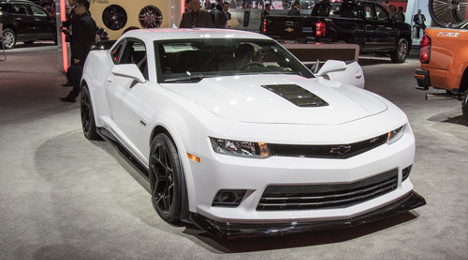
| Chevrolet Camaro |
Subaru Forester |
| Chevrolet Colorado |
Subaru WRX |
| GMC Canyon |
Toyota 4Runner |
| GMC Sierra |
Toyota Tacoma |
| Jeep Wrangler |
Toyota Tundra |
And if you take a look at the top-10 list of vehicles from the 2016 model year that KBB expects to retain the highest percentage of their sticker values, you probably won’t be surprised that eight out of the 10 are trucks or utility vehicles. What may surprise you, however, is that five of the vehicles expected to depreciate the least are from domestic automakers.
With four of those five being manufactured by General Motors, we asked Ibara if he was surprised.
“I think that people could be surprised by that. You don’t normally think of domestic brands when you think of vehicles that retain their value,” he said. “But I think that ever since GM went through bankruptcy they really have changed the way in which they approach the market. I sense, and I see, that they’re doing a better job of matching production to demand. They’re not overproducing vehicles and they’ve cut back on the volume of vehicles that they send into daily rental.
“I think these are all good signs but I guess, first and foremost, they’re making vehicles that are very appealing when you see the vehicles that have come to market over the last few years, like the Tahoe and like the Canyon and Colorado,” he continued. “You can see that the vehicles are much improved over what they’ve offered in the past.”
Those with a keen eye that follow KBB’s resale values will notice a first-time inclusion on the list: Tesla.
Ibara says that used-car transaction data for Tesla, up until recent times, was a bit hard to come by. But now that the situation has been rectified, as Ibara put it, KBB is noticing that Tesla’s Model S isn’t seeing as hard a hit in the used market as the rest of the electric vehicle segment is currently experiencing.
“The electric vehicle segment is very interesting,” Ibara said. “We are seeing EVs depreciate much faster than their gasoline-engine counterparts, where one exists. We think it’s a function of the federal tax credit that all these vehicles qualify for and we also think that the early adopters who are buying the electric vehicles want a new car. We don’t see a lot of early adopters gravitating toward used electric vehicles and as a result their depreciation is very steep, for the most part. The Model S is an exception to this rule.”
So what’s a “safe” segment to invest in, as a used-vehicle dealer? KBB expects for trucks and sport utility vehicles to remain popular for years to come — a trend that Ibara says started before oil prices dropped the favorable level they are today.
“We think it’s a trend that will be around for a while,” he said. “Oil is trading around $35 a barrel right now, and there’s really no sign that it’s going to end that streak any time soon. We’re thinking that consumers will continue to prefer sport utility vehicles and that will make them more desirable five years down the road.”
Here's the full list of KBB's 2016 Best Resale Value Awards by vehicle category:
KBB's 2016 Best Resale Value: By Vehicle Category
| SUBCOMPACT CAR: Honda Fit |
PLUG-IN VEHICLE: Tesla Model S |
| COMPACT CAR: Subaru Impreza |
COMPACT SUV/CROSSOVER: Jeep Wrangler |
| SPORTY COMPACT CAR: Subaru WRX |
MID-SIZE SUV/CROSSOVER: Toyota 4Runner |
| MID-SIZE CAR: Subaru Legacy |
FULL-SIZE SUV/CROSSOVER: Chevrolet Tahoe |
| FULL-SIZE CAR: Toyota Avalon |
LUXURY COMPACT SUV/CROSSOVER: Porsche Macan |
| ENTRY-LEVEL LUXURY CAR: Lexus RC |
LUXURY MID-SIZE SUV/CROSSOVER: Lexus GX 460 |
| LUXURY CAR: Lexus GS |
LUXURY FULL-SIZE SUV/CROSSOVER: Lexus LX 570 |
| HIGH-END LUXURY CAR: Porsche Panamera |
HYBRID SUV/CROSSOVER: Lexus RX 450h |
| SPORTS CAR: Chevrolet Camaro LT |
MID-SIZE PICKUP TRUCK: Toyota Tacoma |
| HIGH PERFORMANCE CAR: Chevrolet Camaro SS |
FULL-SIZE PICKUP TRUCK: Toyota Tundra |
| HYBRID/ALTERNATIVE ENERGY CAR: Lexus ES 300h |
MINIVAN/VAN: Toyota Sienna |
Amid quickly approaching holidays and the close of another year, the International Automotive Remarketers Alliance has a reminder for those looking for something new in 2016: Membership enrollment in IARA begins Jan. 1.
IARA is encouraging existing and prospective members to visit its website to take advantage of the January membership enrollment.
Current members simply click “Pay Your Membership Dues,” while new members click “Join IARA.”
More information can be found at www.iaraonline.org or by contacting executive director Tony Long at (865) 805-5954, membership chairman Tom Wright at (269) 217-3532 or emailing [email protected].