Veteran salespeople might remember how the process unfolded 25 years ago when a friend of a friend suggested the buyer go to a certain dealership. Then, shoppers looked over printed vehicle brochures, walked the lot with store personnel and spent the better part of the day finalizing the delivery.
Well for today’s dealership customers who might have just been born about two decades ago, smartphones and tablets have replaced pamphlets and online review sites have replaced phone calls or face-to-face recommendations. Still, the dealership, finance companies and what they all can do for consumers remain paramount to entire buying process.
Foresight Research’s recently published 2015 Dealership Immersion Report showed millennials — individuals born after 1980 — bring a different set of criteria to dealer selection. Foresight Research president Chris Stommel explained these individuals more often value a comfortable environment for browsing and shopping and are particularly concerned with price and value as well as financing.
But with many being first-time buyers, Stommel pointed out millennials less often choose a dealer based on prior experience with a particular dealership or salesperson. Instead, they use digital tools including the dealer website and online reviews.
“Perhaps most telling that auto shopping is evolving is the differences in what younger buyers seek from a dealership in their next vehicle purchase,” Stommel said.
“Much more so than Baby Boomers, millennials are open to online or ‘on-my-own-time’ options like virtual showrooms and online price negotiation,” he continued.
Perhaps millennials are in a position to haggle over vehicle price if they’re in a good financial position. But FactorTrust indicated that situation might not always be the case.
In fact, FactorTrust determined millennials make up the largest percentage of non-prime auto applicants at 43 percent. Of course as dealers know, getting the deal bought for someone with less than perfect credit can be a bit more complicated than for an individual whose credit score is in the high 700s or even 800.
But if the sales and financing processes go well for millennial customers, both dealerships and their network of finance companies could have a customer for a long time. Foresight Research’s report pointed out that more than three out of five new-vehicle buyers reporting their experience at the dealership highly influenced their recent purchase decision.
“While millennials are certainly digital-savvy buyers overall, for more than half of them this is their first new-car purchase and they are just as reliant on dealers as older buyers,” Stommel said.
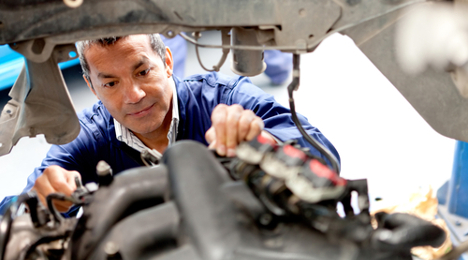
Are you seeing a lack of talented techs come through your doors? Many dealers are; the industry is buzzing about a shortage that may affect your bottom line for years to come.
Mid-career mechanics are retiring, yet fewer schools are able to teach the advanced skills that today’s cars require, and there remains a stubborn stigma that the career doesn’t pay well.
The result is an industry-wide problem of too little supply and too much demand: The U.S. Bureau of Labor Statistics expects the industry to add 237,500 new jobs through 2020.
That’s a 30 percent growth rate in demand, and you know what that means: prepare to offer higher hourly rates for highly skilled and low-level techs, when you’re lucky enough to find them.
You’ll be competing against other dealers for talent, and if you can’t staff your bays your shop may be forced to turn away jobs.
Add in the damage done to your CSI score and the retention problem that can happen when barely qualified techs take on complex jobs…and it’s easy to see how profitability can suffer.
Here are three effective ways to start taking matters into your own hands:
1. Invest in your local education programs: Partner with your local high school or trade school and help them create programs that attract and produce top talent. One of the best examples of this strategy is the Ford Future Techs program launched by Western New York Ford dealers. Providing resources to schools so students in auto repair classes can work on modern technology at younger ages is a great way to add value to their automotive education. Add even more value with an internship program that exposes students to the real working environment of your dealership. Consider offering a signing bonus to those students who commit to working for your dealership for a set amount of time after graduation.
2. Offer compelling incentives: Education costs and the need to shell out $5,000 for a toolset is a significant barrier to entry into the tech field. Make it easier for potential workers by off-setting those costs. For example, we’re seeing some dealerships offer paid in-house training programs that guarantee a job and a complete toolset upon graduation. Graduates must work for the dealership for at least one year; anyone leaving early must pay a prorated amount of the training costs and return the tool set. A program like this is an investment: for that initial investment, you gain a workforce trained to your exact specifications.
3. Be flexible: The rise of flexible work schedules spans all industries and it can be an effective way to recruit and retain auto techs as well. Many dealerships are moving to a compressed 4/10 schedule (four 10-hour days per week) for techs; dealerships that have done it report happier techs, an edge over the competition when it comes to hiring, and increased productivity. The biggest challenges are coordinating the tech rotation and ensuring management is on top of keeping lifts clear when the next tech shift starts.
Your dealership will always need skilled auto techs. It will benefit your bottom line, productivity and CSI to address the impending shortage head-on. By encouraging future techs to pursue the career path, offering attractive incentives, and structuring your shop for the best work balance, you can build a highly trained and motivated workforce that lasts for years to come.
This column first appeared on Dealertrack's Transforming Automotive Retail blog, which can be found at blog.dealertrack.com.
The TPC Management Co. put three more sessions in the books this summer for its Auction Academy aimed at providing continued education for auction industry professionals.
The academy will host its next and final event for 2015 as a joint-class session in Detroit this fall.
The first of the three summer sessions was hosted in mid-July in Spokane, Wash., the Auction Academy’s fourth annual trip to the location. The academy’s Class 4 Group participated in DAA Northwest’s Rock & Roll Sale along with interacting with key managers at the auction.
Len Roll, the auction’s manager of reconditioning shops, led the first day, focusing on auction operations along with a tour of the auction facility. Lecturers for the academy’s students included Greg Mahugh, the auction’s co-owner, and Mitzi VanVoorhis, the auction’s marketing manager, as well as an interactive exercise led by Gonzaga University professor of leadership studies Dr. Shann Ferch.
The second day included a discussion with Dave Woods, director of remarketing for Harley Davidson, followed by a Harley auction at DAA Northwest. The day ended with the Rock & Roll concert headlined by Heart following an industry overview by Charlie Vogelheim and an outline of auction technology by Scott Finkle, president of Auction Edge.
“We cannot thank Bob McConkey, Greg Mahugh and the entire staff of DAA Northwest enough for once again allowing the Academy to participate in their largest sale of the year,” said Penny Wanna, the academy’s vice president of administration. “It is amazing to see how the team is able to handle record breaking consignment volumes and so graciously accommodate us being right in the middle of all the auction action for the entire week.”
The academy hosted its first “Seminar Series,” later in July, featuring a Digital Manager’s Session in Chicago. The single-day session featured several presentations on various technology platforms, followed by open discussion on the challenges and opportunities of operating their businesses.
“That afternoon was the single most dynamic discussion session I have ever witnessed in our industry,” said Pierre Pons, the academy’s chief executive officer. “I am convinced that due to the interactions of that afternoon, the state of online sales for independent auctions has been enhanced dramatically.”
The academy’s Class Group 3 went to Brasher’s Sale Lake in late August for an auction tour and several discussion sessions. One academy student, Wanda Jowers, a 23-year employee of Carolina Auto Auction, commented on her experience.
“In all my years at the auction I thought I had seen just about everything,” Jowers said. “But over the course of my Academy experience, which allows me to visit so many other facilities around the country, I have picked up something new each and every time. The Salt Lake City session was my favorite to date — but quite honestly I have loved them all.”
For more information on the Auction Academy, visit its site here.
It’s that time of year again: the next generation is headed back to school and their variety of before- and after-school activities.
Parents, family and friends looking at upgrading their vehicles will have this in mind this time of year, so Steve Halloran, the chief editor at CarGurus, has announced his company’s recommendations for them to help ease their guesswork. Dealers can gain a few tips, as well.
“For families with school-age children, finding a vehicle that balances safety and reliability with space, comfort and convenience is important,” Halloran said. “To eliminate the guesswork for shoppers, we’ve identified the vehicles that meet these specific criteria and also offer bonus features that will make time spent shuttling the kids a little more pleasant.”
According to a recent online poll by CarGurus, 38 percent of car shoppers with school-aged kids said they spend between 30 minutes and one hour each day with kids in their car. A third said that time was stretched over an hour.
When a customer comes onto the lot, it may be worthwhile to ask if kid-hauling is part of their regular activities. Here’s a list of vehicles that may be appealing to them, according to CarGurus.
Midsize SUVS
- Mitsubishi Outlander (2016 MSRP starts at $22,995)
- Toyota Highlander (2015 MSRP starts at $29,765)
- Ford Explorer (2016 MSRP starts at $30,700)
- Chevrolet Traverse (2016 MSRP starts at $31,205)
- Infiniti QX60 (2015 MSRP starts at $42,400)
- Acura MDX (2016 MSRP starts at $42,865)
Minivans
- Kia Sedona (2016 MSRP starts at $26,400)
- Toyota Sienna (2015 MSRP starts at $28,700)
- Honda Odyssey (2015 MSRP starts at $28,975)
Large SUV
- Chevrolet Suburban (2016 MSRP starts at $49,700)
According to CarGurus, this list was compiled based on currently available models with a focus on safety records, cargo storage space, seating capacity and availability of technology features.
For more information about CarGurus, visit its site here.
Chase Channell was the owner and operator of his own paint store in West Virginia when he happened to bump into a man at a downtown restaurant who was involved in automotive marketing.
Channell, who opened the Elkins, W.Va., paint store at age 18, chatted with the man, who was in town for a tent event car sale.
A business owner himself, Channell decided to try his hand in the auto market.
Initially, he just wanted to learn the car business and buy a store.
“I thought it’d be real simple,” said Channell, one of the honorees in the inaugural Remarketing and Used-Car Industry's 40 Under 40. “So, the passion was to own my own dealership. And then when I got in the car business, I realized, ‘Wow, this isn’t like the paint business.’“
While he noticed similarities between the two retail worlds — like working with manufacturers, for instance — the car business had a lot more complexities than Channell imagined.
“In the paint business, you order a can of paint, they come in (and say), ‘I want it this color,’ and you sell it to them,” he said. “In the car business, there’s a lot more between fixed operations and understanding variable (operations), and finance and the insurance side of it.”
But it didn’t take long for Channell to excel.
At age 21, he started as a salesperson at a Honda store in Alpharetta, Ga. Within 45 days, Channell said, he was the top salesperson, so the store moved him into a finance manager role.
After a year in finance, Channell went to work for the Rick Case Automotive Group, starting out as a finance manager at Rick Case Kia in Georgia. He held that role for three years before becoming the lead finance manager at that store.
Channell then earned a promotion and became the used-car director for Rick Case’s Hyundai store in Atlanta, which is the flagship store for the Atlanta platform and a “proving ground” for future general managers and general sales managers.
After six months and used-car records there, Channell said, he got his shot. Rick Case’s director of operations for Georgia, Channell said, asked him to be general sales manager at the Hyundai Roswell store, which Channell described as a rather challenging store to turn around.
“And that was really the turning point for me,” Channell said. “I remember starting there on a Saturday, and Day 1 we sold 22 cars, which was an all-time record for most cars they’ve ever sold in a day. And that was with the same eight sales guys.
“We didn’t change anything. We didn’t do more advertising; we didn’t do anything,” he said. “It was just a little passion, a little enthusiasm and a little know-how, and we were able to turn that store around, and we took it to break an all-time, anytime record in new and used cars for Hyundai Roswell. And the store reached sales-efficiency with the manufacturer for the first time in the 10 years we’d owned it.”
After 13 months as the GSM, Channell got the chance to become GM at Rick Case Kia, which is where he started with the organization. Channell, who said he enjoys being a “turnaround king,” has held that role since October.
“I like a challenge. This store had a lot of challenges. Our CSI was under, the store wasn’t profitable. They looked at me the day they offered me the deal and said, ‘Chase, I don’t want you to make any mistake: this store is not doing well … you don’t need to tip-toe around and be afraid of making any changes. You know how to do it, you know the deal. Be aggressive, make the changes, and let’s get this thing going in the right direction,’“ Channell said, “and that’s what I did.”
What Channell also did, from Day 1, was to jump feet first into the business.
When he first started selling cars, Channell said he was selling cars seven days a week, from open to close. Then he would go home, conduct online research and watch YouTube videos to learn the best practices for selling cars.
Or as he put it, it was “immersion in the business.”
Channell also lauds the mentors he has had — leaders like Kevin Kolb in the Rick Case organization and its president and chief operating officer Jack Jackintelle.
“Those guys really wrapped their arms around me,” Channell said. “I think they saw something special in me, and said, ‘This guy reminds me of myself,’ and they really helped me out in many, many ways.”
Editor's Note: This is one of several spotlight features included in Auto Remarketing's inaugural 40 Under 40. Stay tuned for more.
NADA University Online is hosting a free webinar on Wednesday titled, “The Roadmap to Becoming a Millionaire Car Salesman.”
The 30-minute session presented by Sean Bradley from Dealer Synergy will highlight the eight ways to sell a vehicle and maximize everyday sales opportunities.
“Bradley will cover how to make as much money as possible and how to take control of a dealership's financial landscape through projection and forecasting tools,” organizers said about the free webinar that begins at 1 p.m. ET.
Dealership personnel can register for the webinar here.
Auto Remarketing has launched a new series this year called “Consignor Connection,” in which we catch up with a leading remarketing executive at a different consignor each month.
In a Q&A format, we talk about best practices, auction industry trends and more. The latest in this series features Jeannie Chiaromonte, vice president/national remarketing manager at Bank of America.
Auto Remarketing: How is consignment volume trending this year for Bank of America and what have been some of the stronger performing segments for you?
Jeannie Chiaromonte: Bank of America's repossession volumes have been steady year-over-year. We are expecting a slight uptick in volume going into next year on the auto portfolio. That said, we are starting to see a vintage change in our auto portfolio as our average vehicle in the lane is a more recent model year.
The bank is currently utilizing our own brand recognition for the certification program, not having yet adopted the NAAA certification program. We have brand certification program consisting of our 14-day, which is mechanically sound and as close to front-line ready as possible.
Our seven-day certification program now consists of mechanically sound vehicles with no severe collision damage. Interestingly enough, we changed our seven-day program years ago and widened the cosmetic portion, allowing for some minor collision damage which would be quick and easy for the buyer to fix.
Both programs are based with model-year as well as mileage criteria. Our seven-day certification program performed better this year as the buyers were making those needed cosmetic repairs.
The continued focus at Bank of America is our customers' satisfaction and getting the most for our customers' vehicles, thus reducing their bottom line deficiency balance owed. Equally important on the back end is our buyers in the Bank lane has the confidence they can return the vehicle within the timeframe allowed in our certification programs.
We are focused on the buyers' needs, thus drawing them to our lanes.
I would be remiss not to mention our Specialty Portfolio consisting of motor home, fifth wheels, etc., and marine product. With the limited supply of marine product in the wholesale market, our boat values have remained in demand. We also experienced a lift in values for our diesel motor home segment.
AR: How has the increase in volume, particularly off-lease units, impacted the auction industry in 2015?
JC: With an increase in late-model vehicles in the lanes, buyers have the option to be selective. Increased inventory in this segment created downward pressure on our 14-day certified products —basically a retail-ready vehicle, Grade 3 and higher. More online sales and upstream selling puts product in dealers' hands before auction sales in the lane.
We will rely on our business partners to deliver the continued level of service during these times, which may present a challenge with increased volumes, while we continue to focus heavily on days to sell.
The key to this being a continued success for all is communication. Communicate our needs as well as the auctions to communicate theirs. Being a national consignor, understanding where the vehicle saturation will be. Online buyers will continue to be critical to the success during this time, increasing bidding, thus boosting prices.
AR: How does your company strike a balance when it comes to choosing how your cars are sold, be it auction sales, online sales, open/closed sales, etc.?
JC: Bank of America has a varied mix of year, make and model vehicles. Due to our entire portfolio consisting of repossessed vehicles, we opt for physical auction sales (open sales only) that also have the Internet sales channel available on sale day. We post all no sales from the auction lanes on the Internet awaiting our next sale date often utilize event sales.
The Bank has had some success in exposing our vehicles to buyers in other markets by offering product via "postcard" on sale day. While the collateral is not physically at the sale, it is offered via condition report and pictures in a virtual format. We have a Bank representative attending all sales in person or rep on-line for lower volume sales if needed.
AR: What importance does Bank of America put on condition reports when selling in the wholesale lanes?
JC: The industry has come a long way when it comes to condition reports. As the newest president of IARA (International Automotive Remarketers Association), myself as well as all the volunteers on our board have found the importance in helping remarketers voice their concerns and working with our auction partners to ensure we all strive for excellence.
As most consignors do, Bank of America relies heavily on the quality of condition reports including quality control assessments in our presale review. Our remarketing process begins with the information and pictures documented on condition reports. Accuracy is key! Equally, we rely on our auction partners to update information once identified or when repairs are completed.
Our goal is to provide the most accurate condition report reflective of vehicle condition and accurate announcements at time of sale. Full disclosure to the dealer is the Bank's ultimate goal to ensure their satisfaction and to reduce the likelihood of arbitrations.
While the physical auction continues to be our first most source of disposal, the internet buyer continues to play a critical part in sales and well as playing a huge part in increased bidding. Might I add, with Auto Grade implementation at all of our auction sites, we are finding the importance of Post Recon Grade updates, as dealers have become more familiar with the industry's grading scale. Many buyers now use the Grade as part of their criteria to source product.
AR: What have been some of the biggest challenges (and opportunities) in the auction market for consignors this year?
JC: While speaking from a repossession only consignor, taking possession of collateral without keys has been a huge concern. No-keys on repossessions have caused delays in transporting collateral and obtaining miles for title work when required.
Since our focus is on days to sell, as most, this continues to be a hurdle in addition to "one off" transport assignments while trying to reduce transport costs. Vehicles under warranty are a small concern in ensuring they are fixed quickly if need be. Recalls have had little impact on us at this time however will continue to remain a watch item.
As a consignor that does a good amount of reconditioning, there continues to be opportunities in condition report writing with respect to consistency. Once reconditioning is completed it is critical for timely updates to the condition reports as well as new and accurate grade values being updated in the system of record.
Target marketing for consignors that have smaller portfolios is another. With a smaller portfolio, trying to determine the best run time and lane along with which weeks to run are a challenge being a consignor who reps in person.
Working diligently with our business partners on the repossession side, transporters and the auctions has been and will continue to be the key to the continued success for us all. Timely communication is a critical component for not just the consignor's success but the industry's success.
Why do you love selling cars?
This is a question I love to ask dealers. Usually, if I’ve had a chance to get to know them, I can guess. It’s usually one of these four things:
- The thrill of the chase. The do-or-die, make-it-or-break-it lifestyle of a salesperson is an exciting way to live.
- You make more when you sell more. Of course, you make less when you sell less, too, but that’s all in the lifestyle of a salesperson.
- You love cars. Who better than you to help someone find the right vehicle for themselves or their family?
- You love people. This was my reason when I was a salesman. And if you were there for any of my Catch and Keep customer strategy presentations this year, you were probably nodding along with me. Either way, if this is your reason, we should talk; we’d get along well!
My Catch and Keep customer strategy is all about people because the automotive business is all about people. Yes, technology has changed. Shopping is different, navigation is different, communication is different.
But that really amounts to a big change in the people we sell cars to. And I wanted to speak directly to today’s dealers about today’s customers. I wanted to arm all of you with all the insight I can, so you can be successful in a today that’s very different from yesterday.
Long-term thinking in a short-term world
The first pillar of Catch and Keep is that you have to know your customer — this means every car shopper and car owner you interact with. You need to build a modern database that tracks the relevant details about modern customers, and segments them accurately so you can communicate more effectively. That’s what Pillar 2 is all about: right message, right time, right channel. Which brings us to today’s topic, Pillar 3. It’s time to commit.
Commitment is a tough term for anyone who knows what today’s customers are like. They buy a car from one person, have their service done somewhere else and switch it up again when it’s time to trade in. Many dealers think they’re lucky to get one sale out of anyone; the idea of repeat business feels a little too lofty. But it really shouldn’t be, if done right. Try to think about businesses that are successful long-term by only living off new customers. There probably aren’t many.
Let me tell you about a dealer I work with, Scott Rainville of Apple Automotive Group in York, Pa. Nearly a quarter of his customers, 22 percent, have been customers for a minimum of 18 months. In car terms, that’s a long time!
How does Scott do it? How do you keep customers coming back when they always have options, and they always go with the best one? You make sure your dealership is always the best option for every customer. When you know your customer (Pillar 1) well enough to get the right message to them every time, in the right way (Pillar 2), you can absolutely hang in there for the full lifecycle. That means you get the vehicle sale and the add-ons. You get a good customer review that leads to referrals.
You get their maintenance throughout ownership, you get the replacement parts business and then, sure enough, you get a good trade-in or at least another vehicle sale.
So, how do you make Pillar 3 possible at your dealership? It’s surprisingly simple:
You change your mindset
“The lifecycle mindset is something dealers have to mature into,” Scott told me. And he couldn’t be more right. As we all know too well, there’s a lot of pressure to sell every day, so today often feels like the most important day of your career. That feeling is even more intense for dealers who are young in their careers, who haven’t yet gained the perspective it takes to see the value of repeat business. But repeat business is the only way to grow your dealership successfully, so the mindset shift is critical.
Scott and his team knew they had a big hurdle to clear with their sales team, so they set up some advanced training on how to use their technology to nurture a more profitable customer and a longer customer lifecycle. Their CRM logs evolving communication preferences, service history … everything that illustrates the experience their customers are having with their vehicles and the likelihood of any upcoming need they might have.
And their employees are trained to know their customers well enough to identify additional opportunities beyond the offer that’s currently on the table. Some things they might do, for example, are meet and greet customers in service, understand their customers’ current mileage and vehicle wear and tear, stay up on any of their customers’ lifestyle changes, as well as alert customers to current OEM offers that might be to their advantage.
You tune in
To help build trust, which is crucial in any committed relationship, Apple’s dealers are encouraged to interact with their customers no matter where the customers are or how they prefer to communicate. That means the dealers are trained to create and maintain their own social media identities. On Facebook, Twitter and beyond, they can respond to customer questions and comments quickly, and learn a great deal about what happens with buyers between big purchases.
There’s something to be said for a dealer who can talk directly to his customer base while they’re already online, where they make most of their biggest purchase decisions. If you’re available at critical moments, you become memorable, and that’s what you want. You make yourself easy to find and easy to talk to, and you’ll be the easy choice when they’re ready to do business.
You widen your territory
Here’s an aspect of modern technology that dealers should use to their advantage and often don’t: The Internet makes geography irrelevant.
Say you have a solid digital presence — a user-friendly website with strong SEO and complete listings that include great photos. It’s very possible you’ll attract customers from cities and towns you’ve considered outside of your region. You might even sell a car to someone who flew to get to you — someone who did his homework and found the right car for the right price on your lot instead of any of the lots closer to home.
Now, with a one-and-done mentality you might think, “This is great! I made a sale today. I’m pretty encouraged that this guy came so far just to buy from me. But I’ll probably never see him again. Moving on!”
Not so fast. Long-distance customers still have long-term potential. When you’re selling with a customer lifecycle mentality, Mr. or Mrs. Out-of-Town Buyer gets classified in your database as an out-of-towner. That means you don’t bother him or her with things like oil change coupons. But you do reach out to him or her with news and updates about the vehicle and anything else that shows you remember and appreciate them and their business.
Here’s how this leads to repeat business: Give out-of-towners a good experience, and they’ll tell their social networks. They’ll give you a good review that people can read, again, in any region. They’ll consider buying add-ons from you because they already trust you. And, when it’s time for the next vehicle purchase, they’ll be back. You’ve just landed yourself loyal customers in another state. Plus, you never know who they know or who they’re related to that might just live in your community or around your dealership.
You take the plunge
Pillar 3 might be my favorite, because frankly it’s where you can really experience a difference in your work and your results — no matter who you are or why you do what you do. The thrill-seekers will have that many more opportunities to chase. The money-minded among us will obviously like how much more money they make in a lifecycle compared to a single sale. If you love cars, or just love selling good things to good people, you’ll have more of that. And it will be more rewarding.
If you made it this far without the fear of commitment overcoming you, I have one task for you: Find out what your number is. Figure out how many of your customers have been with you — doing actual business with your dealership in any capacity — for longer than 18 months. Think about what kind of training you need to do with your team to move people into a lifecycle mindset. And then get ready to talk about how to tie it all together and transform your dealership when I’m back right here with Pillar 4!
Sean Stapleton is the vice president of sales and marketing for VinSolutions, a Cox Automotive company.
Perhaps vehicle buyers on your lot aren’t interested in every single new bell and whistle a model can have nowadays. Or store personnel isn’t explaining how the technology works thoroughly enough at the time of delivery.
Those findings and more are part of the J.D. Power 2015 Driver Interactive Vehicle Experience (DrIVE) Report, which found automakers are investing billions of dollars to put technologies in their cars and light trucks that are not being used by many of the owners of those vehicles.
The 2015 DrIVE Report measures driver experiences with in-vehicle technology features during the first 90 days of ownership.
The report released this week indicated that at least 20 percent of new-vehicle owners have never used 16 of the 33 technology features measured. The five features owners most commonly report that they “never use” are:
—In-vehicle concierge: 43 percent
—Mobile routers: 38 percent
—Automatic parking systems: 35 percent
—Head-up display: 33 percent
—Built-in apps: 32 percent
J.D. Power also discovered there are 14 technology features that 20 percent or more of owners do not want in their next vehicle, including Apple CarPlay and Google Android Auto, in-vehicle concierge services and in-vehicle voice texting.
Among Gen Y consumers involved in the report, J.D. Power found the number of features unwanted by at least 20 percent of owners increases to 23, specifically technologies related to entertainment and connectivity systems.
“In many cases, owners simply prefer to use their smartphone or tablet because it meets their needs; they're familiar with the device and it's accurate," said Kristin Kolodge, executive director of driver interaction and HMI research at J.D. Power.
“In-vehicle connectivity technology that’s not used results in millions of dollars of lost value for both consumers and the manufacturers,” Kolodge continued.
Among all owners, the report indicated the most frequently cited reasons for not wanting a specific technology feature in their next vehicle are “did not find it useful” in their current vehicle and the technology “came as part of a package on my current vehicle and I did not want it.”
In addition, the report mentioned owners who say their dealer did not explain the feature have a higher likelihood of never using the technology.
Furthermore, features that are not activated when the vehicle is delivered often result in the owner not even knowing they have the technology in their new vehicle.
Kolodge noted that the technologies owners most often want are those that enhance the driving experience and safety, which are only available as a built-in feature rather than via an external device. In-vehicle technologies that most owners do want include vehicle health diagnostics, blind-spot warning and detection and adaptive cruise control.
“The first 30 days are critical. That first-time experience with the technology is the make-it-or-break-it stage,” Kolodge said. “Automakers need to get it right the first time, or owners will simply use their own mobile device instead of the in-vehicle technology.”
Because the first few weeks of ownership are so critical, dealerships play the most important role in helping owners get off to a good start with the technology in their vehicle, Kolodge noted.
“While dealers are expected to play a key role in explaining the technology to consumers, the onus should be on automakers to design the technology to be intuitive for consumers,” Kolodge said. “Automakers also need to explain the technology to dealership staff and train them on how to demonstrate it to owners.”
Safety and repair costs
J.D. power insisted use of in-vehicle technologies has implications beyond the auto industry.
For example, analysts mentioned the insurance industry is closely tracking automotive technology for safety and financial purposes. Insurers are concerned that difficult-to-use technology may distract drivers and cause an accident.
Using smartphones instead of in-vehicle technology also creates safety issues, according to J.D. Power.
Additionally, in-vehicle technology can significantly increase claims costs for vehicles damaged in an accident.
“While some technologies, such as lane-departure warning, are making vehicles safer, the insurance industry is very concerned about the driver-distraction hazards caused by some of the other technologies," said Chip Lackey, senior director of the insurance practice at J.D. Power.
“In addition, technology drives up the repair and replacement costs. A slight bumper scrape that would normally cost a few hundred dollars to repair can catapult a claim into thousands of dollars when a park assist camera or other sensors are damaged.”
The 2015 Driver Interactive Vehicle Experience (DrIVE) Report is based on responses from more than 4,200 vehicle owners and lessees after 90 days of ownership. The report was fielded in April through June of this year.
The National Automobile Dealers Association through its online outlet NADA University updated its guide to the Family and Medical Leave Act in light of the June 26 Supreme Court decision legalizing same-sex marriage in all 50 states.
NADA officials explained spouses now qualify for leave under the Family and Medical Leave Act (FMLA) if their marriage was legal at the time and place of its celebration. They added the FMLA applies to almost all U.S. dealerships.
To access the revised guide, sign in to www.nadauniversity.com and search for L33. This guide is for the use of dealers, department managers and human resources staff.
All guides are complimentary to NADA/ATD members.