Used-car dealers won’t have to worry about a federal requirement of bearing the burden of fixing recalls before being allowed to resell used vehicles. At least, for now.
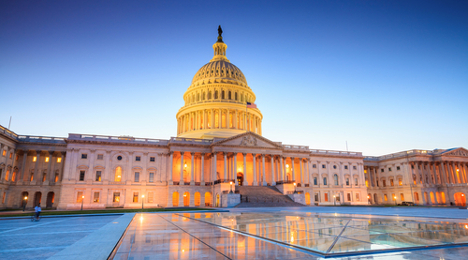
This is in light of a Senate Committee on Commerce, Science, and Transportation mark-up meeting on Wednesday that voted on several legislative actions attempting to alter operations in various areas of the United States’ transportation sector, including highway, rail and port-related issues.
While many areas of transportation in the U.S. will be affected, the key takeaways for used-car dealers are as follows.
The committee passed S. 1732, a multi-year transportation bill including multiple amendments that the committee says offers critical regulatory and consumer protection reforms. As we reported a few days ago, the Republican-driven bill will directly affect franchised dealers and car rental companies by requiring them to provide consumers with notification of open safety recalls.
The Democratic amendment proposed by senators Ed Markey (Massachusetts), Bill Nelson (Florida) and Richard Blumenthal (Connecticut) that would require used-car dealers to repair recalled vehicles prior to their resale was shot down by the committee.
That same amendment would have also required dealers to check for and fix safety defects subject to open recalls, with customer permission, when such vehicles were taken in for routine maintenance. Per the specific wording of the amendment, the auctioning of used-vehicles would be exempt from repair requirements.
Sen. John Thune, the Republican senator from South Dakota and chairman of the committee that sponsored the bill that passed showed his hesitations toward the Democrat-sponsored amendment that would specifically require used-vehicles to be repaired prior to their sale by a dealer.
“Just let me say in response that requiring used-car dealers to remedy any open recall prior to sale could have unintended consequences, negative consequences, for consumers in the used-car market,” Thune said. “Cars would sit on used-car lots for potentially long stretches of time before the used-car dealers could get them repaired as used-car dealers would not be a recall-repair priority for franchised dealers.
“Used-car dealers would also likely be reluctant to accept trade-ins or otherwise purchase cars from consumers with open recalls even from minor defects because they would have to repair the car before it could be resold. I appreciate the intent of this amendment, and I’m open to continuing to work on the issue, but I don’t think we have addressed the potential implementation issues so I’m going to vote no at this time and would urge my colleagues to do the same.”
Washington-state Democrat Sen. Maria Cantwell spoke in defense of the legislation, bringing into the conversation the lives that have been lost due to used vehicles sold with unrepaired recalls.
“New-car dealers cannot sell vehicles under recall, but used-car dealers can,” Cantwell said. “So this presents a real danger to the public. In fact, several individuals who died from exploding Takata airbags purchased used cars that hadn’t been fixed. So consumer safety requires corporate accountability — this would also have accountability from third-party vendors, and I think this amendment would help achieve that.”
At the closing of the mark-up session, Blumenthal addressed Thune and lightly expressed his dissatisfaction with the speed of the processes involved with various issues related to the various amendments he tried to get passed.
“Thanks Mr. Chairman. I want to join in thanking for adopting the measures that you did and express the hope that we can reach agreement on some more,” Blumenthal said. “I think that there is always a tendency to articulate what happens here as overly simplistic terms. Essentially I think that we’ve taken some steps, they strike me as baby steps, in the right directions when we should be making giant strides given the absolutely gut-wrenching, heartbreaking stories we’ve heard in this very room about the real-life consequences of safety lapses and gaps in our present laws. I’m hoping we can correct some of them. Thank you.”
Auto Remarketing has launched a new series this year called “Consignor Connection,” in which we catch up with a leading remarketing executive at a different consignor each month.
In a Q&A format, we talk about best practices, auction industry trends and more. The latest in this series features Nate Lattimer, vice president of remarketing, sales and operations at Enterprise Holdings.
Auto Remarketing: How does EHI strike a balance when it comes to choosing how your cars are sold, be it auction sales, online sales, open/closed sales, etc.?
Nate Lattimer: At Enterprise Holdings, we execute a multi-channel sales strategy which predominately uses two sales channels. While the majority of our units are sold directly to our franchise and independent dealership partners, it can vary from location to location. With more than 6,000 neighborhood and airport car rental locations across the country, we rely on our local operations team to guide our remarketing efforts. This decentralized approach enables us to maximize all of the opportunities in the local markets where we operate.
New technology is also playing an increasingly important role in our sales strategy. With more and more dealerships seeking ways to increase efficiencies, many prefer to shop and compare vehicles online. Today, we have a robust sales team comprised of more than 350 dedicated account managers who consistently update our inventory on a mobile platform, enabling our customers to browse and purchase our vehicles seamlessly.
Local auctions remain an important component of our remarketing strategy, as well. Both in-lane and online opportunities provided by our auction partners allow our vehicles to be showcased in front of as many buyers as possible. It's really a multi-faceted approach.
AR: What are some of the biggest challenges (and opportunities) on the rental car side of the auction market for consignors like EHI in 2015?
NL: One of the biggest challenges we face is overcoming misconceptions regarding rental cars in the used-car marketplace. Several of our recent customer surveys have reinforced that the perception exits today. In reality, these used vehicles receive much more care than the average consumer-owned car.
At Enterprise Holdings, we offer a diverse range of late-model, well-maintained vehicles to reflect the preferences of our consumers. We feel that most of our late-model products we bring to the market are low mile, serviced regularly, in great condition and provide a great deal of diversity with regards to make, model and trim level.
The value of used rental vehicles isn't consistently touted in the used-car space, but ensuring this message reaches all buyers is important as more rental vehicles for dealer inventory become available this year.
AR: Looking at multiplatform buying and selling in the wholesale space, what are some of the benefits you see as a consignor, and what are the costs?
NL: As a consignor, we appreciate the opportunities that multiplatform listings can provide. We benefit from increased exposure to a wider range of potential buyers. Dealers, in turn, are able to see more vehicles and make a more informed purchasing decision. Ensuring that more buyers are given the opportunity to view, compare and bid on vehicles creates a "true marketplace," providing a more stable and consistent used-car market that benefits everyone.
There are still some challenges with multiplatform buying and selling, but we are optimistic that an efficient solution for the industry will be created. Once buyers and sellers become more efficient in their processes, we believe stronger residuals should result from this platform.
Enterprise Holdings sells at essentially all of the Manheim, ADESA and the independent auctions throughout the U.S.
When planning transport of pre-owned vehicles, a little planning can go a long way in saving you time and money. Just knowing about how various parts of the supply chain operate can give you the insights to help optimize vehicle transport.
The dispatchers and customer service reps at vehicle transport companies can be a wealth of information in this regard. Below are just a few of their suggestions that can help you save transportation costs and transit time.
Dealer-to-dealer trades
When planning a trade with another dealership, keep in mind their hours of operation. Some dealerships are not open on Sundays, and some don’t accept weekend deliveries even though they are open for business. You could lose up to two days when dealerships don’t have weekend pickup or drop-off times. Knowing that in advance can help you plan for optimal timing.
Auction pick-ups
When requesting vehicles be picked up at an auction, make sure your transport provider has the vehicle gate pass/gate release. Auction companies will not release vehicles to a carrier without that documentation. Valuable time is lost when a driver has to wait for hours to get the gate pass. As many of them have other vehicles to pick up or deliver, they may not wait. Some transport providers will not dispatch a driver until they have a gate pass to issue.
Auction sales
Sale prices of pre-owned cars can change rather quickly. A little planning can help ensure that vehicles arrive at the auction in time for the sale. Capacity constraints also exist in the pre-owned car market, and rushing cars to an auction at the last minute can increase transport costs and the risk of not making the sale, causing vehicles to sit at the auction until the next sale.
Experienced dispatchers generally have a good overall view of road construction, traffic flow, weather conditions and other factors that can impact delivery times, and will provide you with their recommendations on the best ways to ensure timely delivery.
Combined purchasing efforts
When possible, combine purchasing efforts for a group of dealerships in an area to save time and money. A driver would rather have a few stops in one day in a metropolitan area than have to drive empty miles between auctions and dealerships over a number of days.
Truckload rates are better than single-unit rates. Look for opportunities to partner with other nearby dealerships to share the load.
“Don’t be afraid to ask questions,” says Alisha Bray, senior dispatcher with MetroGistics. “There are some special considerations depending on what time of year it is, and your transport company should be able to assist you in making the best decisions to get your vehicles to their destinations on time and in good condition.”
Martha Garcia-Perry is Director, Account Management with MetroGistics. More information can be found at www.metrogistics.com.
Earlier this month, Larry H. Miller Dealerships announced a platform to sell car parts online directly to consumers.
This type of play is something IDDS Group chief executive Max Zanan calls “a great move” that more dealers should follow.
Selling parts online allows a dealer to broaden the reach for this part of their business and open a new revenue stream, he said. And it’s also just one of several service strategies successful dealers are employing to compete with independent repair facilities and boost their fixed operations business.
Zanan is the co-founder and chief executive officer of IDDS, which advises dealerships and various auto personnel while also providing F&I products, services and training.
In an interview with Auto Remarketing last week, he said he finds parts and service to be “a tremendous revenue builder” that requires certain fine-tuning to work.
“There are so many different things that a car dealer can do, but first and foremost, they need to concentrate on customer retention. So, the dealers that are extremely successful with parts and service start their process in sales,” Zanan said.
“When the customer actually buys the car, the dealership sales department introduces the customer to the parts and service department where they physically meet the service manager and the parts manager and the service advisers,” he continued. “And they get accustomed to this new environment.”
Zanan also said that successful dealers often set up a “clinic,” where a new-car buyer comes back to the dealership, say, a couple weeks after his or her purchase. The dealerships goes over a few “basic questions” and helps with some of the learning-curve gadgets in today’s vehicle like navigation and satellite radio.
“By having those clinics, the dealers train their customers into coming back to their facilities,” he said.
Successful dealers in the service lane, he said, also provide the perks when it comes to nice service facilities and waiting areas. That includes business centers and offering everything from loaner cars to manicures.
“What they’re doing is they’re trying to cater to today’s buyer,” Zanan said.
And there are often two misconceptions that today’s buyer might have about taking their car to get serviced at the dealership, he said.
“First, it’s going to be too expensive, and second it’s going to be too inconvenient,” Zanan said.
To combat those perceptions, “the most progressive dealers” offer prices that are competitive to the independent repair facilities and provide services (like the aforementioned loaner cars and business centers) that one might not find at those independent service shops.
Many dealers are also promoting convenience and cost-effectiveness through the Costco Auto Program, which said last week that it saw nearly double the demand for its parts, service and accessories benefit during June.
That’s compared to the daily average recorded by the company from January through May of this year. Costco launched the parts/service/accessories benefit in its auto program in the spring of 2011 to provide a solution for its members who want to maintain and accessorize their vehicles.
The number of dealerships offering the discount has doubled since the program’s inception, while the average daily usage in the first half of 2015 is more than four times larger than that recorded in 2011.
The discount is available nationwide for application to any vehicle in a Costco member’s household at participating Costco Auto Program dealership service departments.
And the “vast majority” of participating Costco Auto dealers are taking advantage of the parts/service program that is offered to members, says executive vice president Rick Borg.
The process is relatively simple: According to the company, the Costco member (i.e. the consumer) goes to CostcoAuto.com to print the benefits coupon. He or she is matched to a certain service center, and calls that center to schedule an appointment and get an estimate. The consumer shows their coupon and Costco membership card when he or she authorizes the service, and receives 15 percent off.
“Aggressive dealers recognize the importance of their service operations (and) fixed ops, in general,” Borg told Auto Remarketing. “Our members’ demand continues to rise, as we market the program more aggressively … like many dealerships, we recognize the importance of driving more business to our participating dealers and their parts and service departments.”
Borg added: “Consumers are holding on to their vehicles. The overall age of the fleet of vehicles is somewhere north of 11 years, 11.5 years.”
Older cars need more maintenance, thus driving demand.
“I think dealerships understand that,” Borg said, “and there are various other factors that are driving more attention to their service drives.”
Ever wonder why we keep changing our industry arbitration rules?
Every few years, we need to tweak them; some to make the issues less granular and some to make them more granular. I bet we can guess how the winds are blowing and from which direction with this latest round of changes.
The interesting part of any changes in NAAA-recognized industry standard rules is this: the more information a buyer has, the better off he is in making a fair market value choice, taking that unit into the retail market space and quickly turning it and returning to the wholesale auction space to make another purchase.
Knowing that, why do we make the auction purchase more complicated by making the announcement process less granular, thus more all-inclusive and basically eliminate vehicle history reports from the equation?
Auctions should be independent third-party remarketing arms for our consigning partners, but we should also be the venue where vehicle transparency should be at its highest and most ethical level to serve the needs of our buying dealers, as well.
As vehicles are on the road longer and in an environment that 100,000 miles is no longer an exception but a rule, we owe it to all parties in the remarketing chain to insure complete disclosure using every tool to which we have access.
Editor's Note: Jim DesRochers is vice president at Dealers Auto Auction of the Southwest. As with any contributed content, the opinions expressed in this and other editorial columns are solely that of the author's and do not necessarily reflect those of Auto Remarketing or its parent company.
An upcoming mark-up of a proposed Republican transportation bill featuring regulatory and consumer protection reforms, which may contain several provisions that could directly impact dealers, is scheduled for Wednesday morning. And several industry sources have already offered their thoughts on this measure (more on that below).
Update: check out some of the ramifications for used-car dealers decided upon at Wednesday's mark-up meeting here.
First, the basics.
South Dakota Republican Sen. John Thune, the chairman of the Senate Committee on Commerce, Science and Transportation, announced Thursday that the committee will convene Wednesday to consider and vote on S. 1732, the Comprehensive Transportation and Consumer Protection Act of 2015, which is sponsored by Thune and two other Republican senators: Surface Subcommittee chairman Deb Fischer, from Nebraska, and Consumer Protection Subcommittee chairman Jerry Moran, from Kansas.
The Republican transportation bill is fairly broad, affecting several areas including highway, rail and port-related provisions. Some of the most pertinent provisions of the bill for dealers, according to summaries provided by the Senate Committee, are included in the following excerpt:
Vehicle Recalls
Improves consumer awareness of vehicle safety information and requires franchised dealers and car rental companies to provide consumers with notification of open safety recalls. Increases the time consumers have to seek a free remedy for tire recalls and creates a state pilot grant to inform consumers of open vehicle recalls at the time of motor vehicle registration.
Provides Increased Oversight of NHTSA
Following a record number of recalls for defects linked to fatalities, high profile failures by the auto safety regulator and expert testimony that the most immediate needs are to fix fundamental problem of NHTSA’s defect identification and investigation process and not substantial increased funding, the bill requires the DOT Inspector General and NHTSA to provide updates on how NHTSA is addressing these problems and directs audits of NHTSA’s management of vehicle safety recalls, public awareness of recall information, and NHTSA’s research efforts.
Promoting Crash Avoidance Technology
Adds a requirement that crash avoidance information, such as active braking and lane-tracking technology, be included next to the 5-star information on the car sticker for consumers purchasing new vehicles.
(This chunk of summary, provided by the committee, is by no means exhaustive — read the full summary of the provisions here.)
The Republicans aren’t alone in their aims to make changes to how recalls and other such defects are handled. Democratic Party senator Ed Markey, of Massachusetts, also made an announcement on Thursday regarding his sponsorship, along with two other Democrats on the Senate Commerce Committee, of “sweeping auto safety legislation” that was filed in the senate that day.
Along with senators Bill Nelson, of Florida, and Richard Blumenthal, of Connecticut, the trio, in part prompted by their committee’s investigations into issues such as faulty GM ignition switches and defective Takata airbags, seek to make even deeper-impacting changes on legislation involving how recalls and defects are handled. Two key provisions in the proposed legislation that may directly impact dealers in the used-vehicle market include the following, according to a release from Sen. Markey:
Sec. 205. Used passenger motor vehicle consumer protection.
Section 205 prohibits the sale or lease of a used vehicle that has an unrepaired safety defect or does not comply with an applicable motor vehicle safety standard. The prohibition does not apply to circumstances where recall information is not available or accessible at the time the vehicle is sold or leased.
Sec. 402. Dealer requirement to check for and remedy recall.
Section 402 requires authorized dealers to check for and fix safety defects subject to open recalls when consumers take their cars in for routine maintenance.
(To see the full summary of provisions, click here.)
Curious about how this may affect dealers, Auto Remarketing reached out to several in the business to see how they feel these pieces of legislation may impact the industry.
Shaun Petersen, the legislative and regulatory counsel for the National Independent Automobile Dealers Association, shared some of his advice with AR about how he expects Markey and his fellow Democrats to try to get their portion of legislation passed.
“And just by the way of background, my guess is, I think Sen. Markey kind of alludes to it, that the provisions in their bill, they’re going to try to get marked up and put into the Republican bill,” Petersen said. “Because, obviously, the Republicans control the Senate, and Sen. Thune is the committee chair. That would be the vehicle for moving it, any legislation, if anything does move.”
Petersen also says we’ll have to see what sort of verbiage is used to draw out the Democratic bill, which refers to “authorized dealers” but, in his best guess, will end up targeting franchised dealers.
“Without having seen that specific language in the Markey bill … there’s a similar provision in the Republican bill that is applicable to franchise dealers, and our guys wouldn’t be affected by that because we aren’t obviously ‘authorized dealers,’” Petersen said. “Which is what I’m assuming the language that Markey’s bill will have to make it clear that it’s talking about (for example) the Chevy dealer servicing a Chevy car and checking the Chevy system to see if there’s any recalls.”
Independent dealers will have to wait to see how they may be affected. Regardless, Petersen says they will still need to utilize their franchised dealership connections to have repairs made to vehicles with safety recalls.
“We would absolutely have to,” Petersen said. “Certainly on the Republican bill, and then what I’m assuming is going to come out of the Markey bill, that element is not going to change. We’re beholden to somebody else to fix these vehicles for us, and certainly we want to make sure our customers are aware of information pertaining to recalls.
“And we, as a best practice, are going to advise dealers to get them fixed if they can and use that as a best practice and make sure that they’re staying in communication with their customers and disclosing recalls, particularly with those that can’t be fixed.”
When reaching out to others in the industry regarding these legislative acts, a representative from the NADA provided Auto Remarketing the following statement on behalf of the association.
“The National Automobile Dealers Association is a strong supporter of data-driven efforts to improve recall completion rates, and believes that legislative or regulatory proposals should avoid unnecessarily raising costs for consumers or unfairly punishing small businesses. The overwhelming majority of recalls involve issues that do not warrant the drastic step of grounding, which is why NADA continues to work with policymakers and regulators to identify the most effective, most efficient and most consumer-friendly way to increase the nation’s recall-repair rate.”
Another industry resource, vAuto's Dale Pollak, was quite clear with his dissatisfaction with the dealer-facing provisions of the legislation.
“The responsibility of checking and remedying open recalls for all used vehicles prior to sale is an excessive and unreasonable burden to dealers,” Pollak said. “This is because dealers frequently do not possess the resources, expertise and/or parts to make the necessary repairs. Moreover, this situation is exacerbated in light of the fact that dealers cannot practically refuse trade-ins on the purchase of new vehicles.
“These trades represent a significant portion of the customer’s payment, and therefore, the receiving dealer must have the ability to turn the trade quickly in order to convert the asset to cash,” Pollak continued. “The inability to do so as a result of the proposed legislation will likely deny all dealers the necessary capital to sustain operations.”
Pollak offered his own advice to the policymakers.
“A more reasonable alternative would be for dealers to identify open recalls and prominently post notice thereof on all affected vehicles,” Pollak said. “This would allow consumers the opportunity to make informed choices and would facilitate more efficient recall remediation.”
Dealers – what are your thoughts? How do you feel the proposed legislation may positively or negatively affect your business and your customers? Any suggestions? Let us know in the comments or via one of our other social media outlets linked at the bottom of the page.
The TPC Management Co.’s continuing education program for auction professionals, Auction Academy, has hosted two successful classes in the first half of the year and has two more scheduled in the next two months.
The program, designed to enhance essential skills sets, promote best practices and yield better auction performance, will host a session for “Class 4” in Spokane, Wash., next week (Monday through Thursday). The fourth class of the year will be hosted by DAA Northwest in conjunction with its 20th Anniversary Rock & Roll Sale.
Meanwhile, a session for Class 3 will be hosted August 27 through August 29 at Brasher’s Salt Lake Auto Auction.
TPC recently wrapped up hosting both the Class 3 and Class 4 groups jointly in the Baltimore area at the end of April, beginning with presentations by Todd August of Avis/Budget Remarketing and Frank Hackett, the chief exetcutive officer of the National Auto Auction Association. The group then traveled to the NADA headquarters in McLean, Va., for a version of the NADA Dealer Academy before being hosted to dinner by BSC America executives and Bel Air Auto Auction staff members in Annapolis, Md.
David Pendergraft of DAA Northwest reflected on his experience at the combined session as a member of the Auction Academy’s Class 4 group.
“The training offered by Auction Academy is a tremendous benefit to anyone who wants to expand their knowledge and understanding of the auto auction business, whether they’re new to the industry or a seasoned veteran,” Pendergraft said. “No other program provides the opportunity to intimately learn from our industry’s key executives, offer in-depth operational walkthroughs with auction pioneers like Mr. Ray Nichols, or help build lifetime connections with other auction leaders. The value of the education Auction Academy provides is priceless, to both the individuals undergoing the training and by extension the companies for which they work.”
Auction Academy also plans to introduce a shorter, more intense Seminar Series to focus on a specific discipline related to remarketing and the auction industry. The first of these events, titled as Digital Managers Session, is scheduled for July 27 and 28 in Chicago.
“We had been discussing for some time the need in our industry for shorter, more focused sessions that bring together managers from specific disciplines, in contrast to the regular two-year Academy program which takes a broader approach, covering many topics and areas,” said Pierre Pons, the program’s chief executive officer. “The response to this initial Digital Managers Session has been overwhelming; not only did the session quickly sell out, but now stands at 30 percent more participants than we had originally anticipated. I look forward to the interaction of representatives from some 30 independent auctions on this session’s very timely focus to internet remarketing and its impact on our industry.”
For more information on Auction Academy, visit its site here.
You’re already working hard: You carefully monitor your three main inventories — new cars, used cars and car parts — to bring down overhead costs and maximize profit.
You know what you spend on these tangible assets, and you work to turn a profit on those deals. But there’s a fourth inventory at your dealership, and neglecting it costs you hundreds of thousands of dollars in profit every year.
That fourth inventory is the service technician’s time.
Your invisible asset
When assessing the value of your inventory, it’s easy to forget about time. You can’t touch time. You can’t buy time at auction. But your technicians’ time is a major source of revenue for your business.
Every unfulfilled appointment is a revenue opportunity lost that can never be recovered. Time is a fully perishable resource. Once it’s gone, you can’t get it back.
Maybe you think this is only a problem for the other dealers. But even if your phones are ringing off the hook, there’s still plenty of room for improvement.
In analyzing Xtime’s 6,000-plus customers, we found that these dealers can conduct 32 percent more business if they effectively promote and pre-sell unsold time slots. But amid the chaos of a humming service department, it’s easy to overlook these gaps. In a fast-paced environment, no one feels underworked — even when they are.
Unless you pay close attention, these opportunities can add up fast; that 32 percent translates to a potential gross profit increase of more than $800,000 every year.
Fortunately, there are ways to reclaim that profit.
Seeing is believing
Without a way to visualize your dealer capacity, the best you can do is see empty service slots after they occur — and by then, it’s too late. For lasting, useful change, you need to be proactive. Make all of your inventory visible. Scheduling software enables you to monitor and chart your team’s service schedule in advance. This gives you an accurate picture of your unused shop capacity, revealing trends and giving you time to react.
Once you’ve identified when your downtime occurs, you can use price elasticity to fill them with paying customers. Adjusting your rates to drive demand is basic economics and it makes good business sense. You adjust prices when cars aren’t selling, so why not do the same with your time? Discounts, incentives and special offers are excellent motivators to bring in customers during off-hours. How does "Oil Change Happy Hour" sound?
You can get even more sophisticated by matching these offers with the right customers. Scan your customer records and you’re bound to find several due for an oil change or major service. Marketing software can help you generate messaging that addresses these customers’ needs directly, increasing your odds of getting customers to respond.
Lost souls = found revenue
While you can use the above promotions to optimize your invisible inventory, don’t forget about the potential customers you can’t see. Some customers regularly hit their service appointment milestones, but there are others you haven’t seen in years. These "lost souls" visited you for service in the past but haven’t scheduled an appointment in 18 months or more.
They’re prime candidates for your service department. After all, a lot can happen in that time; chances are they need routine maintenance at the very least.
Whether it’s for a quick fix or a complex procedure, it’s worth the effort to bring these lost souls back into your service department. Using marketing software to generate targeted messaging is proven to help reclaim them, and the benefits to your bottom line are impressive. On average, dealers who take this approach recapture 24 lost souls per month. And since it’s typically been almost two years since their last appointment, it’s no surprise that when these customers do come in, they spend money — $358 per person, in fact.
Reclaiming lost souls benefits your entire business. These valuable customers might need new brake pads or spark plugs, which is beneficial for your parts department. If you deliver an outstanding experience, they’ll return next time they need service — great news for your technicians. And if you really impress them, you might see them on the lot when they need a new car.
From invisible to invincible: time is money
Time might be an easy resource to overlook, but optimizing it has impressive results: Your service department is fully utilized, your customers become prime candidates for repeat sales and thousands of dollars in once-invisible profit flow right to your bottom line. With a well-managed fourth inventory, everyone wins.
Jim Roche is the senior vice president of sales, marketing & managed services at Xtime.
Reconditioning: for a dealership in the preowned space, it is arguably one of the more complex processes between the acquisition of a vehicle and its retail sale.
Whom am I targeting with the sale of this vehicle? What needs to be fixed? What is worth fixing? These are all important questions — questions you may already know how to answer.
For many of our readers that are involved in the reconditioning process, they know how to identify and solve the necessary issues to prepare a vehicle for sale. But one issue, no matter how long you've been in the game, could still be quite challenging: how do I do this quicker?
Auto Remarketing reached out to several dealerships throughout the nation to get a variety of different viewpoints on the topic of reconditioning.
Although they face a host of varying issues due to their very different geographical locations, everything they do boils down to getting their newly acquired inventory prepped and ready for sale as soon as possible.
But before you focus in on a process, it's good to identify the end goal. For Harry Haber, the used-car manager at Capistrano Volkswagen in San Juan Capistrano, Calif., the goal is what has become an increasingly common expectation of used-vehicle shoppers: a trouble-free vehicle.
"From our standpoint, how we look at the reconditioning process is to look at the end-experience of the customer," Haber said. "What is the customer going to get? The customer wants to get a non-problem type of car. The dealership wants a non-hassle type of experience after the sale."
The situation works both ways: a happy customer leads to more referrals and less strain on the sales and service department relationship.
And that all begins with a vehicle that not only runs well, but also looks the part.
"Most customers who approach a car on the lot or online make a judgement about that vehicle in about three seconds," said Blain Marston, the general manager of the CARite store in Monroe, Mich. "This judgement may be conscious or subconscious, but the customer generally decides very quickly whether he or she wants to look at the vehicle in more detail.
"It's the old line, 'You only get one chance to make a good first impression.' With that in mind, we do not place vehicles on the lot or online unless those vehicles are ready to make that very important first impression — serviced, ready and completely reconditioned," Marston said.
Getting to the point of making a quick turn on a vehicle's reconditioning takes time to master. That's one reason dealers like Haber are constantly attending conventions such as the those hosted by the National Automobile Dealers Association, which he says he attends to check out new offerings from various companies to see if they'll help streamline his business.
"I look at efficiencies: what the new efficiencies are, what software programs are out there to make your systems more efficient, how to better the experience both for our customers internally and our customers outside," he said.
Haber says his average reconditioning turnaround time, many years ago, was 21 days. After some work with various dealership technologies and hosting numerous meetings with his reconditioning staff, they managed to whittle the time down to seven days.
"The key is communication," Haber said. "Using a system like Kanban Flow is a good system. Because then everybody's on the pace with where the cars are … Everybody knows where the cars are and in what stage."
Haber said he realizes that software can help keep track of the innumerable issues that can come up during the recon process, helping to cope with the inevitable human error involved.
"What happens a lot of times is, if it's not in front of someone, it gets forgotten, for whatever reason," Haber said. "We're people, we forget things."
The main reason Haber chose to use a business software program like Kanban Flow, which can be accessed for free, is its adaptability.
"It's easy to use, and you can use it on any device," Haber said. "That's the big draw. You can use it on desktop or on mobile."
But the seven-day turn is not where Capistrano VW stopped. According to Haber, their current average turnaround, including weekends, is four days — and that's despite the presence of additional processes in the reconditioning process due to state legislation such as California's smog requirements. He says this was achieved by streamlining the work-approval process during the reconditioning phase.
"It's self-authorizing," Haber said. "We were sitting at seven days, and we couldn't get it down below seven days. We found out if we self-authorize, it's a little quicker. Now what we do is we bill everything based on cents per mile.
"So, based on the car, year and mileage on the car, we use cents to mile for actual cost. But cents per mile is self-authorizing — so if a car has 10,000 miles, that's $500. So if they (technicians) spend over $500, then the service department eats it (the additional cost). If they spend less than $500, service department keeps it."
Of course, the example above varies based on the type of vehicle. Marston uses a similar system at CARite.
"We have a stated inspection process and allow a standard flat-rate fee for the initial inspection that is based on the type of vehicle being inspected," Marston said. "Clearly, a four-wheel drive diesel is going to require a different inspection than a small, simple compact car. If the reconditioning required falls within stated guidelines, it is an 'auto approve.' Anything outside of the standard requires management approval.
"We all do inspection write-ups online so that we can easily and rapidly communicate via email, which minimizes downtime for the tech involved because we can easily monitor labor and part costs."
Frank Fuzy, the co-owner of Century Motors of South Florida in Pompano Beach, Fla., has been in the business for 31 years, 15 years of which he spent reconditioning vehicles for the wholesale industry.
Four years ago, he and his wife purchased a certified center to assist in the reconditioning process at their own dealership. To Fuzy, it's all about the turn time.
"It's time and money," Fuzy said. "It takes time. I've got nine lifts in my building, and if I've got four cars sitting on a lift all day waiting for parts, it's a dead day — we're not getting the turn. You need the turn. My goal is to try to order all parts the first day the car gets in."
Here's where it can get tricky. For an independent dealer or an individual franchise, access to parts can be limited. Haber provided an example that occurs all too often when an off-make vehicle finds its way to his store, presenting what he says is the biggest challenge he has in the reconditioning business: preparing off-make vehicles for sale that they don't carry parts for.
"The parts department is dealing with a lot of cars," Haber said. "The tech's going, 'Oh, I can't believe it, I've got a Toyota in, we're a Volkswagen store.' And obviously we don't have this part because we don't carry those parts. Then they have to be ordered. When is the order going to come in?"
Utilizing partnerships with outside vendors to address issues that aren't always handled in-house, like paintless dent repair, is a must for a quick turnaround. Establishing relationships with neighboring franchises can be a good idea, as well, considering the nature of the recall business today.
"I've got relationships with many, but I'm still at the mercy of how busy their service centers are," Fuzy said. "It's frustrating. It takes time and effort." But for issues other than recalls, which an independent dealer could have repaired with his own mechanical staff, Fuzy has found that most of the time, the hardest part is acquiring the parts for the various vehicles that find their way to their lots. Fuzy, who aims at ordering all necessary parts the first day a vehicle is on site, has learned where he can save money without cutting corners.
"eBay has been our best friend," Fuzy said. "I can buy a $60 blend door actuator for a Lexus when it's $360 at the dealer. And they're brand new parts."
One possible drawback from that situation, however, is waiting for items to ship — which isn't always an option. This is where Fuzy utilizes what he calls a "second inspection," where he fixes the less immediate issues with a vehicle.
"Sometimes we have the ability to let it sit there for four days; sometimes we need it right away," Fuzy said. "It just depends on the emergency of is the car sold? Is the customer flying in in one day? Or do I have a week for shipping? So that plays an important part also in the final reconditioning. We'll recondition the major stuff first, then as we sell them it goes back through a second inspection."
In the fast-paced environment of recon, establishing and maintaining efficient repairs can be challenging. Even with the aid of technology and a well-trained staff, nothing can replace a good leader who holds a solid grasp on what's going on.
"You need to know mechanical, basically, if you're going to do reconditioning and have a service center," Fuzy said. "You've got to know what's going on. You've got to be the boss."
This story appears in the July 1 edition of Auto Remarketing, which focuses on reconditioning strategies for dealers.
DealerSocket has a simple suggestion for dealerships going into the Fourth of July weekend: Man the phones and make sure managers have a formal appointment confirmation process in place.
Why? DealerSocket data showed 93 percent of phone leads resulted in a scheduled appointment. From that point, the results could mean plenty of fireworks going off in the dealership in terms of principal-pleasing metrics such as average total profit and improved vehicle turns.
In fact, DealerSocket found that potential buyers set more appointments to test-drive used vehicles (34 percent) versus new models (23 percent). That higher test-drive penetration leads to more sales, too, according to DealerSocket, with 44 percent leading to a used-car turn and 38 percent resulting in a new-model delivery.
While that phone appointment led to a tidy average total profit for a new model of $1,428, DealerSocket’s latest information showed that average used profit is even more robust at $2,072.
When customers make contact with the store via phone, DealerSocket noticed the average turn for used inventory came in at 18 days with the new-model inventory selling at an average of 24 days.
And as that inventory turns, DealerSocket pinpointed three brands that are generating the highest average total profits. That group included:
— Jeep: $3,378
— Infiniti: $2,995
— Buick: $2,647
DealerSocket went on to highlight several other data points, reinforcing the importance of monitoring leads, especially on a holiday weekend if potential buyers aren’t just grilling hot dogs and watching fireworks.
The firm indicated the average total profits by lead source settled as follows:
— Floor: $1,867
— RevenueRadar equity-mining technology: $1,595
— Internet: $1,469
— Phone: $1,392
DealerSocket also shared the top five marketing channels by number of new prospects received and average total profit per vehicle:
— Dealership website (7,729 leads/$1,381 average total profit per vehicle)
— RevenueRadar equity-mining technology (3,135 leads/$1,703 average total profit per vehicle)
— Autotrader (2,276 leads/$1,231 average total profit per vehicle)
— OEM website (1,709 leads/$1,576 average total profit per vehicle)