One of the more than 140 speakers who are on deck for Used Car Week appeared on this episode of the Auto Remarketing Podcast
Kirsten Von Busch, who is director of product marketing Experian Automotive, discussed how far the industry has progressed in spotting flood-damaged vehicles, but how improvements still can be made, especially now as dealers are grappling with tight inventory availability.
To listen to the episode, click on the link available below, or visit the Auto Remarketing Podcast page.
Download and subscribe to the Auto Remarketing Podcast on iTunes or on Google Play.
LotLinx is offering dealerships more resources to overcome what might be the most pressing challenge they’re currently facing — inventory stocking and pricing fluctuations.
This week, the inventory marketing technology company released its latest whitepaper, which leverages LotLinx’s proprietary data network that has been tracking the industry’s stocking and pricing fluctuations to determine the most effective way to mitigate this potential risk.
LotLinx explained its proprietary data set is pulled from a deep integration into the automotive ecosystem, tracking 100 million vehicles and indexing more than 35,000 websites at the VIN-level. This data is used in conjunction with cookie-free, contextual and behavioral audience-based data to power the LotLinx platform.
The whitepaper is the first in a series of reports compiled by the LotLinx Market Research Labs team and can be downloaded via this website.
“The past year’s volatile market has reiterated the importance that strong financial results depend on how successfully dealers can offload inventory risk against dynamic market conditions,” LotLinx chairman and chief executive officer Len Short said in a news release.
“Resilient dealers who want to remain strongly profitable, regardless of changes in the marketplace, need to adopt a VIN-aware marketing strategy,” Short continued.
And speaking of being VIN-aware, that also was the focus of a sponsored episode of the Auto Remarketing Podcast that featured LotLinx chief revenue officer Bill Reidy and Lance Schafer, the company’s general manager of product and technology.
That episode is available in the window below.
Independent dealership expert Gene Daughtry is back on the Auto Remarketing Podcast with a timely message for operators who might be struggling to handle inventory acquisition and maintain underwriting discipline.
The senior consultant for AMS Consulting cautioned about the pitfalls of pushing parameters in those areas as the spring market intensifies in both the wholesale and retail worlds.
To listen to this episode, click on the link available below, or visit the Auto Remarketing Podcast page.
Download and subscribe to the Auto Remarketing Podcast on iTunes or on Google Play.
As part of Auto Remarketing's 2020 Best Auto Auctions to Work For program, we are featuring Q&As with leaders from some of the honorees.
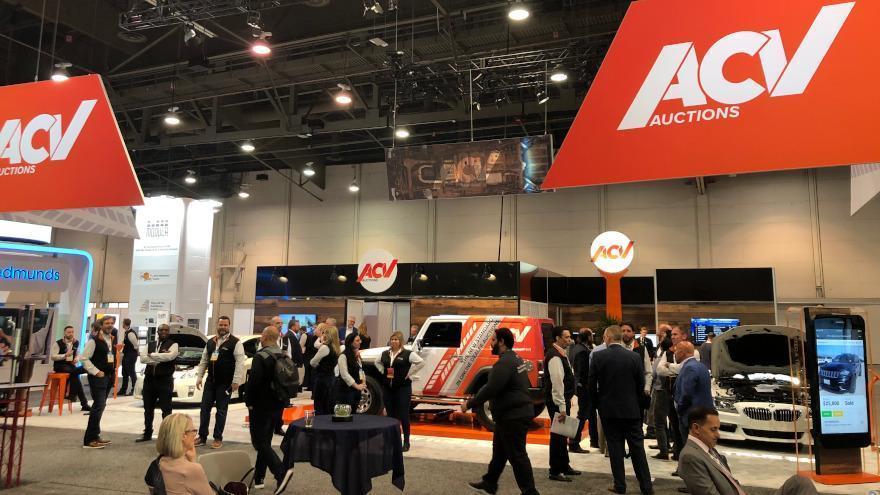
Next up is Michael Waterman, chief sales officer at ACV Auctions, one of this year's honorees.
That Q&A, available to CMG Premium subscribers, can be found below.
Auto Remarketing: Workplace safety has been a big topic in the auto auction industry, particularly for the traditional brick-and-mortar auctions where cars are running through the lanes. How does an adherence to workplace safety manifest differently in the digital wholesale space, where sales tend to be remote?
Michael Waterman: Although our sales take place 100% digitally, the safety of our team of over 700 inspectors — the largest inspection network in the country — is paramount. In accordance with the Centers for Disease Control and Prevention (CDC) recommendations, we adopted new and enhanced protocols to help keep our teammates safe — both in the field and in the office.
For our office-based teammates, we were able to pivot to a mostly remote, work-from-home workforce while still maintaining best in class service and efficiency. For team members working in the field, we updated our process for approvals, sign-offs and hand-offs of vehicle keys to minimize contact between our customers and our inspectors. ACV inspectors do the vehicle inspections outside at the lots of our dealer partners, which allows for a safe and distraction-free work environment. ACV’s thorough onboarding process includes training on how to properly operate our innovative tools used as part of ACV’s comprehensive True360 condition reports, which are designed to provide the most accurate, transparent view into the vehicle’s condition.
Our auctions take place completely online, where dealers use our detailed condition reports to make confident bidding decisions without needing to be physically present at a traditional auction. Not only does this eliminate the in-person auction experience where cars run through lanes and crowds gather to make purchases, it also provides dealers with a faster, more flexible and more informed way of doing business without the risks associated with physical interactions.
AR: How has the COVID-19 pandemic impacted your safety strategy?
MW: Our inspection process is as contactless as possible, allowing team members to safely distance themselves from others while remaining fully productive in their roles. In light of the pandemic, we have closely followed guidelines from the Centers for Disease Control and Prevention (CDC) and equipped our team members with necessary protective equipment, including masks, gloves and disinfectants, in order to ensure that they can perform their work safely. All measures have been designed to keep both the safety of our team members and our dealer partners in mind. ACV provides virtual training sessions to our field teammates as we introduced new PPE and process updates to ensure everyone feels educated and comfortable working within our “new normal” for business operations.
AR: Training and development is key in any organization, but I imagine it’s especially challenging in the digital wholesale space. What have been some effective approaches you have taken when it comes to training and developing employees?
MW: ACV provides hands-on training for our Vehicle Condition Inspectors (VCIs) both in the classroom (now virtual) and with vehicles. Team members from various departments will do ride-alongs in the field so that Managers are able to assess and help improve processes and vehicle assessments.
We haven't let COVID slow us down from a training perspective. We are continuing to invest in training our team members in new types of inspections including cross-training our VCIs on all three kinds of inspections that we provide (wholesale, retail and off-lease) so they can become experts in each area and grow in their skillset and within the company.
During these challenging times, we are providing additional instructor-led training via online learning as well as socially distant field visual training to enhance their inspection skills and overall knowledge of ACV.
AR: This year’s program had some particularly strong scores with supervisor relationship and overall employee engagement. What are some ways your organization fosters positive professional relationships between supervisors and employees?
MW: ACV’s culture leads with a “You asked. We listened.” mindset. This applies to both our customers and our team members. Given our background as a start-up, our teammates’ feedback has been extremely important to the growth of our company and to our culture. Many of our leading procedures and policies are in direct response to feedback that we have received from our team members.
They know that they can speak up and share their thoughts and they will be heard. ACV is a company without ego. We love great ideas/feedback and take it from our team members and customers alike. This feedback makes us better and more relevant every day.
It’s invigorating to look at our growth over our five-plus years and see how our team members have grown with us. A once junior inspector is now a senior inspector mentoring and coaching new team members as they join ACV. It ultimately comes down to the passion that each and every one of us have for our jobs. We want to be the best we can be in our roles and we want to help those around us be the best as well. It’s in our DNA to help one another from offering tips, answering questions and serving as mentors to one another.
AR: Likewise, what are some ways your organization engages employees?
MW: ACV engages our team members by empowering them and supporting them. We encourage team members to find an area of passion and run with it. For example, our Diversity & Inclusion program was spearheaded by one of our senior teammates from our training department who has both a passion for and experience in leading D&I initiatives.
We also support our teammates in philanthropic efforts that impact them personally or impact the region where they work. We support these team members as they offer charitable assistance across the country to regions impacted by natural disasters and other efforts to help those in need.
COVID-19 has significantly impacted how we can interact with our corporate teammates who are used to seeing one another daily in the office. ACV quickly pivoted to a mostly remote model for our corporate workforce in order to protect their personal health and safety as a result of the pandemic. We pushed through to find new ways to connect, engage and have fun. Various departments have virtual, Zoom-powered happy hours and play games via Jackbox. The ACV HR department also started a monthly all-company Trivia Night on Wednesdays to bring everyone back together.
We now also offer team members free access to online Yoga and Meditation sessions (exclusively for ACV team members) throughout the week to help relieve any added stress that team members may be carrying due to the intensity of our “new normal.”
As part of Auto Remarketing's 2020 Best Auto Auctions to Work For program, we are featuring Q&As with leaders from some of the honorees.
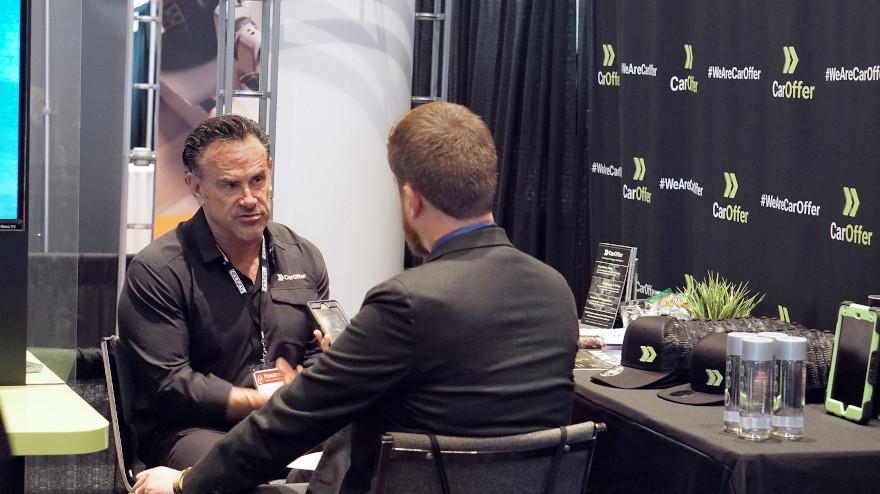
Next up is Bruce Thompson, founder and chief executive officer of CarOffer, one of this year's honorees.
That Q&A, available to CMG Premium subscribers, can be found below.
Auto Remarketing: Workplace safety has been a big topic in the auto auction industry, particularly for the traditional brick-and-mortar auctions where cars are running through the lanes. How does an adherence to workplace safety manifest differently in the digital wholesale space, where sales tend to be remote?
Bruce Thompson: For us, CarOffer needs to mean it’s not just a better, more efficient way to buy, sell and trade used inventory; it needs to work and it needs to be safe. Especially in times when the world seems to stop and it’s the only available option for dealers to acquire inventory.
Being a tech company, we were well-positioned to pivot to a remote working situation at the onset of the pandemic literally overnight so, fortunately, we didn’t miss a beat on product development, client servicing or trading opportunities. When we were able and ready to welcome team members back to the physical office, we followed all CDC recommendations for health and safety protocols.
But our team extends well beyond the people in our headquarters; we have a complex supply chain that we heavily rely on to get cars to dealers’ lots, which includes transportation, condition reporting, inspections and other logistical details. We handle this so our clients don’t have to, and we collaborated closely with our third-party partners to ensure and optimize health and safety protocols at every stage so dealers could safely and reliably stock their lots.
AR: How has the COVID-19 pandemic impacted your safety strategy?
BT: The pandemic and sheltering in place requirements served to remind us of how nimble we are as a company. I am extremely proud of and grateful for our team who adapted to change so seamlessly.
In every crisis situation, there is opportunity to improve one’s response and preparedness strategy. Since our business is inventory management, one of the biggest challenges we faced was managing inconsistent protocols in different states. So, access to some critical services like state inspections, for instance, were delayed. How can we ensure the process continues to move forward during a safety or health issue? We are exploring all aspects of our operations to fine tune the preparedness. If the pandemic has taught us anything, it’s never say never, and keep your crisis plan up to date!
AR: Training and development are key in any organization, but I imagine it’s especially challenging in the digital wholesale space. What have been some effective approaches you have taken when it comes to training and developing employees?
BT: It is common in tech companies to have daily stand-ups, or scrums, because the pace of product development is so fast and constant communication among team members enables swift action. We conduct these informal sessions at CarOffer as it creates a valuable setting for knowledge sharing, collaboration and platform improvements. While nothing is better than the in-person version of a stand-up, we were able to move them to a virtual format which not only kept the work moving along, but it kept our team connected at a time when people felt very isolated.
Training and development are critical to the success of CarOffer — it not only keeps our technology advancing and competitive, but it creates opportunities for our employees to grow and learn and accept new challenges. We strive to create a culture of knowledge-sharing by doing things like role playing how to sell a certain feature or handle a situation, or relaying client needs with the software engineers so we can enhance the platform. And we bring new team members into this culture Day 1. It helps all of us to be better at what we do, regardless of our position or tenure with the company.
AR: This year’s program had some particularly strong scores with supervisor relationship and overall employee engagement. What are some ways your organization fosters positive professional relationships between supervisors and employees?
BT: The CarOffer leadership team is involved in the day-to-day workflow of our operations. We support transparency and have an open-door policy which is well utilized. Because we are growing at such a rapid pace, this culture fosters onboarding and immersion of new employees.
During the strict work-at-home period, we brought our accessibility and open-door policy online and held all-hands meetings weekly, which provided a continuum of connection and engagement while people were not physically together.
As part of Auto Remarketing's 2020 Best Auto Auctions to Work For program, we are featuring Q&As with leaders from some of the honorees.
Next up is Matt Alombro, auction manager at Louisiana's 1st Choice Auto Auction, which has been an honoree in each of the program's five years.
That Q&A, available to CMG Premium subscribers, can be found below.
Auto Remarketing: Louisiana's 1st Choice Auto Auction is the only auction that has made the list of Best Auto Auctions to Work For in each of the award program's first five years. What makes LAFCAA stand out from the pack, and what gives you such a strong workplace culture?
Matt Alombro: Culture, exactly that. We have been open since 2002, 18 years, and our management team has been here for an average of 12-14 years. We stay true to our values and do everything we can to hire people that align with our culture and cherish the same core beliefs. This also attributes to our extremely low turnover rate and allows everyone to work so well together year after year.
AR: Workplace safety has been a big topic in the auto auction industry, particularly for the traditional brick-and-mortar auctions where cars are running through the lanes. How has the COVID-19 pandemic impacted your safety strategy?
MA: Safety is more important now than ever before with the advent of government mandates and stricter health and safety guidelines. Our most valuable asset has always been our team members. COVID brought new challenges to the table with health and safety restrictions that we put in place. We canceled our large all-employee meetings, which has led us to conduct smaller team meetings more frequently. We have several meetings per week, and safety is always the main topic. Safe T. Sam is excellent for our new hires as an introduction, and we always supplement it with the years of experience we have run a safe workplace.
AR: Training and development are key in any organization, but I imagine it’s especially challenging this year. What have been some effective approaches you have taken when it comes to training and developing employees?
MA: The smaller and more frequent team meetings have allowed supervisors and managers a more hands-on approach, increasing communication across all departments. Smaller meetings led to better training and a wealth of new ideas to shorten processes and increase efficiency.
AR: This year’s program had some particularly strong scores with supervisor relationship and overall employee engagement. What are some ways your organization foster positive professional relationships between supervisors and employees? Likewise, what are some ways your organization engages employees?
MA: The last nine months have been more than a challenge to all. Like many others we had to announce employee furloughs for an unknown length of time. Through the first 5-6 weeks, every manager was on the lot moving cars, taking pictures, detailing cars and anything else that needed to be done to continue having a weekly auction. Everything was completed by only about 15 people. This was truly a humbling experience. When our team started to come back 6-8 weeks later, we were still out there with them and getting the job done.
For months we remained with a limited team, and through that time, many close friendships formed. It was a new level of respect for the team tasked with completion, as well as the supervisors and managers who were willing to do whatever it takes to make it happen. That bond made for great ideas and open communication to only further improve the fantastic team we have here at Louisiana’s 1st Choice Auto Auction.
As dealers might already know, TCPA is the acronym for the federal regulatory rule officially known as the Telephone Consumer Protection Act.
The acronym also has a more pejorative meaning — Total Cash for Plaintiff’s Attorneys.
In an effort to help dealerships avoid pitfalls connected with either interpretation of TCPA, Paul Gipson appeared on this episode of the Auto Remarketing Podcast.
Gipson is director of marketing compliance services for CompliancePoint, a leading provider of information security and risk management services. And the firm recently completed an in-depth examination of dealerships and text messaging.
For more on that, listen to the entire conversation, which is available at the link below or on the Auto Remarketing Podcast page.
Download and subscribe to the Auto Remarketing Podcast on iTunes or on Google Play.
Auto Remarketing is collaborating with Podium to host a free webinar focused on one of the most important ways dealerships connect with their customers nowadays: digitally.
Podium marketing specialist Hayley Sonntag plans to share a quartet of takeaways for dealerships of all sizes during the session titled, “4 Ways Dealerships Can Attract and Service Customers, 100% Digitally.”
Sonntag intends to discuss:
1. Focusing on the online experience
2. Opening and communicating with customers in their preferred channels
3. Nurturing leads through messaging
4. Collecting payments via text
The webinar is set to begin at 2 p.m. ET on Tuesday.
“So much has changed in the world during the past few months,” Podium said. “There’s an increased urgency now to take every opportunity to increase online leads and interact with customers amidst all the uncertainty. This is requiring an unprecedented strategy and creativity.
“Join this webinar to learn how your dealership can manage your customer journeys — from initial search to final sale — digitally,” the firm added.
Dealers can complete registration for this free webinar on this website.
More than a decade removed from the Great Recession, media analysts and economists believe there is potential for an economic downturn to occur within the next few years. Despite the speculation, the automotive finance market appears to be strong. In fact, Experian’s Q3 2019 State of the Automotive Finance Market report continues to show year-over-year growth and low delinquency rates — signs of an overall healthy market.
Still, it’s always a best practice to prepare your dealership for the worst. Ten years ago, dealerships were forced to assess business practices on the fly. Many pivoted to a focus on used vehicles — keeping older trade-ins on their lots to resell. Others invested in their service departments to focus on parts and routine maintenance and amplified their presence online to reach more potential car shoppers. While many of these dealerships were able to adapt and adjust during the turmoil, moving forward, you will be better served to prepare ahead of time. And with the exact timing of a financial downturn largely unforeseen, now is as good a time as any.
During times of economic distress, organizations need to review business models and strategies. For auto dealers, there are three considerations for dealers as they prepare their systems and practices for a potential economic downturn.
Identify local in-market car buyers
You don’t need to attract customers from far and wide. In fact, a bevy of potential car shoppers likely live within 15 miles of your dealership. The more you understand about your local prospects, the better positioned you will be to reach them with right message at the right time. For instance, did the individual just purchase a home? Are their lease terms set to expire? This level of insight can help you identify the prospects most likely to be in the market for their next vehicle and enable you to create and deliver messages that resonate.
If you can address a potential customer’s specific needs, the more likely they are to convert. Time-after-time, we’ve seen well-tailored ads perform better than generic ones. More importantly, you can reduce wasted ad spend on out-of-market customers. And the less money you waste during an economic downturn, the better positioned you will be to sustain success.
Offer ways to help your customers secure the car of their dreams
Maximizing sales results takes more than showing your customer a vehicle. As a guru of the car-buying experience – you’re there to not only offer advice and insights based off years of experience, but to provide the support your customers need to purchase the vehicle of their dreams.
Oftentimes, support is needed when your customers are assessing their vehicle financing options. During times of economic distress, budgets will be leaner and personal finances may have taken a turn for the worse — so what can you do if you have a willing customer who can’t qualify for the best rates?
Tools and resources, such as Experian Boost can open access to better credit for your customers—more importantly this is credit that they’ve earned. That means better rates for the customer, and you can augment current sales and strengthen future relationships down the line.
Ensure you’re purchasing high-quality used vehicles
Just as shoppers need to make sure their credit scores are in order, you need to make sure your pre-owned inventory is of a strong enough quality. Vehicle history reports will help you gauge the reliability of used cars compared to other vehicles in its class and the likelihood of it being on the road in five years. This is especially critical if your dealership needs to place a stronger emphasis on used car sales.
It may seem counterintuitive to plan and prepare for an economic downturn during a period of extended growth, but the importance of the task cannot be lost. Smarter decisions and a commitment to better understanding your customers and inventory can set you up for success. The full impact of the next financial crisis cannot be predicted, but the better prepared your dealership is, the more likely you are to weather the storm and continue successfully serving your customers at healthy margins.
John Gray is Experian’s president of automotive, North America.
The National Automobile Dealers Association (NADA) recently released a guide designed to help owners, principals and their advisors gauge what their business truly might be worth.
In an effort to assist dealers to understand the process of valuing franchised dealerships as well as the various factors that influence rooftop value, NADA explained that its guide covers such situations as:
— Buy-sell transactions
— Estate and gift tax planning or reporting
— Ownership succession planning
— Owner buy-in or buy-out
— Tax reporting due to entity restructuring
— Litigation settings including divorce and dispute
NADA mentioned its guide also delves into the importance of analyzing historical earnings and cash flow, estimating future cash flow and determining a reasonable return on investment.
The association noted its material describes the steps in the appraisal process, outlining the income, market, and asset-based approaches to valuation.
Furthermore, NADA pointed out the guide provides numerous examples, formulas and worksheets as well as addressing special valuation considerations such as:
— Discounts for non-controlling interests
— Valuation of personal versus corporate goodwill (Blue Sky)
— Valuation for key employee ownerships
— Valuation for federal tax matters, including the relevance of IRS Revenue Ruling 59-60
And finally, the guide also examines changes resulting from the Tax Cuts and Jobs Act of 2017 and suggests strategies to maximize dealership value and prepare for exit.
NADA members can find this guide by going to this website.