When parents step onto the used-car lot to help their teen pick out a first car, many have two top concerns: affordability and safety.
And many parents struggle with how to satisfy both those needs in the same used vehicle.
In response to this need, the Insurance Institute for Highway Safety released a few lists this week that will prove helpful for both parents and dealers trying the find the right vehicles for those new to the driver seat.
IIHS released Wednesday a list of the safest used vehicles for teens, as research showed “many aren’t driving the safest ones,” the organization stated.
This marks the organization’s first-ever list of recommended used vehicles for teens.
"A teenager's first car is more than just a financial decision," says IIHS president Adrian Lund. "These lists of recommended used vehicles can help consumers factor in safety, in addition to affordability."
There are two tiers of recommended vehicles with options at various price points, ranging from less than $5,000 to nearly $20,000, “so parents can buy the most safety for their money, whatever their budget,” according to IIHS.
The list compiles recommended used vehicles for teens starting under $20,000, as well as a separate list for those searching for a vehicle under $10,000.
The lists break the vehicles up by segment, as well, and provides model-year suggestions.
The more expensive list includes vehicles such as the 2009 model year and later Lincoln MKS, as well as the Toyota Prius v in the midsize cars segment, for example.
In the $10,000 and under list, dealers will find older models, such as the 2005 and later Acura RL and the 2009 Ford Taurus.
IIHS also offered a little more insight into why lists like these can save parents time, money, and the potential injury of their teens.
The organization fielded a series of studies, one which showed minicars or small cars were the most commonly purchased type of vehicle for teens, among the 500 parents surveyed.
A little over 28 percent of the responders were buying for their teens from this category, which tends to not hold up as well as larger models during a crash.
Furthermore, a little more than half of newly purchased vehicles for teens, according to the survey, were from the 2006 model-year or earlier.
IIHS pointed out this can be a problem because older vehicles are much less likely to have safety features such as electronic stability control (ESC) and side airbags.
IIHS also offered a list of four factors parents should consider when buying a vehicle for their teens; this list will also be helpful to dealers looking for vehicles for teens on the lot:
According to IIHS:
- Young drivers should stay away from high horsepower.
- Bigger, heavier vehicles protect better in a crash.
- ESC is a must.
- Vehicles should have the best safety ratings possible.
And though this may be difficult for some families, IIHS said parents may want to consider shelling out a bit more for vehicles bought for their teens.
In the parent survey, the the mean purchase price for a teen's vehicle was about $9,800, while the median was just $5,300.
"Unfortunately, it's very difficult to get a safe vehicle for a teenager at the prices most people are paying," says Anne McCartt, IIHS senior vice president for research. "Our advice to parents would be to remember the risks teens take and consider paying a little more."
To view the complete lists of recommended vehicles for teens from IIHS, click here.
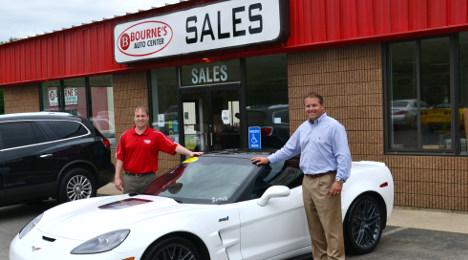
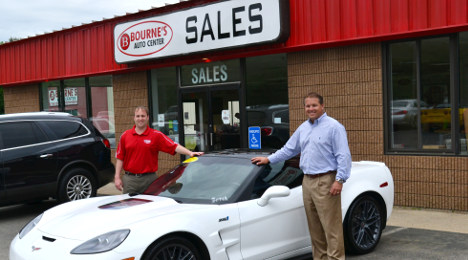
Do the math on this one: Bourne’s Auto Center is stocking less and selling more.
Previously, the number of used retail units that the store kept in its inventory was in the high 300s, said general manager Michael Kelley. This year, the Boston-area independent dealer has reduced that number to around 312.
However, its used retail sales have actually gone up, climbing from 194 per month in 2013 to approximately 215 per month in 2014.
In a June interview with Auto Remarketing, Kelley said Bourne’s has grown its turn by about 12 percent.
Tighter turns, fewer units in inventory, stronger sales — this all has a direct relationship with the dealership’s reconditioning process, and its target of getting cars to the front line faster.
“Obviously, our service department reaches a capacity. So, the biggest and the most important thing is that we get the vehicle to the front line,” Kelley said. “And when I say to the front line, I mean detailed, photographed with 40 some odd photos on our website and then mechanically serviced, and also taking care of any sort of body shop issues, any sort of wear-and-tear on the outside, things that we would want to do to make a good product.
“By having less inventory, we’re able to get the cars to the front line faster, which means that when the customer comes to look at the car, it’s pretty much ready to go,” he continued. “Very rarely are they asking for anything additional to be done. Their age-old question is, ‘When can I take the car?’ Our answer is, ‘Right now.’”
This approach to get cars retail ready quickly is something that resonates with top dealers working with Mike Black and his team at Dent Wizard International.
Black, the company’s chief operating officer, says that a lot of times, it boils down to consolidation of recon services.
“The top dealerships we work with want their vehicles ‘front-line ready’ as quickly as possible. Time is money. So they’re accomplishing this in a number of ways,” he explained.
“Using a consolidated service provider naturally reduces repair cycle time and cuts down on resources required to manage the repair processes,” he continued. “And having a service provider that uses sophisticated technology for estimating and invoicing cuts time and costs, too.”
The longer the dealer has to hold on to the car, the less room for profit margins. Black provided Auto Remarketing with data — coming from research done by ADESA — that charts used-vehicle gross profits by days in inventory.
The chart, as you might imagine, has a short upswing at the beginning followed by a long downward slope. Vehicles in inventory between 11 and 20 days — or even 21 to 30 days — generated close to $2,000 in gross profit per unit, with margin percentages at 13 percent.
As time wears on, however, and the car continues to sit on the lot, those numbers trickle downward — and once the days-in-inventory exceeds 60, the margin percentage dips to 9 percent with gross profit per unit between $1,000 and $1,500.
Once the car is there for more than 90 days, margin percentage is 5 percent, and gross profits are less than $1,000 per unit.
Granted, these numbers are from a few years ago, Black says, but he has found that the “data still holds true based on several discussions with senior dealer executives.”
And these figures align with what Dent Wizard is aiming to achieve with quicker recon.
“The name of the game is to provide service to dealers, whose real focus is selling cars and driving service. That’s their game. So, when I think about time, there is a window of time where the dealer can really maximize their retail selling ability, in terms of dollars, and then maximize their gross margin,” Black said.
“And that window dries up within about the first 30 days. So in other words, when you look at dealers that have a very clear focus on turning vehicles within 60 days … after 60 days, their ability to make margin on that particular unit is effectively eliminated,” he continued.
“Because when you look at holding cost, in terms of floor planning and the interest that they’re paying on those vehicles or on that inventory, the longer you hold it, the more money it costs you,” he said.
While acknowledging it might be the same for every dealer, it typically would cost a store that is floor planning a vehicle between $30 and $40 per day just to keep that car in stock.
Hence, this is why it’s important to get that car frontline ready and reconditioned “very, very quickly,” Black said.
If a customer comes in with a trade-in that has a litany of work to be done, Dent Wizard can aid dealers on the cosmetic recon side.
“And then if we can take a couple or three days out of that cycle, because they’re not waiting on the wheel vendor to show up, the PDR tech to show up, the bumper process to be handled, the interior stains to be removed, the carpet dyed, the steering wheel cover to be re-wrapped,” he said. “All of those things cost the dealer time in terms of reconditioning those vehicles.
“So, therefore, if a vendor such as Dent Wizard can bring all of those services to them at a fair and equitable price, and we can help them manage the project — and more importantly, deliver on the back end, the technology that says we had the vehicle for 13 hours, and we turned all the cosmetic repair inside of six to 13 hours — that really drives value for the dealer,” he said.
Dent Wizard offers dealers a consolidated approach in the form of its Frontline Fast cosmetic repair program, which it launched in 2011.
As explained on Dent Wizard’s website, Frontline Fast is an expansion of the company’s brand to offer dealers a vast array of cosmetic reconditioning services all from the same source.
Black says the company’s approach to dealers or dealer groups with Frontline Fast is to provide three or more services, including paintless dent removal, paint and typically something along the lines of wheel and/or interior work.
“The idea is to consolidate vendors,” he explained. “One partner, simplified vendor management, simplified invoicing management and a heightened awareness around reconditioning vehicles in terms of time.”
In other words, instead of the dealer having, say, seven or eight vendors to complete all the reconditioning tasks, Frontline Fast aims to package the services into one offering.
Additionally, Black says, “It allows us scale and the ability to add some SG&A to manage the business for you and work strictly with your people so we can reduce time in getting vehicles reconditioned, through the reconditioning pipeline and the reconditioning process, so that you have vehicles frontline ready at an escalated rate.”
All of this is not to say doing a quality, thorough job isn’t important. Most, if not all, in the industry would attest that it is.
But it appears the sweet spot is to do a quality, thorough job in a time-efficient manner.
Consider a February column posted to the Velocity Overdrive blog from vAuto founder Dale Pollak, who shared a memo he received from the general manager of DePaula Chevrolet.
In the memo, which was addressed to the dealership’s employees, GM Paul Lynch says this:
“What our goals in used-car reconditioning should be are quality and speed (2.5 days or below). I believe another store goal should be to get our average monthly recon ROI dollar amount under $1,000 per copy. Last but not least, the final goal of the reconditioning department should be to minimize policy expense …
“If we execute on all four of these goals, we will sell more used cars,” he goes on to say, “and the parts, service department and used-car department will all make more money.”
To view the full blog post, see here.
What can cripple conversion rates at auction? Delayed-title vehicles, according to a new industry study.
According to a new white paper from Manheim, having a physical title on site at the time of sale is crucial to conversion rates.
In fact, the study found having a physical title on hand can actually double vehicle conversion rates at auction.
Manheim also discovered titles can benefit online sales via Simulcast and OVE.com, as well.
“Roughly 35 percent of all vehicles at auction are sold without the presence of a physical title, and this can negatively affect customer profitability,” shared Ally Pomeroy, customer consultant. “While we observed significant differences between commercial and dealer sellers when it comes to having physical titles at auction, this study focused on dealers because the majority of vehicles with delayed titles are sold by dealers.”
Title Delays Equal Lost Profit
The white paper not only outlined the benefits of having titles on sale day, but it also highlighted the significant “costs of title delays" for buyers and dealers.
The average delayed title will take up to a week to arrive. Though this may seem like a brief amount of time, those are sales days lost to a dealer that has to wait to receive the title to sell the car off the lot.
Manheim broke it down like this:
The current prime interest rate is 3.25 percent, which equates to dealers spending 89 cents per day on every vehicle with a value of $10,000.
Manheim pointed out If the dealer buys 1,000 cars a year from the auction and each title is delayed one day: that’s an additional $890 cost to the dealer.
If the titles are delayed one week it’s an additional $6,232, the white paper pointed out.
And think about this: According to the Manheim data, 10 percent of the overall delayed titles can take up to a month or more to arrive in dealers’ hands.
The bottom line: delayed titles have the potential to waste dealers and buyers’ money.
Titles Push Conversion Rates
Having physical titles at auction doesn’t just help dealers, but it also serves to push auction conversion rates.
Of course, vehicles with titles on site are going to be more attractive to buyers and dealers.
Manheim offered this comparison:
According to Manheim data, the average conversion rate for dealer vehicles with a title on hand is 86.2 percent, as opposed to 42 percent conversion on delayed-title vehicles.
Interestingly, the study also found that the newest, lower mileage vehicles have the lowest conversion rates without a title present, while the older, higher-mileage vehicles feel less of an effect.
“These findings may be due to a dealer’s tendency to have reconditioning work done on older vehicles to get them ready to retail,” Pomeroy said. “Because they are already expecting delays and extra holding costs due to reconditioning time, the title delay is less of a concern.”
Auction Online Activity Boosts
The study also found that the benefits of title-ready vehicles permeates the digital space, as well.
According to Manheim data, 18.5 percent of whole cars with physical titles present sold online via Simulcast or OVE in 2014, compared to 17.7 percent of vehicles with delayed titles.
“Buyer confidence is crucial during an online transaction, and the risk of a long-delayed title is enough to deter some dealers,” the white paper stated.
The study results point to the benefits for buyers, sellers, and the auctions — both brick-and-mortar and online — of title-ready vehicles in the lanes.
“The cost of money when waiting for a title to arrive can escalate quickly, causing the buyer to lose profits if they decide to take the chance on the vehicle at all,” the white paper states. “High conversion rates associated with ready-title cars help the seller’s results as well as keep re-run costs for the auction low. A physical title also gives confidence to online buyers, expanding the pool of dealers doing business.”
Women heading into a Mercedes-Benz or Volvo dealership leave the lots the most satisfied with their experience.
That’s according to the Mid-Year Report from Women-Drivers.com highlighting top automotive brands rated by women when purchasing.
The site analyzed car dealer reviews written by women when purchasing a vehicle from January through June of this year.
On a scale from 1.0 to 5.0, Mercedes-Benz topped the list with an almost perfect score of 4.98.
Volvo followed with a score of 4.96.
Next came a few domestic nameplates with Lincoln in the No. 3 spot with a score of 4.89, followed closely by Dodge (4.88).
Mitsubishi rounded out the top five with a score of 4.87.
And it seems women are becoming more satisfied overall during the car purchase process as the average WomenDriver.com's Women Satisfaction Index score from January through June was 4.72 for all brands.
And this number is becoming increasingly important. According to WomenDrivers.com, women purchase an estimated 50 percent of all cars and influence up to eight out of 10 purchases.
Here are the top 20 brands rated by women when purchasing their next vehicle, according to the latest WomenDrivers.com study.
1. Mercedes-Benz – 4.98
2. Volvo – 4.96
3. Lincoln – 4.89
4. Dodge – 4.88
5. Mitsubishi – 4.87
6 (tie). Chrysler & Jeep – 4.86
8. Buick – 4.84
9. Volkswagen – 4.83
10. Lexus – 4.82
11. Chevrolet – 4.80
12. Ford – 4.79
13. Audi – 4.78
14. Toyota – 4.74
15. Mazda – 4.72
16. GMC – 4.71
17. Honda – 4.70
18 (tie). Hyundai & Nissan & Subaru – 4.68
Though car dealership employees, on average, earn more than the average weekly earnings of U.S. private sector employees, retention remains a large problem for dealerships across the country.
According to NADA’s 2013 Dealership Workforce Study Industry Report, franchised dealership employees, on average, earn 27 percent more than the average weekly earnings of all U.S. private sector employees — but turnover rates remain elevated.
According to the report, the overall turnover rate for dealership employees is 35 percent.
And it gets worse for sales personnel, in particular.
According to a CNW Retail Automotive Summary released in late May, turnover rates for salespeople at new-car dealerships came in at 111 percent last year.
This compares to a high of 124 percent in 2011, brought on by the 2008 economic downturn, according to CNW.
CNW president Art Spinella noted that historically, new-car dealership sales personnel turnover has been above 100 percent for decades
The 2013 Dealership Workforce Study Industry Report from NADA was produced in partnership with DeltaTrends, a provider of workforce metrics for the auto industry. The report is based on 2012 hard data culled from 290,000 car and truck payroll records, and includes both national and regional data. More than 2,240 dealerships enrolled in the 2013 Dealership Workforce Study.
To get a little more insight into employee retention trends and what dealers can do to turn the tides, Auto Remarketing turned to Ted Kraybill, who conducted and analyzed the study.
Kraybill, president of ESI Trends, shared some opinions based on industry research and experience, regarding the factors that are pushing sales personnel out the dealership doors.
To get the full picture on where the historical trend of high turnover in the show room originated, we went back to the source.
Explaining why sales people don’t stick around, Kraybill said, “I think the history of high turnover in sales positions ties back to sales people being originally classified as a ‘variable’ expense from an accounting perspective due to 100 percent commission-based pay plans.”
“As long as this variable mindset is in place, managers are less likely to see turnover as a serious issue,” he added.
And while the dealership culture changed, with most stores no longer viewing sales people as “expendable,” this trend has yet to fully leave the lot, Kraybill pointed out.
The turnover rate for female sales consultants is even more of an issue, with rates sitting at 76 percent, according to the NADA report.
As for the reasoning being this trend — the culprit could very well again be tied to industry history.
“While the industry is slowly changing, the showroom is still not a very female-friendly environment. This applies to female customers, as well as employees,” Kraybill asserted. “The good-old-boy, macho culture still dominates in many dealerships, so it’s not an easy place for women to fit in. When you add in the work-life balance issues, it’s just not an attractive career choice for many women.”
The NADA study also shared that 40 percent of sales people are terminated within 90 days of hire.
Kraybill shared the 90-day revolving door is due to two factors: poor “fit” hiring decisions and commission-based pay plans.
“Sales managers who invest more time during the interview process and use some type of personality assessment to identify candidates who fit the successful salesperson profile, tend to have lower turnover in that first 90-day period,” said Kraybill. “Also, dealerships who allow new salespeople to ‘ease into’ commission pay plans with longer periods of guaranteed base pay, tend to have less short-term turnover.
“If a commission-based salesperson isn’t earning enough to pay their bills while they work up the learning curve, they will chose to leave.”
Time Off Versus Pay Incentives
Though overtime and pay incentives will work for some, the study tied high turnover rates in part to long hours.
“The total number of hours and weekend that employees are scheduled to work has a significant impact on retention,” NADA said in the report.
Sales consultants working 50 to 60 hours per week earn 4 percent more a year than their counterparts working 40 to 45 hours. But there's a caveat.
When employees work over 45 hours, turnover increase and retention decreases, implying a change to the incentive system may be due.
“A lot of salesperson turnover is directly correlated to the number of hours that they are required to work. There are still a significant number of dealerships who require sales employees to work 50 to 60 hours,” Kraybill said. “While there are a lot of other industries where employees have to work weekends, they usually get time off during the week and usually get one or two weekends off each month. That’s often not the case in dealerships.”
He also pointed out this is a very big issue with most Generation Y employees, who put a higher value on time-off compared to extra pay.
This could be a big issue in the future, as dealers hired members of Gen Y 41 percent of the time in 2012.
NADA cautioned that to keep them, “we need to address dealership culture, work house, salary and incentive programs, as the turnover rate in 2012 for this age group was 54 percent.”
Cutting Down on Turnover
It is common knowledge that employee turnover can greatly reduce monthly gross profit.
As such, Kraybill contends employee retention should be one of dealerships’ top concerns.
“For decades, customer loyalty research has shown a direct connection between customer retention and employee retention. As dealer margins continue to shrink, employee retention and productivity represent significant profit improvement strategies,” said Kraybill. “Many dealers and dealer groups understand this, and now, many automakers are implementing programs to help their dealers engage and retain retail employees.
“Employee retention is becoming a global retail KPI (key performance indicator) for several automakers, such as Ford and VW.”
The report’s author provided a few suggestions as to how dealerships can ensure sales personnel stick around a bit longer:
- Be more flexible when it comes to work schedules and time off.
- Do a better job of matching showroom staffing to showroom traffic.
- Do a better job of creating career paths for employees who want to grow and thrive.
Improving and investing in staff training also has the potential to lead to better employee retention rates.
“Dealerships who invest in new employees through training programs have higher long-term retention. As dealerships hire more employees who lack sales experience, they need to help them develop the skills needed to be successful,” Kraybill said.
And at the end of the day, much of it comes down to pay structure. For some, commission-based pay structure is difficult to maintain, especially when just starting out.
“They (dealers) also need to provide higher base salaries until they (sales personnel) are able to support themselves in a commission-based pay structure,” Kraybill said.
Online marketing company Net Driven is continuing its expansion into the automotive industry with a few new tools for dealers, along with a grand opening for its new headquarters.
The Pennsylvania company will be moving to its new headquarters in Scranton, Pa., on July 17, in conjunction with the inaugural meeting of its Automotive Dealer Council.
The council, formed by Net Driven, aims to “examine challenges in the automotive industry with dealers on the front line and develop new solutions,” the company said.
This first meeting will hone in on the tire industry with more than 100 dealers from across the United States and Canada participating in a program moderated by the Tire Industry Association (TIA).
“By creating the Automotive Dealer Council, Net Driven is creating a platform that encourages meaningful conversations among dealers that are long overdue,” said Donna Sage, director of marketing for the Tire Industry Association. “These discussions are sure to pave the way for dealers everywhere to overcome roadblocks they are facing and grow their businesses.”
The grand opening will also include educational seminars for attendees, as well.
The plan for a new headquarters was spurred by strong growth in online marketing investments by North America’s automotive businesses, the company shared.
“As Internet marketing becomes the most critical tool for customer acquisition and retention, it can also be the most challenging because of the constant and incredibly rapid shifts in technology,” said Patrick Sandone, founder and president of Net Driven. “Whether you are a franchised, independent or aftermarket retailer, keeping up with these changes is a major obstacle to staying competitive, and that’s where Net Driven really makes a difference.”
For more information, see www.netdriven.com.
Auction Academy graduated its first class group this past March, but it’s been plenty busy during the second quarter of 2014, as well, organizers said.
The Auction Academy already launched its third class group this past April, followed in May with a session at Southern Auto Auction for the group.
“In mid-April we launched our third class group, holding the opening session in Nashville, Tenn.,” said Auction Academy president Richard Curtis.
“The first to address the group was industry veteran Tony Moorby, who highlighted his long career in the auction industry, which began in England and later included assignments as president/chief executive officer of ADT Automotive and as an executive with ADESA,” he continued.
The next day the class visited ADESA Nashville, where general manager Dan Dietsch led a tour of the facility. Next up was a presentation from Kevin Cullum of NMAC, which focused on Nissan Remarketing.
The two-day session also included presentations by chief executive officer and founder of Auction Academy Pierre Pons, who reviewed the history of the auction industry; David Nutter of Direct Auction Services who outlined cost benchmarking in auction accounting; and Joe Miller, who covered working aspects of AutoIMS.
Students in Auction Academy’s third class group include: Ryan Bateman (Sanford Auto Dealers Exchange), Julie Daniel (NextGear Capital), Brandon Derrick (Memphis AA), Matt Groller (Bel Air AA), Heath Hale (Alliance AA), Wanda Jowers (Carolina AA), Ashley Magee (Alliance AA), Bill McCready (Charleston AA), Ryan Milletics (Harrisburg AA), Jodie Plaunt (Grand Rapids AA), Angelica Rotsart (Lynnway AA), Shelly Walker (Pittsburgh AA), Andrew Whisenhunt (ABC Birmingham), and Nadina Williams (Alliance AA).
Next on the schedule for these members is an event in mid-July in Spokane, Wash., which will be held in conjunction with the DAA Northwest Rock & Roll Sale.
Pons said, “We are certainly not resting on our laurels following the graduation of Auction Academy’s first class group. Dick and the entire Academy team completed a very strong series of sessions this past quarter, and the third quarter sessions will be equally as vibrant and informative.”
The third class group may already be on a roll, but the second class group training is still underway, as well.
This group met during the second quarter in East Windsor, Conn., where Larry Tribble and Garrison Hudkins of Southern AA presented a curriculum they developed that is “geared to understanding both buying and selling dealer habits and strategies, as well as vehicle pricing,” organizers shared.
“The students always have much to learn when visiting the largest Independent auction in the country, and the entire Southern team puts on a first class program,” said Curtis.
He also shared the second glass group is scheduled to graduate during its eighth and final session, when it meets during the IARA Summer Roundtable in Chicago in August.
Auction Academy will continue its training with the registration of a fourth glass group following the NAAA Convention this fall.
"What Women Want" was a great movie about an ad executive starring Mel Gibson who, after an injury, had the ability to read women’s minds. He could do wondrous things in the advertising world marketing and selling to women with that unusual ability.
But that was the magic of movies. Knowing what women car buyers want is not that simple and has become crucial for auto dealerships today, because the industry that has historically been male focused has gradually been shifting towards more female-centric.
Today, women customers have become not just prominent buyers, but also the fastest growing auto buying segment in the US.
6 Things Women Want When Buying a Car
What do women customers really want from dealerships to close successful car purchases? While each woman has her own unique set of circumstances, needs and wants in buying a car and in purchasing from the dealership she does business with, there are some generalities and commonalities that we have unveiled. They are:
- Dealer’s Market Reputation
Women research and want to learn about the dealers’ reputation and market credibility before they visit the store. Thanks to the smart phones and tablets, learning this is easy. There are plenty of review sites where customers share their dealership experiences with others. From customer experiences it becomes easy to form opinions, learn about different dealers’ market reputation and select dealerships accordingly. Women especially appreciate reading the reviews and experiences from other women — it means more to them.
Distinguish your dealership on more than price — trust is the No. 1 reason women buy from a dealership! In fact, our latest big data reports that despite the fact that there is a brand dealership closer to her home, 65 percent of women report they are travelling farther to another dealership to buy.
- Sales Adviser
Women want an empowering dealership experience so that are fully satisfied with the decision they make without any regrets. They want to be greeted pleasantly and with respect the moment they walk into the dealership; not overlooked by the sales advisor even when "browsing." This gives them the confidence to proceed with this same dealership when they purchase.
If they are welcomed by a friendly sales advisor, this can instantly develops a rapport and a sense of likeability. Rapport transforms into trust in a moment or two when the salesperson greets them and lends an ear by listening to what they want. Women feel empowered when their voice is heard. This tends to win their loyalty and they reward the dealership with a purchase.
- The Right Price
They prefer dealerships that are upfront about the cost and price estimates and don’t over quote the price and play the "cat and mouse" game. If the price of the car is within their budget and the dealership also facilitates a flexible payment plans, women customers are most likely to make the car buying decision in the dealers’ favor.
- Best Model and Color
To make an informed car buying decision women want to learn about the latest car models and the color selection of this dealership. When sales advisers provide this information to women buyers they feel that the sales adviser is not just knowledgeable but also wants them to make an informed buying decision.
5. Car Financing Options
More women want to learn about car financing options like leasing. This gives them the financial power to purchase their desired vehicle which may be expensive otherwise but easy to purchase through a suitable car financing plan. Having information on your website that informs and educates certainly helps attract and market your dealership when women are in the research mode.
6. Best Trade
Women also want to know about trade in offers. Sometimes they may want to sell off their old car to finance their new car. They want to know if the dealership they are visiting offers best trade in value offers.
Editor's Note: Anne Fleming is president and car-buying advocate of Women-Drivers.com and a guest contributor to Auto Remarketing. She was also recognized as one of AR's 2013 Women in Remarketing.
A little more than a decade ago, the move that Bourne’s Auto Center made from a smaller location to its current facility on Belmont Street in South Easton, Mass., also came with a shift in strategy.
The independent dealership decided to go with no-haggle, fixed pricing. This strategy change and several other factors have helped push the dealership from being a roughly 40-car lot with five or so employees in 2003 to the 64-employee, 400-car lot that it is today.
And something funny happened along the way: people became more and more accepting of the no-haggle approach as time went on.
“Every month, every week, every day that goes by, I have less and less people even ask to negotiate on the price,” general manager Michael Kelley told Auto Remarketing. “And I don’t know why that is, because obviously that’s the way they’ve purchased cars for so many years.
“I don’t know if it’s because of the amount of research that they’re doing online and that we’re so forward that that’s the way we do it, but I rarely even get a salesperson that will come to me and be like, ‘This customer just won’t pay the price; they want to talk to a manager,’” he continued. “It is maybe one or two times a month, and given the volume that we’re doing, that’s pretty incredible.
“I think the consumers are ready for it,” Kelley added. “I think you’re going to see manufacturers go that way over the next couple of years. There’s going to be a manufacturer that’s going to tell their dealers that they have to be fixed price, i.e. the way Saturn was.”
He said more and more franchised dealers are turning to no-haggle pricing, including those in the dealership group realm launching stand-alone pre-owned stores with fixed pricing.
As industry studies can attest — including a recent one from Edmunds.com that shows only a fifth of shoppers will take as many time as possible to get the lowest price — consumers certainly see the benefits of taking at least some of the haggling out of the equation.
But what’s in it for dealers like Bourne Auto Center?
“The benefit for us is, the customer is spending so much of their time online that they can conduct just about everything that they want to do online. So they can really measure our car versus the competition,” Kelley said. “So, that’s one thing, because they know exactly what they’re going to pay, whereas they might go (look at) another dealer’s car and say, ‘I don’t really know what I’m going to pay.’
“So they’re going to know exactly what they’re going to pay, with all the fees and everything right up front; frankly, without even contacting us,” he continued. “They can get that information all online.”
He added: “That’s great from the consumer’s standpoint. From the dealer’s side, it’s great because it’s going to speed up the transaction. You’re going to empower your salespeople to make decisions, and they know exactly what it is. So, they’re not spending time going back and forth to a manager to try to negotiate a price or anything like that. They know the price, so they’re going to be able to deal with more customers in the day … It just makes the whole transaction from the salesperson’s standpoint and the consumer’s standpoint a lot quicker.
“And that was one of the big hot topics at NADA … time, time time,” he continued.
That’s where fixed pricing can help: it reduces the time used up by both the salesperson and the consumer.
Other Strategies Pay Off, Too
The focus on fixed pricing isn’t the only area that has spurred growth for the dealership. Bourne’s Auto Center has also benefited from shifting its ad dollars from traditional avenues to third-party lead providers, and decided to hone in on turn instead of volume.
In 2013, the dealership sold an average of 194 retail used cars each month, moving 2,280 units for the full year. (It also wholesaled 1,120 vehicles)
This year, though, the dealership is on pace to hit 2,584 retail sales, which shakes out to about 215 sales per month. (Its wholesale sales are tracking at 96 sales per month)
“What’s really interesting about that is, we’ve taken what we stock on a daily basis for retail units and we’ve actually lowered it. And we’ve seen our sales go up,” he said. “We were averaging last year stocking somewhere in the high 300s, and this year so far we’re averaging stocking around 312.
“What we’ve done is, we’ve increased our turn by about 12 percent so far this year,” he said. “It’s pretty incredible.”
Kelley would go on to explain the thinking behind this approach and how the dealership has managed to make it work.
“Obviously, our service department reaches a capacity. So, the biggest and the most important thing is that we get the vehicle to the front line. And when I say to the front line, I mean detailed, photographed with 40 some odd photos on our website and then mechanically serviced and also taking care of any sort of body shop issues, any sort of wear-and-tear on the outside, things that we would want to do to make a good product,” he noted.
“By having less inventory, we’re able to get the cars to the front line faster, which means that when the customer comes to look at the car, it’s pretty much ready to go. Very rarely are they asking for anything additional to be done. Their age-old question is, ‘When can I take the car?’ Our answer is, ‘Right now.’”
And as the dealership has found with its no-haggle approach, for many consumers, time is of the essence.
Tracking dealer metrics, and using the data to attract the right customers to the right cars in your inventory, is the subject of a free webinar coming next week.
In the next Carfax ‘PowerUp’ webinar series, set for Tuesday, dealers can learn about new tools available for creating a more targeted retail strategy that helps increase profits and improve inventory turn.
Dealers also will learn how to identify the most valuable used-car differentiators, to help cars stand out from the competition.
Leading the discussion will be Jennifer Ryan, director of inventory solutions for Dominion Dealer Solutions.
The webinar takes place at 2 p.m. EDT, and lasts approximately 30 minutes.
Registration is open to anyone; to register, click here.