The National Automobile Dealers Association relayed a warning from the Internal Revenue Service about the latest tax-related activities generated by unscrupulous entities on the Internet.
The IRS warned all e-services users to beware of a new phishing scam that tries to trick tax professionals into “signing” a new e-Services user agreement. The phishing scam seeks to steal passwords and data.
Officials explained the scam email claims to be from “e-Services Registration” and uses “Important Update about Your e-Services Account” in the subject line. It states, in part, “We are rolling out a new user agreement and all registered users must accept its revised terms to have access to e-Services and its products.” It asks the individual to review and accept the agreement but takes them to a fake site instead.
NADA suggested that all tax professionals should be aware that as e-Services begins its move later this month to Secure Access authentication and its two-factor protections, cybercriminals likely will make last-ditch efforts to steal passwords and data prior to the transition.
“As the IRS has warned over the past few years, these sophisticated schemes are adaptive in nature, and everyone should be cautious before clicking on a link or entering sensitive personal information,” NADA said.
IRS commissioner John Koskinen added, “These scams evolve over time and adjust to reflect events in the news, but they all typically are variations on a familiar theme. Recognizing these schemes and taking some simple steps can protect taxpayers against these con artists.”
Jeremiah Wheeler, vice president of financial services at DRN, returns to the Auto Remarketing Podcast, as Nick hosts a discussion about the impact technology is having on vehicle repossessions.
We also touch on the special segments at Used Car Week that include Jeremiah and DRN, which is the presenting sponsor of Auto Fin Con.
Check out the conversation below.
Download and subscribe to the Auto Remarketing Podcast on iTunes or on Google Play.
You can also listen to the latest episode in the window below. All episodes can be found on our Soundcloud page or by visiting www.autoremarketing.com/ar-podcast. Please complete our audience survey; we appreciate your feedback on the show!
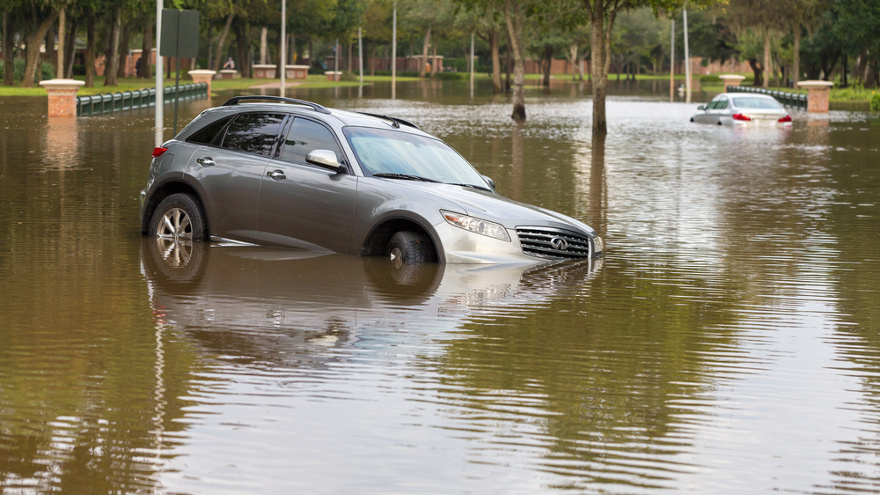
An auction operator who likely saw at least some of the rain from Hurricanes Harvey and Irma spelled out his five points to consider as the industry watches for flood-damaged vehicles.
Chris Tomchay, co-founder and chief operating officer of The Appraisal Lane and co-owner of the Georgia-Carolina Auto Auction, shared his five thoughts as estimates approach 1 million units being impacted by the consecutive Category 4 hurricanes to touch the U.S.
“Apart from the basics, there are other telltale signs that dealers and private parties should pay attention to when it comes to signs of hurricane-related damage,” said Tomchay, whose auction is located 70 miles northeast of Atlanta. “Information is power, so arm yourself with as much knowledge as possible to avoid getting burned on the bottom line.”
Here are Tomchay’s five additional tips:
1. A clean history report doesn’t always mean a clean vehicle.
With widespread hurricane damage in Florida and Texas in recent months, and with Tropical Storm Nate now bearing down on the Gulf Coast, Tomchay explained that it’s important to note that dealers can’t always trust a clean vehicle history report.
“Sometimes there is lag time in the reporting of flood damaged cars to vehicle history reporting organizations. Even 60 or 90 days, at this juncture, is enough time for a vehicle that would otherwise been deemed as ‘salvage’ or ‘totaled’ to be sold to an unsuspecting buyer,” he said.
2. There’s a big difference between salt water and fresh water damage.
While fresh water submersion means damp upholstery or wet engine components that could ultimately be dried and restored, Tomchay pointed out salt water damage is something altogether different.
“Salt causes significant corrosion which, in the long run, can cause big problems to the major components of a car, including the steering and electrical systems, the transmission, the undercarriage, the fuel system, the body panels, and much more,” Tomchay said.
He added that while some waterlogged vehicles with minor damage can represent a good value, it’s important to know the type of water that caused the damage.
3. Flood damaged vehicles can break the bank — but they can also come at a value.
Tomchay acknowledged that certain flood damaged vehicles represent a value depending on the extent and type of damage.
“I’m all for buying a car at ($0.50) on the dollar if it was submerged to the floor in fresh water, or purchasing a vehicle for ($0.75) on the dollar if it was stranded on a ship in a salt water port and the manufacturer merely voided the exterior paint warranty,” he said. “It really depends on the situation.”
4. Beware of out-of-state registrations.
If a vehicle that is registered in a known hurricane-havocked region suddenly shows up for sale in your Northeast or Midwest market, Tomchay recommended that dealers should be extra diligent — particularly now.
“Take a little extra time to evaluate the vehicle using The Appraisal Lane’s SMART tips,” he said. “It could wind up saving you thousands of dollars in the end.”
5. Flood damage isn’t the only hurricane damage.
Tomchay also mentioned small sized hail on a light colored exterior could go unnoticed, as could sand blasting from high winds.
“Be sure to closely inspect a car’s exterior in proper lighting, preferably in sunlight and from various angles,” he said. “If you’re still unsure, solicit an inspection from a qualified body repair shop.”
Tomchay concludes that if dealers are still uncertain when it comes to evaluating a potential hurricane damaged vehicle, or off-brand/one-off inventory, a community approach to appraisals is best — one that connects you with expert appraisers in real time, backed by cash offers.
“Evaluating vehicles based on the law of averages is particularly risky, not to mention trying to evaluate vehicles that may have been damaged during this volatile hurricane season,” he said.
The Appraisal Lane — a Silver Sponsor at Used Car Week which begins on Nov. 13 in Palm Springs, Calif. — consists of vehicle appraisers whose singular responsibility is to evaluate thousands of vehicles each month across all makes and models. The company’s mobile app can connect dealers with a larger community of appraisers and buyers to receive real time cash offers on inventory.
For dealers interested in more information about The Appraisal Lane, visit www.theappraisallane.com or send a message to [email protected].
The National Automobile Dealers Association recently rolled out a resource for members to help stores leverage vehicle leasing in a way that results in happy customers and compliant deliveries.
In light of the vehicle leasing business reaching an all-time high in 2016 with 4.3 million new units being leased, NADA said consumers are still leasing new cars at near-record levels. In fact, Experian Automotive reported that 30.83 percent of all new-vehicle turns during the second quarter came via a lease.
To help store manage that volume, NADA is offering its members a resource titled, “A Dealer Guide to Leasing Fundamentals.” The material aims to help dealers and their sales staff explain leasing, including how it compares to purchasing, so that customers can make the right decision for their individual needs.
Discussed are: closed-end consumer leases, how leasing benefits both customers and the dealership, and who are the best and worst candidates for leasing.
“Leasing appeals to many consumers who are able to acquire a more expensive vehicle, often with lower monthly payments, than they could have afforded as a purchase — and they can get into a new car every few years, with no depreciation risk,” NADA said.
“Still, many consumers don’t understand the leasing concept or vocabulary,” the association added.
NADA members can obtain this leasing guide by going to this website.
Many dealerships have a promotional moniker to distinguish itself in their market; for example touting the biggest selection of used vehicles.
Hireology chief executive officer and co-founder Adam Robinson recommended that stores also generate a local reputation that helps the rooftop generate quality “ups” who could be high-performing, long-term employees.
Robinson described the importance in light of how the firm collaborated with Cox Automotive on a study that showed stores have a 67-percent annual turnover rate among its sales teams, and the average cost of hiring a new dealership employee is $10,000.
“The very first step in establishing a talent-centric strategy for dealerships is a focus on their employment brand,” Robinson told Auto Remarketing during a phone conversation on Thursday. “If your consumer brand is the face of your company to your local market, your employment brand is what your local labor market thinks of you as an employer and a place to work. It’s the single most influencing factor in whether or not a dealership is going to be successful.
“Similar to a consumer brand, when your employer brand is strong, the dealer is going to get more people opting in to the process,” he continued. They’re going to get more people to take a look at the brand and decide that it’s for them versus just trolling the Internet looking for open jobs and slinging resumes all over the place with automated software, which happens these days.
“A strong employment brand is a like a filter in front of the process; almost like a magnet because it attracts the right people and repels the wrong people. That’s what you want,” Robinson added.
“Once you have those strong brand elements in place, you can take full advantage of a robust hiring process. That’s the recipe for success,” he went on to say.
Currently, Hireology is working with 2,000 dealers in the U.S. to help them assemble the best workforce possible. Robinson acknowledged dealerships “are struggling to hire and keep the right people,” as the study showed.
“The study confirmed what we’ve seen on the ground every single day,” he said.
Robinson described characteristics potential new employees should have as dealerships evaluate candidates for various store positions, stating that, “It’s not easy, but it’s also not complicated.” He began by noting great potential employees have to be customer-experience focused
“If you get intrinsic value from providing great service to others, and that can come through specific product knowledge of automobiles, it could come through a love of the product, it could come through the enjoyment of helping people, that’s really a prerequisite for a role in this environment,” Robinson said.
Robinson also mentioned that candidates also should demonstrate a desire to learn and grow during their dealership career.
“That really comes down to accountability,” he said. “People who are service oriented and … they believe destiny is in their own hands, that’s a fantastic combo.
“What we recommend to our dealers is that they’re screening for those elements for all roles in the store during the interview process. When they do, their hiring results and retention should both go up,” Robinson concluded.
The data points Cox Automotive found through its dealership staffing study are startling.
Stores have a 67-percent annual turnover rate among its sales teams, and the average cost of hiring a new dealership employee is $10,000.
Perhaps one of the primary reasons dealerships are burdened by those personnel challenges is connected to training — or the lack of it. The anecdotes shared by Isabelle Helms, vice president of research and market intelligence at Cox Automotive, paint a grim picture.
During a phone conversation before the study was released this week, Helms told Auto Remarketing, “One person said, ‘I assisted with a salesperson for one week and then they threw me out to the sharks.’”
“Another one said, ‘Training? Huh? I was required to complete all online ‘training’ mandated by the OEM and the dealer. Otherwise there’s never any training,’” Helms continued.
The 2017 Cox Automotive Dealership Staffing research was conducted on behalf of Cox Automotive by KS&R with consultation from Hireology. The study was fielded among a random representative sample of 50 dealer owners, principals and general managers through an online discussion about their current dealership staffing practices and challenges.
The project also included 343 dealership employees through an online quantitative survey about their experience as a dealership employee as well as 834 U.S. general population also through an online quantitative survey about their opinions about working at a dealership.
Helms suspected the project would highlight the stereotypical challenges about working at a dealership — long hours during a six-day workweek while being compensated mainly by commission. However, Helms emphasized it was the training component that she thought impacted dealerships most, especially since it’s possible that the quality of worker support could be improved.
“We know there are dealerships out there, in particular the more progressive dealerships, the larger dealer groups, that have formal training programs in place. Those are the ones who should be modeled. But for the most part we saw a huge absence in training,” Helms said.
Beyond the sales team churn and the cost of hiring new employees, Helms also noted how workforce issues can cause other problems for stores, including planning for long-term objectives.
“Many dealers are having to think about the future. They’re thinking about how they’re going to have to evolve and create a dealership of the future,” she said. “When you’re constantly focused on retaining your staff, or bringing on board new staff, that leaves very little time to really think about how you’re going to evolve your model and how you’re going to set up your dealership to compete.”
Furthermore, Helms also mentioned how customer loyalty can erode if buyers seeing new people working at the dealership each time they make a purchase or come in for service.
“Once you create a rapport with someone at the dealership, you expect that person to be there,” Helms said. “Loss of customer loyalty can be a factor because we know from research that the two more important factors that go against a positive customer experience at the dealership; it’s the sales staff followed by F&I staff.
“If you’re having turnover in those two areas in particular, your customer loyalty tends to sustain a significant impact,” she added.
The study showed turnover within the F&I office is lower than the store’s sales department — 38 percent versus that 67 percent figure. But overall, dealerships are sustaining a 40-percent turnover rate across all department.
And referencing back to that $10,000 average that it costs to a hire a new employee, “You can do the math quickly. If you’re experiencing 40 percent turnover at your dealership, that runs up pretty quickly,” Helms said.
Yet one other potential pitfall for employee churn: Helms pointed out that maintaining and refining operational efficiencies might not happen to the degree ownership would like.
“If you’re constantly rolling in new employees, you don’t have the chance to build processes into the business and find the opportunity where you can improve,” she said.
With so much at stake — both financially and with non-tangible costs — Cox Automotive’s study also included some thoughts for dealerships to consider, including:
— Look at your culture and pay plans and make changes where necessary.
— Review your hiring process to properly assess talent, accelerate early relationships with managers and peers and share information about career opportunities in your organization.
— Make sure your development plans support performance expectations.
“My hope by conducting this research is we’ll be able to change people’s opinion about what it’s like to work in the automotive industry, in particular, dealerships,” Helms said. “It’s an exciting new world. The world at dealerships is changing significantly. We need the next generation of workers to embrace looking at this industry differently.”
On July 10, the Consumer Financial Protection Bureau (CFPB) issued a rule banning companies from denying arbitration to groups of people. And, if everything passes, the law should go into effect in September. For auto retail dealers and lenders, this change is just one more turn of the screw clamping down on the ability to do business.
The new ruling stipulates that auto dealers and their lending partners will still be able to include arbitration clauses in their contracts. But those clauses may not be used to prevent consumers from joining a class action lawsuit. The rule specifies the language that must be used in the contract. Companies are also required to submit detailed information to the CFPB about claims and awards made in arbitration. That data eventually will be made public, with consumer names and identifying data removed. It’s no wonder dealers and lenders are feeling like Big Brother is looking over their shoulders.
Shaun Petersen, vice president of legal and government affairs with the National Independent Auto Dealers Association (NIADA) recently joined the EFG Companies Common Sense Compliance podcast and shared some thoughts on how this ruling might impact dealers in the future.
“While the original purpose of the CFPB was to ‘root out’ unfair, deceptive or abusive acts or practices, supervise companies, and enforce laws,” Petersen said, “the bureau has certainly had its eye on the automotive market. While there are certainly some bad actors, the majority of auto dealers and lenders are trying to help the consumer. This additional ruling complicates these efforts.”
“This rule will force small businesses to bear additional costs in defending class-action litigation, particularly meritless suits,” Petersen continued. “Those costs will ultimately be borne by consumers, and in the case of those who are credit-challenged, it could prove to be too much.”
Petersen outlined some of the steps the NIADA is taking to work with key members of Congress to oppose the ruling. “From the outset of this rulemaking process, NIADA has voiced concern about the poor policy reflected in this proposal to both the CFPB and to members of Congress,” Petersen said. “As Congress considers CFPB reform, we will be urging lawmakers to overturn this anti-consumer rule.”
In the meantime, Petersen encouraged dealers and lenders alike to review their contract language, as well as any other materials which discuss the consumer’s rights to contract arbitration. “The ruling is scheduled to take effect Sept. 18,” Petersen elaborated. “While we continue to work with members of the House and Senate to oppose this ruling, we also don’t want dealers and lenders to be caught flat footed.”
Compliance is certainly a growing challenge for auto dealers and their lending partners. When entities such as the CFPB issue wide-ranging rulings, it’s no wonder that dealer principles, F&I teams and lenders throw up their hands in frustration. How can you manage the pressure from this latest turn of the compliance screw? Stick to your compliance checklist and leverage available resources from industry associations and providers. And turn the screw back toward your favor.
As vice president of compliance at EFG Companies, Steve Roennau utilizes his extensive industry experience to provide EFG clients a sophisticated analysis of their current compliance procedures and proactively prepare them for upcoming changes in federal and state regulations. Steve is an AFIP Senior Certified Professional in Financial Services, and has developed compliance training modules in the areas of adverse action, privacy rule, risk-based pricing/exception notice, red flag rule, safeguards rule, deceptive practices, and federal and state regulations. In addition, he has conducted several compliance courses, including compliance workshop for dealership managers; AFIP prep course for F&I producers; and, F&I compliance training for F&I producers. He can reached at [email protected].
While car searches on mobile devices surpass those performed on desktops and laptops, because most consumers who make phone calls to dealerships shop on their desktops, automotive marketers should consider how they direct digital ad spend between both desktops and mobile devices, especially during the industry’s two peak sales seasons, says a recent study.
Shoppers on their desktops and laptops made up 54.8 percent of call conversions from dealer websites, while only 45.2 percent of calls come from visitors on mobile devices, according to a study on shoppers who make phones to dealerships by DT University, the educational and training center of DialogTech.
DialogTech said its DT University examined more than 1.1 million phone calls made to thousands of U.S. and Canadian dealerships from 2015 through August 2017.
During the two peak sales seasons, March to May and September to November the study found that gap between desktop and mobile generated calls is even greater.
Desktop shoppers drive both the most calls and revenue, according to DialogTech.
Below lists the percentage of how many more desktop and laptop calls dealerships received during peak sales seasons:
First Peak Sales Season
- March: 22.2% more calls from desktop/laptop than mobile
- April: 27.3% more calls from desktop/laptop than mobile
- May: 27.3% more calls from desktop/laptop than mobile
Second Peak Sales Season
- September: 22.2% more calls from desktop/laptop than mobile
- October: 22.2% more calls from desktop/laptop than mobile
- November: 56.4% more calls from desktop/laptop than mobile
“There is no shortage of great marketing research on the importance of smartphones to the customer journey of every industry, including automotive,” DialogTech director of content marketing, Blair Symes said in an email interview with Auto Remarketing.
“At DialogTech, we've even published a lot of it. But in the rush to optimize everything for mobile, it can be easy to forget about the desktop. That's why it's important that marketers understand what devices shoppers use at each stage of the customer journey, including when they convert online or over the phone, and tailor their ad campaigns and customer experiences to generate maximum return,” he continued.
To increase ROI, the study encourages marketers to use data on what devices brings the most calls on each specific day to help direct digital ad spend appropriately.
According to the study, desktop and laptop shoppers drive more calls during the week, while mobile shoppers make more calls on the weekends.
The study also suggests that dealerships pay closer attention to callers because on average, shoppers who call a dealership purchase vehicles 10 times more than consumers just who fill out a form online, according to the study.
DialogTech said it collected its phone call data from its voice management platform, which tracks, millions of calls generated by automaker and dealership website visitors across North America each year.
As Edmunds offered five suggestions for how to spot a flood-damaged vehicle, new research from Carfax released on Wednesday suggested that drivers may be behind the wheel of more than 325,000 previously flooded vehicles.
Analysts computed that number is a 20-percent increase from 2016.
Carfax also compiled a list of 10 states that have the most vehicles reported as flood damaged by a state’s department of motor vehicles (DMV) and insurance companies. That rundown includes:
1. Texas: 51,000
2. Louisiana: 29,000
3. Pennsylvania: 20,000
4. Florida: 19,000
5. Kentucky: 16,000
6. Illinois: 15,000
7. South Carolina: 13,000
8. Virginia: 13,000
9. North Carolina: 13,000
10. Michigan: 11,000
Carfax shared the frustration of one consumer who purchased a vehicle unaware of its flooded past.
“I bought a car last year, and the seller never told us anything about it being a flood car,” said Charlene Geiger from Pennsylvania. "When we got home and ran a Carfax, there it was — a flood car from Hurricane Sandy. It showed that the seller bought it as a salvage car and the title was washed when he brought to Pennsylvania. We lost $16,000 over all of it.”
In addition to the current total, Carfax suspects that several hundred thousand more flooded vehicles may emerge from hurricanes Harvey and Irma. Historically, the company said about half the vehicles damaged by floods end up back on the market.
Carfax explained that flooded vehicles rot from the inside out as water corrodes the mechanical parts, shorts the electrical system and compromises safety features like airbags and anti-lock brakes. Health concerns are an added problem, as mold and bacteria permeate the soft parts of the car.
“Our data shows there’s still much work to be done in helping consumers avoid buying flood damaged cars,” said Dick Raines, president of Carfax. “They can, and do, show up all over the country, whether it be a few miles or hundreds of miles from where the flooding occurred.
“With two devastating storms already this year, it’s vital for used-car buyers everywhere to protect themselves from flooded cars that may wind up for sale. Start with a thorough test drive, a vehicle history report and a mechanic's inspection before buying any used car,” Raines continued.
In the wake of Hurricanes Harvey and Irma, Carfax is letting consumers check for flood damage free of charge at carfax.com/flood.
Edmunds senior consumer advice editor Ron Montoya reiterated a similar position about watching for flood-damaged units, referencing some of the trends Carfax shared:
“Roughly half of the vehicles with salvage titles are resold, often in places where the flood never hit, and the sale of flood-damaged cars happens most often in private-party sales than on dealer lots,” Montoya said. “Given that electrical and mechanical problems can potentially surface long after the seller is gone, used-car buyers are at risk of owning an unreliable car with no recourse against the seller.
“Reputable dealers use vehicle history reports to check cars they are offered so they can avoid such problems, and car shoppers should follow that example by checking the vehicle’s history, while looking for signs of a flood-damaged car,” he added.
Montoya then went into detail about the five ways people can spot a flood-damaged vehicle, including:
1. Be alert to unusual odors. Musty or moldy odors inside the car are a sign of mildew buildup from prolonged exposure to water. It might be coming from an area the seller is unable to completely clean. Beware of a strong air freshener or cleaning solution scent since it may indicate the seller is trying to cover up something. Run the air-conditioner to see if a moldy smell comes from the vents.
2. Look for discolored carpeting. Large stains or differences in color between lower and upper upholstery sections may indicate that standing water was in the vehicle. A used car with brand-new upholstery is also a warning sign since a seller may have tried to remove the flood-damaged upholstery altogether.
3. Examine the exterior for water buildup. Signs may include fogging inside headlamps or taillights and damp or muddy areas where water naturally pools, such as overhangs inside the wheel well. A water line might be noticeable in the engine compartment or the trunk, indicating that the car sat in standing water.
4. Inspect the undercarriage. Look for evidence of rust and flaking metal that would not normally be associated with late-model vehicles.
5. Be suspicious of dirt buildup in unusual areas. These include areas such as around the seat tracks or the upper carpeting under the glove compartment. Have an independent mechanic look for caked mud or grit in alternator crevices, behind wiring harnesses, and around the small recesses of starter motors, power steering pumps and relays.
Nick is back to handle hosting duties as this episode features John Giamalvo, the vice president of dealer services at Equifax.
Their conversation touches on how dealers are enhancing their financing processes both before and after vehicle delivery.
Check out the conversation below.
Download and subscribe to the Auto Remarketing Podcast on iTunes or on Google Play.
You can also listen to the latest episode in the window below.
All episodes can be found on our Soundcloud page or by visiting www.autoremarketing.com/ar-podcast.
Please complete our audience survey; we appreciate your feedback on the show!