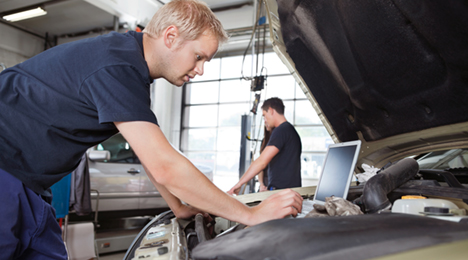
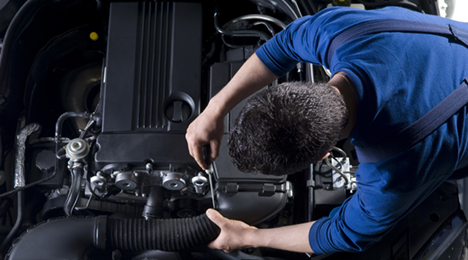
Faulty oxygen sensors are still the most common cause of a check engine light, says the the 2017 CarMD Vehicle Health Index released Tuesday.
According to CarMD’s findings, model-year 2005 vehicles were most likely to have a check engine light on and newer-model 2015 and 2016 vehicles make up less than 1 percent of reported check engine incidents.
"While check engine issues can occur on any age vehicle at any time for many different reasons, this report reminds owners of 10- to 12-year-old vehicles to be vigilant with their maintenance routines and to be prepared for the possibility of a check engine light repair," CarMD technical director David Rich said in a news release. "CarMD has monitored car repair and maintenance trends for two decades and found that when vehicles are properly maintained, they tend to experience fewer check engine light problems than those whose owners put off scheduled maintenance and small repairs."
CarMD examined data from 5.3 million-plus 1996-2016 vehicles inside the U.S. and on the roads during 2016.
Analysts took a look at 5,345,588 repairs reported to and validated by CarMD's network from January 2016 up to the end of December.
Last year, the average cost to repair a check engine problem was $398, which is up 2.7 percent year-over-year, according to the index.
Five top common problems found to trigger the check engine light in 2016, according to the index, were a faulty oxygen sensor, catalytic converter, ignition coil and spark plug issue, loose or damaged fuel cap and faulty mass air flow sensor.
The following lists the five c check engine light-related car repairs along with their average repair costs, according to CarMD.
1. Replace oxygen sensor – $258
2. Replace catalytic converter – $1,190
3. Replace ignition coil(s) and spark plug(s) – $401
4. Tighten or replace fuel cap – $17
5. Replace mass air flow sensor – $378
“Car repairs and associated costs can be affected by region, maintenance decisions of previous owners, as well as the vehicle's age,” CarMD said.
In the West, vehicle owners had a 1.1-percent drop in car repair costs, drivers in the Northeast paid the most for check engine repairs and drivers in the Midwest paid the least for parts and labor, according to the the automotive diagnostic information provider.
The report also found that vehicle age affects the likelihood of engine light-related car repair as well as the type of repair.
CarMD said 11-year-old model year 2005 vehicles accounted for 10.8 percent of check engine issues reported to CarMD in 2016 and were most likely to report having a check engine light on.
The full Index includes: the 25 most common check engine-related repairs; the percent of reported check engine light repairs by vehicle age; an 11-year history of U.S. car repair costs; a list of the most common repairs by region; and the 10 least and most expensive repairs.
To view the detailed 2017 CarMD Vehicle Health Index report click here.
Additionally, the automotive diagnostic information provider has introduced a new service called CarMD Garage now available online at www.carmd.com/garage, which aims to guide consumers to make informed decisions regarding repair, maintenance, used car and parts purchases.
CarMD Garage was designed to help car owners keep up with car maintenance by providing reports that show any services due on their vehicle, according to CarMD.
Misleading performance metrics in the automotive industry will erode the trust between vendors and dealers. These ramifications will have lasting effects for everyone providing marketing services to dealerships.
Most dealerships are beginning to rely heavily on analytics to evaluate their marketing campaigns. Because many marketing products can’t be evaluated only by CRM data, leads and phone calls; dealers are looking to tools like Google Analytics to gauge the effectiveness of their marketing programs.
Google Analytics has predefined two types of data: dimensions and metrics. Google Analytics displays this data in its reports, usually in the form of a table. This standard predefined data allows dealers to honestly evaluate the effectiveness of one marketing campaign against another weighing in cost and other variables.
The latest trend by some vendors is to convince dealers to allow them to manipulate standard Google Analytic data to have their campaigns perform better. While setting up goal conversion on your website is a good thing and should be done for all dealership websites, other changes should be met with some skepticism.
Events and bounce rate
The current recommended change is adding event tracking to vehicle detail pages (VDP). When using event tracking on your website, you need to be aware that events will impact the bounce rate of the page by default. Events count as an interaction (not a bounce) in the same way as visiting another page.
On the surface, event tracking may seem like a good thing; however, it may be done for all the wrong reasons. For example, if an auto shopper lands on your VDP and clicks to watch a video, you may want to add an event to show how many videos are being watched on your website. This can be used to measure the value of video on your site and to make adjustments in the quality of video or the photos used to build your videos.
On the other hand, if that same person is on a VDP but doesn’t click but stays on your site for a few seconds, does that warrant an event? I suggest not. If that person quickly views the vehicle and clicks back, in standard Google Analytics that would be tracked as a bounce. Some companies are suggesting that adding a “time on site” event to trigger Google Analytics that this was not a bounce.
There are many issues with this advice. First being it manipulates Google Analytics to benefit the vendor suggesting this change. All traffic sent to a VDP regardless of the source in this set up would benefit from this event. It would dramatically lower bounce rate, inaccurately inflate the metrics that measure engagement which would alter the evaluation of your marketing campaigns and your decision making ability.
If there is an issue on your VDPs you wouldn’t know it because all shoppers going to the page would appear to be engaged. Even if auto shopper didn’t click on anything it would seem like everything is great, but what if you had an issue with being overpriced? Or, what if your photos were not high quality and the majority of shoppers truly bounced? Wouldn’t you want to have the correct data and know immediately there is an issue so you can make the appropriate changes? Also, if you are using this logic to add an event to a VDP why wouldn’t you add the same event to the homepage or the SRP pages?
Secondly, it would be very difficult to accurately compare seasonal metrics from prior periods before you added the event. If you compare the quality of your traffic in February to the prior February, it would be almost impossible to use the year-over-year data. While the amount of traffic is always a good thing to measure, it isn’t the complete story. We’ve had clients who saw great improvements in the bottom line without big jumps in traffic when they began to have better focused traffic.
The issue with providing marketing vendors access to make these changes only allows them to modify standard Google Analytics to benefit their product(s). There is no reason to allow a vendor to manipulate your Google Analytics without a logical reason. By adding these events there is no actionable meaning behind them.
Let me be clear, event tracking when properly applied for the right reasons, can be a powerful tool for understanding exactly how people respond to your website and how other marketing efforts are working. But when done for no logical reason, it only benefits the company requesting the change. Be suspicious.
We must not allow the practices of some digital media companies to manipulate the metrics to improve their results because it will diminish the value of all digital marketing over time. And, we can’t ignore the larger idea of trust. Marketing agencies and dealerships both exist in a synergetic environment — we both need each other. Almost all consumers are shopping online before buying a vehicle so digital marketing has become very important. Dealerships will continue to need vendors that are honest, provide value and help strengthen their business.
Tony French is the president of Automotive Internet Media a digital marketing agency that provides CarClicks, websites and digital marketing services to the automotive industry.
Car dealerships’ handling of leads outpaces other industries, according to Conversica, a provider of artificial intelligence driven lead engagement software for marketing and sales organizations.
Forty-nine percent of the dealerships in a Conversica study responded to leads within five minutes, which is the ideal window for qualification and conversion.
“Internet leads are an expensive resource, crucial to the success of automotive dealerships,” Alex Terry, chief executive officer of Conversica, said in a news release. “Our annual report offers a snapshot of how dealerships are handling leads today and how that behavior is changing over time. We compared real-world execution with best-practice research to help dealerships see where they’re performing well but also to pinpoint processes that need to improve.”
Conversica analysts examined nine industries and had secret shoppers visit a total of 538 companies, including 59 within the automotive industry.
In addition to the dealership lead response rate presented, the study found that only 6 percent took longer than 24 hours to respond and 25 percent made eight or more attempts to reply to queries.
“There are many things the auto industry is getting right,” Conversica said. “Automotive had by far the highest proportion of top-tier scores, with over one-third of respondents (38 percent) receiving an overall 'A' grade.”
The company said the report also shows that there is room for improvement.
Almost 20 percent of dealers did not respond at all to a direct sales inquiry from their website, according to the annual report.
“And 75 percent failed to make the eight or more attempts that research demonstrates are needed to engage an internet lead,” Conversica said.
Additionally, dealerships that are interested in being included in future reports can submit a request at http://www.conversica.com/4ps-assessment-request.
“There is an abundance of research on the importance of what Conversica describes as the Four Ps—promptness, personalization, persistence and performance—of successful lead engagement,” Conversica added.
“The goal of Conversica’s research was to determine the extent to which auto dealers are putting this information into practice.”
Seventy-four percent of the dealerships examined practiced the four key elements of personalization in their responses.
Consolidated Asset Recovery Systems (CARS), a technology and services company that works with finance companies to help streamline the repossession and remarketing process, is hosting a free webinar focused on insurance claims and protecting finance company investments.
The session, in conjunction with van Wagenen, will begin at 1 p.m. ET on April 25. The webinar features a pair of van Wagenen executives: Jeff Anderson, who is vice president of recovery and risk management, and Neil Hall, who is sales manager.
The event is titled, “Hitting Foul Balls When it Comes to Insurance Claim Recoveries? Hit Grand Slams and Protect your Portfolio from Uninsured Loss!” In keeping with the baseball theme, Anderson and Hall will share insights regarding:
• Load the bases by understanding the different types of damage claims, how they impact your bottom line and when to file a claim on damaged repossessed collateral, total loss vehicle, damaged lease vehicle returns and diminished value claims
• Review your starting line-up on how to address these situations
• Hit a grand slam by maximizing insurance claim recoveries through best practices
Anderson joined van Wagenen in 2010 and has an extensive background in finance, insurance and customer service, having spent time with companies including The Hartford and State Farm Insurance. His expertise is in balancing the customer experience with the need to achieve cost competitiveness through a focus on business process design, technology automation and organizational structure.
Hall also joined van Wagenen in 2010 and brings with him experience in education, finances and physics, including playing professional football in Europe, teaching high school physics, and managing risk on margin investment accounts for Royal Bank of Canada. With his vast knowledge of insurance-related products and services necessary for lenders, Hall skillfully works with agents, partners and lenders nationwide to ensure protection against risk.
To register for the webinar, go to this website.
Three fundamental reasons why auto dealerships find converting leads into buyers an obstacle are: inadequate explanation of the pricing and value proposition, lack of timely follow-up and not using leads' preferred follow-up communication methods, according to recent study results released by AutoLoop.
"To increase lead conversion rates, the studies' results shine a spotlight on three specific areas that auto dealers can target for sales process and technology improvements," the auto industry marketing and customer relationship management solutions provider said in a news release.
AutoLoop's findings come from two of the company’s latest studies, the 2016 Digital Engagement (ADE) study, which analyzes the purchase behavior of more than 4 million customers who represent 1,000 dealerships within the U.S.; and the 2016 Autoloop XRM Unsold Customer Survey Results, which questioned 60,000 unsold customers following initial visit to a national sample of dealerships.
"Many dealers are quick to blame low conversion rates on the quality of leads, or they accept low conversion rates and opt to spend more money to get more leads, but our study points to different reasons for low conversion rates," said Doug Van Sach, AutoLoop’s vice president of analytics and data services. "The data tells us that key areas where dealers are failing to convert have to do with the internal sales process and the failure of sales teams to use technology and tools available to them."
1. Explain pricing and value proposition
"The reasons given to purchase and not to repurchase were similar, which tells us that it really is up to the individual salesperson to be transparent about pricing and to reinforce price points with additional benefits offered by the dealer, such as large vehicle inventory or free loaners during subsequent service visits," Van Sach said.
"Additionally, salespeople may want to ease up on the pressure and focus on making the purchasing process as pleasant and fast as possible."
AutoLoop said the car shoppers surveyed were asked why they decided to buy a vehicle from a particular dealership, their top reasons were: good value for the money, selection of vehicles, ease of purchase experience, quality of salespeople and convenient location.
When asked why they chose to not repurchase at a particular dealership, their top reasons were: prices are too high, plan on buying another brand, the dealer is too far from home, too much pressure to buy and paperwork took too long.
2. Follow-up in a timely manner
Only 47 percent of car shoppers surveyed said they received follow-up communications from the dealership, and 53 percent responded that they never received a follow-up whatsoever.
AutoLoop suggests that this significantly influences purchase rate. The study found that 26 percent of customers who received follow-up communications chose to buy a vehicle from that dealership.
Just 15 percent of shoppers who did not receive follow-up communications returned to the dealership to make a purchase.
"These figures are shocking as everyone knows that follow-up is a basic tenet of the sales process," Van Sach said. "This tells us that many salespeople do not understand the real value of follow-up, are not being held accountable to the established processes within the dealership, or don’t have sufficient time available to contact every unsold customer."
3. Communicate via prospects' preferred methods
Whether it’s by email or phone call, AutoLoop said another compelling finding is that the way in which follow-up communications are preferred is closely tied to the generation a car shopper belongs to.
- Among baby boomers, 60 percent prefer a phone call and 40 percent prefer email.
- Gen Xers and millennials have a preference that’s split 50/50 between email and phone calls
"I believe just about every CRM has a place to track a preferred method of contact, or it's very easy to store the information in a customer’s profile. One strategy dealers can employ is to ask customers for their preferred method of contact during their initial interaction with a dealer either online or in the store," Van Sach said. "Dealers that focus on enhancing their sales process and usage of technology in these three areas will see significant improvements in their lead conversion rates."
Particular car shoppers respond better or worse to different words when debating which car to buy, according to new research released by CDK Global on Tuesday.
The company’s latest edition in its Language of Closers series provides demographic specific entail that is valuable to dealers seeking out ways to most effectively describe inventory on their vehicle description pages.
“Our research examined the words that would eventually lead buyers of different demographics to leave a review website and head to a dealership site,” Jason Kessler, lead data scientist at CDK Global, said in a news release. “In our most recent analysis, we were able to pinpoint specific words that shed valuable light on what vehicle traits matter most to women, Generation-X consumers, recent college graduates, and parents."
CDK found a number of words that it says resonate with multiple demographics heavily.
For example, the research revealed that mentioning the word "power" attracted several groups. CDK suggests it helps to illustrate the experience of driving a vehicle in a relatable way.
“Certain words fell flat and failed to lead prospective buyers to a dealership site,” the provider of integrated information technology and digital marketing solutions said.
Women responded negatively to “bigger,” Generation-Xers would rather read "performance" over "design" and most parents fell that both "sound" and "tech" were low priorities compared to others.
Below is a list of the top and low performing words associated with four demographics that CDK highlights.
WOMEN
Top: drive, power, trip, comfortable, luxury
Low: bought, transmission, owned, bigger, cargo
GEN-X
Top: truck, power, luxury, package, performance
Low: back, seat, design, built, difference
COLLEGE GRADS
Top: buy, work, truck, power, highway
Low: company, designed, inside, warranty, light
PARENTS
Top: truck, leased, row, nice, purchase
Low: sounds, buying, control, tech, company
"As a leading provider of websites and digital advertising for dealers and OEMs, we are always looking for the best ways to help our customers bring the right buyers into their dealership. By making subtle changes to the language used on vehicle description pages, dealers can help customers easily identify cars that they both connect with and fit their lifestyle needs," Kessler added. "Ultimately, these changes will prime both dealers and customers for success."
For more information about The Language of Closers, visit http://www.cdkglobal.com/promo/language-of-closers-reviews.
You have seconds to get a customer's attention online, and vehicle photos are often the first impressions of your dealership. You've spent hundreds on auction fees, transportation and reconditioning your vehicles. So why would you use below-average photos to represent your vehicle and expect to get a customer's attention out of the hundreds of other options accessible to them online?
Show the customer you care about your product. Impress them with photos that depict the quality of the vehicle and dealership, and they’ll come to the showroom to see it in person. Below are four tips for taking better inventory photos to drive showroom traffic.
1. Do your research
The right camera will make all the difference, and you must ensure that you purchase the best camera for your dealership. Smartphones can take quality shots and mobile apps have made it easier to manage and upload photos, but quality can vary by brand and model of phone. Luckily, today there are HD digital cameras available that produce quality photos that can quickly and wirelessly connect directly with your inventory to automate the uploading process to your dealership’s website.
2. Get something up fast
Even if it's just a couple of shots, try to post some images of the vehicle as soon as you can. Online browsers want to visually see actual vehicles and what differentiates them from other similar vehicles they are looking at. A viewer is not going to read through all the details on every vehicle if your website is serving up search results filled with stock or "coming soon" photos. You are losing potential customers every day that vehicle sits on your lot without any photo online.
3. The right photos
Lots of shots showing options is one thing. The key to achieving a customer's trust, though, is being entirely transparent about the real condition of the vehicle through great photos. Put the most content-rich images in the first ten slides with the first image of the vehicle pointing to the right. Our natural visual direction is from left to right, and by pointing the vehicle to the right you are guiding the buyer's eye in the direction of all the great options you want them to see.
4. Shoot at the right time of day
This is by far the most common mistake people make while trying to get quality shots of any subject. The best time to shoot will be in the hour or so after sunset or before sunrise, but don't shoot into the sun. If you must shoot in the harsh light during the middle of the day, try to find a spot where the vehicle and background are all in the shade. The north side of a building is a good spot for softer lighting.
5: Golden Section (the rule of thirds)
The rule of thirds is a general guideline to help in composing visual images. The basic principle behind the rule of thirds is to imagine breaking an image down into thirds so that you have nine parts. This grid identifies four important parts of the image that you should consider placing the vehicle as you frame your image. By using this method it's possible to produce a higher-quality image that is well balanced and puts the focus on the vehicle.
6. Background
Try and keep distractions to a minimum. Avoid having things in the background that will distract the eye. Things like other vehicles, signage, dumpsters, cracked asphalt and power lines can kill a picture. Remember, the photo should be all about the vehicle you’re selling, nothing else. If you want your dealerships information with the photo, considering using a custom photo overlay on the first image instead of hanging behind the car.
7. Reflections and hard shadows
New and reconditioned vehicles often have shiny surfaces. Have a look around at the car to see what is reflecting or casting shadows on its surface. If you can, avoid having your own reflection in the photo. If you can’t avoid a reflection, try putting the camera on a tripod, setting the timer, and moving out of the shot. Nothing ruins a shot like distracting reflections.
8: Get away from normal eye-level
Find unique features and then try and shoot them from different angles. Kneel down in front of the car, or try to get a shot from high up. This will allow you to capture multiple angles of the car. Experiment but be careful not to get too "artsy." Extreme angles can distort the shape of a vehicle and though it might look cool, remember that the purpose of the photo is to clearly show the vehicle’s condition and options to a potential customer in a way that makes them want to come in and see it in person.
Following these tips will go a long way toward producing attractive and enticing photos that will reflect well on your dealership and help generate more showroom traffic.
Joe Holmes is marketing manager with DealersLink.
With Buick and Lexus leading the way, quality of automotive service continues to show significant improvement and is driving an increase in overall customer satisfaction, according to the J.D. Power 2017 U.S. Customer Service Index (CSI) Study released on Thursday.
Furthermore, service departments should brace to use text messages more often to reach their customers more effectively.
J.D. Power’s study indicated service quality scores account for the greatest improvement, rising to 805 (on a 1,000-point scale) from 779 in 2015, when the project was redesigned. The other four measures — service advisor, service initiation, service facility and vehicle pick-up — all showed improvement from 2015 levels.
Overall customer service came in at 813, up from 800 over the same period, according to the study.
The study measured customer satisfaction with service at a franchised dealer or independent service facility for maintenance or repair work among owners and lessees of 1- to 5-year-old vehicles.
“The quality of work — doing the job right the first time — can noticeably affect customer satisfaction and loyalty, but it shouldn’t be viewed in a vacuum,” said Chris Sutton, vice president of the U.S. automotive retail practice at J.D. Power. “Proactive communication with the customer, especially while the car is being serviced, is one element that has a direct influence on loyalty.”
The study indicated that among customers who are contacted by phone, 55 percent say they “definitely will” return for paid service. When receiving text message updates, that loyalty factor jumped to 67 percent.
Additionally, customers’ preference for communicating via text has increased 3 percent to 6 percent across all generational categories since 2015. More than four in 10 Gen Y1 and Gen X customers — 41 percent to be exact — now cite this preference, as do 25 percent of Boomers and 10 percent of Pre-Boomers.
“It’s not surprising to see the preference for receiving updates through text messages continue to rise, but only 3 percent of customers indicate they receive text message updates,” Sutton said. “Correcting that disconnect by adding more text message capability should be a priority with a service operation.”
Additional key findings of the 2017 study included:
—Service advisor scores big: The highest level of satisfaction is in service advisor with a score of 834. This is followed by service initiation (830), service quality (805), vehicle pick-up (803) and service facility (790).
—Technology affects satisfaction: Increases in the use of tablets by service advisors and online scheduling tended to increase customer satisfaction. Tablet usage increased to 24 percent from 17 percent in 2015, and online scheduling rose to 13 percent from 9 percent during the same period.
—Almost a clean sweep: Customers rated dealers higher than non-dealers in 15 of 16 attributes. The most noticeable advantages are amenities offered; comfort of waiting area and cleanliness of dealership. Non-dealers rate higher in time required to complete vehicle service — but only by 0.06 points on a 10-point scale.
—The value of getting it right the first time: The vast majority (94 percent) of customers who take their vehicle in for service indicate that the dealer fixed it right the first time. However, among the 6 percent of customers indicating the service work was not completed right on the first visit, satisfaction dropped to 639, which is 184 points lower than among those whose work was completed right the first time.
—Too much static: Dealers seem to have trouble servicing problems with radios. It’s unclear if the issue is vehicle- or service-related, but only 80 percent of customers who sought service for a radio reception problem indicate the dealer was able to fix it right the first time.
Lexus ranked highest in satisfaction with dealer service among luxury brands with a score of 874. Following in the luxury ranking were Audi (869), Lincoln (868), Porsche (867) and Cadillac (865).
Buick ranked highest in satisfaction with dealer service among mass market brands with a score of 860. Following in mass market brands were Mini (850), GMC (837), Chevrolet (829) and Nissan (822).
The 2017 U.S. CSI Study is based on responses from more than 70,000 owners and lessees of 2012 to 2016 model-year vehicles. The study was fielded between October and December 2016.
For more information about the 2017 U.S. Customer Service Index Study, visit this website.
The National Automobile Dealers Association reminded members that those who participate in its Dealership Workforce Study by completing a questionnaire and submitting their payroll records will receive two complimentary reports.
NADA officials recapped that the reports, titled “Automotive Retail: National & Regional Trends in Compensation, Benefits & Retention,” is one of the industry’s top resources for helping dealers meet their No. 1 challenge of attracting and retaining productive employees.
The report contains clear analysis of the light-vehicle and commercial-truck industry. The report includes national and regional data for 60 car and truck dealership positions.
In addition to data on pay, benefits and turnover, the report details the impact of work schedules, gender gap and generational challenges facing dealerships today.
Participants will also receive a complimentary individualized comparative report for each participating dealership.
To enroll in the 2017 Dealership Workforce Study, which is open through April 28, visit www.nadaworkforcestudy.com and enter your member or company ID. For questions, send an email to [email protected] or call (800) 557-6232.
The next online continuing education offering from risk management and training provider Recovery Industry Services Company (RISC) is geared to prepare recovery agency owners and agents to comply with federal regulations for protecting consumers’ nonpublic personal information (NPPI).
In addition to covering Gramm-Leach-Bliley Act requirements specific to third-party disclosure of NPPI, the new course also examines the growing role of social media in the repossession process.
RISC highlighted the course is priced at $49 through April 7, a discount of 50 percent off regular pricing.
“Professionals in the collateral recovery industry face an array of complex and fast-changing challenges, from rising insurance rates to lender compliance mandates and federal consumer protection regulations,” said RISC president Stamatis Ferarolis, a licensed training instructor for collateral recovery specialists across the nation.
“In such an environment, it’s critical that recovery agents and agency owners continually advance their knowledge and understanding of the latest industry developments,” Ferarolis continued.
The CE 11 course provides recommended procedures for protecting NPPI from unauthorized third-party disclosure during the repossession process, specifically relating to address verification (residence and place of employment), contact procedure (other than debtor) and skip-tracing.
Additionally, the course outlines how social media can affect the repossession process, such as:
• Potentially violating an individual’s privacy rights through the disclosure and/or dissemination of personal and/or disparaging information online.
• Determining insurability, in part, through a review of an individual’s social media postings, including comments and photos.
Ferarolis pointed out RISC’s suite of continuing education courses has been developed to comply with Consumer Financial Protection Bureau and finance company mandates across a range of specialty areas, including field recovery procedures, data security and the Uniform Commercial Code.
All courses are offered 100% online, including final testing, and a certificate is issued upon successful completion of each of the 11 continuing education courses. The training provided is applicable in all 50 U.S. states and Puerto Rico.
“Our goal in developing certification and Continuing Education courses is to ensure collateral recovery professionals continue to serve their clients effectively, while complying with state and federal regulations that impact the repossession process,” said Ferarolis, co-author of the Field Recovery Specialist Operations Manual.
To learn more about RISC’s continuing education programs and other services, e-mail [email protected], call (866) 996-7472 or visit www.RiscUS.com.