What third-party site provides the most valuable leads for car dealers?
In this industry, that’s a million-dollar question.
But it’s a riddle that one company, in particular, is trying to figure out.
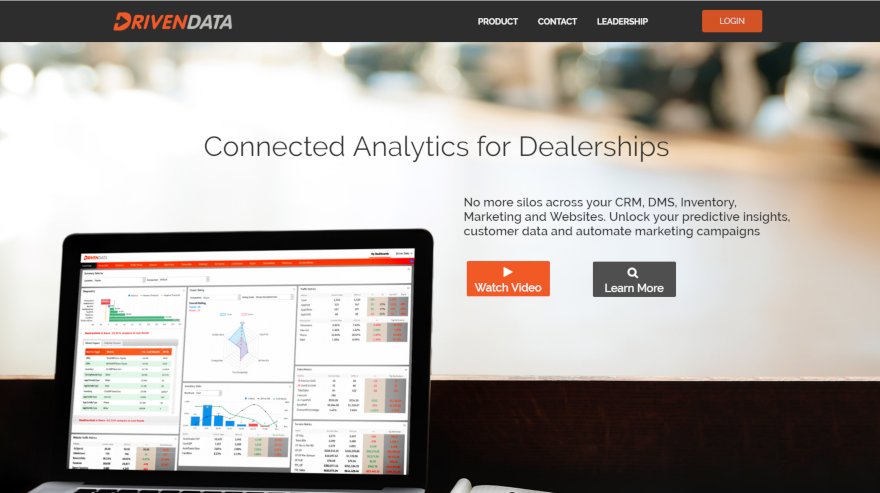
Driven Data, which offers a customer data platform for the auto industry, has released the Classified Lead Quality Index, which through aggregated statistics aims to measure the performance of leads provided by Autotrader, CarGurus, Cars.com, Edmunds and TrueCar.
“Our dealership partners initially asked us for aggregated performance of their classified site providers while maintaining dealership data anonymity. After hearing the same questions each month, we developed the analytics to provide the answers dealers were seeking,” Driven Data said in a news release about the index.
“We published 2018 data last month representing the first time this information has been available for the automotive community,” the company claimed.
Driven Data said it based the report on more than 365,000 leads and 16,200 sales from last year through the first quarter of this year.
“These insights help dealers evaluate the gross profit and lead conversion performance levels each deliver relative to each other,” the company said in the news release.
“The Classified Lead Quality Index highlights the performance metrics on the leads generated by the top automotive classified providers for their dealership partners,” it added. “This amount of lead conversion data was not easily available to the industry and will enable focused innovations to improve performance.
“Additionally, the aggregate data serves as a benchmark for dealerships along with their sales and marketing partners.”
Driven Data said the data is based on information from roughly 130 dealerships from all of last year and the first quarter of this year, representing about 365,000 leads from the leading third-party classified sties. The data was sourced via CRM leads, CRM appointments and DMS sales.
Driven Data said its warehouse data is “standardized from the various CRM and DMS providers.”
Its data can be downloaded here. The company is lead by founder and chief executive officer Jon Berna.
A couple of the players mentioned have shared their thoughts on the report.
In a LinkedIn post from last week, Cars.com chief executive officer Alex Vetter said: “I’m proud to report that Cars.com is No. 1 in our competitive set, delivering the highest average gross profit per used-vehicle sale to dealers, up over 20% since 2018. Thank you to Jon (Berna) and Driven Data for finally cracking which auto marketplace is delivering the most value into the CRM — one small fraction of sales transactions.
“But Cars.com has never been just a ‘lead provider,’ as we deliver so much more value for our dealer customers beyond traditional leads,” Vetter said. “This is becoming even more apparent as consumer shopping habits change and digital purchase indicators shift — you should see how much traffic we’re driving to first-party dealer websites that result in a sale (more to come on this)!
“As we continue to drive value for our customers and help them stay out of the race to the bottom, we believe the combination of Cars.com, Dealer Inspire and DealerRater will be hard to beat,” he said.
Meanwhile, in comments provided by email to Auto Remarketing, Jessica Stafford, who is senior vice president and general manager at Autotrader, said: “While I’m not as familiar with the exact methodology and client list that have been used as part of this specific lead quality report, it’s not surprising that Autotrader would have the highest show rate and conversation rate as well as deliver among the highest rate at gross per lead.
“Additionally, Autotrader delivers a significant amount of visits and leads to our dealers’ websites, which is important to some dealers and not as important to others as each dealer has a strategy and goal with third-party sites,” she said.
“Over the past year we’ve continued to innovate and find new ways to deliver increased value to consumers and clients yielding up to 80% more leads year of year, which enabled us to become the No. 1 most used third-party listings site,” Stafford said.
“One of the interesting things that we’ve been watching closely as we have been delivering significantly more leads is the quality of the lead to the dealer’s bottom line – we’re seeing that our leads convert up to 2x in comparison with internet leads. I hear from clients every week that Autotrader continues to deliver the highest margin on leads in comparison with our competitors,” she said.
“This is promising as we are committed to delivering value to dealers, and there is no better way to deliver value than to their bottom line. We use stated, behavioral and predictive data to ensure that vehicles are always targeted to the right buyers, which means that we deliver a high volume of quality exposure, engagement and leads that convert to sale more often than anyone else.”
Dealers don’t have to meander through the lanes or go on their smart devices for significant spans to know the spring market is in full bloom.
How long it might last is the question Black Book looked to answer in its newest Market Insights report.
Editors indicated spring activity continued to roll on this past week, with four specific car segments and three truck segments generating the most price activity.
However, Black Book executive vice president of operations Anil Goyal doesn’t suspect that lane intensity will continue too much longer.
“The spring market continued to show strength last week. However, it’s not expected to last long as sales percentages are starting to come down from their peak,” Goyal said in the latest report.
An auction owner from South Carolina who talked with Black Book went so far as to make this assessment: “It feels like the robust spring market is beginning to fade. Our sales percentages are beginning to come down to levels that are typical during the summer months.”
According to volume-weighted information, Black Book determined that overall car segment values increased by 0.29% last week. That’s more than triple the average increase spotted during the previous four weeks; a reading at just 0.09%.
Among those cars, editors noticed full-size cars increased the most, rising by 0.76%. But sporty cars, subcompacts and compact cars weren’t far off that pace as each segment jumped by at least 0.53 percent.
Again, based on volume-weighted data, Black Book indicated overall truck segment values (including pickups, SUVs, and vans) ticked up by 0.19% last week. That level is slightly higher than the four-week average rise, which was 0.16%
In the truck space, minivans, midsize crossover/SUVs and small pickups generated the highest increases, climbing by 0.59%, 0.55% and 0.54%, respectively.
Furthermore, Black Book’s lane observers stationed at nearly 60 weekly sales nationwide collected anecdotes that further showed how the 2019 spring market is unfolding.
Here is the rundown from the other sale locations Black Book reported:
— From Georgia: “The spring market is still going strong. There was a good crowd with competitive bidding and very few no-sales. The only vehicles that seemed a little soft were the luxury vehicles.”
— From Pennsylvania: “This is a very hot market. Of all the lanes here, the truck lanes were the most active with most selling and for good prices.”
— From Michigan: “The market is up as dealers remain positive, although we are hearing reports of low trade-in volume.”
NOTE: Updated to include March and first-quarter certified pre-owned vehicle sales figures.
Two years ago, 59% of vehicle shoppers were focused on used cars.
According to the 2019 Cox Automotive Car Buyer Journey study, that number is now 64% — and the struggle around new-vehicle affordability is a major reason why.
The numbers reflecting used-leaning shoppers include those that are either A) only shopping for used cars or B) those that are primarily shopping for used, but browsing some new.
The number of total shoppers only considering used has climbed from 23% to 28% in the last two years, according to the study.
(The consideration numbers included these categories: Used Only; Primarily Used, Some New; Primarily New, Some Used; and New Only. It excluded shoppers who were not sure).
In a news release recapping the study, Cox Automotive analysts said that, “consumers continue to be frustrated by new-vehicle prices and are more likely than ever to be shopping for used vehicles.”
And many are moving into certified pre-owned vehicles.
First quarter CPO sales were up 0.4% year-over-year at 677,038 units, according to Cox Automotive. In March, certified sales climbed 2.7% to 265,878 units.
Company analysts said in Wednesday’s Data Point report that record-high new-vehicle prices and the highest interest rates since 2011 are “perhaps” among the drivers of such CPO sales strength in Q1.
“This is in stark contrast to the weakness we have seen with new retail vehicle sales, which were down 4% for the quarter,” Cox Automotive analysts said in the Data Point report.
“As the used-vehicle market continues to see strong consumer demand with favorable supply of off-lease units coming to market, the CPO market is primed to continue its growth heading into the spring selling season.”
Going back to the Car Buyer Journey Study, new vehicles had an average purchase price point of $35,671 in December, Cox Automotive said, citing data from its Kelley Blue Book brand.
Monthly new-car loan payments averaged $567 in the first quarter, a 3.4% year-over-year hike. New-car lease payments were at $500, up 2.7%.
There was relatively stability in monthly used-car payments, which came in at $414 — just $1 more than the year-ago figure.
This underscores Cox Automotive’s finding that affordability is paramount. More than half (54 percent) of vehicles in 2012 had price tags under $30,000, but that has slipped to just a little more than a third (35 percent) falling into this price bracket, the company said.
“Meanwhile, the number of vehicles priced over $50,000 jumped fourfold, from 6% in 2012 to 24% today,” analysts said. “It comes as no surprise then that 48% of consumers feel that owning or leasing a vehicle is becoming too expensive, up from 42% in 2015.”
Used-car buyers are also cutting down on the time they spend shopping — and more so than their new-car counterparts.
Among what Cox Automotive called “Automotive Internet Users,” or AIUs, used-vehicle buyers reduced their time spent researching and shopping from 15 hours and seven minutes in 2017 to 14 hours and 12 minutes in 2019.
That’s a 55-minute reduction.
Meanwhile, new-vehicle buyers cut their research/shopping time by 42 minutes, spending 13 hours and six minutes on that process in 2019.
However, the amount of time dedicated online has remained relatively steady for both new- and used-car shoppers (among AIUs)
For used-car buyers, 63% of their shopping time was spent online, representing a sum of eight hours and 52 minutes. Two years ago, they spent 59% of their time online (which still equaled eight hours and 52 minutes).
On the new-car side, 53% (or six hours and 55 minutes) of time was spent online in 2019; two years ago, it was 52% (or seven hours and eight minutes).
The full study is available here.
As KAR Auction Services chief economist Tom Kontos explained it, those crossovers and SUVs that rolled over the curb during the past couple of years as leased units are now “coming home to roost.”
According to ADESA Analytical Services’ monthly analysis of wholesale used-vehicle prices by vehicle model class, Kontos and the analyst team determined wholesale used-vehicle prices in March averaged $11,095 — up 3.0% compared to February and up 2.5% relative to March of last year.
Kontos pointed out that all vehicle segments experienced month-over-month increases with car prices going up more than truck prices, on average.
“Average wholesale prices and retail used vehicle sales were strong in March, typifying the usual spring/tax season market uptick,” he said in his latest Kontos Kommentary released on Monday.
“In addition, our analysis increasingly indicates that prices for car segments are beginning to hold up better, while crossover and SUV truck segments may be starting to have a tougher go. In recent years, the opposite has been true,” Kontos continued.
“As mentioned in previous commentaries, this is to be expected as more crossovers and SUVs start coming home to roost from strong new-vehicle sales over the last few years,” he added along with a video that can be seen here..
Kontos again took a closer look at fleet and lease trends for vehicles less than 3 years old and 45,000 miles on the odometer. When holding constant for sale type, model-year age, mileage and model class segment — using criteria that characterize off-lease units — Kontos noticed that prices climbed “significantly” on a year-over-year basis for midsize cars but dropped “substantially” for midsize SUV/CUVs.
Specifically, those car prices jumped $530 or 4.4% to $12,517 while those utility prices slid $688 or 3.3% to $20,336.
Kontos went on to mention all seller types saw monthly and annual average price increases in March.
The update showed that average wholesale prices for used vehicles remarketed by manufacturers increased 3.7% month-over-month and edged 0.1% percent higher year-over-year.
Prices for fleet/lease consignors rose 4.3% sequentially and 2.3% annually, according to ADESA data.
Finally, Kontos noted average prices for dealer consignors increased 5.7% versus February and 2.0% relative to last March.
ADESA Wholesale Used-Vehicle Price Trends
| |
Average |
Price |
($/Unit) |
Latest |
Month Versus |
| |
March 2019 |
February 2019 |
March 2018 |
Prior Month |
Prior Year |
| |
|
|
|
|
|
| Total All Vehicles |
$11,095 |
$10,775 |
$10,824 |
3.0% |
2.5% |
| |
|
|
|
|
|
| Total Cars |
$8,656 |
$8,339 |
$8,595 |
3.8% |
0.7% |
| Compact Car |
$6,716 |
$6,484 |
$6,661 |
3.6% |
1.6% |
| Midsize Car |
$7,564 |
$7,352 |
$7,591 |
2.9% |
-0.4% |
| Full-size Car |
$7,996 |
$7,780 |
$7,274 |
2.8% |
9.9% |
| Luxury Car |
$13,144 |
$12,633 |
$13,088 |
4.0% |
0.4% |
| Sporty Car |
$14,340 |
$13,412 |
$14,194 |
6.9% |
1.0% |
| |
|
|
|
|
|
| Total Trucks |
$13,145 |
$12,820 |
$12,779 |
2.5% |
2.9% |
| Minivan |
$8,408 |
$8,367 |
$9,876 |
0.5% |
-14.9% |
| Full-size Van |
$13,283 |
$12,287 |
$13,195 |
8.1% |
0.7% |
| Compact SUV/CUV |
$11,322 |
$11,095 |
$10,777 |
2.0% |
5.1% |
| Midsize SUV/CUV |
$11,371 |
$11,234 |
$11,031 |
1.2% |
3.1% |
| Full-size SUV/CUV |
$14,214 |
$13,628 |
$13,379 |
4.3% |
6.2% |
| Luxury SUV/CUV |
$18,281 |
$17,788 |
$18,290 |
2.8% |
0.0% |
| Compact Pickup |
$10,082 |
$9,692 |
$8,905 |
4.0% |
13.2% |
| Full-size Pickup |
$16,244 |
$15,662 |
$15,707 |
3.7% |
3.4% |
Source: ADESA Analytical Services.
Depending on where your dealership is situated, if the greening grass and volume of pollen in your neighborhood already haven’t indicated spring is in full swing, perhaps the buzzing at your favorite wholesale auction should show it.
This week’s Market Insights report from Black Book summarized the continued intensification of the spring market with lane watchers throughout the country relaying anecdotes about active bidding and more.
“The spring market trend continues with affordable used sedans rising the most in values. The crossovers are showing an uptrend as well, but not as strong as the sedans,” Black Book executive vice president, operations Anil Goyal said in the latest report.
According to volume-weighted data, editors determined overall car segment values increased by 0.25% last week. That’s quite a reversal of the four-week average, which represented a 0.10% dip.
Black Book pointed out subcompact cars increased the most with their values rising by 0.74%
Again based on volume-weighted information, editors indicated overall truck segment values (including pickups, SUVs, and vans) decreased by only 0.01% last week. Like cars, that latest reading is quite different than the four-week truck average, which was a decline of 0.28%
Values for compact vans led the way with an increase of 0.90%.
As mentioned, Black Book’s representatives at nearly 60 sales nationwide noticed auctioneers and ringmen stayed busy, watching for bids from dealers walking the lanes or submitting offers online. Here is the rundown:
— From Georgia: “Both inventory and attendance were up in numbers. The quality of the consigned inventory was subpar, but most sold anyway.”
— From California: “A strong sale with lots of action. More vehicles were purchased online as opposed to in the lanes.”
— From Pennsylvania: “A high percentage of vehicles sold as dealers were stepping up their bids. I heard some complaints from dealers about having to pay higher than normal prices to secure inventory.”
— From Wisconsin: “Almost everything is selling amid very active bidding. Prices are moving up on most models.”
The segment of the nation’s economic engine fueled by franchised dealerships ran pretty smoothly last year.
In fact, employment and payroll at U.S. franchised dealerships continued to rise in 2018, according to the latest report released on Monday by the National Automobile Dealers Association.
In 2018, the nation’s 16,753 franchised dealerships employed 1,136,600 workers, up 0.5 percent from the previous year, according to NADA Data 2018.
“Direct employment at new-car dealerships once again topped 1.1 million employees at the end of 2018,” NADA senior economist Patrick Manzi said in a news release. “In addition to direct employment provided by new-car dealerships, hundreds of thousands of other jobs in local communities are dependent on dealerships.”
The report indicated payroll at franchised dealerships topped $66.5 billion in 2018, up 1.9 percent from the previous year. On average, dealership employees earned $1,134 per week, up 1.8 percent from 2017.
“For the past several years, dealership employees have seen steady increases in their incomes as well as their total compensation,” Manzi said. “Dealership jobs offer compensation that is significantly higher than other retail sectors, and dealers continue to boast one of the highest average salaries of all industries.”
Other highlights from NADA Data 2018 include:
— For the second consecutive year, total sales which includes new- and used-car sales, service, parts, F&I and more topped $1 trillion.
— At the end of 2018, the average selling price of a new and used vehicle sold at franchised dealerships was $35,608 and $20,586, respectively.
— Net pre-tax profit per dealership as a percentage of total sales (new and used vehicle sales, service, parts, F&I and body shop) continued to decline: 2016 (2.5 percent); 2017 (2.3 percent); and 2018 (2.2 percent)
—Since 2009, service and parts sales on average per dealership increased by 5.5 percent per year on an annualized basis.
NADA Data 2018 also includes a section focusing on the new- and used-vehicle financing with in-depth data from Experian. The stats include average monthly payment, average contract term, leasing and more.
To download the entire report, go to this website.
Black Book highlighted activity in the lanes and dealership showrooms is on the upswing as the spring market continues to blossom.
This week’s Market Insights report detailed not only the latest price movements, but also anecdotes from Black Book’s representatives at sales nationwide that indicated dealers are in need of inventory because of upticks in buyer demand.
“Auto auctions are seeing high-sales conversion rates with active buyers,” Black Book executive vice president of operations Anil Goyal said.
“Spring market is in full swing, and affordable cars have the strongest demand,” Goyal continued in the latest report. “Subcompact cars led the market last week with the highest lift in valuation.”
Volume weighted, editors determined that overall car segment values increased by 0.17 percent last week. In comparison, Black Book reported car values on average softened by 0.25 percent during the previous four weeks.
Editors pointed out that the mainstream cars and sporty car segments showed a strong lift in values with those subcompact cars leading the way with a gain of 0.57 percent.
Again volume weighted, Black Book determined overall truck segment volume (including pickups, SUVs and vans) edged down just 0.07 percent last week. That level was just a fraction of the four-week average, which was a dip of 0.36 percent.
In the truck segment, editors said minivans showed the most lift in values, rising by 0.55 percent, while luxury SUVs showed the most declines with the full-size category dropping by 0.57 percent.
Turning to those stories from last week’s sales, Black Book offered this collection from its lane observers:
— From Michigan: “The market remains positive. Dealers are reporting a more active retail market, which has pushed more buyers and bidding at the auction.”
— From Nevada: “Several dealers stated that tax refunds are starting to flow into the market, which is welcome news.”
— From Massachusetts: “Everyone seemed happy as retail is gaining steam, especially in the used market. This was the best sale this year.”
— From Maryland: “One of the best sales I have ever witnessed. Out of the 95 vehicles consigned in the lane, only two failed to sell, and they all brought good money.”
— From Georgia: “The lower end of the market is being driven up by buyers willing to pay over market value for specific models. Also, the sport cars and convertibles are getting hot.”
Update on the specialty market
As they do at the beginning of each month, editors also relayed their updates from the specialty market. Here is the rundown from Black Book:
— Collectibles: Editors indicated the collectible car world has gotten off to a good start this year. Black Book reported the first two months of the year generated more than $500 million in sales, and the auctions held in association with the Amelia Island Concours d’Elegance added another $80 million.
— Recreational vehicles: Now that spring is here, Black Book highlighted that dealers are seeing an increase in floor traffic on their lots and strong interest at shows. “We have noted an uptick in volume for the second month in a row at the wholesale auctions as dealers continue to fill out their inventories,” editors said.
— Powersports: Black Book determined entry-level, affordable and mid-range units lead the way as the powersports market enters spring. “Warmer weather has brought most segments of the market significant increases in value, which is a welcome development as the retail selling season is upon us,” editors noted.
— Heavy duty: As more over the road trucks dropped in wholesale value, Black Book noticed a few others held their own while a couple actually went up.
— Medium duty: Editors closed by mentioning auction prices continue a downward trend as demand slows and new and used inventory increases.
Used cars were always a major point of emphasis for Larry H. Miller.
Miller, who founded Utah-based Larry H. Miller Dealerships in 1979, expected his business’ used-to-new vehicles sales ratio to be at 1-to-1.
Miller died in 2009, but the company has continued to operate on his philosophy of the importance of used vehicles.
“The impact of a solid used-car operation within our dealerships is critical to our overall success,” Rod Rowley, who is vice president of operations for the dealer group, said via email.
Other dealership groups agree with that thinking. Penske Automotive Group reported record full-year and fourth-quarter 2018 adjusted results, and for the year those record results included units retailed, revenue and earnings before taxes. Used vehicles played a major role in that success.
“For the fourth quarter, our business was driven by continued growth in used vehicles, service and parts, the commercial truck operation and our equity investment in Penske Truck Leasing,” company chairman Roger Penske said in the company’s full-year and fourth-quarter 2018 earnings release.
Larry H. Miller and Penske Automotive are just two examples of how used vehicles are a big part of auto dealership groups’ current and future plans. Group 1 Automotive reported in its fourth-quarter and full-year 2018 earnings report that although it faced challenges in its new-vehicle business because of factors such as difficult sales comparisons to the Hurricane Harvey period in 2017, “our strong performance in used vehicles, parts and service, and F&I allowed us to deliver positive same store gross profit growth despite these very significant headwinds in our new-vehicle business.”
Lithia Motors is another example, with the company reporting that total same-store used-vehicle retail sales increased 7 percent for the year and 10 percent for the quarter, which helped contribute to the company’s record 2018 and fourth-quarter revenues.
Various trends in auto dealers’ sales focus show how dealers have increased their emphasis on used-vehicle sales.
Lower new-car affordability helps used
The used-car business remains robust, said Rowley of Larry H. Miller. As new-vehicle prices continue to climb, more consumers are turning to used cars.
“(Certified pre-owned) is a very good option for consumers and gives them the peace of mind that the car is covered by a manufacturer warranty and has been thoroughly inspected,” Rowley said, adding that late-model trucks and SUVs are Larry H. Miller’s top-selling used vehicles. “Many of the OEMs provide incentivized rates for consumers that makes the vehicle even more appealing. Again, as new prices climb, used trucks become more affordable for many consumers.”
Zo Rahim agrees. Affordability concerns are shrinking the pool of people who can afford to buy a new vehicle, said Rahim, who is part of Cox Automotive’s research and market intelligence group.
“If you look at the 2018 average new-vehicle payment, the payment came in at 10.2 percent of median household income,” Rahim said during a presentation at NADA Show 2019.
He added that shifting consumer preferences and changes in production to favor light trucks means consumers looking for affordable options like midsize and compact cars are looking to shop in the used-vehicle market, since that supply of vehicles is being restricted in the new-vehicle market.
How used-vehicle promotions, technology help boost sales
Larry H. Miller sees a “big spike” in business when it holds its four-day LHM1000 sales events on Memorial Day and Labor Day weekends, Rowley said.
“In-store advertising usually has two event-based sales using direct mail, e-mail blasts and outbound phone calls per month focused on driving used-car traffic to our stores,” he said.
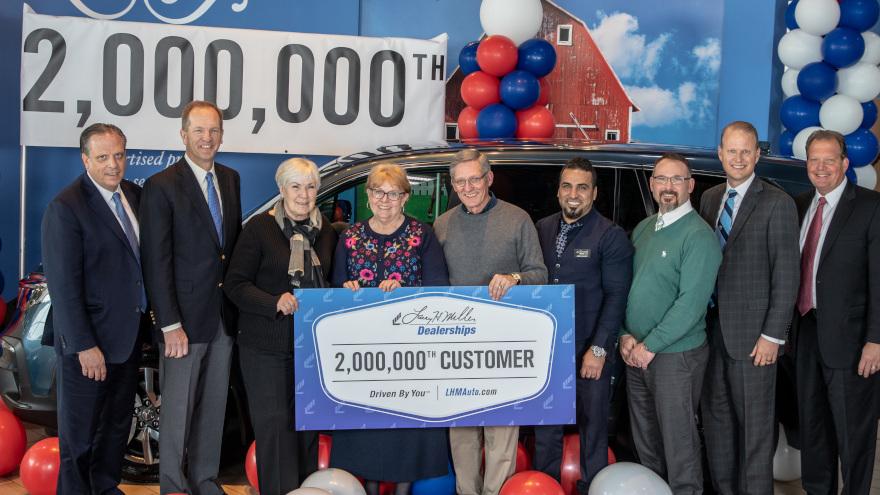
Those promotions have probably played a role in Larry H. Miller Dealerships recently celebrating the milestone of selling 2 million retail new and used vehicles.
Technology and central appraisal systems can be a big factor in sales, too.
“Technology is and will continue to be an advantage for dealers,” Rowley said. “The amount of information available in regards to pricing and core inventory for a specific dealer is abundant.”
Rowley noted that Larry H. Miller Dealerships started a central appraisal team, which can provide an appraisal in less than 10 minutes for every dealership and every car the dealership appraises.
“The dealership can then decide whether to keep the car or sell it to Appraisal Central, which in turn places the vehicle in the dealership that can use the vehicle and maximize the sale,” he said.
Other factors driving emphasis on used
A January Auto Remarketing article highlighted Sonic Automotive’s emphasis on used vehicles through its commitment to standalone used-car stores. Sonic president Jeff Dyke went into detail on purchasing vehicle inventory and how establishing a rhythm is key in inventory management for these stores. He explained that the company makes projections for what it believes it will sell the following week and then buys according to that number.
“Everything is done by week, so that we keep a consistent flow of inventory,” Dyke stated in the article. “And that’s critical. Inventory management is imperative in order to be able to be profitable in a store like this.”
Standalone used-car stores have also been important for Larry H. Miller Dealerships, and that is further evidence of its investment in the used-vehicle side. It runs seven standalone used-vehicle operations.
“I would say we will continue to be open to new opportunities in the right place,” Rowley said.
He noted that Larry H. Miller Dealerships sold more than 53,000 used vehicles in 2018, representing a 4-percent increase over the previous year. That is a major piece of evidence supporting Rowley’s repeated statements of the importance of a strong used-vehicle operation to the business’ success.
“And with our reconditioning standards, it has a huge impact on our fixed operations and the gross generated there,” Rowley said.
He noted again that with the continued rise in new car prices, “the used-car business will remain a major focus within our dealerships.”
“A strong used-vehicle operation is crucial to the profitability of each dealership,” Rowley said.
In challenging times, used-vehicle sales are there to take up the slack.
At least that was the case for Group 1 Automotive in the fourth quarter and full-year 2018.
When times are good for auto dealers, used-vehicle sales also often play a prominent role, and that was the case for Asbury Automotive Group, too, as used vehicles helped that company achieve a record-breaking sales year in 2018.
For Group 1, its 2018 revenue of $11.6 billion was an all-time record for the company. Group 1 retailed more than 170,000 new and approximately 150,000 used vehicles.
But for fourth-quarter 2018, Group 1’s U.S. comparisons to fourth-quarter 2017 faced some challenges, in part because of the company’s accelerated 2017 sales in its Houston and Beaumont, Texas markets after Hurricane Harvey. New-vehicle sales for those areas were down in the third and fourth quarters of 2018.
For the full year of 2018, however, used-vehicle sales helped save the day for Group 1.
“Despite these difficult comps, our U.S. operations team delivered positive full-year, same-store gross profit growth through a continued focus on improving our used-vehicle and aftersales business as well as a record-setting year in F&I,” Earl Hesterberg, Group 1 president and chief executive officer, said during the company’s 2018 fourth quarter and full-year financial results conference call on Feb. 5.
Retail used-vehicle gross profit increased 4.7 percent on a revenue increase of 13.1 percent. The company retailed 147,999 used vehicles in 2018, a 13.9 percent increase over 2017.
Used vehicles help Group 1 ease new-vehicle challenges
Hesterberg did not provide an update on the specific measures Group 1 is taking to improve its used-vehicle business, but last year the company launched Val-U-Line, a proprietary brand for older-model, high-mileage, pre-owned vehicles. The company notes that Val-U-Line targets a growing customer demand and allows Group 1 to retail lower-cost units that would have otherwise been sent to auction.
In the conference call, Hesterberg mentioned the used business as helpful in offsetting new-vehicle challenges. He started by discussing the new-vehicle business, noting that total consolidated new-vehicle revenues in the fourth quarter decreased 4 percent on a constant currency basis, driven by a 6-percent decrease in unit sales related to Hurricane Harvey comps and U.K. emissions legislation.
Moving on to discuss the used-vehicle business, Hesterberg said the company retailed more than 36,000 used units in the fourth quarter of 2018, with the United States and United Kingdom performing well. Total consolidated used-vehicle revenues grew 8 percent on a constant currency basis, and the company sold 6 percent more units with a 2-percent increase in the average used-vehicle selling price. Total used-vehicle gross profit increased 9 percent on a constant currency basis.
“The used volume and per-unit margin increase were the result of our corporatewide focus in this area of our business and especially our Val-U-Line initiative in the U.S.,” Hesterberg said.
He added that on a year-over-year same-store basis, he was proud to see continued strong growth in used retail unit sales, with an 11-percent gain in the fourth quarter. He noted that the Val-U-Line retail unit sales generated more than 10 percent of the company’s used volume during the quarter.
Responding to a conference call participant who asked for more information on the benefits of Val-U-Line, Daryl Kenningham, Group 1 president, U.S. operations, said the company feels Val-U-Line’s 10 percent of quarterly used volume is a good level at this point.
“We’re always watching to make sure it’s incremental,” Kenningham said. “It is not substitutional. That’s a continual focus for us.”
The numbers consistently showed used vehicles helping to save the day for Group 1. Retail used-vehicle revenues increased 8.8 percent (10 percent year-over-year comparable basis) in the fourth quarter on 12.8 percent higher unit sales. Retail used-vehicle gross profit increased 1.4 percent (2.4 percent year-over-year comparable basis) to $41.1 million.
Used vehicles’ strong role in Asbury’s record year
Asbury Automotive’s record year in 2018 included generation of $6.9 billion of revenue, as well as retailing of more than 185,000 vehicles and servicing of more than 2 million vehicles.
“Our success was driven by growth in our used-vehicle business, higher F&I gross profit and continued solid growth in parts and service,” David Hult, Asbury president and chief executive officer, said in the company’s fourth quarter 2018 earnings conference call on Feb. 6.
Asbury increased its used-to-new ratio by 160 basis points, resulting in used-vehicle unit sales increasing by 5 percent and a 7-percent increase in used-vehicle gross profit, said John Hartman, Asbury’s senior vice president of operations.
He added that the company’s deployment of omni-channel initiatives along with Asbury’s used-car enterprise software, contributed to some of the strong results. Hartman noted that the company’s used-vehicle inventory of $159 million was at a 34-day supply which is within its targeted range of 30 to 35 days. He added that increased volume sales led to an F&I gross profit increase of 3 percent.
“The improved used-vehicle sales drove reconditioning work within parts and service to increase by 5 percent,” Hartman said.
A more detailed look at the sales numbers provides additional evidence of how used vehicles came to the rescue for Asbury. For all stores, Asbury’s new-vehicle revenue increased 6 percent in the fourth quarter, with new-vehicle gross profit decreasing 6 percent.
But used-vehicle retail revenue and used-vehicle gross profit both increased by 10 percent in the quarter, as well. Finance and insurance revenue and gross profit increased by 6 percent. On a same-store basis, new-vehicle gross profit decreased 7 percent. However, used-vehicle gross profit on a same-store basis increased 7 percent, and used-vehicle retail revenue also increased 7 percent.
More on used vehicles helping Group 1 results
But although used vehicles played a key role in Asbury’s record sales year, their role in helping Group 1 through its challenges was key. The Worldwide Harmonised Light Vehicle Test Procedure legislation, which caused new-vehicle supply shortages in the U.K., was another challenge.
“Our strong performance in used vehicles, parts and service, and F&I allowed us to deliver positive same-store gross profit growth despite these very significant headwinds in our new-vehicle business,” Hesterberg said.
Perhaps the day is coming soon when dealership service drive personnel or rental fleet staffs already will have a host of information about a vehicle’s tire condition and other data points before the customer even gets in line.
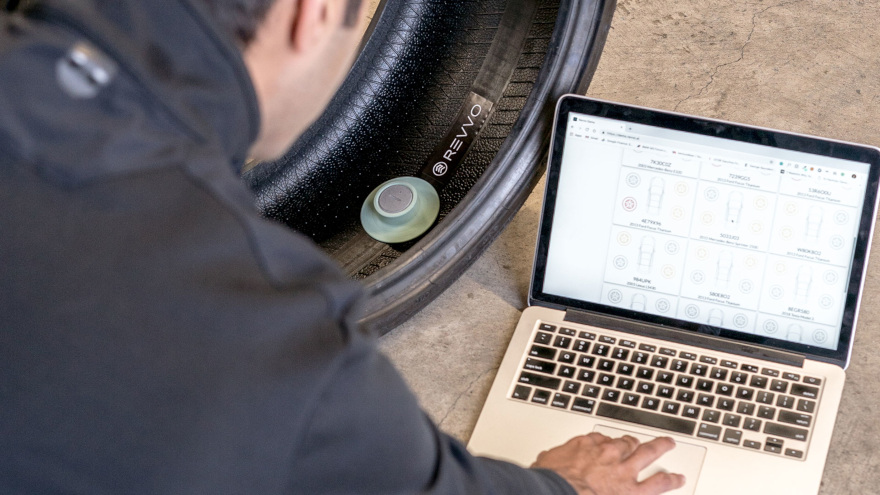
Revvo, a Silicon Valley-based startup formerly known as IntelliTire that offers an internet of things (IoT) “smart” sensor for vehicle tires, announced on Tuesday that it has raised $4 million in Series A funding.
Norwest Venture Partners led the round with participation from Vulcan Capital and AngelList, according to a news release.
Revvo said it will use the financing to continue to build the product and expand its technical and business development teams.
Revvo highlighted that the firm proudly joins the ecosystem of tech startups fueling the shift in the mobility and transportation sectors. Although autonomous vehicle and self-driving technology have made enormous advances, Revvo contends the tire has remained virtually unchanged, despite being one of the most critical components of a vehicle’s performance, safety and reliability.
The firm sees the market offering a massive opportunity with more than $225 billion spent on 2.2 billion tires in the last year alone. Revvo’s initial focus will be on the fleet sector, a segment consuming tires at a disproportionately high rate with clear pain points around tire usage.
Revvo explained that it has built what the company said is a first-of-its-kind, sensor-enabled artificial intelligence software platform to monitor tires while a vehicle is on the road. The technology includes proprietary sensors that are embedded inside the tire, which can generate a real-time feed of a tire’s condition and performance. The sensors capture thousands of data points per second from the interior of the tire which is sent to the cloud via an app on the driver’s phone.
Artificial intelligence and machine learning models are applied to the aggregated data set to better predict tire tread wear. This technology can helps the driver and fleet managers better understand the overall health of the tires on their vehicles which leads to increased vehicle uptimes, optimized efficiency, and improved safety.
“Until now, tires have not benefited from the mobility revolution. Through machine learning and AI, tires can provide an invaluable data set of road conditions, driver behavior, and feedback for vehicle performance,” Revvo chief executive officer Sunjay Dodani said.
“We’re extremely excited to have the support of the Norwest team, which will help us work toward our goal of enabling smart and connected tires,” Dodani continued. “Our team at Revvo is passionate about applying a data science-centric approach to bring intelligence to the only part of the vehicle that touches the ground.”
Parker Barrile, who is a partner at Norwest Venture Partners, added, “We live in a world of increasingly connected and autonomous vehicles, but tires haven’t changed in decades.
“We’re excited to work with the team at Revvo to make tires as smart as the vehicles that depend on them and to tap into a massive market that is shifting toward fleets and autonomous vehicles,” Barrile went on to say.
For more information, visit www.revvo.ai.