A new report from eLEND Solutions asks the question: Is digital retailing promising more than it can deliver? And Nick posed more questions to eLEND Solutions chief executive officer Pete MacInnis about this report and more for this Auto Remarketing Podcast episode recorded during NADA Show 2019.
MacInnis explained during the conversation that although digital retailing and its many definitions is being touted as the future of automotive retailing, this dealership survey indicated that a key hurdle remains. That challenge is many standalone digital retailing tools or platforms quoting inaccurate and/or misleading payment information to consumers, which are ultimately creating more skepticism with buyers and expensive rewrites and unwinds for dealers.
According to the survey, dealers who adopt digital retailing tools are striving to deliver a frictionless buying experience, including more transparency about the “deal,” but these same surveyed dealers report that basic payment calculator estimator tools are actually getting in the way of their desire to evolve.
In fact, a total of 87 percent of dealer respondents agree that it’s common for payment estimator tools to provide inaccurate or unrealistic payment expectations. And it is impacting sales, as 74 percent reported that well over a quarter of deals that include digital retailing-provided payment terms have to be rewritten
And the majority lose more than 60 percent of those sales, according to the survey that’s available here.
MacInnis offered an array of suggestion to reverse these trends during the podcast that can be found below.
Download and subscribe to the Auto Remarketing Podcast on iTunes or on Google Play.
You can also listen to the latest episode in the window below.
Catch the latest episodes on the Auto Remarketing Podcast homepage and on our Soundcloud page.
AutoNation Honda Hollywood has taken many steps to lower its energy costs and reduce its environmental impact in the community. Some of those steps include installing energy-efficient lighting and HVAC systems and state-of-the-art LED lighting in the interior and exterior of the dealership.
Because of actions like that, AutoNation Honda Hollywood has been named a 2018 Energy Efficiency Leader. Dealerships that win the annual recognition have shown “exceptional energy performance” compared to other dealerships in their area, based on their energy use per square foot of building space.
AutoNation Honda Hollywood is one of 33 dealerships nationwide to be recognized as a 2018 Energy Efficiency Leader, a new designation for Honda Green Dealer program participants. Honda introduced the Honda Green Dealer recognition to encourage continuous improvement among its Green Dealers and acknowledge their ongoing efforts to conserve energy. Honda analyzes dealerships' energy performance over a calendar year to determine the Energy Efficiency Leaders.
“We’re proud to be recognized as a 2018 Energy Efficiency Leader and join Honda's global effort to preserve and protect the environment,” AutoNation Honda Hollywood general manager Mike Eagle said in a news release.
For Honda’s Green Dealer program, a third-party evaluator conducts environmental audits of participating dealers and recommends strategies to reduce their energy use. Participating dealers across the company’s automotive, power equipment and powersports lines have so far collectively lowered CO2 emissions by more than 59,000 metric tons and saved almost $12.5 million in energy costs. Honda introduced its voluntary Green Dealer Program to its U.S. dealers in the fall of 2011.
Honda has worked for more than three decades to reduce the environmental impact of its North American products, manufacturing and logistics operations, and facilities. The company's North American Environmental Report reports annually on these initiatives.
Honda says expanding its environmental initiatives to its dealer body is the logical next step in the company's effort to reduce waste, energy use and CO2 emissions across its operations and throughout the lifecycle of Honda products, including at the point of sale.
The 2018 Green Dealers are:
Platinum:
—Bradfon Honda
—Kastner Honda
—Rensselaer Honda
—Rossi Honda
—Roswell Honda
—Smith Honda
—Smithtown Acura
—Tony Honda
Gold:
—Brown Honda
—Cities Edge Motorsports
—Crown Acura
—Don Wessel Honda
—Hardin Honda
—Holmes Honda
—Jim Coleman Honda
—Jody Wilkinson Acura
—Marin Acura
—McKibben Powersport Honda
—Vatland Honda
Silver:
—AutoNation Honda Hollywood
—Chad Little Outdoor Power Equipment
—Diamond Honda
—Frank Leta Honda
—Honda of Santa Fe
—Larry Hopkins Honda
—Lester Raines Honda
—McDaniels Acura
—Monarch Honda
—Piedmont Honda
—Scotsco Inc.
—Scott Honda of West Chester
—Tom-N-Jerry’s Boat Center
—Vandergriff Honda
Jim Robertson likes how the social media, intelligent lead response technology and consumer engagement company Digital Air Strike helps with his dealership’s customer satisfaction index score.
“The online review monitoring is always spot on and gives us the ability to review, correct and sometimes even get the customer to change or remove negative reviews,” said Robertson, who is general manager of Brown’s Manassis Kia.
Digital Air Strike is now taking its partnership with Kia a step further, as the automaker named the company a preferred partner to provide social media and reputation management for Kia dealerships for the eighth consecutive year.
Kia notes that in 2011, Digital Air Strike became the first 100-percent automotive-centric social media vendor to support Kia dealerships nationwide, with 100 percent of Digital Air Strike products being co-op eligible by Kia.
Digital Air Strike notes that it has helped more than 5,000 dealerships boost consumer response and conversions in digital and social media environments. It also says it helps dealerships generate measurable ROI. The company adds that it deploys industry-specific mobile apps, software, intelligent messaging and managed service platforms to monitor, engage, improve and manage consumer interactions for businesses in the United States, Canada and 11 additional countries. Digital Air Strike has also worked with seven of the largest automotive manufacturers.
Kia’s more than 755 dealers can now access all of Digital Air Strike’s social media and reputation management tools and technology.
“It’s a privilege to continue our great relationship with Kia Motors America and Kia dealerships nationwide,” Digital Air Strike co-founder and chief executive officer Alexi Venneri said in a news release. “Kia has long been a market leader and among the first to embrace new technology that enhances the ability for dealers to communicate with Kia consumers. We are proud to provide industry-leading social media marketing, reputation management, and response solutions that help Kia dealers engage with their customers and ultimately sell and service more vehicles.”
Those used vehicles on your front line and highlighted on your store website — especially certified pre-owned models — are going to look even more appealing if a new report from Edmunds is any indication.
Edmunds projected on Wednesday that used-vehicle sales in 2019 are poised to hit the highest level since the recession. In 2018, analysts said 40.2 million used vehicles were sold in the U.S. In 2019, Edmunds is predicting used-vehicle sales could approach 41 million.
Edmunds experts explained that rising vehicle prices and high interest rates are pushing buyers out of the new market, and a record number of lease returns this year will give shoppers more options than ever in the used market.
“Typically, sales of new and used vehicles follow the same pattern — if sales of new vehicles rise or fall, so do sales of used vehicles, and vice versa,” Edmunds senior manager of industry analysis Ivan Drury said in a news release.
“But now we’re seeing new-vehicle sales fall while used rise, indicating the market has reached a flash point,” Drury continued. “New cars are getting so expensive that they’re out of reach for many car shoppers, but there are so many more affordable used vehicles coming off lease that the market is naturally shifting in that direction.”
Edmunds data showed that in 2013, the price gap between new and 3-year-old used vehicles was 56 percent, amounting to more than $11,000 in savings on average. In 2018, that number grew to 62 percent, totaling nearly $14,000 in savings on average.
Edmunds data also revealed that interest rates on new-vehicle financing jumped by 17 percent in 2018, whereas rates for used vehicles have risen at a slower clip, with interest rates increasing by 9 percent in the same period.
Edmunds experts added that these market conditions have never been more favorable for certified pre-owned vehicles, but there’s an opportunity for automakers to better educate vehicle shoppers on the benefits of these programs.
According to Google Trends data, relative search interest for CPO vehicles has steadily increased over the last five years, but the top pages viewed on Edmunds for shoppers of CPO vehicles are “What Are Certified Pre-Owned Vehicles?” and “Certified Pre-Owned Cars Vs. Used Cars With Extended Warranties.”
“Many shoppers are unaware of the benefits of CPO vehicle programs, but given the tough financial conditions in the new market, it’s never been a better time to look into them,” Drury said.
“Between more affordable prices, the assurance of an automaker warranty, and lower interest rates, CPO vehicles give car shoppers a way to enjoy many of the benefits of a new car and minimize many of the risks of buying a used car,” he went on to say.
The Price Gap Between 3-Year-Old Used Vehicle Versus New Model
| Segment |
2013 |
2018 |
Additional
Percentage Savings |
| Subcompact Car |
$5,750 |
$7,519 |
31% |
| Compact Car |
$7,135 |
$7,891 |
11% |
| Midsize Car |
$9,679 |
$10,979 |
13% |
| Large Car |
$14,771 |
$15,623 |
6% |
| Sports Car |
$9,656 |
$15,877 |
64% |
| Subcompact SUV |
$11,423 |
$9,302 |
-19% |
| Compact SUV |
$7,997 |
$9,760 |
22% |
| Midsize SUV |
$13,753 |
$13,924 |
1% |
| Large SUV |
$21,965 |
$24,024 |
9% |
| Midsize Truck |
$7,594 |
$9,341 |
23% |
| Large Truck |
$14,550 |
$15,765 |
8% |
| Minivan |
$11,765 |
$12,154 |
3% |
| Luxury Subcompact Car |
$8,568 |
$13,606 |
59% |
| Luxury Compact Car |
$15,079 |
$19,509 |
29% |
| Luxury Midsize Car |
$19,755 |
$25,991 |
32% |
| Luxury Large Car |
$35,547 |
$45,486 |
28% |
| Luxury Sports Car |
$33,392 |
$37,374 |
12% |
| Luxury Subcompact SUV |
N/A |
$15,252 |
N/A |
| Luxury Compact SUV |
$16,141 |
$18,967 |
18% |
| Luxury Midsize SUV |
$19,711 |
$22,318 |
13% |
| Luxury Large SUV |
$36,049 |
$41,536 |
15% |
| Industry |
$11,398 |
$13,705 |
20% |
Source: Edmunds
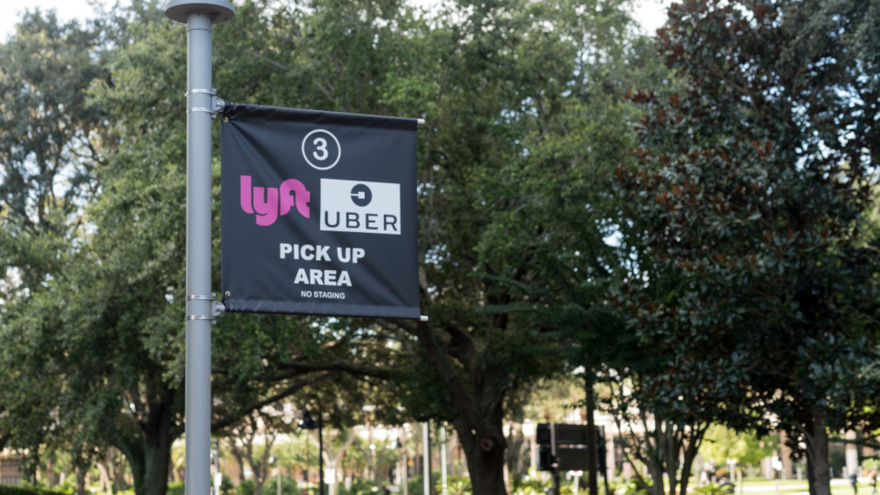
Dealers who want to get involved with individuals looking to participate in the ride-sharing economy have another opportunity by leveraging their idle inventory.
On Wednesday, DriveItAway announced it is partnering with MyDealerOnline to give ride-share drivers what the companies called “unprecedented choice” in selecting a temporary vehicle to drive, giving them access to hundreds of vehicles in current inventory as well as wholesale auction vehicles in many locations available through participating dealers.
With the goal of being the most dealer and driver friendly national car-sharing service for current and prospective Lyft and Uber drivers, DriveItAway said in a news release that it now has more than 1,000 vehicles available and offered on its driver app in each of two pilot regions — Philadelphia and Miami. Combined with its free credit repair and remediation program, DriveItAway insisted it is the only platform of its kind to offer a clear “path to ownership” to all of its ride-share drivers.
DriveItAway is piloting this new service with MyDealerOnline in the Philadelphia area with Empire Motors Auto Sales, and in the Miami area with AutoTrust USA.
Potential ride-share drivers looking for a vehicle that they might want to drive or rent-to-own simply has to download the app where both immediately available vehicles and those units that would be available “upon request” are displayed.
For many dealers, all or part of the car-sharing rental payments can be used toward the down payment for the purchase of the ride-share drivers chosen “dream car.”
“In the past, the ‘on demand’ employment that Lyft and Uber provide was only available to those who have an appropriate vehicle with which to drive,” DriveItAway chief executive officer John Possumato said. “Our mission at DriveItAway is to provide temporary vehicles to those who want to drive but don’t have a vehicle, by tapping into a car dealer’s inventory, but uniquely, offering a ‘path to ownership,’ as there is no getting around the fact that, longer term, it is much more economical for a ride-share driver to own their own vehicle.
“A few weeks ago, we made the industry first move of offering free credit repair for all drivers on our platform, and now we have gone one step further and have broadened vehicle selection beyond any competitive offerings as now dealers can add both sitting inventory to a driver’s selection on the app,” he continued.
“The vast inventory currently available at wholesale ‘dealer only’ auctions in the area, through cooperating dealers, so that DriveItAway alone offers our drivers true transparency to hundreds, even thousands of vehicles to choose from, available for a rent to own type purchase.” Possumato went on to say
MyDealerOnline creator Yury Kaganov also described what the partnership with DriveItAway means for his firm.
“I originally created MyDealerOnline to create an easy, transparent way car dealers could display to the public vehicles that were listed at wholesale remarketing channels, as means by which they could offer this ‘virtual’ inventory for sale and attract more buyers,” Kaganov said. “Now I think integrating it into the DriveItAway dealer focused car sharing app, for dealers who want to attract even more customers and to offer these vehicles to ride-share drivers on a rent to own basis is a perfect new age additional feature, giving ride-share driver’s maximum choice in selecting their temporary, then purchased vehicle.
“Combining the ‘virtual’ dealer supplied vehicles with ride-share, on-demand employment and credit repair through DriveItAway give unprecedented choice and opportunity to this new market,” Kaganov went on to say.
For more information, visit www.driveitaway.com/rto/.
RumbleOn is an e-commerce company that uses technology to help dealers and customers buy, sell, trade, or finance pre-owned vehicles through one online location. Expanding its partnership with Manheim into Fontana, Calif., RumbleOn notes that its distribution network from California to Washington, Pennsylvania and down to Florida, now hits all corners of the United States.
That coverage further reduces inbound freight costs without capital expenditures, according to RumbleOn.
The addition of Manheim Southern California gives RumbleOn regional partnerships in 17 markets across the country, including nine Manheim locations. Those markets include:
—Cincinnati
—Nashville, Tenn.
—Dallas
—Orlando, Fla.
—Daytona Beach, Fla.
—San Diego
—Fontana, Calif.
—San Francisco
—Greensboro, N.C.
—Statesville, N.C.
—Spokane, Wash.
—Indianapolis
—Kansas City, Kan.
—West Palm Beach, Fla.
—Madison, Wisc.
—Windsor, Conn.
—Manheim, Pa.
“By adding Fontana to our capital-light distribution network, RumbleOn further taps into one of the largest pre-owned vehicle markets in the country,” RumbleOn founder, chairman and chief executive officer Marshall Chesrown said in a news release.
“As we expand our automotive presence, Manheim’s reputation for being one of the leading reconditioning and end-to-end remarketing companies makes them a great partner for RumbleOn’s growth strategy," Chesrown continued.
Manheim senior vice president of marketplace Patrick Brennan added, “With its strong brand, RumbleOn is an incredibly valuable partner for Manheim, both as a wholesale buyer and a seller.
"Bringing their attractive inventory, 30-day guarantee, and transportation assistance into southern California is a great win for Manheim buyers in an important market for used vehicles," Brennan went on to say.
I am just old enough to remember from reruns a black-and-white TV sitcom, “Car 54, Where Are You?” The show originally ran on NBC from 1961 to 1963. I do recall, somewhat painfully, hearing a similar phrase echoing through our showroom and used-car operation during my more recent days as a former dealership owner and general manager.
We, too, lost cars. Transports unloaded out back on busy Saturdays were often left to sit, sometimes until the following Wednesday. We lost track of cars at sublets. Cars pulled out of line at inspection to await special order parts sometimes sat idle too long. Each delay cost us money.
Your dealership loses, misplaces or forgets vehicles every day as they move around through a multi-step reconditioning process. These neglected assets run up your holding costs — $40 on average per day per car — and kill your time-to-line (T2L) efficiency, which results in diminished inventory turn, gross erosion and loss of precious sales.
That’s a lot of damage resulting from cars that, for many reasons, drop out of line and out of mind while the depreciation clock continues to tick.
You must stop this waste. To succeed here, you’ll need a system for tracking vehicle movement, location and time loss (as holding cost). You’ll want a process that follows every vehicle through every step of your reconditioning, from acquisition until it’s sold. The ideal solution keeps you and your team on top of each vehicle’s situation via mobile and desktop tools that email, text and flag notations that provide real-time location updates and where that vehicle is during any moment of your recon process, whether still on the back lot or sale-ready and moved to the sales lot.
Find more gross
Recon delays caused by misplacing or forgetting cars slow down your T2L recon cycle time (in days) and that costs your dealership the loss of measurable gross you’ll never get back. This is because the speed at which each recon step is completed and the number of times the cycle is repeated is what drives up gross profit exponentially — and each car must be in recon for this to happen:
• It drives up gross with additional trade-in volume.
• It drives up gross in the service and parts departments with more purchases and trades running through the shop.
• It drives up F&I gross with more customers coming through that department.
• It drives up future gross as the dealership’s customer base expands with each new customer, referral and repeat business.
The longer a vehicle remains in the inventory cycle, the higher the holding cost and the lower the total gross profit will be. At some point, these increased costs and lost gross will overtake any potential gross profit.
No more lost cars
Fred Gwynn, who played Fred Munster in the sitcom “The Munsters,” and comedian Joe E. Ross starred in the original “Car 54,” not to be confused with the ’94 remake (for younger readers, the original version is available on Amazon Prime Video). Gywnn and Ross as officers Muldoon and Toody, respectively, were comical, a little clumsy and, by all indications, apt to get lost or forgotten by those back at command central.
That is no way to run a police — or recon — department.
The “Car 54” team used two-way radio communications but, for rapid recon results today, you’ll use mobile devices and desktop computers equipped with T2L workflow tracking and location apps. Now your team, from wherever they are, can instantly know the precise location of your cars, whether on the lot, in detail, at sublet — or on a test drive.
Fast, convenient VIN and QR code scans mean immediate capture and upload of incoming car data into your DMS to start the recon acquisition process. Mobile scan convenience saves your team time, shoe leather, double data entry and the frustration of having to correct errors that inevitably plague manual data entry.
Progressive dealers use recon accountability workflow technology, mobile applications and software products to shorten their inventory cycle times, from acquisition to sale-ready and then to the front line.
Why T2L accountability matters
We know the first 21 to 30 days you own a car is the best opportunity to sell a vehicle and earn the highest gross. After having processed more than five million vehicles through our rapid reconditioning software, however, our data tell us most dealers’ recon practices suffer under a 12- to 21-day recon cycle. These slow cycles mean cars are not sale-ready until much of this premier sales time is consumed.
Where reconditioning T2L software replaces manual recon workflow and tracking methods, most dealers quickly achieve a three- to five-day time to line cycle.
Too good to be true? No, say dealers:
“We sell more than 700 used cars a month. Tracking these vehicles through the reconditioning process has always been a task that is very difficult to deal with,” said Jared Ricart, president of the Ricart Used Car Factory, part of Ricart Automotive in Columbus, Ohio. “With the software that Rapid Recon has provided for us, we can find out where cars are at and at which step of the process. Discovering how fast they're getting to the front line has been terrific because, in today's age of used car sales, it's about speed to the front line.”
When you want to run a highly productive and intelligent vehicle-reconditioning department, you can’t have lost cars, delayed cars or out-of-production cars.
Camacho Auto Sales is an independent dealership with three used car operations serving the Palmdale and Lancaster, Calif., markets outside of Los Angeles. Camacho reconditions 220 vehicles a month to keep its lots filled with fresh inventory that sells faster.
Camacho’s used car superstore at the Palmdale Auto Mall provides the recon function for the operation.
Vehicles sent out to sublets for some phases of that work often were forgotten or otherwise delayed. That lost time cost Camacho Auto Sales considerable financial loss.
“Things were a mess,” said owner/operator Gus Camacho. “We are talking here about thousands and thousands of dollars. Delay getting cars ready to be sold increases floorplan expense, ties up money in products not available for sale and contributes to vehicle depreciation.”
The core of this problem is a lack of visibility. Camacho said he rarely knew how long cars were at sublets or otherwise delayed unless he checked when repair orders on those vehicles were opened. This provided the information sought, but too late to enable him to address the real problem.
“With rapid reconditioning software, however, we know exactly where our cars are — and how long a sublet is taking to get them back to us. If that time is unacceptable, we now have the data to discuss that problem with the sublet in objective ways,” Camacho said.
A busy recon operation has too many individual pieces in motion at one time to track those assets accurately using Google Doc or spreadsheet systems. When you can’t track accurately, cars get lost, misplaced or forgotten for some expensive period of time. Each “lost car” incident erodes recon speed or T2L. Remove delays by using recon tracking accountability software to know where every car you own is — whether just off the transport or coming out of the photo booth.
Trackability and accountability throughout your recon operation will help you reduce your T2L by keeping the line moving forward. Faster T2L improves inventory turn — an added turn for every 2.5 days reduced in your T2L — shaves your holding costs and boost gross. You must know where your cars are at all times.
Steve Lewis, a former dealership GM and owner, is VP of sales for Rapid Recon. For more information, visit www.rapidrecon.com or contact him at [email protected].