Spireon’s latest tool that the company says is the first connected car solution truly designed for franchise dealers is set to roll out this month.
Leveraging the strategic integrations with Cox Automotive’s HomeNet and Dealertrack DMS as well as CDK Global, and Reynolds and Reynolds, Spireon highlighted the six primary capabilities of Kahu Connect, which is designed to offer dealerships the visibility needed for retail inventory management, a new dashboard for ease of access to actionable data and the ability to track down specific inventory for customers.
With the integrated solution, dealers can now visualize and report on the current status of their entire inventory, not just the connected cars on the lot with the Kahu solution. This capability can give dealers deeper insight into inventory location, protection and usage as well as expedites customer sales.
“With dealerships facing increasing pressure to deliver top-notch service to buyers, it’s critical that they are buttoned up on backend operations,” said Brian Skutta, president of automotive at Spireon.
“We’ve created a holistic solution that allows dealers to seamlessly integrate Kahu into the operational DNA of the dealership, leading to lot health and a shorter, streamlined customer buying experience, which in turn, increases sales,” Skutta continued in a news release.
Kahu Connect can provide dealerships with stronger tools to optimize lot health and operational efficiency. Key benefits of the solution include:
• Automated Activation and Deactivation: Utilizing the DMS sales feeds, Kahu automatically can process activation into consumer accounts or deactivates devices without requiring staff to spend time with manual processing
• True Retail Inventory Visibility: Automatically can adjust reports and dashboards to help visualize how dealership management systems (DMS) data feeds and active retail changes impact a dealer's inventory landscape
• New Inventory Management Dashboard: Can deliver real-time data on a dealership’s retail makeup and problem areas, as well as highlights the most urgent and actionable data that dealerships need at their fingertips
• Increases the Ability to Connect the Right Vehicle to the Right Customer Quickly: richer vehicle information automatically can be populated and searchable within the Kahu app and online including interior/external color, stock number, trim and body style
• Inventory Classification: Can allows dealers to segment and view inventory by type including new, used, loaners, parts and shuttles
• Improved VIN Decoding: Key data integration with HomeNet Automotive can allow Kahu to utilize additional data sources as backup for VIN decoding
With visibility into both Kahu connected vehicles and those not yet paired with a device, dealerships are able to ensure all vehicles are accounted for and protected against theft. Spireon shared the experience of an Arizona dealer.
“Kahu Connect promises to be a game-changer for us, in terms of our ability to clearly see the status of our entire lot,” said Shalee Bleecker, controller at Arrowhead BMW in Glendale, Ariz. “While other lot management service providers tout inventory management as a feature, it doesn’t apply to all of the vehicles in our queue, giving our team only half of the picture.
“Spireon has taken the much-needed steps to build an all-encompassing tool that not only gives us the confidence on our backend operations but also empowers our team to provide the best car shopping experience for our customers,” Bleecker continued in the news release.
Kahu Connect will be generally available starting this month, according to the company.
To learn more about Kahu, visit www.spireon.com/kahu. Kahu is only available through automotive dealerships. Dealers interested in selling Kahu can inquire at this website.
More than a decade removed from the Great Recession, media analysts and economists believe there is potential for an economic downturn to occur within the next few years. Despite the speculation, the automotive finance market appears to be strong. In fact, Experian’s Q3 2019 State of the Automotive Finance Market report continues to show year-over-year growth and low delinquency rates — signs of an overall healthy market.
Still, it’s always a best practice to prepare your dealership for the worst. Ten years ago, dealerships were forced to assess business practices on the fly. Many pivoted to a focus on used vehicles — keeping older trade-ins on their lots to resell. Others invested in their service departments to focus on parts and routine maintenance and amplified their presence online to reach more potential car shoppers. While many of these dealerships were able to adapt and adjust during the turmoil, moving forward, you will be better served to prepare ahead of time. And with the exact timing of a financial downturn largely unforeseen, now is as good a time as any.
During times of economic distress, organizations need to review business models and strategies. For auto dealers, there are three considerations for dealers as they prepare their systems and practices for a potential economic downturn.
Identify local in-market car buyers
You don’t need to attract customers from far and wide. In fact, a bevy of potential car shoppers likely live within 15 miles of your dealership. The more you understand about your local prospects, the better positioned you will be to reach them with right message at the right time. For instance, did the individual just purchase a home? Are their lease terms set to expire? This level of insight can help you identify the prospects most likely to be in the market for their next vehicle and enable you to create and deliver messages that resonate.
If you can address a potential customer’s specific needs, the more likely they are to convert. Time-after-time, we’ve seen well-tailored ads perform better than generic ones. More importantly, you can reduce wasted ad spend on out-of-market customers. And the less money you waste during an economic downturn, the better positioned you will be to sustain success.
Offer ways to help your customers secure the car of their dreams
Maximizing sales results takes more than showing your customer a vehicle. As a guru of the car-buying experience – you’re there to not only offer advice and insights based off years of experience, but to provide the support your customers need to purchase the vehicle of their dreams.
Oftentimes, support is needed when your customers are assessing their vehicle financing options. During times of economic distress, budgets will be leaner and personal finances may have taken a turn for the worse — so what can you do if you have a willing customer who can’t qualify for the best rates?
Tools and resources, such as Experian Boost can open access to better credit for your customers—more importantly this is credit that they’ve earned. That means better rates for the customer, and you can augment current sales and strengthen future relationships down the line.
Ensure you’re purchasing high-quality used vehicles
Just as shoppers need to make sure their credit scores are in order, you need to make sure your pre-owned inventory is of a strong enough quality. Vehicle history reports will help you gauge the reliability of used cars compared to other vehicles in its class and the likelihood of it being on the road in five years. This is especially critical if your dealership needs to place a stronger emphasis on used car sales.
It may seem counterintuitive to plan and prepare for an economic downturn during a period of extended growth, but the importance of the task cannot be lost. Smarter decisions and a commitment to better understanding your customers and inventory can set you up for success. The full impact of the next financial crisis cannot be predicted, but the better prepared your dealership is, the more likely you are to weather the storm and continue successfully serving your customers at healthy margins.
John Gray is Experian’s president of automotive, North America.
The automotive industry responding to the need for qualified service technicians continued this week with an automaker joining the effort.
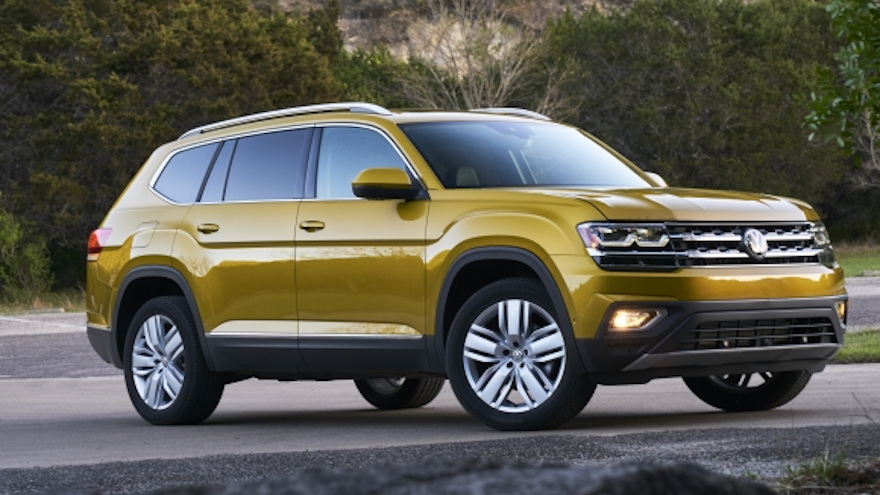
Volkswagen said it recognizes the need for vehicles to be in the hands of students to help educate and equip tomorrow’s technicians with the tools necessary for future employment. During the next few months, Volkswagen announced it will donate 31 Atlas SUVs and diagnostics equipment to high-school auto technician programs, technical schools and career centers across the country.
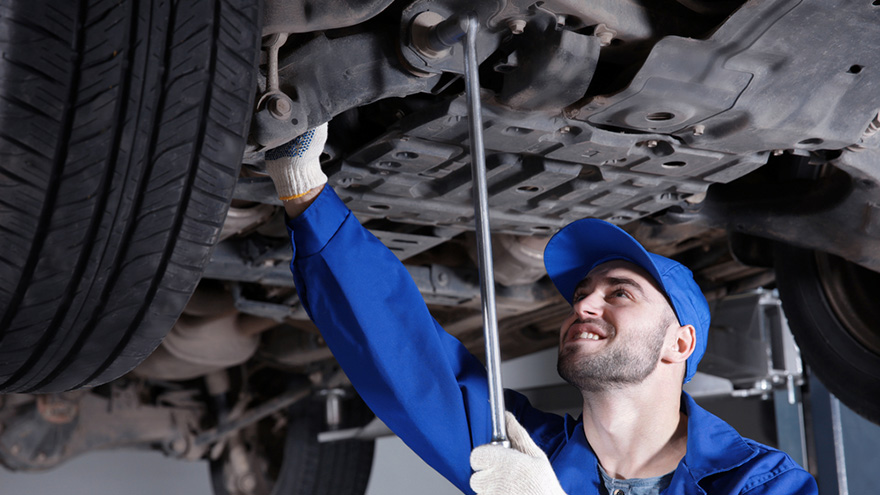
To help address the growing need for trained automotive technicians who understand both the hardware and the increasingly complex software in modern vehicles, Volkswagen acknowledged simply learning the nuts and bolts of automotive repair no longer suffices.
“There is a national shortage of technicians, and it’s expected to grow as many technicians are, or are very close to, retirement age. We have to start looking for avenues to backfill these individuals,” Volkswagen national service operations manager Jon Meredith said in a news release.
Today, more than 770,000 people work as automotive technicians and mechanics across the country, according to federal government estimates. While the overall number of roles remains steady, federal labor experts and the automotive industry estimate the need for new technicians at tens of thousands of workers per year just to maintain current openings demand that’s greater than what trade schools can currently supply with graduates.
“As an industry, we need to come up with different ways of thinking and doing to attract young people to this industry,” said Meredith, while adding that as a vehicle manufacturer, Volkswagen sees tremendous value in partnering with dealers and the technical and trade schools in their markets to bring both the Volkswagen product and diagnostic equipment to the younger generation considering a career in the automotive industry.
The Volkswagen ODIS software used to diagnose and update vehicles would normally have to be purchased directly from Volkswagen under the Motor Vehicle Owners’ Right to Repair Act and would be out of reach of many programs. The automaker indicated the selected schools will also collaborate with local dealerships to provide supplemental assistance and instruction on the donated equipment.
Darin Lewis, an automotive instructor at Ohio’s Medina County Career Center, says the Volkswagen Atlas and software will be the newest vehicle in his school’s training fleet by a decade.
“It goes far beyond donating a physical car. With the technology, they are providing their entry-level curriculum,” Lewis said. “I look back when I was in school and you were either a Ford guy or a Chevy guy. Those days are long gone.
“To have something that’s the latest and greatest out there – and to be able to show students, ‘This is where the industry is headed’ — is important,” Lewis went on to say.
VW announcement comes on the heels of several dealership groups with a presence in Pennsylvania collaborating with Universal Technical Institute (UTI) in Exton, Pa.
With the IRS beginning to accept tax returns this week, no doubt dealers are eager to have potential vehicle buyers arrive at their stores with refunds in hand to make down payments.
And stemming from what Black Book is seeing in the lanes, dealers also are looking to acquire the inventory that will satisfy those possible buyers.
“The used market continues to recover with higher demand from buyers in the auction lanes,” Black Book executive vice president of operations Anil Goyal said in the latest installment of the company’s Market Insights report.
“Both inventory and sales percentages were reported to be rising,” Goyal added in the report.
Delving into the volume-weighted data, Black Book determined overall car segment values declined by just 0.13% last week. That’s less than half of what analysts computed as the four-week average drop of 0.29%.
Again perhaps reflecting preps for those tax-season buyers, Black Book reported values of sub-compact cars, midsize cars and full-size cars all increased.
According to its volume-weighted truck data, Black Book indicated overall truck segment values (including pickups, SUVs, and vans) values declined by 0.28% last week. While not as much as in the car arena, analysts did point out that drop came in below the four-week average decrease of 0.37%.
Among trucks, analysts also noted the values of sub-compact crossovers and small pickups increased, too.
Black Book closed its latest report with anecdotes from its nearly 60 representatives stationed at sales nationwide. Here is the rundown:
— From Georgia: “The auction was really good today as the attendance and consignment were more than we expected. The fleet/lease lanes were selling, but the dealer lanes had difficulty getting buyers to visit their lanes.”
— From Michigan: “Clean 4- to 5-year-old vehicles with good miles are drawing some attention, but the 2- to 3-year-old vehicles are the most in demand.”
— From California: “A strong sale with action on the floor and online.”
— From Tennessee: “Our market is moving in the positive direction with trucks leading the way.”
A quartet of dealer groups with a presence in Pennsylvania is involved with another education program aimed at boosting the number of trained service technicians.
Universal Technical Institute (UTI) in Exton, Pa., recently launched what the school believes is a first-of-its-kind initiative aimed at developing skilled employee pipelines and giving students an inside track on rewarding long-term careers.
UTI explained its Early Employment initiative blends proven post-secondary skills education with on-the-job, apprenticeship-type training.
Under this new initiative, students can apply for jobs with participating local employers as soon as they enroll at UTI’s Exton campus. Employers registered with the program can screen and hire incoming students before they start school and provide on-the-job experience while students complete their education. Graduates who meet their employers’ criteria will receive reimbursement of school-related expenses and potentially other incentives, along with full-time employment.
“This initiative is a win for both employers and students,” UTI-Exton Campus president Bob Kessler said in a news release. “Students gain real industry experience and earn a living while they’re in school.
“Once they graduate, they have a good job with an employer they know well, who will help them pay back their tuition,” Kessler continued. “Employers have the opportunity to help train future technicians to meet their needs and fill a critical skills gap.”
UTI’s Exton campus is launching the initiative in February. Participating employers in the Early Employment program include:
— Bayshore Truck Centers
— CarSense
— Ciocca Dealerships
— Fred Beans Family of Dealerships
— Herc Equipment
— Republic Services
— Rothrock Motor Sales
UTI highlighted there will be more than 30 early employment positions available to incoming students this winter. The Exton campus is only the second of 12 campuses to offer the program. UTI started the Early Employment initiative at its Avondale, Ariz., campus last July and plans to roll it out to all UTI campuses across the country.
“The Early Employment initiative is a unique opportunity to bring together students and employers and demonstrate the benefits of a technical education,” Kessler said. “The program gives students a clear career path, bolstered by the confidence that employers are willing to invest in them from the start.”
Demand for skilled automotive and diesel technicians has never been greater. The U.S. Department of Labor estimated that by 2026, there will be more than 1.2 million job openings (100,000 per year on average) in the transportation sector.
According to a 2016 survey orchestrated by the federal agency, approximately 60% of dealerships cited recruitment as their most pressing challenge.1
Student applications are now being accepted for the Early Employment program at UTI-Exton. Students must apply by Feb. 12 in order to be eligible.
For more information about UTI, visit www.uti.edu.
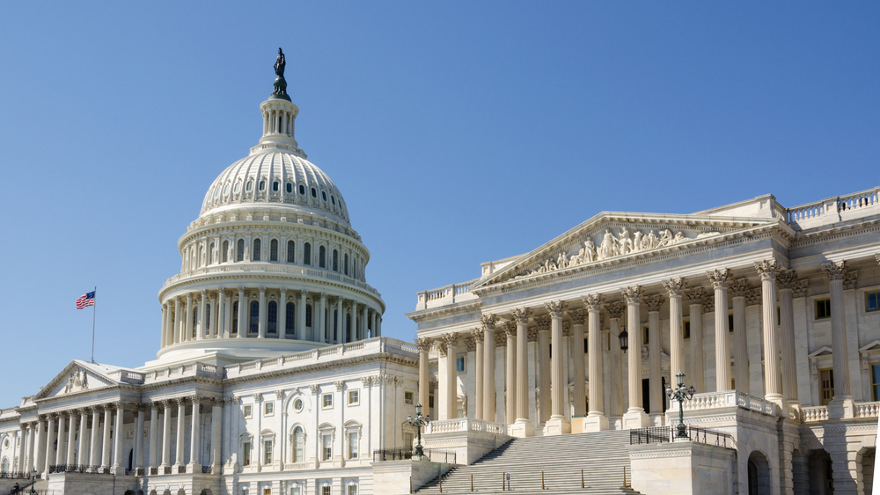
Dealers received some encouraging news going into the Martin Luther King Jr. holiday weekend with the U.S.-Mexico-Canada Free Trade Agreement (USMCA) being overwhelmingly approved by the U.S. Senate on Thursday.
Both the National Automobile Dealers Association (NADA) and the American International Automobile Dealers Association (AIADA) cheered the Senate’s passage of H.R. 5430 by an 89-10 vote; a development the White House said was “fulfilling a core promise the president made to the American people.
“USMCA, which the president successfully negotiated over a year ago, rebalances trade between the three countries and will lead to significant economic and job growth in the United States,” the White House statement said.
NADA chairman Charlie Gilchrist reiterated in a letter sent to all Senators ahead of the USMCA vote that, “The U.S. vehicle industry is built on a favorable trading relationship with our two neighbors, Canada and Mexico.”
In a statement released by NADA following the Senate vote, Gilchrist called the approval of USCMA, “a big win for America’s new-car and -truck dealers and our customers. USCMA will reduce the threat of additional, broad-based tariffs on vehicles and parts produced in North America.
“Approval of USMCA will preserve the global competitiveness of the U.S. automotive industry and enable dealers to continue providing affordable vehicle options for American consumers while strengthening our economic ties to Mexico and Canada,” he added.
AIADA president and CEO Cody Lusk pointed out how longer dealers have been burdened by waiting for USCMA to be finalized.
“Passage of USMCA puts an end to the cloud of uncertainty dealers have been operating under for nearly two years,” Lusk said in a statement. “Once it is signed by the president, and its rules pertaining to autos are finalized, this agreement should provide a framework under which the auto industry in America can continue to grow.
“Today’s vote is a vote for stability and security for America’s auto dealers and their customers,” Lusk went on to say.
In prepared remarks ahead of Thursday’s vote, Senate Majority Leader Mitch McConnell said, “In one recent letter, Kentucky farmers told me, quote, ‘we need the agreement ratified and we need it to happen now.’
“I know my colleagues have been hearing the same thing from their home states. Republicans, Democrats, Senators, Representatives — our incoming has been the same. Get this deal passed. Failure is not an option,” McConnell said.
The past four years have been quite productive for LotLinx with its dealer clients reaping the benefits of artificial intelligence (AI).
The company said on Tuesday that its automotive shopper targeting technology has reached an all-time high in regard to quality of engagement seen from traffic delivered to the dealer site via its vehicle ads.
Lotlinx went on to say its traffic quality has doubled so far in 2020 versus 2016 measurements.
“Think of our AI as a musical conductor — treating each ad channel as an instrument, giving each vehicle its own symphony. We optimize for quality by targeting individual shoppers based on demonstrated purchase intent, not channels,” LotLinx general manager of product and technology Lance Schafer said in a news release.
“While popular sources like Facebook and Google often do provide the best traffic for dealer inventory, we also convert high-quality shoppers from other channels with less name recognition just as often,” Schafer continued.
“In other words, the cymbal matters as much as the bass drum,” he added.
Tuesday’s announcement marks another significant milestone for LotLinx, which recently earned two additional product Automotive Website Awards (AWA) and will be exhibiting at Booth No. 3394C at the upcoming NADA convention.
The LotLinx platform currently helps improve inventory turn and profitability for dealers like Smart Motors Toyota, Fremont Motor Company and Florida Fine Cars.
For more information, download the newest white paper from LotLinx that’s available here.
Asbury Automotive Group has agreed to buy Park Place Dealerships for $1 billion cash, excluding inventory, the public retailer announced Thursday.
The deal gives Asbury a boost both in Texas and within the luxury market.
Park Place’s operating assets include17 franchises, including 15 in the Dallas-Fort Worth market. One of those 17 franchises is an open-point Jaguar/Land Rover dealership set to open in the first quarter in Austin, Texas.
All told, the portfolio includes three Mercedes-Benz, two Lexus, two Jaguar and two Land Rover franchises, plus one franchise each of Porsche, Volvo, Bentley, Rolls Royce, McLaren, Maserati, Karma and Sprinter.
Texas would represent 36% of revenue for Asbury following the deal and luxury brands would represent 50% of the dealer group’s revenue.
“Park Place is highly regarded as one of the best and most efficient operators of luxury stores in the industry,” Asbury president and chief executive officer David Hult said in a news release.
“Their portfolio of stores comes with a strong base of loyal clients and 2,100 long-term team members throughout the high growth Dallas/Fort Worth market,” he said.
“We are also excited to grow our presence in Austin, Texas with a Jaguar/Land Rover open point, which is another high growth luxury market. This acquisition will transform our total portfolio to 50% luxury stores and add approximately $2 billion in expected annualized revenues.”
Included in the price is $785 million in goodwill, roughly $215 million for real estate and leasehold improvements, plus about $30 million for parts and fixed assets. The company anticipate the deal will close in the first quarter.
Evidently, dealers are not rushing to the lanes to acquire inventory like consumers are hurrying to retail stores and websites to purchase holiday gifts.
Multiple Black Book representatives stationed at sales noticed lighter buying activity even as analysts spotted wholesale prices falling at rapid paces. Black Book executive vice president of operations Anil Goyal elaborated about the conditions in the latest installment of the Market Insights report.
“Steeper decline of used-vehicle values continued into December,” Goyal said in the report. “Average weekly depreciation in the last eight weeks is over three times the average weekly depreciation seen year-to-date.”
Looking first at car segment, Black Book reported that its volume-weighted data showed that overall car segment values decreased by 1.04% last week. That figure topped the previous four-week average, which was 0.96%
Among cars, analysts said values of compact cars and sporty cars declined the most, sliding by 1.38% and 1.23%, respectively.
Meanwhile, in the truck world, Black Book determined via its volume-weighted data that overall truck segment value (including pickups, SUVs, and vans) decreased by 1.18% last week. That amount marked a significant jump from the four-week average drop of 0.84%.
Analysts indicated values of minivans dropped the most, softening by 1.65%.
Whether it was frigid outside or still somewhat pleasant, two of Black Book’s representatives mentioned soft dealer bidding during sales they witnessed.
First originating from Florida, “Attendance both in the lanes and online was lighter than usual. Prices were down across the board on passenger cars, trucks and SUVs.”
And then out of Michigan, “You would think that the dealers would now be aggressively purchasing vehicles after the recent sharp drop in values, but that is not the case.”
Black Book closed by sharing comments from an auction owner in Ohio, who might have summed up the entire situation.
“Trucks and SUVs are picking up steam as snow is falling. Our sales percentages typically drop slightly during this time period because we have some sellers and buyers sitting out in anticipation of the big tax push early next year,” the auction owner said.
“Our biggest competition for the next few months will be Mother Nature,” the owner added.
The National Automobile Dealers Association (NADA) recently released a guide designed to help owners, principals and their advisors gauge what their business truly might be worth.
In an effort to assist dealers to understand the process of valuing franchised dealerships as well as the various factors that influence rooftop value, NADA explained that its guide covers such situations as:
— Buy-sell transactions
— Estate and gift tax planning or reporting
— Ownership succession planning
— Owner buy-in or buy-out
— Tax reporting due to entity restructuring
— Litigation settings including divorce and dispute
NADA mentioned its guide also delves into the importance of analyzing historical earnings and cash flow, estimating future cash flow and determining a reasonable return on investment.
The association noted its material describes the steps in the appraisal process, outlining the income, market, and asset-based approaches to valuation.
Furthermore, NADA pointed out the guide provides numerous examples, formulas and worksheets as well as addressing special valuation considerations such as:
— Discounts for non-controlling interests
— Valuation of personal versus corporate goodwill (Blue Sky)
— Valuation for key employee ownerships
— Valuation for federal tax matters, including the relevance of IRS Revenue Ruling 59-60
And finally, the guide also examines changes resulting from the Tax Cuts and Jobs Act of 2017 and suggests strategies to maximize dealership value and prepare for exit.
NADA members can find this guide by going to this website.